One of the most prominent economists of the 20th century was the late Milton Friedman, an ardent free market supporter who remained skeptical of government’s ability to correct market failures through interventionist policies.
I found the talk below interesting. Friedman offers several examples of market failures that have been pointed to as a justification for government intervention, and argues that in fact, government often does not truly know what the right outcome is in most cases. He believes that government failure should be just as much a concern as market failure; and that therefore societal welfare would be best met by finding market-based solutions to the misallocation of resources that sometimes arises under conditions in which externalities exist.
Discussion Questions:
Is government better able to know the “optimal” quantity of output of different goods and services than private individuals are?
Under what conditions would the free market be best able to achieve solutions to market failures such as those described by Friedman?
What do you think should be of greater to concern to society, market failure or government failure?
America’s public education system is failing. We’re spending more money on education but not getting better results for our children.
That’s because the machine that runs the K-12 education system isn’t designed to produce better schools. It’s designed to produce more money for unions and more donations for politicians.
For decades, teachers’ unions have been among our nation’s largest political donors. As Reason Foundation’s Lisa Snell has noted, the National Education Association (NEA) alone spent $40 million on the 2010 election cycle (source: http://reason.org/news/printer/big-education-and-big-labor-electio). As the country’s largest teachers union, the NEA is only one cog in the infernal machine that robs parents of their tax dollars and students of their futures.
Students, teachers, parents, and hardworking Americans are all victims of this political machine–a system that takes money out of taxpayers’ wallets and gives it to union bosses, who put it in the pockets of politicians.
To Mitt Romney, Box 96861, Washington, DC 20090-6861, From Everette Hatcher of www.thedailyhatch.org 13900 Cottontail Lane, Alexander, AR 72002
If you want to change this nation in a big way then you will at the fact that in the last 40 years we have increased our educational spending every year and our test scores have dropped. The problem is not money but education competition. We don’t need to spend over $29,000 per kid in the Washington D.C. district when we could give vouchers out (under $9000 per kid) and have better results. Take a look at this article from Milton Friedman.
Michelle: you are the grandfather of school vouchers do you feel victorious?
Mr. Friedman: Far from victorious, but very optimistic and hopeful. We are at the beginning of the task because as of the moment vouchers are available to only a very small amount of children. Our goal is to have a system in which every family in the U.S. will be able to choose for itself the school to which its children go we are far from that ultimate result. If we had that a system of free choice we would also have a system of competition, innovation which would change the character of education. You know our educational system is one of the most backwards things in our society in the may we teach people they did 200 years ago there is a person in the front of the room there are children sitting down at the bottom and they are being talked to can you name any other industry in the U.S. which is as technologically backward I can name one and only one..the legislature for the same reason. Both are monopolies the elementary and secondary school system is the single most Socialist industry in the U.S. leaving aside the military, but aside from the military its a major socialist industry, it is centralized and the control comes from the center and the difficulty of having a monopoly in which people cannot choose has been exacerbated by the fact that it has been largely taken over by teachers unions, the national education association and the american federation of teachers and the unions. Understandably I do not blame them but they are interested in the welfare of their members not the welfare of the children and the result is they have introduced a degree of rigidity which makes it impossible to reform the public school system from within. Reform has to come through competition from the outside and the only way you can get competition is by making it possible for parents to have the ability to choose.
Michelle: Give to me a model, an example of how it would work
Mr. Friedman: Very simple, take the extreme the government says we are willing to finance schooling for every child. The government compels children. If you look at the role of government in education there are 3 different levels there is a level of compulsory the government says every child must go to school until such and such and age. That is the equivalent of saying if you are going to drive a car you must have a license. The second stage is funding not only do we require you to have an education but the government is willing to pay for that schooling. That would be equivalent to saying the government is willing to pay for your car that you drive. The third level is running the educational industry that would be the equivalent of the government manufacturing the automobile or to put it in a different image consider food stamps today. Food stamps are funds provided by the government but if that were to be runned like the schools they would say everybody has to use these food stamps at a government grocery and each person with food stamps is assigned to a particular government grocers so the only way you can get your food stamps is by going to that grocer do you think those groceries would be very good? We know what the situation is in schooling people say why now and not 50-75 years ago? Well, when I went to high school t hat was a long time ago in the 1920s there were a 150,000 school districts in the U.S and the population was half what it is now. Today, there are fewer than 15,000 school districts. So it used to be that you really did have competition cause you had small school districts and parents had a good deal of control over those school districts, but increasingly we have shifted to very large school districts, to centralized control, to a system in which the governmental officials in which the educational professionals control it and like every socialist industry it produces a product that is very expensive and of very low quality. Of course it is not uniform there are some very good schools do not misunderstand me, but there are also some very bad ones.
Michelle: I interviewed some folks who are against school vouchers and they say that if you really want to help out a school what you should do is provide high quality early childhood education, small classes, small schools, summer school available to children who want it. Put money to those items which they claim would work.
Mr. Friedman: They don’t, we have been doing that. The amount of money spent per child adjusted for inflation has something like doubled or tripled over the last 20 years. Twenty years ago we had this report A Nation at Risk that pointed out all of the difficulties I just referred to and which pointed out this was a first generation that was going to be less schooled then its parents. We are now in the next generation and will be even less well schooled. We have had every possible effort you could have from reform from within. It is not just in schools it is in any area reform has to come from outside it has to come from competition. Let me illustrate that from within the school system. the united states from all accounts ranks #1 in higher education people from all over the world regard the United States colleges and universities the best and most varied. On the other hand in every other international comparison we rank near the bottom in elementary and secondary education why the difference?…one word..choice. The elementary and secondary education the school picks the child it picks its customer. In higher education the customer picks its school, you have choice that makes all the difference in the world. It means competition forces product. Look over the rest of the economy is there any area in the u.s. in which progress has not required progress from the outside. Look at the telephone industry when it was broken down into the little bells and opened up the competition it started a period of rapid innovation and development the key word is competition and the question is how can you get competition. only by having the customer choosing.
Michelle: There is concern that money is going to religious schools. That the majority of the students in voucher programs that exist use them to attend schools with religious affiliation?
Mr. Friedman: Why? Because the vouchers are so small in some cases. It is true that of the private schools in the u.s the great bulk of them are religious. that is for one simple reason here is someone selling something for nothing somebody down the street is giving away chocolate and you want to get into the business of selling chocolate that is kind of tough isn’t it here at schools children can attend them they are not free they are paying for it in the form of taxes but there is no specific charge for going to that school somebody else is going to offer it. The churches, the religious organizations have had a real advantage in that they were the only ones around who were in a position to subsidize the education and keep the fees down low. If you open it wide the most recent case was Ohio, cleveland case. The voucher that they had had a max value of $2,500 now it is not easy to provide a decent education at $2,500 and make money at it make it pay at the same time the state of Ohio was spending something like over $7,000 per child on schooling if that voucher had been $7,000 instead of $2,500 I have no doubt that there would have been a whole raft of new private, non-profit both profit and non-profit schools. That is what has happened in Milwaukee. Milwaukee has a voucher system and today the fraction of the voucher users in Milwaukee going to religious schools is less than the fraction going to religious schools was before this system started because there have been new schools developed and some of them have been religious but many of them are not. In any event, the Supreme Court has settled that issue they have said that if it is the choice of the parent if there are alternatives available there are government schools, charter schools, private non-denominational schools, private denominational schools so long as the choice is in the hands of the parent that is not a violation of the 1st amendment.
Michelle: You have a friend and an ally in the White House when it comes to vouchers
Mr. Friedman: I should say. Mr. Bush has always been in favor. He is in favor of free choice. Remember vouchers are a means not an end the purpose of vouchers is to enable parents to have free choice and the purpose of having free choice is to provide competition and allow the educational industry to get out of the 17th century and get into the 21st century and have more innovation and more evolvement. There is no reason why you cannot have the same kind of change in the provision of education as you have had in industries like the computer industry, the television industry and other things.
Michelle: Is it refreshing to have a President that, Bill Clinton was firmly against vouchers.
Mr. Friedman: No, it is a case of circumstances when he was Governor of Arkansas he was not against vouchers. He was in favor, but when he became President he came out against vouchers. I should say he did not oppose vouchers as Governor and he did as President and that was for political reasons. People don’t recognize how powerful politically the teachers unions are. Something like a quarter of all the delegates at the democratic national convention are from the teachers union. They are probably the most powerful pressure group in the U.S… very large funds, very large number of people and very active politically.
Michelle: We talk in the office about how President Bush has some very Friedmanesq ideas.
Mr. Friedman: They are not freidmanesq they are just good ideas. I hope that is true anyway. I think very highly of President Bush and I think in these areas don’t misunderstand me that is not a blanket statement there are some things he has done that I disagree with, but taken as a whole he has been moving in the right direction of trying to move toward a smaller more limited government trying to provide more freedom and more initiative in all areas. His philosophy on Medicare is the same as his philosophy in schools.
Michelle: Is that refreshing?
Mr. Friedman: It is an interesting thing, if you look at the facts the one area the area in which the low income people of this country, the blacks and the minority are most disadvantaged is with respect with the kinds of schools they can send their children to. The people who live in Harlem or the slums or the corresponding areas in LA or San Francisco they can go to the same stores, shop in the same stores everybody else can, they can buy the same automobiles, they can go to supermarket but they have very limited choice of schools everybody agrees that the schools in those areas are the worst they are poor. Yet, here you have a Democrat who allege their interest is to help the poor and the low income people here you have to take a different point every poll has shown that the strongest supporters of vouchers are the low income blacks and yet hardly a single black leader has been willing to come out for vouchers there were some exceptions Paul Williams in Milwaukee who was responsible for that…and a few others
Michelle: Why do you think that is?
Mr. Friedman: For obvious reasons, political. It has been to the self interest to the leaders the school system as long as its governmental its a source of power and jobs to hand around and funds to dispose of. If it is privatized that disappears and the other aspect of it is the power of the teachers unions. Right now those of us that are in the upper income classes have freedom of choice for our children in various ways we can decide where to live and we can choose places to live that have good schools or we can afford to pay twice for schooling once by taxes and once by paying tuition at a private school. It seems to me utterly unfair that those opportunities should not be open to everybody at all levels of income. If you had a system the kind I would like to see the government would say we require every child to get a certain number of years of schooling and in order to make that possible we are going to provide for every parent a voucher equal to a certain number of dollars which they can use only for schooling can’t use it for anything else. They can add to it, but they cannot subtract from it. Those will be those can be used in government schools let the government run the school but force them to be in competition so that all government schools charge tuition, but can be paid for by that voucher but that same voucher can also be used in private schools of all kinds and then you would have an open the teachers union complained and they insist they are doing a good job. if they are doing a good job then why are they so afraid of some competition?
No one did more to advance the cause of school vouchers than Milton and Rose Friedman. Friedman made it clear in his film series “Free to Choose” how sad he was that young people who live in the inner cities did not have good education opportunities available to them. Remembering Milton Friedman’s School Choice Legacy […]
Everywhere school vouchers have been tried they have been met with great success. Why do you think President Obama got rid of them in Washington D.C.? It was a political disaster for him because the school unions had always opposed them and their success made Obama’s allies look bad. In 1980 when I first sat […]
I ran across this very interesting article about Milton Friedman from 2002: Friedman: Market offers poor better learningBy Tamara Henry, USA TODAY By Doug Mills, AP President Bush honors influential economist Milton Friedman for his 90th birthday earlier this month. About an economist Name:Milton FriedmanAge: 90Background: Winner of the 1976 Nobel Prize for economic science; […]
Milton Friedman and Chile – The Power of Choice Uploaded by FreeToChooseNetwork on May 13, 2011 In this excerpt from Free To Choose Network’s “The Power of Choice (2006)”, we set the record straight on Milton Friedman’s dealings with Chile — including training the Chicago Boys and his meeting with Augusto Pinochet. Was the tremendous […]
The True Cost of Public Education Uploaded by catoinstitutevideo on Mar 5, 2010 What is the true cost of public education? According to a new study by the Cato Institute, some of the nation’s largest public school districts are underreporting the true cost of government-run education programs. http://www.cato.org/pub_display.php?pub_id=11432 Cato Education Analyst Adam B. Schaeffer explains […]
Max Brantley of the Arkansas Times Blog reports today that Mitt Romney is for school vouchers. I am glad to hear that. Over and over we hear that the reason private schools are better is because they don’t have to keep the troubling making kids. It reminds me of this short film that I saw many […]
John Brummett (10-26-11, Arkansas Democrat-Gazette online edition) does not want charter schools to put public schools out of business but he wants them to show public schools how to do it. (Paywall) I seek in these matters a kind of Clintonian third-way finesse: I support charter schools only to the extent that they should be […]
After appearing on the television program, “Who Do You Think You Are,” Gwyneth Paltrow has decided to raise children Apple, 7, and Moses, 5, as Jewish.
According to The Daily Mail, the NBC ancestry show sparked the discovery that the actress descended from a notable line of Eastern European rabbis. Though she’s long practiced Kabbalah, Gwyneth had previously stayed neutral about a formal religion upbringing in her household, which includes crooner husband Chris Martin, who is of Christian background.
“I don’t believe in religion. I believe in spirituality. Religion is the cause of all the problems in the world,” the actress once told The Daily Mail.
_______________
Below is a letter I mailed to Chris and Gwyneth recently:
To Chris Martin and Gwyneth Paltrow, c/o Go Go Pictures, 12 Cleveland Row, London, SW1A 1DH, United Kingdom, , From Everette Hatcher, 13900 Cottontail Lane, Alexander, AR 72002, USA:
I have been a huge fan of both of you and have posted many times on my blog about your religious views which have seemed to have changed over the years. I know that Chris was brought up as an evangelical Christian, but has long ago left the faith behind although he did revisit many biblical themes in his 2008 and 2011 cds.
I have shown what thought processes Solomon went through in Ecclesiastes and then compared them to the evident changes that are occurring with Coldplay. By the way, the final chapter of Ecclesiastes finishes with Solomon emphasizing that serving God is the only proper response of man. My prediction: I am hoping that Coldplay’s next album will also come to that same conclusion that Solomon came to in Ecclesiastes 12:13-14: 13 Now all has been heard; here is the conclusion of the matter: Fear God and keep his commandments, for this is the whole duty of man.
14 For God will bring every deed into judgment, including every hidden thing, whether it is good or evil.
I have also written before about Gwyneth’s famous Jewish relatives which includes a famous Rabbi and I have wondered if she would decide to return to those roots. Actually that is what has happened. I salute you for rejecting your earlier statements against organized religion and for making the decision to teach your children the Bible and to have faith in God.
I know that you will spending lots of time in the scriptures and I wanted to share with you some key scriptures that talk about the Messiah. Rusty Wright of Probe Ministries wrote the article below:
Many crime victims feel forsaken by God. So do many divorced people, war prisoners, and starving refugees. But this young man’s cry of desperation carried added significance because of its historical allusion.
The words had appeared about a thousand years earlier in a song written by a king. The details of the song are remarkably similar to the suffering the young man endured. It said, “All who see me mock me; they hurl insults, shaking their heads …. They have pierced my hands and my feet…. They divide my garments among them and cast lots for my clothing.”{2}
Historians record precisely this behavior during the young man’s execution.{3} It was as if a divine drama were unfolding as the man slipped into death.
Researchers have uncovered more than 300 predictions or prophesies literally fulfilled in the life and death of this unique individual. Many of these statements written hundreds of years before his birth-were beyond his human control. One correctly foretold the place of his birth. {4} Another said he would be born of a virgin. {5} He would be preceded by a messenger who would prepare the way for his work, {6} He would enter the capital city as a king but riding on a donkeys back {7} He would be betrayed for thirty pieces of Silver, {8} pierced, {9} executed among thieves, {10} and yet, though wounded, {11} he would suffer no broken bones.{12}
Peter Stoner, a California mathematics professor, calculated the chance probability of just eight of these 300 prophecies coming true in one person. Using conservative estimates, Stoner concluded that the probability is 1 in 10 to the 17th power that those eight could be fulfilled by a fluke.
He says 1017silver dollars would cover the state of Texas two feet deep. Mark one coin with red fingernail polish. Stir the whole batch thoroughly. What chance would a blindfolded person have of picking the marked coin on the first try? One in 1017, the same chance that just eight of the 300 prophecies “just happened” to come true in this man, Jesus. {13}
In his dying cry from the cross Jesus reminded His hearers that His life and death precisely fulfilled God’s previously stated plan. According to the biblical perspective, at the moment of death Jesus experienced the equivalent of eternal separation from God in our place so that we might be forgiven and find new life.
He took the penalty due for all the crime, injustice, evil, sin, and shortcomings of the world-including yours and mine.
Though sinless Himself, He likely felt guilty and abandoned. Then-again in fulfillment of prophecy {14} and contrary to natural law-He came back to life. As somewhat of a skeptic I investigated the evidence for Christ’s resurrection and found it to be one of the best-attested facts in history. {15} To the seeker Jesus Christ offers true inner peace, forgiveness, purpose, and strength for contented living.
SO WHAT?
“OK, great,” you might say, “but what hope does this give the crime or divorce victim, the hungry and bleeding refugee, the citizen paralyzed by a world gone bad?” Will Jesus prevent every crime, reconcile every troubled marriage, restore every refugee, stop every war? No. God has given us free will. Suffering–even unjust suffering–is a necessary consequence of sin.
Sometimes God does intervene to change circumstances. (I’m glad my assailant became nervous and left.) Other times God gives those who believe in Him strength to endure and confidence that He will see them through. In the process, believers mature.
Most significantly we can hope in what He has told us about the future. Seeing how God has fulfilled prophecies in the past gives us confidence to believe those not yet fulfilled. Jesus promises eternal life to all who trust Him for it: “Whoever hears my word and believes him who sent me has eternal life and will not be condemned; he has crossed over from death to life.”{16}
He promised He would return to rescue people from this dying planet.{17}
Finally justice will prevail. Those who have chosen to place their faith in Him will know true joy: “He shall wipe away every tear from their eyes; and there shall no longer be any death; there shall no longer be any mourning, or crying, or pain.”{19}
Does God intend that we ignore temporal evil and mentally float off into unrealistic ethereal bliss? Nor at all. God is in the business of working through people to turn hearts to Him, resolve conflicts, make peace. After my assailant went to prison, I felt motivated to tell him that I forgave him because of Christ. He apologized, saying he, too, has now come to believe in Jesus.
But through every trial, every injustice you suffer, you can know that God is your friend and that one day He will set things right. You can know that He is still on the throne of the universe and that He cares for you. You can know this because His Son was born (Christmas is, of course, a celebration of His birth), lived, died, and came back to life in fulfillment of prophecy. Because of Jesus, if you personally receive His free gift of forgiveness, you can have hope!
Will you trust Him?
Notes
1. Matthew 27:46.
2. Psalm 22.
3. Matthew 27:35-44; John 20:25.
4. Micah 5:2; Matthew 2:1.
5. Isaiah 7:14; Matthew 1:18, 24-25; Luke 1:26-35.
6. Malachi 3:1; Isaiah 40:3; Matthew 3:1-2.
7. Zechariah 9:9; John 12:15; Matthew 21: 1-9.
8. Zechariah 11:12; Matthew 26:15.
9. Zechariah 12:10; John 19:34, 37.
10. Isaiah 53:12.
11. Matthew 27:38; Isaiah 53:5; Zechariah 13:6; Matthew 27:26.
12. Psalm 34:20; John 19:33, 36.
13. Peter Stoner, Science Speaks, pp. 99-112.
14. Psalm 6:10; Acts 2:31-32.
15. Josh McDowell, Evidence That Demands a Verdict, pp. 185-273.
Rusty Wright, former associate speaker and writer with Probe Ministries, is an international lecturer, award-winning author, and journalist who has spoken on six continents. He holds Bachelor of Science (psychology) and Master of Theology degrees from Duke and Oxford universities, respectively. www.RustyWright.com
The central economic selling point of the Obama reelection team is that the president saved the U.S. auto industry. That such a contestable proposition serves as the administration’s economic headline does more to underscore its abysmal record than to inspire confidence in its continued economic stewardship.
The administration didn’t save the auto industry. The stronger case is that it damaged the auto industry along with several important institutions vital to capitalism’s proper functioning. However, it should be granted that President Obama’s commandeering of GM’s and Chrysler’s bankruptcy process saved jobs at those companies and elsewhere in their supply chains (and provided an opportunity to dole out spoils for politically favored interests). How many jobs were saved is impossible to determine because it’s not clear what would have happened to GM’s and Chrysler’s assets had a normal, non-political bankruptcy process been allowed to unfold.
Yes, jobs were saved for the time being in Michigan, Ohio, and a few other industrial states in the Midwest. That is what can be seen. And politicians are hardwired to tout the benefits—and only the benefits—of their policies.
But an informed citizenry should insist on a proper accounting of the costs of those policies, as well—not just the losses put on the taxpayers’ tab (right now taxpayers’ “investment” in GM is $27 billion, but the public’s 500 million shares of GM stock is worth only $10 billion), but the unseen costs.
Sure some jobs were preserved in some locations, but what about the less visible consequences and ripple effects? What isn’t so easily seen, but is every bit as important to assessing the auto interventions is the effects on the other auto companies and their workers (i.e., the majority of the U.S. auto industry). Will the public remember or know enough to attribute layoffs of American workers at Ford or Toyota or Kia during the next downturn in auto demand to the fact that a necessary reckoning on the supply side was precluded by the interventions of 2009?
The auto industry is plagued with overcapacity, which is a problem that demands a thinning of the herd. GM and Chrysler, through their own relatively poor decisions with respect to labor relations, product offerings, and quality management were failing by the market’s judgment and were the rightful candidates to be thinned. But that process was forestalled. In 2013, auto workers in Alabama, Tennessee, South Carolina, Indiana, and even Michigan and Ohio may lose their jobs because GM and Chrysler workers’ jobs were spared in 2009.
That is only one of the many unseen or under-rug-swept costs of the auto bailouts. The following passage from congressional testimony I gave last year identifies several others:
It is galling to hear administration officials characterize the auto bailouts as “successful.” The word should be off-limits when describing this unfortunate chapter in U.S. economic history. At most, bailout proponents and apologists might respectfully argue — and still be wrong, however — that the bailouts were necessary evils undertaken to avert greater calamity.
But calling the bailouts “successful” is to whitewash the diversion of funds from the Troubled Assets Relief Program by two administrations for purposes unauthorized by Congress; the looting and redistribution of claims against GM’s and Chrysler’s assets from shareholders and debt-holders to pensioners; the use of questionable tactics to bully stakeholders into accepting terms to facilitate politically desirable outcomes; the unprecedented encroachment by the executive branch into the finest details of the bankruptcy process to orchestrate what bankruptcy law experts describe as “Sham” sales of Old Chrysler to New Chrysler and Old GM to New GM; the costs of denying Ford and the other more deserving automakers the spoils of competition; the costs of insulating irresponsible actors, such as the United Autoworkers, from the outcomes of an apolitical bankruptcy proceeding; the diminution of U.S. moral authority to counsel foreign governments against similar market interventions; and the lingering uncertainty about the direction of policy under the current administration that pervades the business environment to this very day.
In addition to the above, there is the fact that taxpayers are still short tens of billions of dollars on account of the GM bailout without serious prospects for ever being made whole. Thus, acceptance of the administration’s pronouncement of auto bailout success demands profound gullibility or willful ignorance. Sure, GM has experienced recent profits and Chrysler has repaid much of its debt to the Treasury. But if proper judgment is to be passed, then all of the bailout’s costs and benefits must be considered. Otherwise, calling the bailout a success is like applauding the recovery of a drunken driver after an accident, while ignoring the condition of the family he severely maimed.
In the debate of job creation and how best to pursue it as a policy goal, one point is forgotten: Government doesn’t create jobs. Government only diverts resources from one use to another, which doesn’t create new employment.
Video produced by Caleb Brown and Austin Bragg.
___________________________
Keynesian Catastrophe: Big Money, Big Government & Big Lies
Based on a theory known as Keynesianism, politicians are resuscitating the notion that more government spending can stimulate an economy. This mini-documentary produced by the Center for Freedom and Prosperity Foundation examines both theory and evidence and finds that allowing politicians to spend more money is not a recipe for better economic performance.
___________________
Obama’s So-Called Stimulus: Good For Government, Bad For the Economy
President Obama wants Congress to dramatically expand the burden of government spending. This CF&P Foundation mini-documentary explains why such a policy, based on the discredited Keynesian theory of economics, will not be successful. Indeed, the video demonstrates that Obama is proposing – for all intents and purposes – to repeat Bush’s mistakes. Government will be bigger, even though global evidence shows that nations with small governments are more prosperous.
____________
Big Government Is Not Stimulus: Why Keynes Was Wrong (The Condensed Version)
The CF&P Foundation has released a condensed version of our successful mini-documentary explaining why so-called stimulus schemes do not work. Based on a theory known as Keynesianism, politicians are resuscitating the notion that more government spending can stimulate an economy. This mini-documentary produced by the Center for Freedom and Prosperity Foundation examines both theory and evidence and finds that allowing politicians to spend more money is not a recipe for better economic performance.
_________________
Eight Reasons Why Big Government Hurts Economic Growth
This Center for Freedom and Prosperity Foundation video analyzes how excessive government spending undermines economic performance. While acknowledging that a very modest level of government spending on things such as “public goods” can facilitate growth, the video outlines eight different ways that that big government hinders prosperity. This video focuses on theory and will be augmented by a second video looking at the empirical evidence favoring smaller government.
___________________
Keynesian Economics Is Wrong: Economic Growth Causes Consumer Spending, Not the Other Way
Politicians and journalists who fixate on consumer spending are putting the cart before the horse. Consumer spending generally is a consequence of growth, not the cause of growth. This Center for Freedom and Prosperity video helps explain how to achieve more prosperity by looking at the differences between gross domestic product and gross domestic income. www.freedomandprosperity.org
_____________
Deficits, Debts and Unfunded Liabilities: The Consequences of Excessive Government Spending
Huge budget deficits and record levels of national debt are getting a lot of attention, but this video explains that unfunded liabilities for entitlement programs are Americas real red-ink challenge. More important, this CF&P mini-documentary reveals that deficits and debt are symptoms of the real problem of an excessive burden of government spending. www.freedomandprosperity.org
___________
Now that I have been critical of the Democrat President, I wanted to show that I am not concerned about taking up for Republicans but looking at the facts. President Clinton did increase government spending at a slower rate than many other presidents. Here are two videos that praise both Reagan and Clinton for both accomplished this feat.
Spending Restraint, Part I: Lessons from Ronald Reagan and Bill Clinton
Ronald Reagan and Bill Clinton both reduced the relative burden of government, largely because they were able to restrain the growth of domestic spending. The mini-documentary from the Center for Freedom and Prosperity uses data from the Historical Tables of the Budget to show how Reagan and Clinton succeeded and compares their record to the fiscal profligacy of the Bush-Obama years.
______________
Spending Restraint, Part II: Lessons from Canada, Ireland, Slovakia, and New Zealand
Nations can make remarkable fiscal progress if policy makers simply limit the growth of government spending. This video, which is Part II of a series, uses examples from recent history in Canada, Ireland, Slovakia, and New Zealand to demonstrate how it is possible to achieve rapid improvements in fiscal policy by restraining the burden of government spending. Part I of the series examined how Ronald Reagan and Bill Clinton were successful in controlling government outlays — particularly the burden of domestic spending programs. www.freedomandprosperity.org
Lawmakers are considering extending temporary payroll tax cuts. But the policy is based on faulty Keynesian theories and misplaced confidence in the government’s ability to micromanage short-run growth.
In textbook Keynesian terms, federal deficits stimulate growth by goosing “aggregate demand,” or consumer spending. Since the recession began, we’ve had a lot of goosing — deficits were $459 billion in 2008, $1.4 trillion in 2009, $1.3 trillion in 2010, and $1.3 trillion in 2011. Despite that huge supposed stimulus, unemployment remains remarkably high and the recovery has been the slowest since World War II.
Policymakers should ignore the Keynesians and their faulty models, and instead focus on reforms to aid long-run growth…
Yet supporters of extending payroll tax cuts think that adding another $265 billion to the deficit next year will somehow spur growth. That “stimulus” would be on top of the $1 trillion in deficit spending that is already expected in 2012. Far from helping the economy, all this deficit spending is destabilizing financial markets, scaring businesses away from investing, and imposing crushing debt burdens on young people.
For three years, policymakers have tried to manipulate short-run economic growth, and they have failed. They have put too much trust in macroeconomists, who are frankly lousy at modeling the complex workings of the short-run economy. In early 2008, the Congressional Budget Office projected that economic growth would strengthen in subsequent years, and thus completely missed the deep recession that had already begun. And then there was the infamously bad projection by Obama’s macroeconomists that unemployment would peak at 8 percent and then fall steadily if the 2009 stimulus plan was passed.
Some of the same Keynesian macroeconomists who got it wrong on the recession and stimulus are now claiming that a temporary payroll tax break would boost growth. But as Stanford University economist John Taylor has argued, the supposed benefits of government stimulus have been “built in” or predetermined by the underlying assumptions of the Keynesian models.
Policymakers should ignore the Keynesians and their faulty models, and instead focus on reforms to aid long-run growth, which economists know a lot more about. Cutting the corporate tax rate, for example, is an overdue reform with bipartisan support that would enhance America’s long-run productivity and competitiveness.
If Congress is intent on cutting payroll taxes, it should do so within the context of long-run fiscal reforms. One idea is to allow workers to steer a portion of their payroll taxes into personal retirement accounts, as Chile and other nations have done. That reform would feel like a tax cut to workers because they would retain ownership of the funds, and it would begin solving the long-term budget crisis that looms over the economy.
Dan Mitchell discusses the effectiveness of the stimulus Uploaded by catoinstitutevideo on Nov 3, 2009 11-2-09 When I think of all our hard earned money that has been wasted on stimulus programs it makes me sad. It has never worked and will not in the future too. Take a look at a few thoughts from […]
Government Spending Doesn’t Create Jobs Uploaded by catoinstitutevideo on Sep 7, 2011 Share this on Facebook: http://on.fb.me/qnjkn9 Tweet it: http://tiny.cc/o9v9t In the debate of job creation and how best to pursue it as a policy goal, one point is forgotten: Government doesn’t create jobs. Government only diverts resources from one use to another, which doesn’t […]
In his recent article Ernie Dumas sticks to his guns that we should balance the budget without being forced to with a “Balanced Budget Amendment,” but I wonder how well that has worked so far? I have made this a key issue for this blog in the past as you can tell below: Dear Senator […]
(Picture from Arkansas Times Blog) When I think about all the anger and hate coming from the Occupy Wall Street crowd, I wonder if they have read this story below? Solyndra: Crooked Politics or Just Bad Economics? Posted by David Boaz Amy Harder has a good take on the Solyndra issue in National Journal Daily […]
Dear Senator Pryor, why not pass the Balanced Budget Amendment? (Part 13 Thirsty Thursday, Open letter to Senator Pryor) Office of the Majority Whip | Balanced Budget Amendment Video In 1995, Congress nearly passed a constitutional amendment mandating a balanced budget. The Balanced Budget Amendment would have forced the federal government to live within its […]
Andrew Demillo pointed this out and also Jason Tolbert noted: PRYOR OPPOSES THE OBAMA JOBS BILL THAT HE VOTED TO ADVANCE Sen. Mark Pryor has been traveling around the state touting a six-part jobs plan that he says “includes a number of bipartisan initiatives, is aimed at creating jobs by setting the table for growth, encouraging new […]
Is a lack of money the problem for our public schools? Everything You Need to Know About Public School Spending in Less Than 2½ Minutes Posted by Adam Schaeffer Neal McCluskey gutted the President’s new “Save the Teachers” American Jobs Act sales pitch a good while back, as did Andrew Coulson here. Thankfully, it seems […]
With just 21 days to go until the presidential election in the United States, President Obama and his challenger Governor Romney meet for their second debate at Hofstra University in Hempstead, New York.
________________________
President Obama c/o The White House
1600 Pennsylvania Avenue NW
Washington, DC 20500
In the second presidential debate which I watched on 10-18-12, I was very sad that the administration did not come out in the first week and say that this was a terrorist attack instead of talking about a youtube video that HAD NO PLACE IN THE CONVERSATION SINCE THIS WAS A PLANNED ATTACK!!!!! I don’t understand why you talked about this youtube video for about two weeks and I am hoping you will respond to this letter or I am going to keep writing you about this till you do.
PUBLISHED: 10:49 EST, 19 October 2012 | UPDATED: 14:28 EST, 19 October 2012
The mother of an American diplomat killed during a terrorist raid on the U.S. consulate in Benghazi has hit out at Barack Obama for describing the attack as ‘not optimal’, saying: ‘My son is not very optimal – he is also very dead.’
During an interview shown on Comedy Central, Obama responded to a question about his administration’s confused communication after the assault by saying: ‘If four Americans get killed, it’s not optimal.’
Speaking exclusively to MailOnline today, Pat Smith, whose son Sean died in the raid, said: ‘It was a disrespectful thing to say and I don’t think it’s right.
‘How can you say somebody being killed is not very optimal? I don’t think the President has the right idea of the English language.’
Scroll down for video
Not optimal: President Barack Obama, pictured left, discussed the killing of four men in Benghazi while speaking to Jon Stewart, right, on The Daily Show
Criticism: Pat Smith, left, whose diplomat son Sean, right, died in the raid, slammed the President’s remarks
Speaking from her home in San Diego, Mrs Smith, 72, continued: ‘It’s insensitive to say my son is not very optimal – he is also very dead. I’ve not been “optimal” since he died and the past few weeks have been pure hell.
‘I am still waiting for the truth to come out and I still want to know the truth. I’m finally starting to get some answers but I won’t give up.
‘There’s a lot of stupid things that have been said about my son and what happened and this is another one of them.’
Obama was speaking to Jon Stewart of The Daily Show for a programme that was broadcast last night. Stewart, a liberal whose young audience is full of potential voters prized by the Obama campaign, asked the president about his handling of the aftermath of the Benghazi attack.
But Obama’s response sparked outrage among Republican commentators including the website Breitbart and prompted a vicious backlash from the Twitter community.
Killed: U.S. ambassador to Libya Chris Stevens was one of four Americans who died in the assault
Heroic: Former Navy SEALs Tyrone Woods, right, and Glen Doherty, left, were also killed in the mortar attack
Ambassador Chris Stevens, diplomat Sean Smith and security men and former U.S. Navy SEALs Glen Doherty and Tyrone Woods were killed by terrorists on the 11th anniversary of 9/11 – an attack that the White House initially blamed on a spontaneous protest about an anti-Islam movie made in California.
Mrs Smith has previously attacked the Obama administration for keeping her in the dark over how her only child died.
She told Anderson Cooper last week that top officials had told her ‘outright lies’, adding: ‘Everyone of them, all the big shots over there told me – they promised me, they promised me that they would tell me what happened.
‘I told them, please don’t give me any baloney that comes through with this political stuff.
‘I don’t want political stuff. You can keep your political, just tell me the truth – what happened. And I still don’t know.’
________
Thank you so much for your time. I know how valuable it is. I also appreciate the fine family that you have and your commitment as a father and a husband.
Sincerely,
Everette Hatcher III, 13900 Cottontail Lane, Alexander, AR 72002, ph 501-920-5733, lowcostsqueegees@yahoo.com
I have emailed and written the President over 200 times in the last year and I have received over 20 emails and 5 letters back from the White House. However, I have been most urgent in my emails and letter writing concerning this issue about the youtube video being blamed for the attack in Libya. […]
Second Presidential Debate 2012- Obama and Romney on Foreign Policy Published on Oct 16, 2012 by AussieNews1 With just 21 days to go until the presidential election in the United States, President Obama and his challenger Governor Romney meet for their second debate at Hofstra University in Hempstead, New York. ________________________ President Obama c/o The […]
Second Presidential Debate 2012- Obama and Romney on Foreign Policy Published on Oct 16, 2012 by AussieNews1 With just 21 days to go until the presidential election in the United States, President Obama and his challenger Governor Romney meet for their second debate at Hofstra University in Hempstead, New York. ________________________ President Obama c/o The […]
Second Presidential Debate 2012- Obama and Romney on Foreign Policy Published on Oct 16, 2012 by AussieNews1 With just 21 days to go until the presidential election in the United States, President Obama and his challenger Governor Romney meet for their second debate at Hofstra University in Hempstead, New York. ________________________ President Obama c/o The […]
The White House Disinformation Campaign on Libya Published on Oct 7, 2012 by HeritageFoundation New evidence shows there were security threats in Libya in the months prior to the deadly September 11 attack that killed U.S. Ambassador Christopher Stevens and three other Americans. Despite these threats, the State Department left its personnel there to fend […]
The White House Disinformation Campaign on Libya Published on Oct 7, 2012 by HeritageFoundation An Incriminating Timeline: http://herit.ag/WMfTr6 | New evidence shows there were security threats in Benghazi, Libya, in the months prior to the deadly September 11, 2012, attack that killed U.S. Ambassador Christopher Stevens and three other Americans. Despite these threats, the Obama […]
Nobel Laureate Dr. Milton Friedman discusses the principles of Ronald Reagan during this talk for students at Young America’s Foundation’s 25th annual National Conservative Student Conference
_______________
Dear Senator Pryor,
Why not pass the Balanced Budget Amendment? As you know that federal deficit is at all time high (1.6 trillion deficit with revenues of 2.2 trillion and spending at 3.8 trillion).
On my blog www.HaltingArkansasLiberalswithTruth.com I took you at your word and sent you over 100 emails with specific spending cut ideas. However, I did not see any of them in the recent debt deal that Congress adopted. Now I am trying another approach. Every week from now on I will send you an email explaining different reasons why we need the Balanced Budget Amendment. It will appear on my blog on “Thirsty Thursday” because the government is always thirsty for more money to spend.
Passing the Balanced Budget Amendment would be what the founding fathers would have wanted. Look at what my favorite economist once said.
“The amendment is very much in the spirit of the first 10 amendments — the Bill of Rights. Their purpose was to limit the government in order to free the people. Similarly, the purpose of the balanced-budget-and-tax-limitation amendment is to limit the government in order to free the people — this time from excessive taxation.”
“The balanced budget amendment has good aspects, but it is simply not good enough in dealing with fundamental constitutional change for our country.” And thus with that 23-word statement in 1997, Democrat Sen. Robert Torricelli of New Jersey sunk conservative spirits. No longer did the U.S. Senate have the two-thirds it needed to enshrine a fundamental principle of governing into the highest law of the land: that politicians should pay for what they spend.
Controversial, I know. Pfft.
Due to Democrat Torricelli’s jellyfish backbone, the 1997 Balanced Budget Amendment fell one vote short of hitting the needed threshold, which was the same margin of failure as just one year before. And liberals couldnt have been happier. Their penchant for obligating the taxpayers of tomorrow to pay for the spending binges of today remained unbroken.
Not that the dissenting senators worded their objections that way. Nope. To Vermont’s incorrigible leftist Sen. Patrick Leahy, inserting a mechanism into the Constitution that would enable our government’s books to mirror the realities American businesses and families face daily was “bumper sticker politics” and “sloganeering.” The way toward rectifying Uncle Sam’s balance sheet was, according to Leahy, “political courage,” not tinkering with the Constitution. Thirty-three of Leahy’s Democratic colleagues agreed.
Mind-Boggling Debt
Of course, by “political courage,” Leahy didnt mean reforming our insolvent entitlement systems or abolishing many of the improvident, senseless, and unconstitutional government bureaucracies and programs in existence. Nah. He meant tax increases on the rich. You know the drill, people.
Prescience, however, is not a valued commodity in Washington, D.C., as lawmakers pursue policies that are in the best interest of their reelection, not of the republic.
When the balanced budget amendment failed in 1997, the federal deficit stood at just $22 billion and the national debt hovered around 5.5 trillion — meager compared with today’s obscene figures, where we have a deficit topping $1.6 trillion this year alone accompanied by a mind-boggling debt of $14 trillion and growing.
To put our debt in perspective, Kobe Bryant makes $25 million playing for the Los Angeles Lakers. Any guesses on how many seasons Kobe would have to play in order to pay off today’s national debt? How about a whopping 560,000. That’s chilling, and quite frankly, incomprehensible.
Heck, we’ve run deficits in 54 of the last 60 years, as the National Taxpayer Union points out. That’s a figure that would make Keynes himself blink.
Ironically, Leahy was on the right track when he spoke of the need for political courage. This country desperately needs it, but it must manifest itself in the form of politicians who will defend the property rights of all Americans as opposed to the current lawmaking that treats this nation’s treasury as a personal ATM card.
The brute political courage we need is for politicians to plug Congress’s desire to ransack the appropriations process to engineer winners and losers in the marketplace and thus perpetuate a class of constituents whose inspiration to vote is driven by keeping the government gravy train on a track straight to their bank accounts.
Thanks to the midterm elections, the time for real political courage is now: The balanced budget amendment is making a comeback thanks to one veteran and one freshman senator.
“The people are calling for it. They are clamoring for it. They’re demanding it,” said newly elected Utah Sen. Mike Lee, who has 19 of his colleagues, including Jim DeMint and Rand Paul, rallying in support of his balanced budget amendment. “The American people overwhelmingly demand it, and if members of Congress value their jobs, they are going to vote for it,” he told Human Events in an exclusive interview.
Lee’s a Tea Party faithful who believes his job boils down to this bare-bones task: produce a government in the original mold of the Constitution, which is to say, one whose legislative reach is restricted and clearly defined. In other words, a federal government that looks absolutely nothing like what we have today.
Opportune Time Needed
Lee is so intent on getting a vote on his balanced budget amendment that he’s ready to filibuster the vote on whether or not to raise the debt ceiling as a tactical move.
“I can tell you that there are a lot of people who will not even consider it [a vote on the debt limit] without a balanced budget amendment first being proposed by Congress,” he said emphatically.
That’s certainly one approach — to hold the Senate hostage until real, austere statutory spending limits are adopted.
Utah’s senior Sen. Orrin Hatch doesnt see it that way. He’s looking for a vote on his balanced budget amendment too, but at a time believed to be the most opportune for passage. He hasn’t set firm timetables or made any strict demands.
“You have to have a bipartisan vote. You have to have a President that does care, and you have to have a setting in time where people can’t do anything but vote for it,” Hatch explained. “Right now, I don’t think we have that.”
If youre keeping score, the two senators from Utah both have competing balanced budget amendments floating around the Senate. In some ways, these jockeying amendments are a reflection of the Tea Party being a big kid on the block within the GOP.
Hatch, though, has been in the Senate for more than three decades, and is confident that he can get a balanced budget amendment through, which is why he’s taking a softer tone and insisting on waiting for the best moment to accomplish that.
And there’s something to be said for Hatch’s, well, “political,” approach. He’s shepherded the balanced budget amendment since 1982, when it was approved in the Senate, but torpedoed in the House by then-Speaker Tip O’Neill. And, as noted above, Hatch came painstakingly close twice in the Senate, both in 1996 and 1997.
“It’s every bit as difficult now, but it’s important that we bring it up and that we make all the strides we can,” he said.
The long-serving senator has 32 co-sponsors for his bill, including Chuck Grassley of Iowa, who is the ranking member on the Judiciary Committee.
When it comes down to it, both Hatch and Lee’s amendments have the same goal: ending profligate spending. In fact, as Nobel Laureate James Buchanan said, “The balanced budget norm is ultimately based on the acceptance of the classic principles of public finance, meaning that politicians shouldn’t spend more than they are willing to generate in tax revenues, except during periods of extreme and temporary emergency.”
Wait, why is this concept controversial again? Because it handcuffs Big Government believers from exerting influence over our personal decision making, thats why.
Courts Involved
There are notable differences between the balanced budget amendments of Hatch and Lee, which we lay out in detail in the accompanying chart. While Mike Lee would restrict government spending to 18% of the gross domestic product (GDP), Hatch’s limits the figure to 20%. The 40-year average of tax receipts to GDP is around 18%, and Hatch knows this to be the case, but, to quote him, “If you get it too low, then you lose any chance with the Democrats.” And that, right there, encapsulates the internal friction the GOP will face with this budding Tea Party caucus going head-to-head with those who are willing to work with Democrats to deliver a final product.
But there’s more: Hatch’s proposal allows a simple majority vote to waive the balanced budget requirement when there’s a declaration of war or a designated military conflict, whereas Lee’s amendment provides no such exception. His threshold is much higher — a two-thirds vote.
When aren’t we in a military conflict? Lee quips.
There are also differences in the enforcement mechanism. Lee would grant standing in federal court to members of Congress if flagrant violations of the amendment occur. Hatch doesnt want the courts anywhere near enforcement, believing that public pressure placed on politicians instead provides the best form of accountability. Plus, “Who wants the courts doing it?” asked Hatch, alluding to their predilection toward activism.
Lee himself acknowledges that court intervention would be rare, but that the mere possibility that it could occur would add some additional incentive to Congress to make sure that it stays within their restrictions.
So far, so good.
But procedurally, how would our gargantuan budget ever get balanced? We’re dealing with trillions of dollars here, after all, a highly complex web of arithmetic. Congress must make a good-faith effort, say Hatch and Lee, to use the best possible projections of spending and receipts. Even with the accurate projections, economic conditions change throughout the year that may inhibit the Feds’ budget from being balanced, such as underestimating costs, which happens more frequently than not these days. If such a scenario plays out, and a fiscal year does end with a deficit, such spending cuts can be incorporated into the next fiscal year’s budget and make up the difference on the back end. Under both plans, by the way, two-thirds of Congress would be needed to raise taxes, so it would be more likely than not that the budget would be balanced by spending cuts, not tax increases.
Hey, were all game for that.
Naturally, getting a balanced budget amendment adopted as part of the Constitution will not be an easy feat. And not because of the numerical hurdles and multiple steps needed to get any amendment through the Constitution (the process should be difficult). It’s because Democrats will kick and scream over the severe cuts to spending that would ensue after the adoption of a balanced budget amendment.
Heck, Senate Majority Leader Harry Reid and his left-wing posse went apoplectic at a proposed spending reduction of $61 billion over the next seven months, calling it “extreme” and “draconian.” Just $61 billion. Thats it. To realize just how absurd such objections were, $61 billion is only a one-third of the money needed to cover the interest payments for U.S. bondholders this year alone.
Imagine when formal debate begins on the need to cut trillions in spending to rein in our deficit? Democrats may cut off their right arms in protest.
“This is exhibit A for why we need a balanced budget amendment,” responded Lee. “Politicians have reached the conclusion that they are the bad guys unless they say ‘yes’ to more spending, and it’s in light of that aspect of human nature that particularly tends to affect politicians, and that’s why we need a constitutional amendment.”
Unified GOP Caucus
“If this is going to get passed in the next two years,” says Hatch, “President Obama will have to step to the plate. Ultimately you’ll need presidential leadership because everybody knows that you’re not going to get spending under control until we take on entitlements as well. You cannot do it without presidential leadership.”
Remider: There’s always new presidential leadership come 2012. Well, we hope so anyway.
In the end, expect the GOP to have a unified caucus on a merger of the Hatch and Lee balanced budget amendments. It’s hard enough (almost impossible) to get one through when Democrats are in control of the Senate and the presidency, so the Republicans will need a unified front like they’ve had in the past.
A balanced budget amendment restricts the power of lawmakers, and that’s why the left despises it, and will work vigorously to defeat it. Get ready.
In the end, it is exactly what the Constitution needs. And esteemed economist Milton Friedman identified why two decades ago.
Said Friedman: “The amendment is very much in the spirit of the first 10 amendments — the Bill of Rights. Their purpose was to limit the government in order to free the people. Similarly, the purpose of the balanced-budget-and-tax-limitation amendment is to limit the government in order to free the people — this time from excessive taxation.”
If we cannot cut the Welfare State under these distressing economic conditions, then we’ll never do it. Now’s the time.
It’s not a perfect analogy since people presumably prefer cash to in-kind handouts, but the vertical bars basically represent living standards for any given level of income that is earned (on the horizontal axis).
Needless to say, there’s not much reason to earn more income when living standards don’t improve. May as well stay home and good off rather than work hard and produce.
This is why income redistribution is so destructive, not just to taxpayers, but also to the people who get trapped into dependency. Which is exactly the point made in this video.
Harvey Sapolsky is professor emeritus of public policy and organization at MIT. His co-author, Benjamin Friedman, is a research fellow at the Cato Institute.
Added to cato.org on October 31, 2012
This article appeared in CNN.comon October 31, 2012.
A fixture of the presidential race has been Mitt Romney’s 47% problem: Those Americans who don’t pay federal income tax that Romney has described as freeloaders. Of course, Romney has retracted his remark. But if he still wants to attack those who freeload off of U.S. taxpayers, there is a better target: Our wealthy overseas allies.
Forty-seven percent is also roughly the U.S. share of global military spending. Our annual $700 billion-plus military budget exceeds the next 10 biggest military budgets combined. Much of that money buys forces needed to defend allies against threats they could afford to meet themselves. Alliances that once served the U.S. national interest have become a subsidy to rich allies.
In a recent foreign policy speech, Romney noted that only three of the 28 NATO allies meet their commitment to spend 2% of their GDP on defense. He promises to fix that by asking our allies to honor their commitment to security spending.
As long as the United States bears the lion’s share of global defenses, our allies have little incentive to do more.
But the Europeans have grown adept at keeping a straight face while ignoring such lectures.
If Romney wants them to do more, he should suggest giving them less — a logic he appreciates in domestic contexts. The same would apply to the Japanese, South Koreans and various others we defend. Some allies, especially in Asia, might increase military spending. Others, noting less danger and bulging debts, may not.
Washington is not the best judge of others’ needs. But with fewer commitments, we can maintain fewer forces and lower future military costs, which means more savings for U.S. taxpayers.
As long as the United States bears the lion’s share of global defenses, our allies have little incentive to do more.
As we saw in Libya in 2011, the U.S. Air Force enabled NATO’s intervention by providing air refueling, intelligence and precision strike capability. Our combat-tested Army and Marine Corps are the envy of their counterparts around the world, many of whom they train. Our special operations forces track terrorists everywhere.
Romney complains that our Navy has fewer ships than before World War I but fails to mention that it is far bigger than any other fleet and is the police force of the global seas.
Harvey Sapolsky is professor emeritus of public policy and organization at MIT. His co-author, Benjamin Friedman, is a research fellow at the Cato Institute.
Romney has insisted that U.S. exceptionalism compels us to steady alliances, settle regional disputes and forcefully promote democracy everywhere. But he has reversed the idea of U.S. exceptionalism.
Early American leaders thought that the nation’s virtue lay in liberal values and the example America sets. For them, U.S. exceptionalism had nothing to do with military adventurism. Permanent allies might drag us into others’ disputes, imperiling liberalism by centralizing power in the presidency and requiring a massive military establishment.
Similar worries encouraged President Eisenhower’s push to keep our commitments to allies temporary. In 1953, Western Europe and Japan were still recovering from World War II and South Korea, with our help, was still fighting the North and its Chinese allies. U.S. commitments to defend those nations came from fear that the Soviet Union would capitalize on their weakness, through conquest or internal intrigue, and gather enough strength to threaten us directly.
Those allies long ago grew rich enough to defend themselves, and the Soviet Union has been history for decades. The European Union collectively has a population and economy larger than ours. But while Americans spend about $2,700 per capita annually on the military, NATO allies average around $500.
More than 20 years after the end of the Cold War, Europeans sit in cafes while over 80,000 American service personnel still help guard Europe against Russia, which now has a GDP around the size of Spain and Portugal combined.
Sixty years after the end of Korean War, nearly 30,000 American forces still shield the South against a Northern neighbor with a 25th of its wealth and half its population. We have almost 50,000 troops in Japan almost 70 years after its surrender. Japan spends only about 1% of its GDP on its military, provides no troops to help stabilize Afghanistan, but insists that U.S. Marines defend their every rocky island in a possible dispute with China.
Romney still has time to change his mind on this issue. Rather than lecturing our allies about their responsibilities, we should kick them off the dole, rescinding commitments to their defense and removing troops from their shores.
This is a problem that any president faces, including President Obama. But Romney may make the problem worse through his proposed increase in military spending.
If that seems chintzy, remember that there is virtue in economy and that we have needier causes at home, starting with the deficit. That tack might also prove politically useful: polls show that Americans would prefer to do less for rich allies. And foreign freeloaders can’t vote.
As much as recruiting seems to excite every college football fan base, including Arkansas’, one would have expected a lot bigger crowd to show up for Tom Lemming’s talk at the Little Rock Touchdown Club. Surely if Arkansas Athletic Director Jeff Long can pack the Embassy Suites ballroom and say nothing, Lemming ought to draw the same because he said plenty.
Maybe he just knew the crowd he was addressing, but Lemming, who may be the country’s most influential national recruiting expert, evluated Arkansas’ football program as two recruiting classes away from being right up with Alabama’s and said it was a “sleeping giant.”
Like others before him, Lemming said Jeff Long had a huge job ahead in hiring the right guy as the Razorbacks’ next football coach, but he rattled off a list of familiar names who are both top coaches and excellent recruiters that he felt could fill the bill and restore the Hogs to the lofty position Bobby Petrino had the program in 2010-11.
“I’ll be able to tell you when Arkansas hires a new coach if he’s going to be able to win. I mean, they’re going to win but I’ll tell you if they’re going to win a national title or not or not by his history of recruiting,” Lemming said.
Of some of the names linked over the past few months with the Arkansas job, Louisville’s Charlie Strong is a good recruiter and coach, while Iowa State’s Paul Rhoads “is an excellent recuiter and coach,” Lemming said.
Alabama’s Nick Saban apparently is the coaching standard in which all others are measured because he not only recruits well but also develops his players, Lemming noted.
And, if an athletic director such as Long is looking for the best recruiter and coach available, take note of that prospect’s hobbies.
“Show me a coach whose hobby is golf, golf, golf, and I’ll tell you he’s not much of a recruiter,” the fast-talking Chicago native said. “Your hobby has to be recruiting.”
Lemming has been following recruiting since the 1970s, when he made almost nothing while traveling 65,000 miles a year to interview high school players and drum up interest for a newsletter. Eventually, USA Today brought Lemming to a national audience.
In more recent years, Lemming was the key force behind several national recruiting sites and helped start postseason prep all-star games such as the U.S. Army-sponsored event in San Antonio in early January, which has been carried for almost a decade by NBC. Now, he leads the Semper Fi postseason game.
But maybe what brought Lemming the most fame was an appearance in the movie “The Blind Side,” in which he played himself. He was the recruiting expert who first brought Michael Oher’s name to a national following while the future NFL offensive tackle played for Hugh Freeze at Memphis Briarcrest Christian School.
Lemming jokes that while he got to know the actor who played Oher in the movie, he still hasn’t had an in-depth conversation with the real Oher. When they first met, Oher wouldn’t raise his head to to speak and didn’t fill out a questionnaire. It was only after that meeting that Lemming found out from Freeze about Oher’s troubled Memphis background and that he could not read or write.
Other coaches that recruit, like Alabama’s Saban these days, Lemming said, are Miami’s Al Golden and Ohio State’s Urban Meyer, to name two. Lemming also fielded a club member’s question about the various strengths of five candidates linked to the Arkansas job.
Oklahoma State’s Mike Gundy: “Tremendous recruiter and coach. Oklahoma State had always been dead in the water until Boone Pickens put a bunch of money in the program and they promoted Gundy.”
Alabama defensive coordinator Kirby Smart: “He’s probably the best defensive coordinator around, but he’s not known as a great recruiter.”
Louisville’s Charlie Strong: “Very strong recruiter and a great defensive coach.”
Baylor’s Art Briles: “If you’ve ever talked with him, he belongs in Central Texas … he’s perfect for Baylor.”
Mississippi State’s Dan Mullen: “Both, a great coach and recruiter, and he does a great job of organizing. You talk to many of the players in Mississippi and they say they are going to Ole Miss, but he outrecruits them.”
With a small gathering of local media, Lemming added, when asked about TCU head coach Gary Patterson: “He’s done a great job, but he’s had some problems down there, some internal problems with players. I’m not sure how good of a recruiter he is.”
As for Arkansas’ recently departed head coach, Petrino, who continues to be in the conversation for possible openings at Auburn and Tennessee and elsewhere, Lemming said, “As a coach he’s one of the best. As a recruiter I don’t know if he golfs [laughing] … I don’t think he would be one of the guys spending a lot of time talking to juniors all year long like Saban, Urban Meyer.
“But he’s a great coach and I think recruiting-wise, if he had spent as much time as like Nick Saban or some of the other guys, Arkansas would be considered for the national title. His coaching ability is one of the best around. I thought his recruiting was not as good as some of the other guys.”
Arkansas’ next coach needs strong ties, or needs to hire an assistant coach with significant connections, to recruit the Dallas-Fort Worth area, Lemming said.
I really enjoyed hearing Mike Slive speak on Monday. The SEC is blessed to have Slive. Take a look below at all of his accomplishments. Home / Sports / LITTLE ROCK TOUCHDOWN CLUB Slive: Nonconference tie-ups tangle scheduling PHOTO BY KAREN E. SEGRAVE Under the leadership of SEC Commissioner Mike Slive, the conference has won 62 […]
Karen E. Segrave Under the leadership of SEC Commissioner Mike Slive, the conference has won 62 national championships in 16 sports in his 10 years in charge. Slive spoke Monday at the Little Rock Touchdown Club’s weekly meeting at the Embassy Suites in Little Rock. __________ Is the SEC moving to a 9 game schedule […]
I enjoyed hearing Mike Slive speak at the Little Rock Touchdown Club. His delivery was not that flashy but I could tell that he was doing a great job for the SEC. Here is the article below from Jim Harris. Jim Harris: Slive Only Offers Hints To An SEC Future That Rivals Last […]
Harvey Updyke Interview on The Paul Finebaum Show 4 21 11 Part 3 Bobby Petrino going to Tennessee later this year? I thought he would jump at the chance to do that. However, the Vols have looked pretty good this year and if they go into Miss St’s homefield this week and beat the #17 […]
Harvey Updyke Interview on The Paul Finebaum Show – 4-21-11 – Part 2 ___________ I attended the Little Rock Touchdown Club on Oct 8, 2012 and enjoyed it very much. I got to ask a question. “Will we ever get to the point where someone else besides a running back, quarterback or receiver is considered for the Heisman […]
Harvey Updyke Interview on The Paul Finebaum Show – 4-21-11 – Part 1 Uploaded by imagecpr on Apr 21, 2011 ____________ Rex Nelson started things off on Monday Oct 8, 2012 by saying that at the Little Rock Touchdown Club they like to have at least one speaker from Alabama every year. Two weeks ago […]
On Oct 1, 2012 I got to hear Willie Roaf speak at the Little Rock Touchdown Club and he did a great job. One thing he said about Charles McRae and Antone Davis of Tennessee was hard to hear. I think he said that they were his friends and he thought they were very talented […]

![Gwyneth-Paltrow[1]](http://youritlist.com/wp-content/uploads/2012/06/Gwyneth-Paltrow1.jpg "Gwyneth-Paltrow[1]")
 Not optimal: President Barack Obama, pictured left, discussed the killing of four men in Benghazi while speaking to Jon Stewart, right, on The Daily Show


 Killed: U.S. ambassador to Libya Chris Stevens was one of four Americans who died in the assault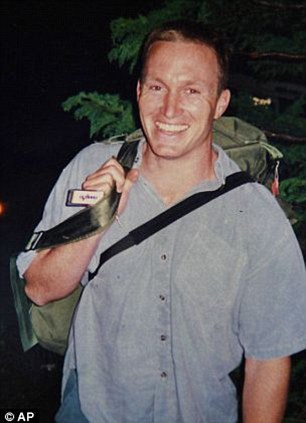

 To put our debt in perspective, Kobe Bryant makes $25 million playing for the Los Angeles Lakers. Any guesses on how many seasons Kobe would have to play in order to pay off today’s national debt? How about a whopping 560,000. That’s chilling, and quite frankly, incomprehensible.
 Utah’s senior Sen. Orrin Hatch doesnt see it that way. He’s looking for a vote on his balanced budget amendment too, but at a time believed to be the most opportune for passage. He hasn’t set firm timetables or made any strict demands.
 “If this is going to get passed in the next two years,” says Hatch, “President Obama will have to step to the plate. Ultimately you’ll need presidential leadership because everybody knows that you’re not going to get spending under control until we take on entitlements as well. You cannot do it without presidential leadership.”


 The Daily Hatch