Science Matters #2: Former supermodel Kathy Ireland tells Mike Huckabee about how she became pro-life after reading what the science books have to say. Everyone remembers Kathy Ireland from her Sports Illustrated days and actually she has became a very successful business person. However, I wanted to talk about her pro-life views. Back on […]
Richard Dawkins comments on Tim Tebow pro-life commercial. I am sad today because Susan G. Komen reversed their decision and will continue to supports Planned Parenthood which the USA’s largest abortion provider. The Arkansas Times Blog reported that the leader of Susan G. Komen apologized and explained that Planned Parenthood would be receiving funds from […]
This is going to take two posts to cover. Jason Tolbert hit the nail on the head in his recent post: It seems Democratic Rep. Garry Smith of El Dorado stepped into a bit of a mess this week when speaking to the newly formed Union County Democratic Club. Perhaps he wasn’t aware that intrepid […]
On the Arkansas Times blog in the comment section the person using username “Hackett” asserted: Life begins when the fetus is viable outside the womb, prior to that it is parasitical and lives at the discretion of the host. I responded with this post today: It seems to me the real argument lies in the […]
Richard Dawkins comments on Tim Tebow pro-life commercial. _________________________ On the Arkansas Times Blog, a person with the username “November” posted: You dont have the “choice” to kill and innocent child in the womb. No one gave the child a trial before killing it. The child is innocent, and the U S Constitution says you […]
PHOTO BY STATON BREIDENTHAL Marchers arrive at the state Capitol on Sunday after beginning the Arkansas March for Life in downtown Little Rock As in the past, the pr0-life March in Little Rock had at least twenty times the people in attendance that the pr0-abortion march did the previous day. In fact, last year Channel […]
Superbowl commercial with Tim Tebow and Mom. In Little Rock on January 21, 2012 in front of 100 pro-choice advocates met next to the Capitol to hear Loretta Ross speak. In that talk she pointed out something about her own experience. (Below is from another speech in which she recounts some of the same details.) […]
ABORTION – THE SILENT SCREAM 1 / Extended, High-Resolution Version (with permission from APF). Republished with Permission from Roy Tidwell of American Portrait Films as long as the following credits are shown: VHS/DVDs Available American Portrait Films Call 1-800-736-4567 http://www.amport.com The Hand of God-Selected Quotes from Bernard N. Nathanson, M.D., Unjust laws exist. Shall we […]
Superbowl commercial with Tim Tebow and Mom. I used to write letters to the editor a whole lot back in the 1990′s. I am pro-life and many times my letters would discuss current political debates, and I got to know several names of people that would often write in response letters to my published letters. […]
Development of the Unborn Baby. Prolife Video There are people all around you who have been affected by humanism. Abortion is one of the results of humanism. Nevertheless, we can befriend those who are considering abortion and speak into their lives with love and truth. There may be those who say hateful things to us […]
“Jane Roe” or Roe v Wade is now a prolife Christian. She’s recently done a commercial about it. Around 1993 my wife Jill and I peacefully walked the streets of Little Rock with Rev Flip Benham who was working with Operation Rescue at the time. We held pro-life signs up and heard some moving stories […]
Bill O’Reilly Interviews Jehmu Greene About Pro-Life Super Bowl Ad about Tim Tebow I got these quotes from someone off the internet that lives in England. The funny thing is the video is put to music and the song they picked won a grammy for an Arkansas band that lives in Little Rock. Here is […]
Tennessee Volunteers quarterback Tyler Bray (8) looks for an open receiver during the second half of their 51-44 loss to Georgia Saturday, Sep. 29, 2012 at Sanford Stadium in Athens, Ga. (MICHAEL PATRICK/NEWS SENTINEL)
When you talking about top 10 teams then you are talking about SEC teams usually these days. No. 3 LSU 38, Towson 22!! Evidently Towson had the lead in this game and LSU came back and won. I wonder if LSU is as good as I thought they were?
Tennessee gave Georgia a run for their money and had their chances to win. Tyler Bray missed some open receivers right before the Vols had a punt blocked late. If Bray had been on target the two plays previous to the punt then the Vols would have picked up the first down.
I am not going to talk about Arkansas today since it is really a pitiful case. I will give credit to Texas A&M though since our relative Jason is a big Aggie fan!!!
MORGANTOWN, W.Va. — Geno Smith threw for 656 yards and tied a Big 12 record with eight touchdown passes to lead No. 9 West Virginia to a 70-63 win over No. 25 Baylor on Saturday.
Smith outdueled Baylor’s Nick Florence, who had a standout game of his own with 581 yards and five TDs.
Baylor’s Terrance Williams set a Big 12 record with 314 yards receiving. The old mark was set minutes earlier by West Virginia’s Stedman Bailey, who had 303 yards and five TDs.
Williams’ 8-yard scoring catch brought Baylor (3-1) within 70-63 with 3:08 left.
But Dustin Garrison ran for 17 yards on third down, and the Mountaineers (4-0) ran out the clock.
It marked the most points scored in a game involving a team ranked in the Associated Press poll. The previous record of 124 was set in No. 12 Oklahoma’s 82-42 win over Colorado in 1980.
No. 3 LSU 38, Towson 22: Zach Mettenberger connected with Odell Beckham Jr. five times for 128 yards and two touchdowns, and host LSU overcame nagging offensive sloppiness in a victory over overmatched but feisty Towson.
No. 4 Florida State 30, South Florida 17: EJ Manuel threw for 242 yards and a touchdown, helping Florida State remain unbeaten with a victory over host South Florida. Receiver Rashad Greene got the Seminoles going with a 10-yard touchdown run, Christian Jones scored on a 12-yard fumble return and Penn State transfer Kevin Haplea had a 1-yard TD reception as the Seminoles (5-0) survived their first road test of the season by pulling away from a three-point lead with two TDs and a field goal in the final 5:09 of the third quarter.
No. 5 Georgia 52, Tennessee 44: Todd Gurley ran for three touchdowns and Keith Marshall added two as Georgia recovered after blowing a 17-point lead to beat Tennessee in the highest-scoring game ever between the SEC rivals. Host Georgia (5-0, 3-0 SEC), which had never scored more points against the Volunteers, locked it up with three takeaways in the final six minutes. No. 6 South Carolina 38, Kentucky 17: Marcus Lattimore ran for two touchdowns and Connor Shaw passed for another in the second half as visiting South Carolina scored 31 straight points for a victory against Kentucky.
No. 15 TCU 24, SMU 16: Casey Pachall threw two touchdown passes, Jason Verrett had two interceptions and TCU extended its FBS-best winning streak to 12 games by beating host SMU.
No. 17 Clemson 45, Boston College 31: Tajh Boyd threw for 367 yards and three touchdowns and ran in another himself as Clemson beat host Boston College. Boyd completed 28 of 38 passes and ran 11 times for 42 yards and a TD for Clemson (4-1, 1-1 Atlantic Coast Conference). DeAndre Hopkins caught 11 passes for 197 yards for the Tigers, who bounced back after blowing a two-touchdown lead and losing, 49-37, to No. 4 Florida State last week.
No. 24 Boise State 32, New Mexico 29: Joe Southwick passed for 311 yards and three touchdowns and Timmy Smith knocked down a fourth-down pass with two minutes to go to help visiting Boise State beat New Mexico.
MIAMI 44, N.C. STATE 37: Stephen Morris threw for a school-record 566 yards and five touchdowns, the last of those a 62-yard strike to Phillip Dorsett with 19 seconds left, and host Miami beat North Carolina State for the Hurricanes’ first three-game winning streak since 2009.
Cincinnati 27, Virginia Tech 24: Munchie Legaux hit Damon Julian for a 39-yard touchdown pass with 13 seconds to play, and Cincinnati beat Virginia Tech at Landover, Md. Trailing by four after a Hokies touchdown, the Bearcats (3-0) took over at their own 15 with 1:43 to play and moved downfield in nine plays for the score.
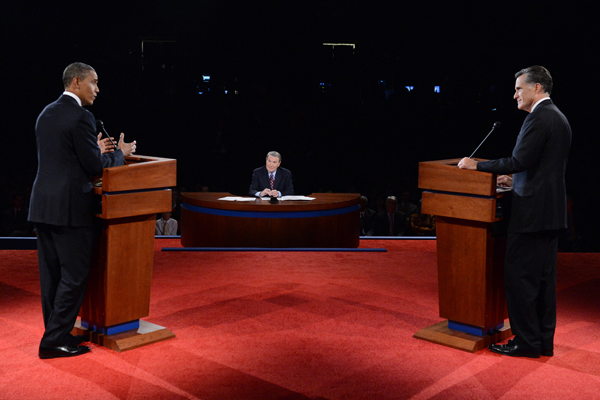
Barack Obama & Mitt Romney Full Presidential Debate
__________
Setting the record straight on the first presidential debate is very easy if you are a reader of the Heritage Foundation website!!! Here are some examples below taken from Romina Boccia‘s excellent article from October 4, 2012:
During last night’s presidential debate, claims were flying fast and furious. Some of these claims were true, others false. Here are the top 10—see which ones you can guess as either true or false.
4. Romney would cut taxes by $5 trillion.
Obama: “Governor Romney’s central economic plan calls for a $5 trillion tax cut.”
False.Governor Romney’s tax plan doesn’t cut taxes. His plan is revenue neutral.
5. Dodd–Frank promises to bail out “too-big-to-fail” firms.
Romney: “Dodd–Frank was passed. And it includes within it a number of provisions that I think has some unintended consequences that are harmful to the economy. One is it designates a number of banks as too big to fail, and they’re effectively guaranteed by the federal government.”
6. The oil industry receives $4 billion in corporate welfare that other businesses don’t get.
Obama: “The oil industry gets $4 billion a year in corporate welfare. Basically, they get deductions that those small businesses that Governor Romney refers to, they don’t get.”
False.A large part of that $4 billion figure comes from a broadly available tax provision and expensing options. These are neither subsidies nor corporate welfare. The tax deduction, under Internal Revenue Code Section 199, goes to all domestic manufacturing. Producers of clothing, roads, electricity, water, renewable energy projects, and many other things produced in the United States are eligible for the manufacturer’s tax deduction—including Hollywood movies.
FIRST PRESIDENTIAL DEBATE – Barack Obama VS Mitt Romney (Part 4)
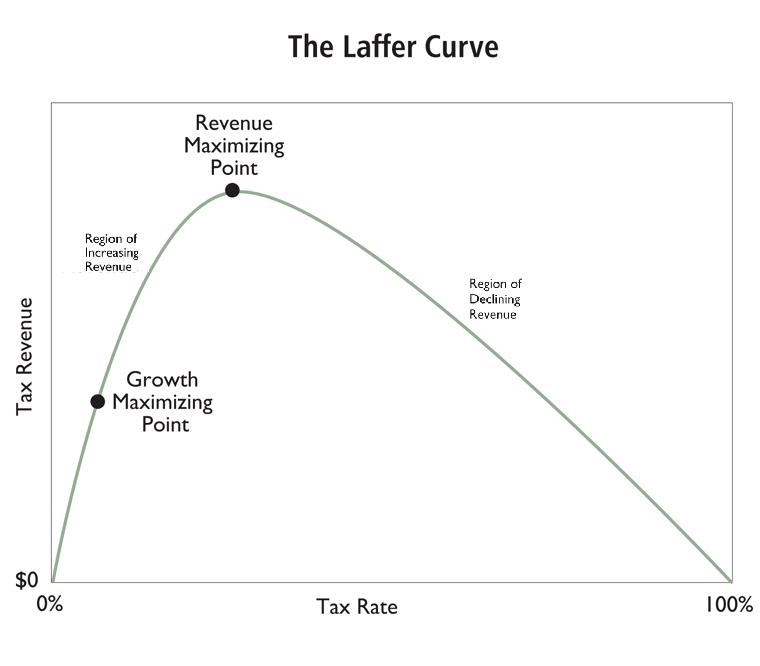
But it recently crossed my mind that maybe President Obama was born in Denmark. Not in a serious way, of course, but you’ll understand my thought process when you read this passage from a report by the government-appointed Danish Economic Council. It doesn’t mention the Laffer Curve, but the report openly states that an increase in the top tax rate would lose revenue because of changes in taxpayer behavior.
…increased taxation on high income earners in Denmark at best is revenue neutral, and may even reduce total tax revenue. This result applies whether one considers the top 10, the top 5 or the top 1 per cent income group. …Using the base estimate of the elasticity of taxable labour income of 0.2, the conclusion is thus that the existing Danish tax system implies an effective tax rate on high income earners that is above – though close to – the tax rate that generates the highest tax revenue. …As an example, the revenue effect of an increase in the marginal tax rate by 6 percentage points for high-income earners is calculated. Using the base estimate of the behavioural response to taxation, this leads to a revenue loss of about ½ billion DKK. …Overall, the scope for acquiring extra tax revenue from high income earners in Denmark is very limited.
Yet there are some politicians in Denmark who want to raise tax rates, even though the damage to the economy will be so significant that the government loses revenue!
By the way, the Danish study probably understates how much revenue the government would lose. Their base estimate about the elasticity of taxable labor income (economist jargon for how sensitive labor income is to changes in tax rates) is much lower than Alan Reynolds reported in his recent Wall Street Journal column.
I’m constantly amazed – in a bad way – that politicians and bureaucrats have been so successful in resisting the insights of the Laffer Curve. The U.S. Treasury Department, for instance, is to the left of the Danish Economic Council and basically assumes that tax policy has no impact on economic performance. The same can be said about the Joint Committee on Taxation on Capitol Hill.
This has to be a case of leftist ideology trumping reality, because the evidence for the Laffer Curve is quite powerful – some of it even being produced by international bureaucracies.
None of this is to suggest that “all tax cuts pay for themselves.” That only happens in unusual cases where a group of taxpayers – such as wealthy entrepreneurs and investors – have considerable flexibility in their economic affairs.
In most cases, the government will collect more revenue when tax rates increase. This is because the impact of the change in the tax rate is larger than the impact of the change in taxable income.
But the real question is whether it is ever a good idea to reduce private economic output in order to give politicians more money to spend. To sensible people, that’s the most important insight of the Laffer Curve.
P.S. While this discussion has focused on the foolishness of setting tax rates so high that the government loses revenue, this does not mean politicians should seek the revenue-maximizing tax rate. The ideal point on the Laffer Curve is the growth-maximizing tax rate.
Barack Obama & Mitt Romney Full Presidential Debate
__________
Setting the record straight on the first presidential debate is very easy if you are a reader of the Heritage Foundation website!!! Here are some examples below taken from Romina Boccia‘s excellent article from October 4, 2012:
During last night’s presidential debate, claims were flying fast and furious. Some of these claims were true, others false. Here are the top 10—see which ones you can guess as either true or false.
1. Governor Mitt Romney’s tax plan would burden the middle class.
President Obama: “[I]ndependent studies looking at this said the only way to meet Governor Romney’s pledge of not reducing the deficit or—or—or not adding to the deficit is by burdening middle-class families.”
Former Governor Romney: “You’ve raised [taxes] by $1 trillion under Obamacare [and] cut Medicare by $716 billion.”
True.Over the coming decade, Obamacare’s taxes will reach $1 trillion, including new taxes on workers’ wages and capital income, as well as taxes on insurers and manufacturers of medical products. Obamacare also cuts Medicare by $716 billion from 2013 to 2022 and uses the savings to pay for other provisions in Obamacare, not to help shore up Medicare’s finances. Many of Obamacare’s 18 new or increased taxes and penalties would fall directly on the middle class—like the ever-controversial individual mandate tax, which is primarily paid by middle- and low-income Americans, as reported by the Congressional Budget Office.
3. Seniors would receive vouchers under Medicare reform.
Obama: “The idea, which was originally presented by Congressman Ryan, your running mate, is that we would give a voucher to seniors and they could go out in the private marketplace and buy their own health insurance.”
False.There is no premium support proposal that would issue seniors a voucher. The Ryan proposal, like all major premium support models, is a defined-contribution system that would provide direct payment from the government to a health plan of a person’s choice, including traditional Medicare. Health plans would have to meet government standards, including benefit standards of the traditional Medicare program, plus new and much-needed protections against the costs of catastrophic illness. Moreover, Congressman Ryan is not the first to propose premium support; its origins are bipartisan and date back to the 1990s.
FIRST PRESIDENTIAL DEBATE – Barack Obama VS Mitt Romney (Part 2)
1980 Presidential Candidate Debate: Governor Ronald Reagan and President Jimmy Carter – 10/28/80
Above is the video of the complete debate. Below is the first part of the transcript that deals with the issue of terrorism among other things. This segment begins at 35:35 minute mark.
BARBARA WALTERS: Mr. President, the eyes of the country tonight are on the hostages in Iran. I realize this is a sensitive area, but the question of how we respond to acts of terrorism goes beyond this current crisis. Other countries have policies that determine how they will respond. Israel, for example, considers hostages like soldiers and will not negotiate with terrorists. For the future, Mr. President, the country has a right to know, do you have a policy for dealing with terrorism wherever it might happen, and, what have we learned from this experience in Iran that might cause us to do things differently if this, or something similar, happens again?
MR. CARTER: Barbara, one of the blights on this world is the threat and the activities of terrorists. At one of the recent economic summit conferences between myself and the other leaders of the western world, we committed ourselves to take strong action against terrorism. Airplane hijacking was one of the elements of that commitment. There is no doubt that we have seen in recent years – in recent months – additional acts of violence against Jews in France and, of course, against those who live in Israel, by the PLO and other terrorist organizations. Ultimately, the most serious terrorist threat is if one of those radical nations, who believe in terrorism as a policy, should have atomic weapons. Both I and all my predecessors have had a deep commitment to controlling the proliferation of nuclear weapons. In countries like Libya or Iraq, we have even alienated some of our closest trade partners because we have insisted upon the control of the spread of nuclear weapons to those potentially terrorist countries. When Governor Reagan has been asked about that, he makes the very disturbing comment that non-proliferation, or the control of the spread of nuclear weapons, is none of our business. And recently when he was asked specifically about Iraq, he said there is nothing we can do about it. This ultimate terrorist threat is the most fearsome of all, and it’s part of a pattern where our country must stand firm to control terrorism of all kinds.
MR. SMITH: Ms. Walters, a follow up?
MS. WALTERS: While we are discussing policy, had Iran not taken American hostages. I assume that, in order to preserve our neutrality, we would have stopped the flow of spare parts and vital war materials once war broke out between Iraq and Iran. Now we’re offering to lift the ban on such goods if they let our people come home. Doesn’t this reward terrorism, compromise our neutrality, and possibly antagonize nations now friendly to us in the Middle East?
MR. CARTER: We will maintain our position of neutrality in the Iran and Iraq war. We have no plans to sell additional materiel or goods to Iran, that might be of a warlike nature. When I made my decision to stop all trade with Iran as a result of the taking of our hostages, I announced then, and have consistently maintained since then, that if the hostages are released safely, we would make delivery on those items which Iran owns – which they have bought and paid for – also, that the frozen Iranian assets would be released. That’s been a consistent policy, one I intend to carry out.
MR. SMITH: Would you repeat the question now for Governor Reagan, please, Ms. Walters?
MS. WALTERS: Yes. Governor, the eyes of the country tonight remain on the hostages in Iran, but the question of how we respond to acts of terrorism goes beyond this current crisis. There are other countries that have policies that determine how they will respond. Israel, for example, considers hostages like soldiers and will not negotiate with terrorists. For the future, the country has the right to know, do you have a policy for dealing with terrorism wherever it might happen, and what have we learned from this experience in Iran that might cause us to do things differently if this, or something similar, should happen again?
MR. REAGAN: Barbara, you’ve asked that question twice. I think you ought to have at least one answer to it. I have been accused lately of having a secret plan with regard to the hostages. Now, this comes from an answer that I’ve made at least 50 times during this campaign to the press, when I am asked have you any ideas of what you would do if you were there? And I said, well, yes. And I think that anyone that’s seeking this position, as well as other people, probably, have thought to themselves, what about this, what about that? These are just ideas of what I would think of if I were in that position and had access to the information, and which I would know all the options that were open to me. I have never answered the question, however; second, the one that says, well, tell me, what are some of those ideas? First of all, I would be fearful that I might say something that was presently under way or in negotiations, and thus expose it and endanger the hostages, and sometimes, I think some of my ideas might require quiet diplomacy where you don’t say in advance, or say to anyone, what it is you’re thinking of doing. Your question is difficult to answer, because, in the situation right now, no one wants to say anything that would inadvertently delay, in any way, the return of those hostages if there if there is a chance that they’re coming home soon, or that might cause them harm. What I do think should be done, once they are safely here with their families, and that tragedy is over – we’ve endured this humiliation for just lacking one week of a year now – then, I think, it is time for us to have a complete investigation as to the diplomatic efforts that were made in the beginning, why they have been there so long, and when they came home, what did we have to do in order to bring that about – what arrangements were made? And I would suggest that Congress should hold such an investigation. In the meantime, I’m going to continue praying that they’ll carne home.
MR. SMITH: Follow up question.
MS. WALTERS: I would like to say that neither candidate answered specifically the question of a specific policy for dealing with terrorism, but I will ask Governor Reagan a different follow-up question. You have suggested that there would be no Iranian crisis had you been President, because we would have given firmer support to the Shah. But Iran is a country of 37 million people who are resisting a government that they regarded as dictatorial. My question is not whether the Shah’s regime was preferable to the Ayatollah’s, but whether the United States has the power or the right to try to determine what form of government any country will have, and do we back unpopular regimes whose major merit is that they are friendly to the United States?
MR. REAGAN: The degree of unpopularity of a regime when the choice is total authoritarianism totalitarianism, I should say, in the alternative government, makes one wonder whether you are being helpful to the people. And we’ve been guilty of that. Because someone didn’t meet exactly our standards of human rights, even though they were an ally of ours, instead of trying patiently to persuade them to change their ways, we have, in a number of instances, aided a revolutionary overthrow which results in complete totalitarianism, instead, for those people. I think that this is a kind of a hypocritical policy when, at the same time, we’re maintaining a detente with the one nation in the world where there are no human rights at all – the Soviet Union. Now, there was a second phase in the Iranian affair in which we had something to do with that. And that was, we had adequate warning that there was a threat to our embassy, and we could have done what other embassies did – either strengthen our security there, or remove our personnel before the kidnap and the takeover took place.
MR. SMITH: Governor, I’m sorry, I must interrupt. President Carter, you have a minute for rebuttal.
MR. CARTER: I didn’t hear any comment from Governor Reagan about what he would do to stop or reduce terrorism in the future. What the Western allies did decide to do is to stop all air flights – commercial air flights – to any nation involved in terrorism or the hijacking of air planes, or the harboring of hijackers. Secondly, we all committed ourselves, as have all my predecessors in the Oval Office not to permit the spread of nuclear weapons to a terrorist nation, or to any other nation that does not presently have those weapons or capabilities for explosives. Third, not to make any sales of materiel or weapons to a nation which is involved in terrorist activities. And, lastly, not to deal with the PLO until and unless the PLO recognizes Israel’s right to exist and recognizes UN Resolution 242 as a basis for Middle East peace. These are a few of the things to which our nation is committed, and we will continue with these commitments.
MR. SMITH: Governor Reagan, you have the last word on that question.
MR. REAGAN: Yes. I have no quarrel whatsoever with the things that have been done, because I believe it is high time that the civilized countries of the world made it plain that there is no room worldwide for terrorism; there will be no negotiation with terrorists of any kind. And while I have a last word here, I would like to correct a misstatement of fact by the President. I have never made the statement that he suggested about nuclear proliferation and nuclear proliferation, or the trying to halt it, would be a major part of a foreign policy of mine.
Government officials always think they know better how to spend money than the private individual. We have a huge government deficit today that demonstrates that the government does not know best. Below are some wise words from Milton Friedman:
“The strongest argument for free enterprise is that it prevents anybody from having too much power. Whether that person is a government official, a trade union official, or a business executive. If forces them to put up or shut up. They either have to deliver the goods, produce something that people are willing to pay for, are willing to buy, or else they have to go into a different business.”
“Free to Choose” (1980), segment 2 of 10, “The Tyranny of Control”
Inflation is always and everywhere a monetary phenomenon in the sense that it is and can be produced only by a more rapid increase in the quantity of money than in output.… A steady rate of monetary growth at a moderate level can provide a framework under which a country can have little inflation and much growth. It will not produce perfect stability; it will not produce heaven on earth; but it can make an important contribution to a stable economic society.
The Counter-Revolution in Monetary Theory (1970)
On the level of political principle, the imposition of taxes and the expenditure of tax proceeds are governmental functions. We have established elaborate constitutional, parliamentary and judicial provisions to control these functions, to assure that taxes are imposed so far as possible in accordance with the preferences and desires of the public — after all, “taxation without representation” was one of the battle cries of the American Revolution. We have a system of checks and balances to separate the legislative function of imposing taxes and enacting expenditures from the executive function of collecting taxes and administering expenditure programs and from the judicial function of mediating disputes and interpreting the law.
Here the businessman — self-selected or appointed directly or indirectly by stockholders — is to be simultaneously legislator, executive and, jurist. He is to decide whom to tax by how much and for what purpose, and he is to spend the proceeds — all this guided only by general exhortations from on high to restrain inflation, improve the environment, fight poverty and so on and on.
The political principle that underlies the market mechanism is unanimity. In an ideal free market resting on private property, no individual can coerce any other, all cooperation is voluntary, all parties to such cooperation benefit or they need not participate. There are no values, no “social” responsibilities in any sense other than the shared values and responsibilities of individuals. Society is a collection of individuals and of the various groups they voluntarily form.
The political principle that underlies the political mechanism is conformity. The individual must serve a more general social interest — whether that be determined by a church or a dictator or a majority. The individual may have a vote and say in what is to be done, but if he is overruled, he must conform. It is appropriate for some to require others to contribute to a general social purpose whether they wish to or not. Unfortunately, unanimity is not always feasible.There are some respects in which conformity appears unavoidable, so I do not see how one can avoid the use of the political mechanism altogether.
“The Social Responsibility of Business is to Increase its Profits” in The New York Times Magazine (13 September 1970)
So the question is, do corporate executives, provided they stay within the law, have responsibilities in their business activities other than to make as much money for their stockholders as possible? And my answer to that is, no they do not.
Interview “Milton Friedman Responds” in Chemtech (February 1974) p. 72.
There is no place for government to prohibit consumers from buying products the effect of which will be to harm themselves.
Free to Choose (1980), segment Who protects the consumer?
“The strongest argument for free enterprise is that it prevents anybody from having too much power. Whether that person is a government official, a trade union official, or a business executive. If forces them to put up or shut up. They either have to deliver the goods, produce something that people are willing to pay for, are willing to buy, or else they have to go into a different business.”
“Free to Choose” (1980), segment 2 of 10, “The Tyranny of Control”
Governments never learn. Only people learn.
Statement made in 1980, as quoted in The Cynic’s Lexicon : A Dictionary Of Amoral Advice (1984), by Jonathon Green, p. 77
With some notable exceptions, businessmen favor free enterprise in general but are opposed to it when it comes to themselves.
Lecture “The Suicidal Impulse of the Business Community” (1983); cited in Filters Against Folly (1985) by Garrett HardinISBN 067080410X
The broader and more influential organisations of businessmen have acted to undermine the basic foundation of the free market system they purport to represent and defend.
Lecture “The Suicidal Impulse of the Business Community” (1983); cited in Filters Against Folly (1985) by Garrett Hardin
After appearing on the television program, “Who Do You Think You Are,” Gwyneth Paltrow has decided to raise children Apple, 7, and Moses, 5, as Jewish.
According to The Daily Mail, the NBC ancestry show sparked the discovery that the actress descended from a notable line of Eastern European rabbis. Though she’s long practiced Kabbalah, Gwyneth had previously stayed neutral about a formal religion upbringing in her household, which includes crooner husband Chris Martin, who is of Christian background.
“I don’t believe in religion. I believe in spirituality. Religion is the cause of all the problems in the world,” the actress once told The Daily Mail.
_______________
Below is a letter I mailed to Chris and Gwyneth recently:
To Chris Martin and Gwyneth Paltrow, c/o Go Go Pictures, 12 Cleveland Row, London, SW1A 1DH, United Kingdom, , From Everette Hatcher, 13900 Cottontail Lane, Alexander, AR 72002, USA:
I have been a huge fan of both of you and have posted many times on my blog about your religious views which have seemed to have changed over the years. I know that Chris was brought up as an evangelical Christian, but has long ago left the faith behind although he did revisit many biblical themes in his 2008 and 2011 cds.
I have shown what thought processes Solomon went through in Ecclesiastes and then compared them to the evident changes that are occurring with Coldplay. By the way, the final chapter of Ecclesiastes finishes with Solomon emphasizing that serving God is the only proper response of man. My prediction: I am hoping that Coldplay’s next album will also come to that same conclusion that Solomon came to in Ecclesiastes 12:13-14: 13 Now all has been heard; here is the conclusion of the matter: Fear God and keep his commandments, for this is the whole duty of man.
14 For God will bring every deed into judgment, including every hidden thing, whether it is good or evil.
I have also written before about Gwyneth’s famous Jewish relatives which includes a famous Rabbi and I have wondered if she would decide to return to those roots. Actually that is what has happened. I salute you for rejecting your earlier statements against organized religion and for making the decision to teach your children the Bible and to have faith in God.
I know that you will spending lots of time in the scriptures and I wanted to share with you some key scriptures that talk about the Messiah. Today I will look at some scriptures from Psalms 22:
The LORD Jesus Christ was fulfilling another prophecy (Matthew 27:46) as it is written in Psalm 22:1. Psalm 22 is shown below here to show the importance of Jesus Christ saying on the cross “My God, my God, why hast thou forsaken me?” This was very important to show that Jesus Christ was the Messiah as prophesized in the Old testament! Jesus Christ quoted Psalm 22:1 because of the fulfilled prophecies contained in Psalm 22 that prove that Jesus Christ is the Messiah! (Jesus fulfilled 33 prophecies on the day of his crucifixion). God The Father, sent His Son to pay the price for sin. THERE IS NO OTHER CHAPTER IN THE HOLY BIBLE THAT HAS MORE FULFILLED PROPHECIES THAN PSALM 22.
Romans 6:23 “for the wages of sin is death….but eternal life is through Jesus Christ our LORD.”
God cannot look at sin. Period. One sin is death. One sin will separate us from God for he cannot look at sin.
Ephesians 2:13 But now in Christ Jesus ye who sometimes were far off are made nigh by the blood of Christ. Ephesians 2:14 For he is our peace, who hath made both one, and hath broken down the middle wall of partition [between us]; Ephesians 2:15 Having abolished in his flesh the enmity, [even] the law of commandments [contained] in ordinances; for to make in himself of twain one new man, [so] making peace; Ephesians 2:16 And that he might reconcile both unto God in one body by the cross, having slain the enmity thereby:
While Jesus Christ did not sin (1Peter 1:19 But with the precious blood of Jesus Christ, as of a lamb without blemish and without spot:), He died for our sins as shown in Hebrews 9:14. 2 Corinthians 5:21 For he hath made him [to be] sin for us, who knew no sin; that we might be made the righteousness of God in him.
Hebrews 9:14 How much more shall the blood of Christ, who through the eternal Spirit offered himself without spot to God, purge your conscience from dead works to serve the living God?
Why is blood so important? For the life of the flesh is in the blood (Leviticus 17:11). Blood is the payment for sin.
Leviticus 17:11 For the life of the flesh is in the blood: and I have given it to you upon the altar to make an atonement for your souls: for it is the blood that maketh an atonement for the soul. Leviticus 17:14 For [it is] the life of all flesh; the blood of it [is] for the life thereof: Hebrews 9:22 And almost all things are by the law purged with blood; and without shedding of blood is no remission. Jesus Christ dieing on the cross AND shedding his precious blood satisfied once and for ALL, the full payment for sin. Hebrews 10:4 For it is not possible that the blood of bulls and of goats should take away sins. Hebrews 10:19 Having therefore, brethren, boldness to enter into the holiest by the blood of Jesus.
Jesus Christ’s blood atones for all of our sins. Hebrews 13:12 Wherefore Jesus also, that he might sanctify the people with his own blood, suffered without the gate. Colossians 1:14 In whom we have redemption through his blood, even the forgiveness of sins: Revelation 1:5 And from Jesus Christ, who is the faithful witness, and the first begotten of the dead, and the prince of the kings of the earth. Unto him that loved us, and washed us from our sins in his own blood,
The Son was not forsaken, the sin was forsaken, more specifically, Jesus Christ was in the likeness of sinful flesh to condemn sin in the flesh (Romans 8:3). Attonement for all sin was fulfilled the instant his blood was shed for the remission of our sins to satisfy the old covenant.
Romans 8:32 “He that spared not his own Son,…” Romans 8:3 For what the law could not do, in that it was weak through the flesh, God sending his own Son in the likeness of sinful flesh, and for sin, condemned sin in the flesh: 2 Corinthians 5:21 For he hath made him [to be] sin for us, who knew no sin; that we might be made the righteousness of God in him.
Acts 2:[27] Because thou wilt not leave my soul in hell, neither wilt thou suffer thine Holy One to see corruption. [31] He seeing this before spake of the resurrection of Christ, that his soul was not left in hell, neither did his flesh see corruption. [32] This Jesus hath God raised up, whereof we all are witnesses. [33] Therefore being by the right hand of God exalted, and having received of the Father the promise of the Holy Ghost, he hath shed forth this, which ye now see and hear. John 2:[19] Jesus answered and said unto them, Destroy this temple, and in three days I will raise it up. John 10:[18] No man taketh it from me, but I lay it down of myself. I have power to lay it down, and I have power to take it again. This commandment have I received of my Father. Revelation 1:[18] I [am] he that liveth, and was dead; and, behold, I am alive for evermore, Amen; and have the keys of hell and of death. Romans 6:[9] Knowing that Christ being raised from the dead dieth no more; death hath no more dominion over him. Ephesians 4:[9] Now that he ascended, what is it but that he also descended first into the lower parts of the earth? Matthew 12:[40] For as Jonas was three days and three nights in the whale’s belly; so shall the Son of man be three days and three nights in the heart of the earth. 1Peter 3:[19] By which also he went and preached unto the spirits in prison;
Jesus Christ bore the wrath of God for us, through the shedding of his own precious sinless blood on the cross, so that we, thru faith in the LORD Jesus Christ, may have eternal life. The sin was forsaken by the Father and Jesus Christ proves that believers in his name will have eternal life by virtue of the resurrection from the dead. Amen.
1Thessalonians 1:[10] And to wait for his Son from heaven, whom he raised from the dead, [even] Jesus, which delivered us from the wrath to come. Note: The FULFILLMENT of Verse 18 in Psalm 22 is negated by the omission of Matthew 27:35 out of the following bible translations: NIV, NASV, RSV, NSRV, Living Bible, New Concordance. Only the King James Version AV1611 and the New King James Version has this verse, Matthew 27:35.
Psalm. 22 (note: fulfilled prophecies in the New Testament are referenced by the bold print, 7 total)
[1] My God, my God, why hast thou forsaken me? why art thou so far from helping me, and from the words of my roaring?(Matthew 27:46 and Mark 15:34 was fulfilled by Jesus Christ) [2] O my God, I cry in the daytime, but thou hearest not; and in the night season, and am not silent. [3] But thou art holy, O thou that inhabitest the praises of Israel. [4] Our fathers trusted in thee: they trusted, and thou didst deliver them. [5] They cried unto thee, and were delivered: they trusted in thee, and were not confounded. [6] But I am a worm, and no man; a reproach of men, and despised of the people. [7] All they that see me laugh me to scorn: they shoot out the lip, they shake the head saying,(Matthew 27:43 was fulfilled by Jesus Christ on the cross. “People mocked, “He trusted in God, let Him deliver him!”) [8] He trusted on the LORD that he would deliver him: let him deliver him, seeing he delighted in him.(Matthew 27:43 was fulfilled by Jesus Christ on the cross. “People mocked, “He trusted in God, let Him deliver him!”) [9] But thou art he that took me out of the womb: thou didst make me hope when I was upon my mother’s breasts. [10] I was cast upon thee from the womb: thou art my God from my mother’s belly. [11] Be not far from me; for trouble is near; for there is none to help. [12] Many bulls have compassed me: strong bulls of Bashan have beset me round. [13] They gaped upon me with their mouths, as a ravening and a roaring lion. [14] I am poured out like water, and all my bones are out of joint: my heart is like wax; it is melted in the midst of my bowels. [15] My strength is dried up like a potsherd; and my tongue cleaveth to my jaws; and thou hast brought me into the dust of death.(John 19:28 After this, Jesus knowing that all things were now accomplished, that the scripture might be fulfilled, saith, I thirst.) [16] For dogs have compassed me: the assembly of the wicked have inclosed me: they pierced my hands and my feet. (John 20:25, 27 was fulfilled by Jesus Christ on the cross.) [17] I may tell all my bones: they look and stare upon me. (Matthew 27:36 was fulfilled by Jesus Christ on the cross. “People sat there looking at Him…”) [18] They part my garments among them, and cast lots upon my vesture. (Matthew 27:35 was fulfilled by Jesus Christ on the cross. Matthew 27:35 And they crucified him, and parted his garments, casting lots: that it might be fulfilled which was spoken by the prophet, They parted my garments among them, and upon my vesture did they cast lots.) [19] But be not thou far from me, O LORD: O my strength, haste thee to help me. [20] Deliver my soul from the sword; my darling from the power of the dog. [21] Save me from the lion’s mouth: for thou hast heard me from the horns of the unicorns. [22] I will declare thy name unto my brethren: in the midst of the congregation will I praise thee. [23] Ye that fear the LORD, praise him; all ye the seed of Jacob, glorify him; and fear him, all ye the seed of Israel. [24] For he hath not despised nor abhorred the affliction of the afflicted; neither hath he hid his face from him; but when he cried unto him, he heard. [25] My praise shall be of thee in the great congregation: I will pay my vows before them that fear him. [26] The meek shall eat and be satisfied: they shall praise the LORD that seek him: your heart shall live for ever. [27] All the ends of the world shall remember and turn unto the LORD: and all the kindreds of the nations shall worship before thee. [28] For the kingdom is the LORD’s: and he is the governor among the nations. [29] All they that be fat upon earth shall eat and worship: all they that go down to the dust shall bow before him: and none can keep alive his own soul. [30] A seed shall serve him; it shall be accounted to the Lord for a generation. [31] They shall come, and shall declare his righteousness unto a people that shall be born, that he hath done this.
Ecclesiastes 1
Published on Sep 4, 2012
Calvary Chapel Spring Valley | Sunday Evening | September 2, 2012 | Pastor Derek Neider
_____________________
Ecclesiastes 2-3
Published on Sep 19, 2012
Calvary Chapel Spring Valley | Sunday Evening | September 16, 2012 | Derek Neider
Senator Kay Bailey Hutchison delivered remarks regarding her landmark proposal on entitlement reform, the Defend and Save Social Security Act at the Heritage Foundation’s “Saving Social Security” event. Sen. Hutchison announced that Senator Jon Kyl (R-AZ), member of Biden’s budget working group, has lent his support of her bill as the original cosponsor. At her press conference last week, Sen. Hutchison unveiled her Social Security proposal, and today she reiterated the urgency of putting Social Security on the table in the Biden budget group discussions. Sen. Hutchison sent a letter to Vice President Joe Biden last week urging him to incorporate Social Security reform in the ongoing deficit reduction debates that he is leading.
___________________
President Obama c/o The White House
1600 Pennsylvania Avenue NW
Washington, DC 20500
If you don’t think that Social Security is in trouble then just consider the fact that the first Baby Boomer just got their first Social Security check at age 65 in 2011 and now we have 19 more years of baby boomers retiring. Also in 2011 Social Security spent $45 billion more in benefits than it took in from its payroll tax. As President of the United States you should be taking the lead in getting Social Security privatized in order to save it. It will fail otherwise.
“There are risks and costs to action. But they are far less than the long-range risks of comfortable inaction.”
—John F. Kennedy
“Lawmakers should not delay addressing the long-run financial challenges facing Social Security and Medicare,” the trustees wrote. “If they take action sooner rather than later, more options and more time will be available to phase in changes so that the public has adequate time to prepare.”
—2012 Social Security trustees report
Social Security’s finances significantly worsened last year, according to the new 2012 trustees report,[1] because of a weakened economy and structural problems with the program. The April 23 report shows that all people who receive Social Security benefits face about a 25 percent benefit cut as soon as 2033—three years earlier than predicted in last year’s report. The program’s long-term deficit is now larger than it was before the 1983 reforms. In order to pay all of its promised benefits, Social Security would require massive annual injections of general revenue tax money in addition to what the program receives from payroll taxes. These additional funds would be needed for the next 75 years and beyond.
Factors Dragging Down Social Security
The poor numbers come from a number of factors, including the continued weakness of the U.S. economy, high energy prices holding down wages, and a significant increase in the number of people who receive benefits from Social Security’s disability program (SSDI). SSDI has its own sub-trust fund that will be exhausted in 2016. While some SSDI costs will be paid from money that would have gone to pay retirement and survivors’ benefits, SSDI recipients face across-the-board benefit reductions in just four years. As this year’s report shows, the need to reform SSDI is as great as the need to fix the rest of the program.
Long-Term Financial Picture Worsens
In net-present-value terms, Social Security owes $11.3 trillion more in benefits than it will receive in taxes. This 2012 number consists of $2.7 trillion to repay the special-issue bonds in the trust fund and $6.5 trillion to pay benefits after the trust fund is exhausted in 2033. This is an increase of $2.2 trillion from last year’s report. This is the largest one-year drop in the program’s finances since 1994.
Net present value is the amount of money that would have to be invested today in order to have enough money on hand to pay deficits in the future. In other words, Congress would have to invest $11.3 trillion today in order to have enough money to pay all of Social Security’s promised benefits through 2086. This money would be in addition to what Social Security receives during those years from its payroll taxes.
The trustees report’s perpetual projection extends beyond the usual 75-year planning horizon. In net-present-value terms, the perpetual projection is $20.5 trillion, including money necessary to repay bonds in the trust fund. Last year’s number was $17.9 trillion.
This means that Social Security’s net-present-value deficit after 2086 is $9.2 trillion. These projections show that the program’s total deficit continues to grow well beyond the 75-year projection period. For that reason, a successful reform would need to eliminate the deficits over the 75-year window and address those that come after that period.
In actuarial terms, Social Security’s long-term financing declined sharply from a 75-year deficit of 2.22 percent of taxable payroll in last year’s report to a deficit of 2.67 percent. This 0.44 percent change resulted mainly from the economy’s continued weakness and the effects of high energy costs.
Social Security Ran Another Deficit Last Year
In 2011, the Old-Age and Survivors Trust Fund, which pays for retirement and survivors’ benefits, took in $698.8 billion, which includes $106.5 billion that came from a paper transaction that credited interest to the trust fund. Excluding the interest, the retirement and survivors program had income of $592.3 billion but paid out $603.8 billion in benefits, leaving a deficit for 2011 of $11.5 billion. Additional deficits were suffered by Social Security’s disability program.
Counting both programs together, in 2011, Social Security spent $45 billion more in benefits than it took in from its payroll tax. This deficit is in addition to a $49 billion gap in 2010 and an expected average annual gap of about $66 billion between 2012 and 2018. These deficits will quickly balloon to alarming proportions. After adjusting for inflation, annual deficits will reach $95 billion in 2020 and $318.7 billion in 2030 before the trust fund runs out in 2033. Now is the time to focus on solutions.
The immediate cash-flow deficits are largely due to the effects of the recession on the program’s finances. The recession increased the amount of benefits paid out by Social Security, as older workers who lost their jobs chose to file for benefits earlier than they might have otherwise. Meanwhile, younger unemployed workers did not pay Social Security taxes, while workers who suffered a drop in their incomes paid lower amounts. However, this year’s projections show that these effects will continue. Higher energy prices are expected to dampen income increases, while the longer-term effects of the recession are likely to hold down the number of hours individuals can work.
Moreover, the condition of Social Security continues to deteriorate in future years so that the overall estimate is further worsened in 2012, when the 75-year financial window shifts to include 2086—a year when Social Security is expected to run a very large deficit.
The Trust Fund Does Not Make Social Security Healthy
The existence of a trust fund does not make Social Security healthy. Although those assets are guaranteed by the full faith and credit of the United States, the bonds it contains must be repaid using general revenue that would otherwise go to other programs. Similarly, the interest that Social Security receives on existing trust fund balances is not spendable income. It merely inflates the numbers in the trust fund and increases the amount that Social Security will eventually receive from general revenue. The only part that counts today is the cash that Social Security receives from the Treasury to cover its annual operating losses.
Many opponents of reform claim that raising payroll taxes by about 2.7 percent (the average percentage difference between revenues and outlays over the 75-year period) would permanently solve Social Security’s problems. The reality, however, is that the program’s future deficits are projected to be both large and growing, so this tax increase would still leave a huge shortfall. Modest changes will not fix the current system.
Delay in Fixing Social Security Will Only Make Matters Even Worse
Congress could have fixed Social Security several years ago but delayed because it feared making the difficult decisions. A further delay in addressing Social Security’s financial problems will only make the situation even worse. The new trustees report is not based on conjecture; it is based on a firm understanding of the economy and the U.S. population. Almost every new taxpayer who will begin a career before 2033 is living today and can be counted. Similarly, all the people who will face approximately 25 percent across-the-board benefit cuts starting in the year 2033 if Congress does nothing to fix the program are alive now, and most of them are paying taxes.
Social Security’s problems are based on demographics that do not change from year to year. The people who will be hurt if nothing is done to fix Social Security are not unknown people of the future: They are the nation’s children and grandchildren of today.
David C. John is Senior Research Fellow in Retirement Security and Financial Institutions in the Thomas A. Roe Institute for Economic Policy Studies at The Heritage Foundation.
___________
Thank you so much for your time. I know how valuable it is. I also appreciate the fine family that you have and your commitment as a father and a husband.
Sincerely,
Everette Hatcher III, 13900 Cottontail Lane, Alexander, AR 72002, ph 501-920-5733, lowcostsqueegees@yahoo.com
Stephen B. Thornton Pro Football Hall of Famer and Pine Bluff native Willie Roaf (left) is glad the NFL could work out a deal with the officials, saying Monday “the replacements were going to cost some teams some games.”
LITTLE ROCK — Pro Football Hall of Famer Willie Roaf says he always appreciated the way NFL officials maintained control of the game.
“Year in and year out, you see the same crews over and over again and you have a lot of respect for them,” said Roaf, 42, who played 13 years as an offensive tackle for the New Orleans Saints and Kansas City Chiefs before retiring after the 2005 season.
But things got out of control when league officials were locked out for the season’s first three weeks and replacement officials filled in, Roaf told members of the Little Rock Touchdown Club at the Embassy Suites hotel Monday,
“You don’t see guys bumping and shoving refs,” said Roaf, who grew up in Pine Bluff and played for Pine Bluff High School before attending Louisiana Tech. “That doesn’t happen.”
The low point occurred Sept. 24 when the Seattle Seahawks defeated the Green Bay Packers 14-12 on a “Hail Mary” touchdown pass from Russell Wilson to Golden Tate and replays showed the Green Bay defensive back M.D. Jennings (Arkansas State) grabbed the ball first before Tate got his hands on it. After a mandatory replay review, officials did not have indisputable evidence to overturn the call.
Two night later, the NFL and its officials agreed on a new eight-year agreement.
“It’s good to have them back because the replacements were going to cost some teams some games,” Roaf said. “Look at Green Bay, there were in a tough spot after that game Monday night.
“The big thing was the refs got to keep their pension and the NFL can hire some younger guys to replace some of the older officials.”
Roaf said he was honored to go into the Hall of Fame two months ago as part of a “blue-collar class” that included a second Arkansas-born inductee, former Seattle Seahawks defensive tackle Cortez Kennedy, who was born in Osceola, grew up in Wilson and played at Rivercrest before attending the University of Miami.
“It was great to go in with Cortez, and it was a class in which none of us were stars and I was very happy to go in with them,” Roaf said.
When asked about the plight of the 0-4 New Orleans Saints and the 1-4 Arkansas Razorbacks, Roaf, who played at Louisiana Tech, discussed the similarities of the Saints playing without Coach Sean Payton, who is suspended for the season for his role in the bounty scandal, while the Razorbacks are playing the season with John L. Smith, who is on a 10-month contract after he was hired in April after Bobby Petrino was fired.
“It’s a tough situation because you know Sean makes a difference and provides a lot of leadership and when you look at Arkansas, you saw how much Bobby Petrino made a difference, especially on offense,” Roaf said. “I predicted the Saints would win 10 games and they played hard in Green Bay, but they’re in a tough situation.”
Roaf, who lives in Newport, Calif., came back to Arkansas after stopping off in Kansas City, Mo., over the weekend where his former teammate Will Shields was inducted into the Chiefs Ring of Honor. He also plans on spending a couple of weeks in the state, visiting friends and family members.
I really enjoyed the Little Rock Touchdown Club on Monday Oct 1, 2012. He was passed over by the Razorbacks and other big time schools because of his size but he turned out to be a very special player. Jim Harris: Willie Roaf Stands Tall For Pine Bluff, State As NFL Hall Of Famer by […]
I enjoyed hearing Willie speak today at the Little Rock Touchdown Club. He actually played with the New Orleans Saints the same time that Wayne Martin did. He got block some NFL greats like Reggie White, Kevin Green and Tim Harris. Here is a great story about Willie below: Willie Roaf’s road to greatness Wright […]
I enjoyed the speech today. It was extremely short then he took questions. Here is a rundown from Arkansas Sports 360. John L. Smith Was Apparently John L. Smith Today At The Little Rock Touchdown Club <!– 51 –> by ArkansasSports360.com Staff 9/24/2012 at 1:04pm Image by Trent Ogle John L. Smith is apparently being […]
John L. Smith is to speak at the Little Rock Touchdown Club on Monday Sept 24, 2011. I am proud of him for showing up. Bill Vickery had some comments on the debacle on Saturday. Vickery said it totally removed the earlier nightmare he had since he was 7 years old when he witnessed his […]
Randy White spoke at the Little Rock Touchdown Club yesterday. He did a great job. I have always been a big Dallas Cowboy fan. Here is a story from Arkansas Sports 360: HOW ‘BOUT THEM COWBOYS: The Touchdown Club welcomed Randy White to town this Monday. The former Dallas Cowboy defensive tackle is one of […]
I have written a lot about the Dallas Cowboys in the past. One of my favorite stories is getting to ask Pat Summerall a question about Tom Landry and his answer was a classic one. I simply asked him if he had a chance to interact with any Christian Coaches like Tony Dungy or Tom […]
I got to see Matt Jones speak on 9-10-12 at the Little Rock Touchdown Club and I was proud of him for opening up concerning what brought his career to an end. Drugs can derail a great career. Take a look at what happened to Matt Jones: Taken in the first round by the Jacksonville […]
My son Hunter and I got to hear Matt Jones speak on 9-10-12 at the Little Rock Touchdown Club. When asked about what to do when you are up against a wall like this team is, he responded that he remembers how it felt to lose in the 6 overtime game in Knoxville and to […]
I got to hear Howard Schnellenberger speak on Sept 4, 2012 at the Little Rock Touchdown Club. I did not know that he played football for the University of Kentucky. In fact, just last year Kentucky ended a long losing streak to Tennessee by winning in Lexington. Schnellenberger was responsible for catching the winning touchdown […]
I got to hear Howard Schnellenberger speak at the Little Rock Touchdown Club on Tuesday Sept 4, 2012. Schnellenberger was good at building programs. Ex-coach enjoyed building programs By Jeff Halpern Posted: September 5, 2012 at 5:10 a.m. Staton Breidenthal Howard Schnellenberger speaks Tuesday at the Little Rock Touchdown Club. LITTLE ROCK — Howard Schnellenberger […]




 The Daily Hatch