“The new debate in the Republican party needs to be between conservatives and libertarians,” says Sen. Jim DeMint (R-S.C.). “A lot of the libertarian ideas that Ron Paul is talking about…should not be alien to any Republican.”
Yet right after the 2010 midterm elections, the influential Tea Party favorite proclaimed that “you can’t be a fiscal conservative and not be a social conservative,” a comment that was widely viewed as a slap at libertarians. And South Carolina’s junior senator is also a staunch pro-lifer, has favored a constitutional ban on flag burning, and is on the record saying that gays shouldn’t be allowed to teach at public schools.
More recently, DeMint has been leaning libertarian. His new book, Now or Never: Saving America from Economic Collapse, is a warning to the nation that we need radical spending cuts (including putting defense spending on the table) or else face economic oblivion. And he was instrumental in getting Tea Party Republicans elected in 2010, including the most libertarian member of the caucus, Sen. Rand Paul (R-Ky.), who also wrote the foreword to DeMint’s book.
Reason’s Nick Gillespie and Matt Welch sat down with DeMint for a wide-ranging discussion about fiscal vs. social conservatism, cutting spending, the GOP presidential nomination, whether the Tea Party still matters, and much more.
Approximately 29 minutes.
Shot by Meredith Bragg and Jim Epstein; edited by Epstein.
Go to http://Reason.tv for downloadable versions and subscribe to Reason.tv’s YouTube Channel to receive automatic notification when new material goes live.
On my blog www.thedailyhatch.org I have an extensive list of posts that have both videos and transcripts of MiltonFriedman’s interviews and speeches. Here below is just small list of those and more can be accessed by clicking on “Milton Friedman” on the side of this page or searching for Milton Friedman also.
Milton Friedman videos and transcripts Part 3 On my blog http://www.thedailyhatch.org I have an extensive list of posts that have both videos and transcripts of MiltonFriedman’s interviews and speeches. Here below is just small list of those and more can be accessed by clicking on “Milton Friedman” on the side of this page or searching […]
Milton Friedman videos and transcripts Part 2 On my blog http://www.thedailyhatch.org I have an extensive list of posts that have both videos and transcripts of MiltonFriedman’s interviews and speeches. Here below is just small list of those and more can be accessed by clicking on “Milton Friedman” on the side of this page or searching […]
Milton Friedman videos and transcripts Part 1 On my blog http://www.thedailyhatch.org I have an extensive list of posts that have both videos and transcripts of MiltonFriedman’s interviews and speeches. Here below is just small list of those and more can be accessed by clicking on “Milton Friedman” on the side of this page or searching […]
Friedman Friday” Free to Choose by Milton Friedman: Episode “What is wrong with our schools?” (Part 3 of transcript and video) Here is the video clip and transcript of the film series FREE TO CHOOSE episode “What is wrong with our schools?” Part 3 of 6. Volume 6 – What’s Wrong with our Schools Transcript: If it […]
Here is the video clip and transcript of the film series FREE TO CHOOSE episode “What is wrong with our schools?” Part 2 of 6. Volume 6 – What’s Wrong with our Schools Transcript: Groups of concerned parents and teachers decided to do something about it. They used private funds to take over empty stores and they […]
Liberals like President Obama want to shoot for an equality of outcome. That system does not work. In fact, our free society allows for the closest gap between the wealthy and the poor. Unlike other countries where free enterprise and other freedoms are not present. This is a seven part series. Created Equal [7/7]. Milton Friedman’s Free to Choose […]
Milton Friedman’s solution to limiting poverty Liberals like Michael Cook just don’t get it. They should listen to Milton Friedman (who is quoted in this video below concerning the best way to limit poverty). New Video Shows the War on Poverty Is a Failure Posted by Daniel J. Mitchell The Center for Freedom and Prosperity has […]
Milton Friedman was born on July 31, 1912 and he died November 16, 2006. I started posting tributes of him on July 31 and I hope to continue them until his 100th birthday. Here is another tribute below: TEMIN: We don’t think the big capital arose before the government did? VON HOFFMAN: Listen, what are […]
Milton Friedman – Do-Gooders And Special Interest Uploaded by LibertyPen on Nov 4, 2011 An effective alliance to grow government. http://www.LibertyPen ___________________________ Great article that quotes Milton Friedman: ‘Government Efficiency’: Trying to Turn Cats into Dogs Posted by Tad DeHaven I’ll have more to say later on Mitt Romney’s speech on federal spending, but his […]
Liberals like President Obama want to shoot for an equality of outcome. That system does not work. In fact, our free society allows for the closest gap between the wealthy and the poor. Unlike other countries where free enterprise and other freedoms are not present. This is a seven part series. Created Equal [6/7]. Milton Friedman’s Free to Choose […]
Here is the video clip and transcript of the film series FREE TO CHOOSE episode “What is wrong with our schools?” Part 1 of 6. Volume 6 – What’s Wrong with our Schools Transcript: Friedman: These youngsters are beginning another day at one of America’s public schools, Hyde Park High School in Boston. What happens when […]
Milton Friedman was born on July 31, 1912 and he died November 16, 2006. I started posting tributes of him on July 31 and I hope to continue them until his 100th birthday. Here is another tribute below: worked pretty well for a whole generation. Now anything that works well for a whole generation isn’t […]
Milton Friedman was born on July 31, 1912 and he died November 16, 2006. I started posting tributes of him on July 31 and I hope to continue them until his 100th birthday. Here is another tribute below: MCKENZIE: Ah, well, that’s not on our agenda actually. (Laughter) VOICE OFF SCREEN: Why not? MCKENZIE: I […]
In the last few years the number of people receiving Food Stamps has skyrocketed. President Obama has not cut any federal welfare programs but has increased them, and he has used class warfare over and over the last few months and according to him equality at the finish line is the equality that we should all be talking about. However, socialism has never worked and it has always killed incentive to produce more. Milton Friedman shows in this film series below how so many people get caught in the “Welfare Trap.” Friedman also gives a great solution to this problem in the “negative income tax.” I am glad that I had the chance to be studying his work for over 30 years now.
In 1980 when I first sat down and read the book “Free to Choose” I was involved in Ronald Reagan’s campaign for president and excited about the race. Milton Friedman’s books and film series really helped form my conservative views. Take a look at one of my favorite films of his:
Friedman Friday:(“Free to Choose” episode 4 – From Cradle to Grave, Part 1 of 7)
Volume 4 – From Cradle to Grave
Abstract:
Since the Depression years of the 1930s, there has been almost continuous expansion of governmental efforts to provide for people’s welfare. First, there was a tremendous expansion of public works. The Social Security Act followed close behind. Soon other efforts extended governmental activities in all areas of the welfare sector. Growth of governmental welfare activity continued unabated, and today it has reached truly staggering proportions. Travelling in both Britain and the U.S., Milton Friedman points out that though many government welfare programs are well intentioned, they tend to have pernicious side effects. In Dr. Friedman’s view, perhaps the most serious shortcoming of governmental welfare activities is their tendency to strip away individual independence and dignity. This is because bureaucrats in welfare agencies are placed in positions of tremendous power over welfare recipients, exercising great influence over their lives. Because people never spend someone else’s money as carefully as they spend their own, inefficiency, waste, abuse, theft, and corruption are inevitable. In addition, welfare programs tend to be self-perpetuating because they destroy work incentives. Indeed, it is often in the welfare recipients’ best interests to remain unemployed. Dr. Friedman suggests a negative income tax as a way of helping the poor. The government would pay money to people falling below a certain income level. As they obtained jobs and earned money, they would continue to receive some payments from the government until their outside income reached a certain ceiling. This system would make people better off who sought work and earned income. This contrasts with many of today’s programs where one dollar earned means nearly one dollar lost in welfare payments.
Friedman: After the 2nd World War, New York City authorities retained rent control supposedly to help their poorer citizens. The intentions were good. This in the Bronx was one result.
By the 50’s the same authorities were taxing their citizens. Including those who lived in the Bronx and other devastated areas beyond the East River to subsidize public housing. Another idea with good intentions yet poor people are paying for this, subsidized apartments for the well-to-do. When government at city or federal level spends our money to help us, strange things happen.
The idea that government had to protect us came to be accepted during the terrible years of the Depression. Capitalism was said to have failed. And politicians were looking for a new approach.
Franklin Delano Roosevelt was a candidate for the presidency. He was governor of New York State. At the governor’s mansion in Albany, he met repeatedly with friends and colleagues to try to find some way out of the Depression. The problems of the day were to be solved by government action and government spending. The measures that FDR and his associates discussed here derived from a long line of past experience. Some of the roots of these measures go back to Bismark’s Germany at the end of the 19th Century. The first modern state to institute old age pensions and other similar measures on the part of government. In the early 20th Century Great Britain followed suit under Lloyd George and Churchill. It too instituted old age pensions and similar plans.
These precursors of the modern welfare state had little effect on practice in the United States. But they did have a very great effect on the intellectuals on the campus like those who gathered here with FDR. The people who met here had little personal experience of the horrors of the Depression but they were confident that they had the solution. In their long discussions as they sat around this fireplace trying to design programs to meet the problems raised by the worst Depression in the history of the United States, they quite naturally drew upon the ideas that were prevalent at the time. The intellectual climate had become one in which it was taken for granted that government had to play a major role in solving the problems in providing what came later to be called Security from Cradle to Grave.
Roosevelt’s first priority after his election was to deal with massive unemployment. A Public Works program was started. The government financed projects to build highways, bridges and dams. The National Recovery Administration was set up to revitalize industry. Roosevelt wanted to see America move into a new era. The Social Security Act was passed and other measures followed. Unemployment benefits, welfare payments, distribution of surplus food. With these measures, of course, came rules, regulations and red tape as familiar today as they were novel then. The government bureaucracy began to grow and it’s been growing ever since.
This is just a small part of the Social Security empire today. Their headquarters in Baltimore has 16 rooms this size. All these people are dispensing our money with the best possible intentions. But at what cost?
In the 50 years since the Albany meetings, we have given government more and more control over our lives and our income. In New York State alone, these government buildings house 11,000 bureaucrats. Administering government programs that cost New York taxpayers 22 billion dollars. At the federal level, the Department of Health, Education and Welfare alone has a budget larger than any government in the world except only Russia and the United States.
Yet these government measures often do not help the people they are supposed to. Richard Brown’s daughter, Helema, needs constant medical attention. She has a throat defect and has to be connected to a breathing machine so that she’ll survive the nights. It’s expensive treatment and you might expect the family to qualify for a Medicaid grant.
Richard Brown: No, I don’t get it, cause I’m not eligible for it. I make a few dollars too much and the salary that I make I can’t afford to really live and to save anything is out of the question. And I mean, I live, we live from payday to payday. I mean literally from payday to payday.
Friedman: His struggle isn’t made any easier by the fact that Mr. Brown knows that if he gave up his job as an orderly at the Harlem Hospital, he would qualify for a government handout. And he’d be better off financially.
Hospital Worker: Mr. Brown, do me a favor please? There is a section patient.
Friedman: It’s a terrible pressure on him. But he is proud of the work that he does here and he’s strong enough to resist the pressure.
Richard Brown: I’m Mr. Brown. Your fully dilated and I’m here to take you to the delivery. Try not to push, please. We want to have a nice sterile delivery.
Friedman: Mr. Brown has found out the hard way that welfare programs destroy an individual’s independence.
Richard Brown: We’ve considered welfare. We went to see, to apply for welfare but, we were told that we were only eligible for $5.00 a month. And, to receive this $5.00 we would have to cash in our son’s savings bonds. And that’s not even worth it. I don’t believe in something for nothing anyway.
Mrs. Brown: I think a lot of people are capable of working and are willing to work, but it’s just the way it is set up. It, the mother and the children are better off if the husband isn’t working or if the husband isn’t there. And this breaks up so many poor families.
Friedman: One of the saddest things is that many of the children whose parents are on welfare will in their turn end up in the welfare trap when they grow up. In this public housing project in the Bronx, New York, 3/4’s of the families are now receiving welfare payments.
Well Mr. Brown wanted to keep away from this kind of thing for a very good reason. The people who get on welfare lose their human independence and feeling of dignity. They become subject to the dictates and whims of their welfare supervisor who can tell them whether they can live here or there, whether they may put in a telephone, what they may do with their lives. They are treated like children, not like responsible adults and they are trapped in the system. Maybe a job comes up which looks better than welfare but they are afraid to take it because if they lose it after a few months it maybe six months or nine months before they can get back onto welfare. And as a result, this becomes a self-perpetuating cycle rather than simply a temporary state of affairs.
Things have gone even further elsewhere. This is a huge mistake. A public housing project in Manchester, England.
Well we’re 3,000 miles away from the Bronx here but you’d never know it just by looking around. It looks as if we are at the same place. It’s the same kind of flats, the same kind of massive housing units, decrepit even though they were only built 7 or 8 years ago. Vandalism, graffiti, the same feeling about the place. Of people who don’t have a great deal of drive and energy because somebody else is taking care of their day to day needs because the state has deprived them of an incentive to find jobs to become responsible people to be the real support for themselves and their families.
I am currently going through his film series “Free to Choose” which is one the most powerful film series I have ever seen. TEMIN: We don’t think the big capital arose before the government did? VON HOFFMAN: Listen, what are we doing here? I mean __ defending big government is like defending death and taxes. […]
I am currently going through his film series “Free to Choose” which is one the most powerful film series I have ever seen worked pretty well for a whole generation. Now anything that works well for a whole generation isn’t entirely bad. From the fact __ from that fact, and the undeniable fact that things […]
Uploaded by YAFTV on Aug 19, 2009 Nobel Laureate Dr. Milton Friedman discusses the principles of Ronald Reagan during this talk for students at Young America’s Foundation’s 25th annual National Conservative Student Conference MILTON FRIEDMAN ON RONALD REAGAN In Friday’s WSJ, Milton Friedman reflectedon Ronald Reagan’s legacy. (The link should work for a few more […]
I am currently going through his film series “Free to Choose” which is one the most powerful film series I have ever seen. PART 5 of 7 MCKENZIE: Ah, well, that’s not on our agenda actually. (Laughter) VOICE OFF SCREEN: Why not? MCKENZIE: I boldly repeat the question, though, the expectation having been __ having […]
Milton Friedman’s solution to limiting poverty Liberals just don’t get it. They should listen to Milton Friedman (who is quoted in this video below concerning the best way to limit poverty). New Video Shows the War on Poverty Is a Failure Posted by Daniel J. Mitchell The Center for Freedom and Prosperity has released another […]
I am currently going through his film series “Free to Choose” which is one the most powerful film series I have ever seen. PART 4 of 7 The massive growth of central government that started after the depression has continued ever since. If anything, it has even speeded up in recent years. Each year there […]
I am currently going through his film series “Free to Choose” which is one the most powerful film series I have ever seen. PART 3 OF 7 Worse still, America’s depression was to become worldwide because of what lies behind these doors. This is the vault of the Federal Reserve Bank of New York. Inside […]
I am currently going through his film series “Free to Choose” which is one the most powerful film series I have ever seen. For the past 7 years Maureen Ramsey has had to buy food and clothes for her family out of a government handout. For the whole of that time, her husband, Steve, hasn’t […]
Friedman Friday:(“Free to Choose” episode 4 – From Cradle to Grave, Part 1 of 7) Volume 4 – From Cradle to Grave Abstract: Since the Depression years of the 1930s, there has been almost continuous expansion of governmental efforts to provide for people’s welfare. First, there was a tremendous expansion of public works. The Social Security Act […]
Says Federal Reserve should be abolished, criticizes Keynes. One of Friedman’s best interviews, discussion spans Friedman’s career and his view of numerous political figures and public policy issues.
When interviewing student candidates for prestigious national scholarships, my favorite question runs something like: “If you had unlimited funds for planning the perfect dinner party consisting of any ten people you choose, whom would you invite? And why?” Their responses tell me volumes about the students’ range of interests, knowledge, verbal talent, and ability to think on their feet.
Like solitaire, the “ideal dinner party” game can be played alone, and I often play it when I am bored. Although my guest list changes slightly from time to time, depending on my mood and current interests, invariably at the very top of my roster are Milton and Rose Friedman. The Friedmans are my automatic selection not only for my perfect dinner party but as the persons I would most like to accompany on a long journey. Reading their revealing and stimulating memoirs is the next best thing to taking that voyage. They place the reader in the company of two of the most remarkable people of our time.
The memoirs extend from the Friedmans’ early years to 1997. The earliest times are recounted in separate voices by Rose and Milton, each telling her or his own story seriatim. For the later years, their narrative voices are presented sometimes jointly and sometimes in tandem. This method adds a great deal to the readability and interest of their story. It allows the reader to get different impressions of the same people and places and brings out the (rare) disagreements between the two authors. It provides more information and presents a more vivid picture than is typically the case in memoirs by a single author.
Rarely and after a long interval there emerges an economist whose name is destined to become associated with a whole epoch of economic thought and policy. In the period since 1930 only two such names have surfaced: John Maynard Keynes is one of them. His ideas about the causes and cures of unemployment dominated the teaching and research of economists during the period roughly from 1936 to 1970.
Milton Friedman is the other name in the pantheon of recent greats for whom epochs are designated. By one empirical measure he is by far the most influential economist in America, as John Huston and I have shown (“Reputation versus Influence: The Evidence from Textbook References,” Eastern Economic Journal 23 [Fall 1997]: 451–56). But how did he reach this pinnacle? And by what criteria might we judge his achievement? There are two major rubrics under which one might place Friedman’s most important work.
First are the contributions he made to the development of economic theory, what Alfred Marshall, in an earlier century, referred to as the “engine of analysis.” The committee that selected Friedman for the Nobel Memorial Prize in Economic Science in 1976 placed great emphasis on that aspect of his output.
The second criterion is harder to characterize and yet is of paramount importance. It might be referred to as the influence Friedman had in affecting the intellectual and social currents of his era. That influence would include not only his impact on economic and social policy by inspiring legislation and court decisions, but his role in determining the very issues that would be debated.
Of course the two categories are not mutually exclusive and often are so intertwined as to be inseparable. Keynes, for instance, developed a new “box of tools” (in Joan Robinson’s phrase)consisting of such technical arcana as the consumption function, the investment multiplier, the liquidity-preference function, and the marginal efficiency of capital, among othersthat changed the vocabulary and way of thinking of economists who deal with aggregate income and employment problems. But Keynes did more than provide a new arsenal of weapons to be used in what later came to be called macroeconomics. For his ideas had enormous consequences for the practical policy debates of his time. Without his ability to impress his fellow economists with his talents for theoretical abstraction, it is highly unlikely that Keynes would have had much impact on the economics profession and ultimately on public officials.
Like Keynes, Friedman developed new theories (and ingenious ways of testing old ones). His work led to an exhaustive reevaluation of the efficacy of fiscal and monetary policy and to a revisionist view of America’s monetary history, especially in relation to the Great Depression. His statistical testing of Keynes’s consumption function resulted in an alternative view of the relation between consumption and income; and his famous Workshop in Money and Banking at the University of Chicago eventuated in a more sophisticated version of the quantity theory of money, a theory that in its more naive formulation had led Keynes and his disciples to underestimate the potency of monetary factors in economic change. These contributions have become part of the modern economist’s vocabulary and way of dealing with economic issues. One chapter of the memoirs is devoted to a lucid discussion of Milton’s scientific scholarly work in a manner that laymen should be able to follow without difficulty. In this illuminating discussion Friedman commands a very simple and straightforward style of saying very complicated things.
But far more important than his abstract theorizing and statistical techniques has been his impact on the agenda of economic debate. There is hardly a major controversy among economists in the post–World War II period that hasn’t taken Friedman’s work as its point of departure: fixed versus flexible exchange rates; the relationship between political and economic freedom; an all-volunteer army versus a conscripted army; positive versus normative economics; the deregulation of industry; fixed rules versus fine-tuning in economic policy; the causes of the Great Depression; a flat tax versus a progressive income tax; the legalization of drugs versus prohibition; a voucher system versus socialized schoolsall of these debates were initiated by a provocative article or book by Friedman. No other economist in his day, or perhaps in the twentieth century, has broken ground in so many areas later tilled by others.
Many of these ideas were developed in collaboration with Rose Director Friedman, his co-thinker and wife, whom he met when both were graduate students at the University of Chicago in the 1930s. One of their professors seated the students alphabetically so that Milton and Rose found themselves next to each otherjust one example of the good luck they have enjoyed throughout their lives, which gave their joint autobiography its title. A friendship developed between Rose and Milton, eventually leading to marriage in 1938. Although a well-trained economist herself, Rose decided from the beginning that Milton’s career should come first. She would be a mother first and an economist second. In Rose’s words, “I have never had the desire to compete with Milton professionally (perhaps because I was smart enough to recognize that I couldn’t). On the other hand, he has always made me feel that his achievement is my achievement” (p. 87). And with good reason. After her children were grown, Rose began collaborating with Milton on some of his most important projects.
The fruit of their first collaboration was published in 1962 (Capitalism and Freedom [Chicago: University of Chicago Press]). It contains the essence of Milton Friedman’s economic policy counsel and shows the interconnection between much of his earlier work in pure theory and his espousal of a coherent classical liberal philosophy that holds individual freedom to be paramount. Because Friedman’s ideas were out of keeping with the left-liberal dominance of economics and politics at the time, the book was not reviewed by any major national publication. Eventually, however, it sold over a half-million copies, was translated into eighteen languages, and became one of a small handful of books that “along with books and writings by Ludwig von Mises and Friedrich Hayek played a major role in spreading and keeping alive an understanding of the meaning of a free society” (p. 340). In the fullness of time the royalties from the book paid for the Friedmans’ hexagonal dream house in rural Vermont, which they named “Capitaf.” (Some of the most delightful parts of their memoirs are descriptions of their life in that idyllic setting).
The academic year 1962–63 gave evidence of astonishing industry on Friedman’s part. In addition to Capitalism and Freedom, he published Price Theory: A Provisional Text (Chicago: Aldine, 1962) and his magnum opus, co-authored with Anna Jacobson Schwartz, A Monetary History of the United States, 1867–1960 (Princeton, N.J.: Princeton University Press, 1963). Those works and the output of the previous decade were beginning to bear fruit all over the world. Consequently he began to have an impact on politics, which changed his life from the relative simple one of a typical academic to that of an international celebrity. He was the subject of a Time cover story in late 1969, and the New York Times Magazine followed with a Friedman cover soon afterward. He became a columnist for Newsweek, was the subject of an interview in Playboy, and appeared regularly on television talk shows. Eventually he hosted his own ten-part TV series called “Free to Choose.” The book that accompanied that project was co-authored with Rose and became a best-seller. Milton’s name and face became instantly recognizable by large segments of the general public.
In 1976 Milton Friedman was awarded the Nobel prize in economics. His fame was to carry the Friedmans around the globe many times. Milton lectured, studied, met with top-notch scholars and high-level government officials the world over, all the while working on material for articles and books.
But the Friedmans always seemed to find time for sight-seeing and recording their impressions in lengthy informative letters to family and friends. Because neither kept a diary, they found those letters invaluable for refreshing their memories for their joint autobiography. Large segments of the book consist of their reactions to many of the people and places they visited. Here the reader will be grateful for the authors’ perceptiveness, their shrewd insights, and their acute generalizations based on keen powers of observation. They record their impressions in a way that makes vivid almost everything of interest that they encountered. Thus, the reader will be treated to fascinating accounts of politicians for whom Milton became an unofficial adviser: Barry Goldwater, Richard Nixon, and Ronald Reagan. Friedman also consulted with foreign leaders, including Margaret Thatcher and Menachem Begin, among others. On a visit to China in 1988 he engaged in a lengthy dialogue with Zhao Ziyang, at the time the general secretary of the Communist Party. That dialogue, along with a memorandum Friedman sent to Zhao, appears as an appendix (pp. 607–16).
The self-confidence that Friedman displayed in his meetings with powerful world leaders helps explain his amazing career. To this factor I would add his seemingly unlimited energy, uncommon brilliance, creative mind, andas he and Rose would insistluck.
To read Two Lucky People is to get on intimate terms with a wholly delightful and wholly admirable couple. Here is a book to savor. Instructive and endlessly entertaining, it brings to life a whole era from the Great Depression to the present day.
This article appeared in Forbes on October 3, 2011
The desperate search for an acceptable Republican Party presidential candidate continues. Republican leaders apparently are pushing New Jersey Gov. Chris Christie, who previously said no, to jump into the race.
The GOP’s frustration is palpable. Mitt Romney has been running for four years but generates little enthusiasm. Rick Perry was an instant front-runner before losing much of his support after unimpressive debate performances. Michelle Bachmann briefly streaked across the political firmament but now barely registers in the polls. Newt Gingrich committed political seppuku shortly after announcing his candidacy. Ron Paul’s support is fervent but limited.
However, the real Republican problem is positions, not candidates.
The Republican Party cheerfully ran up the national debt before surrendering the keys to Capitol Hill and the White House. President George W. Bush’s promiscuous war-making cost the U.S. thousands of lives and hundreds of billions of dollars, while making Americans less secure. The GOP centralized more power in Washington. Republican lawmakers managed to turn laudable opposition to tax hikes into a deplorable defense of the status quo.
Most of the GOP presidential candidates offer little new. Mitt Romney, the ultimate political weathervane, implemented ObamaCare in Massachusetts before there was ObamaCare. He now fervently defends Social Security, despite its design as a public Ponzi scheme. Gov. Perry talks of domestic budget cuts but on foreign policy appears to be Bush-lite, yet another hawk disconnected from reality. The sharpest dissent from big government conservatism comes from the candidates least likely to win the nomination: Rep. Paul, former Utah Gov. Jon Huntsman, and former New Mexico governor Gary Johnson, who has been excluded from most of the debates.
President Barack Obama obviously is vulnerable, as well he should be. The problem is not that he is responsible for all of America’s economic woes — no president “runs” the $15 trillion U.S. economy. But this president has no solution for slow growth and high unemployment other than spending more money, increasing the deficit, and running up the debt.
Unfortunately for the Republicans, simply denouncing President Obama for every ill known to man may not lead to victory. Voters dislike much current GOP orthodoxy. President Obama could win an election which turns into competitive political demonization and personal destruction.
Republicans should offer a positive agenda while addressing the party’s past failings. First, they should explain that current budget policy is unsustainable on both a short- and a long-term basis. Economist Larry Kotlikoff figures that America’s real public debt is $211 trillion, 15 times the nominal national debt. Public finance in states like California already looks a lot like that in Greece.
Unless Americans want to turn their entire incomes over to government, public spending must be cut, and cut sharply. And it must be cut across-the-board.
However, to regain lost credibility GOP politicians should lead with proposals to cut spending benefiting “their” interest groups. Corporate welfare should top any Republican Party list of budget cuts. Too often Republican apparatchiks have been pro-business rather than pro-free market, attacking financial transfers to the poor while endorsing subsidies for corporate America.
The GOP also needs to support significant reductions in military outlays. There is no more important responsibility for the U.S. government than protecting America. However, most of the Pentagon’s current activities have little to do with protecting America.
Instead, most U.S. forces currently defend prosperous, populous allies around the world. Europe has a larger GDP and population than America, yet continues to rely on Washington to provide most of NATO’s combat capability. Japan long had the world’s second largest economy but nevertheless relied on America for its protection. South Korea has 40 times the GDP of its northern adversary, but nearly 30,000 U.S. military personnel remain in the South, creating a “tripwire” for war.
Equally wasteful and far more costly in human terms have been nation-building exercises in Somalia, Bosnia, Kosovo, Iraq, Afghanistan, and more. Going to war in 2001 to punish the Taliban for hosting terrorist training camps made sense. Staying at war a decade later in an attempt to create a competent, honest centralized government in Kabul is foolish.
Also required is an honest discussion of Social Security’s and Medicare’s funding crises. Neither is financially sustainable and both risk triggering generational conflict. The longer Congress puts off addressing these issues the costlier will be any solution.
The GOP should reaffirm its opposition to tax hikes, but emphasize that taxes can be kept low only if outlays are reduced. Endless borrowing threatens a financial death spiral of increased debt, higher interest payments, slower economic growth, and lower investor confidence. The U.S. now is on the road to fiscal ruin.
Moreover, Republicans should endorse President Obama’s attack on special interest tax breaks. Not all tax preferences are equally bad, but the narrower the tax break the more it approaches a special interest subsidy. The GOP should push legislation that simultaneously kills dubious tax “loopholes” and reduces overall marginal tax rates. Republicans should similarly respond to tax proposals from President Obama or congressional Democrats. Rather than defend the undefendable, the GOP should challenge yet another form of corporate welfare.
With job creation at issue, Republicans should develop a list of regulations and taxes which interfere with a growing economy. Political candidates enjoy denouncing “over-regulation” in the abstract, but they would be more convincing if they targeted specific policies costing real jobs. The House GOP should follow the example of its earlier majority which held hearings on regulatory abuses.
Republicans should challenge politically popular public agencies. For instance, the government-sponsored enterprises Fannie Mae and Freddie Mac were at the epicenter of the housing and financial crises. The GOP rightly criticized Democrats for not including the two GSEs in last year’s financial “reform” bill. But so far House Republicans have done nothing to close Fannie and Freddie, which continue to lose money.
Deregulation should include proposals to make more market friendly controls which are necessary even in a free society. After all, few Americans want to breathe dirty air or swim in dirty water. And there is no simple market solution to such problems. But people don’t want to needlessly waste money and destroy jobs when cleaning up the environment.
The Republicans also should offer a more restrained foreign policy. Doing so is necessary to curtail military outlays — in effect, the defense budget is the price of a nation’s foreign policy, since the more Washington seeks to do in the world, the more military force it requires. So long as the U.S. government is determined to dominate every region of the globe against every power, it will have to spend as much on the military as the rest of the world combined. Indeed, real, inflation-adjusted military outlays have doubled over the last decade, and today are higher than at any point during the Cold War, Korean War, and Vietnam War.
But a more humble foreign policy also would be a better foreign policy. Rather than engage in social engineering abroad, Republican politicians should leave friendly states with responsibility for international problems. If there is a problem in the Balkans or North Africa, Europe should address it. Japan, South Korea, Australia, and other democratic nations should cooperate to restrain potential Chinese aggressiveness. Only the Afghans can create a sustainable political order, of whatever form, in Afghanistan.
The GOP should simultaneously support a globally engaged America and Americans. For instance, international cooperation can help meet humanitarian, environmental, and other problems which transcend national boundaries. Whatever U.S. policy toward illegal aliens, Americans should expand the legal immigration of entrepreneurial professionals.
Trade benefits Americans. Washington’s failure to ratify the free trade agreement with South Korea is beyond foolish. A commercial war with China would hurt Americans while poisoning the most important bilateral relationship of the 21st century.
Other issues also deserve attention — such as expanding educational opportunities for children stuck in poorly performing public schools. Even here, however, the GOP needs to break with recent Republican Party orthodoxy. President Bush and the Republican Congress centralized even more authority in Washington with the “No Child Left Behind” legislation.
Perhaps Chris Christie or some other late electoral entrant will revolutionize the GOP presidential sweepstakes. But without good ideas well-expressed, the GOP could still end up outside the White House looking in. The Republican Party deserves to win in 2012 only if it recognizes that it deserved to lose in 2008.
John Lofton noted: “DR. FRIEDMAN an evolutionist with ‘values’ of unknown origin but he said they were not ‘accidental.’ “
_____________
If anyone takes time to read my blog for any length of time they can not question my respect for the life long work of Milton Friedman. He has advanced the cause of freedom more than any other person I know of in the last 100 years except for Ronald Reagan who I give credit to for the collapse of the Berlin Wall.
I only had onc chance to correspond with Milton Friedman and he quickly answered my letter. It was a question concerning my favorite christian philosopher Francis Schaeffer. I had read inthe 1981 printing of The Tapestry: the Life and Times of Francis and Edith Schaeffer on page 644 that Edith mentioned “that the KUP SHOW in Chicago, a talk show Francis was on twice, once with the economist Milton Friedman, with whom he still has a good correspondence.” I asked in a letter in the late 1990’s if Friedman remembered the content of any of that correspondence and he said he did not.
1947: Economists representing the emerging Chicago School: Milton Friedman, George Stigler, and Aaron Director,
JUDY GARLAND IRV KUPCINET Kup’s Show 1967
Published on Dec 3, 2013
1969 edit of Judy Garland’s 1967 appearance on Chicago based “Kup’s Show.”
_________________________________
I was hoping the answer would have been yes because I also wanted to talk to Friedman about some religious subjects. I knew that Friedman had rejected religion at an early age. James A. Nuechterlein noted in 2007, “Milton Friedman grew up in Rahway, New Jersey, the son of Hungarian Jewish immigrants. (His parents were moderately observant, but Friedman, after an intense burst of childhood piety, rejected religion altogether.)
Milton’s mind was bright and alert to the end, although he suffered from pain in his legs and he had a hard time walking. He also had gone through two open-heart surgeries in the 1980s. This year, when he turned 94, I asked him, “Do you think you will live to be 100?” His reply: “I hope not!” But Milton was almost always upbeat about life, even to the end. He was not a particularly religious man, but he expressed interest in religious topics near the end of his life.
One of the saddest things to see is a truly brilliant individual, with a keen intellect, but who does not believe in God, in Jesus Christ, in the Bible. A case in point: Dr. Milton Friedman, the Nobel Prize-winning, libertarian, free market economist. In a letter-to-the-editor to the “Wall Street Journal” (10/30/92), Dr. Friedman made the point that he is a “radical,” get-to-the-root-of-the-problem kind of guy. So, although I knew, generally, what his answer would be, but not exactly, I wrote Dr. Friedman, at the Hoover Institute at Stanford University, and asked him:
Do you believe in God? And what, if anything, does God have to do with economics? He replied, in a handwritten note on my original letter:
“I am an agnostic. I do not ‘believe in’ God, but I am not an atheist, because I believe the statement, ‘There is a god’ does not admit of being either confirmed or rejected. I do not believe God has anything to do with economics. But values do.”
Okay. So, I write Dr. Friedman again, thank him for his prompt response, and ask: What is the distinction you make between ‘agnosticism’ and ‘atheism?” And where do these ‘values’ you say you believe in come from? Again, Dr. Friedman writes back, quickly:
“(1) Agnosticism ‘I do not know.’ (2) Atheism ‘I know that there is no god.’ (3) I do not know where my values come from, but that does not mean (a) I don’t have them, (b) I don’t hold them as strongly as you hold your belief in God. (c) They turn out — not accidentally, I believe — to be very much like these held by most other people whether Christian, Jewish, Muslim, atheist, agnostic, or abstract. (d) Which leads me to believe that they are a product of the same evolutionary process that accounts for the rest of our customs as well as physical characterizations.”
John Lofton rightly notes that “Dr. Friedman was an evolutionist with ‘values’ of unknown origin but he said they were not ‘accidental.’ I encountered the same approach from Carl Sagan. He wanted to say their was no afterlife and we were all products of chance but then he wanted to jump back and grab words like “precious” to describe us as if we could attain lasting meaning to our lives without God in the picture.
I will give agnostics credit when they realize that without God in the picture everything is left to chance. I posted earlier. Neo-Darwinist Richard Dawkins recognized the purposelessness of such a system:
In a universe of blind physical forces and genetic replication some people are going to get hurt, other people are going to get lucky, and you won’t find any rhyme or reason in it, nor any justice. The universe we observe has precisely the properties we should expect if there is, at bottom, no design, no purpose, no evil and no good, nothing but blind, pitiless indifference.22
On humanist assumptions [the assumption that there is no God and life has evolved by time and chance alone], life leads to nothing, and every pretense that it does not is a deceit. If there is a bridge over a gorge which spans only half the distance and ends in mid-air, and if the bridge is crowded with human beings pressing on, one after another they fall into the abyss. The bridge leads to nowhere, and those who are pressing forward to cross it are going nowhere. . . It does not matter where they think they are going, what preparations for the journey they may have made, how much they may be enjoying it all . . . such a situation is a model of futility (H. J. Blackham et al., Objections to Humanism (Riverside, Connecticut: Greenwood Press, 1967).)
1. The fossil record. Not only is the so-called missing link still missing, all of the transitional life forms so crucial to evolutionary theory are missing from the fossil record. There are thousands of missing links, not one!
2. The second law of thermodynamics. This law states that energy is winding down and that matter left to itself tends toward chaos and randomness, not greater organization and complexity. Evolution demands exactly the opposite process, which is observed nowhere in nature.
3. The origin of life. Evolution offers no answers to the origin of life. It simply pushes the question farther back in time, back to some primordial event in space or an act of spontaneous generation in which life simply sprang from nothing.
Solomon is said to be the wisest man who ever lived.Solomon went to the extreme in his searching in the Book of Ecclesiastes for this something more, but he did not find any satisfaction in pleasure (2:1), education (2:3), work (2:4), wealth (2:8) or fame (2:9). All of his accomplishments would not be remembered (1:11) and who is to say that they had not already been done before by others (1:10)? Also Solomon’s upcoming death depressed him because both people and animals alike “go to the same place — they came from dust and they return to dust” (3:20).
In 1978 I heard the song “Dust in the Wind” by Kansas when it rose to #6 on the charts. That song told me thatKerry Livgren the writer of that song and a member of Kansas had come to the same conclusion that Solomon had. I remember mentioning to my friends at church that we may soon see some members of Kansas become Christians because their search for the meaning of life had obviously come up empty even though they had risen from being an unknown band to the top of the music business and had all the wealth and fame that came with that. Furthermore, Solomon realized death comes to everyone and there must be something more.
Livgren wrote:
“All we do, crumbles to the ground though we refuse to see, Dust in the Wind, All we are is dust in the wind, Don’t hang on, Nothing lasts forever but the Earth and Sky, It slips away, And all your money won’t another minute buy.”
Both Kerry Livgren and Dave Hope of Kansas became Christians eventually. Kerry Livgren first tried Eastern Religions and Dave Hope had to come out of a heavy drug addiction. I was shocked and elated to see their personal testimony on The 700 Club in 1981 and that same interview can be seen on youtube today. Livgren lives in Topeka, Kansas today where he teaches “Diggers,” a Sunday school class at Topeka Bible Church. Hope is the head of Worship, Evangelism and Outreach at Immanuel Anglican Church in Destin, Florida.
Solomon’s experiment was a search for meaning to life “under the sun.” Then in last few words in the Book of Ecclesiastes he looks above the sun and brings God back into the picture: “The conclusion, when all has been heard, is: Fear God and keep His commandments, because this applies to every person. For God will bring every act to judgment, everything which is hidden, whether it is good or evil.”
You can hear Kerry Livgren’s story from this youtube link:
Milton Friedman – Power of Choice (Biography) Part 2 Published on May 21, 2012 by BasicEconomics My Tribute to Milton Friedman: The Little Giant of Free Market Economics By: admin- 11/17/2006 09:49 AM RESIZE: AAA Milton Friedman, the intellectual architect of the free-market reforms of the post-World War II era, was a dear friend. I […]
Testing Milton Friedman – Preview Uploaded by FreeToChooseNetwork on Feb 21, 2012 2012 is the 100th anniversary of Milton Friedman’s birth. His work and ideas continue to make the world a better place. As part of Milton Friedman’s Century, a revival of the ideas featured in the landmark television series Free To Choose are being […]
Milton Friedman, Ronald Reagan And William F. Buckley Jr. Peter Robinson, 12.12.08, 12:01 AM EST In a time of crisis, don’t forget what they had to say. As the federal deficit surpasses $1 trillion, Congress debates a bailout for the Detroit automakers and President-elect Barack Obama draws up plans for a vast new stimulus package, […]
Charlie Rose interview of Milton Friedman My favorite economist: Milton Friedman : A Great Champion of Liberty by V. Sundaram Milton Friedman, the Nobel Prize-winning economist who advocated an unfettered free market and had the ear of three US Presidents – Nixon, Ford and Reagan – died last Thursday (16 November, 2006 ) in San Francisco […]
Free or Equal?: Johan Norberg Updates Milton & Rose Friedman’s Free to Choose I got this below from Reason Magazine: Swedish economist Johan Norberg is the host of the new documentary Free or Equal, which retraces and updates the 1980 classic Free to Choose, featuring Milton and Rose Friedman. Like the Friedmans, Norberg travels the globe […]
I must say that I have lots of respect for Reason Magazine and for their admiration of Milton Friedman. However, I do disagree with one phrase below. At the end of this post I will tell you what sentence it is. Uploaded by ReasonTV on Jul 28, 2011 There’s no way to appreciate fully the […]
Milton Friedman on Hayek’s “Road to Serfdom” 1994 Interview 1 of 2 Uploaded by PenguinProseMedia on Oct 25, 2011 Says Federal Reserve should be abolished, criticizes Keynes. One of Friedman’s best interviews, discussion spans Friedman’s career and his view of numerous political figures and public policy issues. ___________________ Two Lucky People by Milton and Rose Friedman […]
What a great man Milton Friedman was. The Legacy of Milton Friedman November 18, 2006 Alexander Tabarrok Great economist by day and crusading public intellectual by night, Milton Friedman was my hero. Friedman’s contributions to economics are profound, the permanent income hypothesis, the resurrection of the quantity theory of money, and his magnum opus with […]
Milton Friedman videos and transcripts Part 7 On my blog http://www.thedailyhatch.org I have an extensive list of posts that have both videos and transcripts of MiltonFriedman’s interviews and speeches. Here below is just small list of those and more can be accessed by clicking on “Milton Friedman” on the side of this page or searching […]
Milton Friedman at Hillsdale College 2006 July 2006 Free to Choose: A Conversation with Milton Friedman Milton Friedman Economist Milton Friedman is a senior research fellow at the Hoover Institution at Stanford University and a professor emeritus of economics at the University of Chicago, where he taught from 1946-1976. Dr. Friedman received the Nobel Memorial […]
Some folks say they want “austerity,” but that’s largely a code word for higher taxes. They’re fighting against the people who say they want “growth,” but that’s generally a code word for more Keynesian spending.
And then, to get me even more irritated, lots of people support bailouts because they supposedly are needed to save the euro currency.
When I ask these people why a default in, say, Greece threatens the euro, they look at me as if it’s the year 1491 and I’ve declared the earth isn’t flat.
So I’m delighted that the Wall Street Journal has published some wise observations by a leading French economist (an intellectual heir to Bastiat!), who shares my disdain for the current discussion. Here are some excerpts from Prof. Salin’s column, starting with his common-sense hypothesis.
…there is no “euro crisis.” The single currency doesn’t have to be “saved” or else explode. The present crisis is not a European monetary problem at all, but rather a debt problem in some countries—Greece, Spain and some others—that happen to be members of the euro zone. Specifically, these are public-debt problems, stemming from bad budget management by their governments. But there is no logical link between these countries’ fiscal situations and the functioning of the euro system.
Salin then looks at how the artificial link was created between the euro currency and the fiscal crisis, and he makes a very good analogy (and I think it’s good because I’ve made the same point) to a potential state-level bankruptcy in America.
The public-debt problem becomes a euro problem only insofar as governments arbitrarily decide that there must be some “European solidarity” inside the euro zone. But how does mutual participation in the same currency logically imply that spendthrift governments should get help from the others? When a state in the U.S. has a debt problem, one never hears that there is a “dollar crisis.” There is simply a problem of budget management in that state.
Because European politicians have decided to create an artificial link between national budget problems and the functioning of the euro system, they have now effectively created a “euro crisis.” To help out badly managed governments, the European Central Bank is now buying public bonds issued by these governments or supplying liquidity to support their failing banks. In so doing, the ECB is violating its own principles and introducing harmful distortions.
Last but not least, Salin warns that politicians are using the crisis as an excuse for more bad policy – sort of the European version of Mitchell’s Law, with one bad policy (excessive spending) being the precursor of additional bad policy (centralization).
Politicians now argue that “saving the euro” will require not only propping up Europe’s irresponsible governments, but also centralizing decision-making. This is now the dominant opinion of politicians in Europe, France in particular. There are a few reasons why politicians in Paris might take that view. They might see themselves being in a similar situation as Greece in the near future, so all the schemes to “save the euro” could also be helpful to them shortly. They might also be looking to shift public attention away from France’s internal problems and toward the rest of Europe instead. It’s easier to complain about what one’s neighbors are doing than to tackle problems at home. France needs drastic tax cuts and far-reaching deregulation and labor-market liberalization. Much simpler to get the media worked up about the next “euro crisis” meeting with Angela Merkel.
Milton Friedman, the intellectual architect of the free-market reforms of the post-World War II era, was a dear friend. I was probably the last person to go out to lunch with Milton. We met at his favorite restaurant in San Francisco, where I showed him a picture of him standing next to John Kenneth Galbraith, the premier Keynesian and welfare statist of the 20th century. It was a picture in contrast: Milton Friedman, around 5 feet tall, and Galbraith, almost 6 feet, 10 inches in height. Beneath the picture was an ironic quotation by George Stigler: “All great economists are tall. There are two exceptions: John Kenneth Galbraith and Milton Friedman.” Milton was so pleased with the photo and caption that he sent it to all his friends only a few weeks before his passing.
The triumph of free-market reforms introduced by Thatcher, Reagan and other leaders in the post-Berlin Wall era (reforms such as lower taxes, deregulation, privatization, and the collapse of the Keynesian and Marxist paradigm) can be laid at the feet of a single giant figure: Milton Friedman. Other free-market economists had their impact, but Friedman’s was the most influential.
Founder of the modern-day Chicago school of economics, Milton Friedman was the catalyst of many new and exciting ideas that transformed economics from the “dismal science” to the “imperial science” of today. His impact has been felt in policies such as monetarism, privatization of Social Security, school choice, and futures markets in currencies, as well as in scholarly pursuits that transformed the economic profession and the war of ideas. He was the first economist to counter effectively the Keynesian monolith and its myths that capitalism is inherently unstable, that money does not matter, and that there is a trade-off between inflation and unemployment. Friedman debunked them all. He demonstrated that money mattered a lot: “Inflation is always and everywhere a monetary phenomenon.”
His most important work is his 1963 magnum opus, “A Monetary History of the United States, 1867-1960,” co-authored with Anna J. Schwartz. This book carefully demonstrated a close correlation between monetary policy and economic activity. The authors demonstrated beyond doubt that it was government ineptitude by the Federal Reserve, and not free-enterprise capitalism, that caused the Great Depression. Friedman and Schwartz showed that the Fed allowed the money supply to collapse by over a third. This booked marked the beginning of a counterrevolution—deviating from the Keynesian view that the welfare state and big government were beneficial. Now government was seen as the “cause” of our problems, not the cure, as Reagan used to say. Textbooks replaced “market failure” with “government failure.” And Friedman made it happen.
Friedman was able to succeed because he had impeccable credentials within the economics profession—earning his Ph.D. from Columbia University, becoming president of the American Economic Association in 1967, being published by Princeton University Press, teaching at the University of Chicago, and winning the Nobel Prize in Economics in 1976 (appropriately on the 200th anniversary of America’s Declaration of Independence).
After establishing himself as a top-ranked economist, he wrote for the general public, especially “Capitalism and Freedom” (1962) and “Free to Choose” (1980), co-authored with his wife and fellow economist, Rose Friedman. (Rose was his beloved companion in life — they traveled and worked together, had two children, and wrote the memoir “Two Lucky People”). Milton told me that he always regarded “Capitalism and Freedom” as his best book for the intelligent layman. I highly recommend the book as an ideal libertarian document.
On a personal level, Milton was a unique friend. Always intelligent and demanding of evidence, Milton had an “open door” policy toward people of all walks of life. He kept his secretary busy handling abundant correspondence with friends and strangers. When I first met him in the early 1980s, he didn’t know me from Adam, but he was willing to meet with me and answered my questions seriously. Ever since then I have kept up our friendship by letter, e-mails, telephone calls and dinner or lunch over the past dozen years. He invited me to my first Mont Pelerin Society meeting (a gathering of international scholars that Friedrich Hayek established in 1947) and through his influence, I became a member in 2002. He generously wrote blurbs for my recent books, and was a big fan of “FreedomFest,” my annual gathering of freedom lovers. When I had the opportunity to teach at Columbia Business School, he wrote a favorable letter to the dean to help me get the position.
Milton loved a good argument and we had plenty over the years, especially about the gold standard and the Austrian theory of the business cycle. When I told him the title of my new book, “Vienna and Chicago, Friends of Foes?” (Capital Press/Regnery, 2006), he responded, “Both—We’re friends and foes!” In the early 1990s, when I wrote a marketing piece for another book with the headline, “Japan and Germany Will Surpass the U.S. economy by 2000,” but he corrected me. “It won’t happen.” He was right. Occasionally, I was able to change his mind, but it was never easy.
Milton’s mind was bright and alert to the end, although he suffered from pain in his legs and he had a hard time walking. He also had gone through two open-heart surgeries in the 1980s. This year, when he turned 94, I asked him, “Do you think you will live to be 100?” His reply: “I hope not!” But Milton was almost always upbeat about life, even to the end. He was not a particularly religious man, but he expressed interest in religious topics near the end of his life. His favorite poem was Keat’s “Ode on a Grecian Urn,” which ends, “Beauty is truth, truth beauty—that is all/ Ye know on earth, and all ye need to know.” He discovered both in a full and complete life. I consider it a privilege and honor to have known him.
I got to hear Arthur Laffer speak back in 1981 and he predicted what would happen in the next few years with the Reagan tax cuts and he was right with every prediction.
The Laffer Curve Wreaks Havoc in the United Kingdom
Back in 2010, I excoriated the new Prime Minister of the United Kingdom, noting that David Cameron was increasing tax rates and expanding the burden of government spending (including an increase in the capital gains tax!).
I also criticized Cameron for leaving in place the 50 percent income tax rate imposed by his feckless predecessor, and was not surprised when experts began to warn that this class-warfare tax hike might actually result in less revenue because the reduction in taxable income could be more significant than the increase in the tax rate.
In other words, bad policy might lead to a turbo-charged version of the Laffer Curve.
Allow me to elaborate. In most cases, punitive tax hikes do raise revenue, but not as much as politicians predict. As explained in this three-part video series, this is because it takes a very significant reduction in taxable income to offset the revenue-generating impact of the higher tax rate.
With that background knowledge, let’s now take a closer look at David Cameron’s tax increases. They’ve been in place for a while, so we can look at some real-world data. Allister Heath of City AM has the details.
Something very worrying is happening to the UK’s public finances. Income tax and capital gains tax receipts fell by 7.3 per cent in May compared with a year ago, according to official figures. Over the first two months of the fiscal year, they are down by 0.5 per cent. This is merely the confirmation of a hugely important but largely overlooked trend: income and capital gains tax (CGT) receipts were stagnant in 2011-12, edging up by just £414m to £151.7bn, from £151.3bn, a rise of under 0.3 per cent. By contrast, overall tax receipts rose 3.9 per cent.
Is this because the United Kingdom is cutting tax rates? Nope. As we mentioned in the introduction, Cameron is doing just the opposite.
…overall taxes on labour and capital have been hiked: the 50p tax was introduced from April 2010 (and will fall to a still high 45p in April 2013), those earning above £150,000 have lost their personal allowance, CGT has risen to 28 per cent, many workers have been dragged into higher tax thresholds, and so on. In theory, if one were to believe the traditional static model of tax, beloved of establishment economists, this should have meant higher receipts, not lower revenues.
So what’s the problem? Well, it seems that there’s thing called the Laffer Curve.
…there is a revenue-maximising rate of tax – and that if you set rates too high, you raise less because people work less, find ways of avoiding tax or quit the country. The world isn’t static, it is dynamic; people respond to tax rates, just as they respond to other prices. Laffer told a gathering at the Institute of Economic Affairs that this is definitely true in the UK today – and the struggling tax take revealed in the official numbers suggest that he is right. Tax rates and levels are so high as to be counterproductive: slashing capital gains tax would undoubtedly increase its yield, for example. Many self-employed workers are delaying incomes as much as possible until the new, lower top rate of tax kicks in.
…higher VAT is also damaging growth, though it is still yielding more. Some taxes can still raise more – but try doing that with income tax, CGT or corporation tax and the result is now clearly counter-productive. These taxes are maxed out; they have been pushed beyond their ability to raise revenues.
Last but not least, he makes an essential point about the role of bad spending policy.
The problem is that spending is too high – central government current expenditure is up by 3.7 per cent year on year in April-May – not that taxes are too low. The result is that the April-May budget deficit reached £30.7bn, some £6.2bn higher than a year ago.
But that’s not the point of this post. The relevant question is why do politicians pursue bad policy and why do some economists aid and abet bad policy?
For politicians, I think the answer is easy. They simply care about getting elected and holding power. So if they think class-warfare tax policy is the way of achieving those narcissistic goals, they’ll push higher tax rates. Even if it means lower revenue, notwithstanding their usual desire to have more money so they can buy more votes.
I’m more mystified by the behavior of economists. Let’s look at a couple of examples. Justin Wolfers and Mark Thoma recently cited some survey data to claim that the Laffer Curve was universally rejected by the profession.
Those economists did say that a reduction in tax rates, based on current levels, would not cause taxable income to jump by a large enough amount to fully offset the revenue-losing impact of the lower tax rate. But the Laffer Curve says that only happens in extreme circumstances, so there’s zero contradiction.
So why did Wolfers and Thoma create a straw man in an attempt to discredit the Laffer Curve?
I have no idea, but Republican politicians probably deserve some of the blame. Too many of them make silly claims that “all tax cuts pay for themselves,” even when talking about new credits and deductions that have no positive impact on economic performance.
To the extent that Wolfers, Thoma, and others think that’s what the Laffer Curve is all about, then their skepticism is warranted.
But if that’s the case, they should read what Art Laffer actually wrote so they can be more accurate in the future. Or they can watch these three videos.
Part I describes the theory.
Part II describes the evidence.
And Part III explains the sloppy and inaccurate revenue-estimating methodology of the Joint Committee on Taxation.
But if they think I’m too biased or that Art is similarly misguided, then they should look at some of the evidence produced by other economists.
2012 is the 100th anniversary of Milton Friedman’s birth. His work and ideas continue to make the world a better place. As part of Milton Friedman’s Century, a revival of the ideas featured in the landmark television series Free To Choose are being revisited in a new 3-part PBS broadcast.
To learn more visit: miltonfriedmanscentury(dot)org
Amidst continuing nervousness about the Eurozone and slower global growth, political debate in the U.S. is centered around the best path forward to return to sustainable prosperity. The Wall Street Journal reminded us this past weekend of similar tough times 32 years ago, and the group of economic advisors led by 1976 Nobel Laureate Milton Friedman who steeled a new President’s nerves to “stay the course” on a pro-growth and pro-investment policy mix — exactly what needs to happen again today.
The Global Backdrop Compared to 1980
This past week the continuing stream of data about the global economy was not good around the globe but, we hasten to add, “not bad” for the United States. Manufacturing is contracting in the Eurozone and in China (for the seventh straight month in the latter), and slowing in the U.S., along with orders for durable goods including aircraft, computers, and heavy machinery (though still all positive growth here). Both the OECD and IMF have cut their 2012 forecast for global growth, now below the 3.9% seen in 2011. The Morgan Stanley MSCI Index for global equities is off 9% since mid-March, and the price of crude oil, the leading globally-traded industrial commodity – and hence indicator of commercial appetites – is down 15% since the beginning of May alone. Worries about Greece and its possible-to-likely exit (or forced eviction) from the Eurozone after its June 17 elections have only added to investor nervousness on a global scale: Greece is of course a small country, but its Euro-exit and debt repudiation could be a harbinger for the other heavily-indebted member states in the Eurozone, beginning with the 4th largest economy in the union, Spain, whose banking system is increasingly stressed.
Thus, Greece has an outsized influence on global markets as we head into June. While in more “normal” times a Greek default and currency reconstruction would be absorbed in a global economy with $60 trillion in GDP, these are not normal times: in the current environment, the play-out of tragedy in Greece sends out echoes to Italy, Portugal, Spain, and elsewhere, threatening a general depression if devalued currency warfare stunts global trade, as per its potential.
The economy in the United States continues to show amazing resilience, even as equity markets traded flat last week and are down 7% since peaking in April. Indeed some of the performance metrics in the U.S. are nothing short of outstanding: retail sales are now up for 21 of the previous 22 months, during a 26-month span when 4.2 million private sector jobs have been created since the unemployment peak. Consumer spending is up 4% in real terms from a year ago, exemplified by a preferred leading indicator for us, auto sales, up 10% year-on-year to a new annual run rate of 14.3 million vehicles.
Work hours are continuing a two-year rise as well, and business (nonresidential fixed) investment, while still way off its 2006 peak and well-below long term trend, is recovering smartly as well, up 12% year-on-year.
Meanwhile data out in the past week reinforces the positive “spin” on the U.S., even in the case of declining durable goods orders mentioned above. New single-family home sales increased 3.3% in April, to a 343,000 annual rate (up nearly 10% from a year earlier), continuing a three year recovery that is on track to double from existing production levels in the next four years based on demographic needs (in contrast to Japan and most all of Europe, the United States is actually getting younger). Sales were up in the Northeast, West, and Midwest, as the supply of new homes fell to 5.1 months’ inventory from 5.2 the prior month. Further, the median price of new homes sold was $235,700 in April, up 4.9% from a year ago; the average price was $282,600, up 5.1% from 2011; this is very positive data that casts doubt on the recent gloom contained in the Case-Shiller data (all homes’ pricing is also up, by 2.7% from year-earlier levels).
Data on existing home sales matched that of new product: volumes of existing home sales rose 3.4% in April, to an annual rate of 4.62 million units; sales of these homes are also up 10.0% versus a year ago, and are up in all four regions of the U.S. including the South. Median prices for existing homes are up 10.1% from a year ago, with average prices up 7.4% in that time. New orders for durable goods were positive, too: they increased 0.2% in April, and are up 6.9% year on year (and orders excluding the volatile transport sector are still up 6.3%). While there was a severe decline in core capital goods production (viz., excluding aircraft and defense-related), the continuing rise in capacity utilization (nearing 80% for the first time in four years) and home-building should lead to a rebound in capital equipment production of all types in the months ahead.
What Reagan Faced
Considering the turmoil elsewhere, as well as the uncertainty around near term conditions here in the U.S., the continuing relative buoyancy here, and intrepid resourcefulness of American producers, is nothing short of astounding. And related to this, how heartening it was, too, to see the reprint of portions of a famous memo on economic growth strategy appearing in the Wall Street Journal this past weekend. Written to then President-Elect Reagan within two weeks of his election victory, the memo, signed by a committee including George Schultz, Milton Friedman, William E. Simon, and the incoming Chair of the Council of Economic Advisors Murray Weidenbaum, outlined the serious challenges facing the U.S. economy, and the priorities to meet them.
The committee did not mince words at a time of nearly 8% unemployment, 13% inflation, and 21% interest rates. The core concepts of a new plan, indeed, governing paradigm, for sustainable growth, included the following:
You have identified in the campaign the key issues and lines of policy necessary to restore hope and confidence in a better economic future:
• Reestablish stability in the purchasing power of the dollar.
• Achieve a widely-shared prosperity through real growth in jobs, investment, and productivity.
• Devote the resources needed for a strong defense, and accomplish the goal of releasing the creative forces of entrepreneurship, management, and labor by:
• Restraining government spending.
• Reducing the burden of taxation and regulation.
• Conducting monetary policy in a steady manner, directed toward eliminating inflation.
This amounts to emphasis on fundamentals for the full four years, as the key to a flourishing economy.
Reading the document in its entirety is an eerie experience because the solutions proffered mirror almost precisely what needs to happen today. The leading influence in the memo’s production, which was itself a compendium of several economic policy position papers developed during the campaign, was Milton Friedman. Professor Friedman, born 100 years ago this summer, went on to serve all eight years on President Reagan’s economic policy advisory committee, later joined by such luminaries as Thomas Sowell — it was a group Mr. Reagan described in his memoirs as enjoying immensely throughout his two terms, and a group whose 6-8 meetings per year he never missed. Indeed, in one of the understated circumstances of history, it was this group that provided encouragement to Mr. Reagan to steel his courage to “stay the course” on this 1981 Economic Recovery and Tax Act, which in the horrible economy of 1982 he was repeatedly encouraged to abandon — by his own people. In spite of electoral thrashing that November, he did exactly that, and engendered the 1983-89 seven year boom, with three million new jobs per year and a steadily declining debt-to-GDP ratio across his term.
The entire document is worth reading, but for our purposes, it is fascinating to see the items for action listed — and their priority in emphasis — as laid out by Professor Friedman. At the top of the list was restoring a sound dollar, followed by the need to promote productivity-enhancing investment. This was followed by building up the national defense in conjunction with a roll-back in spending and burdensome regulations. The Committee knew that growth in the public sector — in both taxes and spending — had led to a fiscal “crowding out” of resources available for the private sector, including defense spending. The committee advised the incoming President that his tax cuts, lessened government spending, and fewer regulations would unleash an entrepreneurial boom, and ignite the U.S. economy’s natural propensity for being the global drive-train of growth. 21 million jobs soon followed.
For those old enough to remember, it will be recalled that 1979-80 were miserable times in the U.S.: gas lines, high unemployment, stagnant real wages, increasing global trade tensions, high inflation, and an era of diminshed expectations as encouraged by the incumbent President. Mr. Reagan would have none of it, and encouraged by Milton Friedman and his confreres, applied the wisdom of Adam Smith to that era’s troubles. The resulting 25-year boom, in which the U.S. economy effectively added new growth the size of the German economy, can be re-ignited once again, and indeed could be transposed around the world to all troubled economies, including that of Greece. To do so only requires the will to implement anew the policies followed then.
For information on Alhambra Investment Partners’ money management services and global portfolio approach to capital preservation, John Chapman can be reached at john.chapman@alhambrapartners.com. The views expressed here are solely those of the author, and do not necessarily reflect that of colleagues at Alhambra Partners or any of its affiliates.
Milton Friedman on the American Economy (4 of 6) Uploaded by donotswallow on Aug 9, 2009 THE OPEN MIND Host: Richard D. Heffner Guest: Milton Friedman Title: A Nobel Laureate on the American Economy VTR: 5/31/77 _____________________________________ Below is a transcipt from a portion of an interview that Milton Friedman gave on 5-31-77: Friedman: […]
Milton Friedman’s negative income tax explained by Friedman in 1968: We need to cut back on the Food Stamp program and not try to increase it. What really upsets me is that when the government gets involved in welfare there is a welfare trap created for those who become dependent on the program. Once they […]
Milton Friedman on the American Economy (3 of 6) Uploaded by donotswallow on Aug 9, 2009 THE OPEN MIND Host: Richard D. Heffner Guest: Milton Friedman Title: A Nobel Laureate on the American Economy VTR: 5/31/77 _____________________________________ Below is a transcipt from a portion of an interview that Milton Friedman gave on 5-31-77: Friedman: Now […]
Milton Friedman The Power of the Market 5-5 How can we have personal freedom without economic freedom? That is why I don’t understand why socialists who value individual freedoms want to take away our economic freedoms. I wanted to share this info below with you from Milton Friedman who has influenced me greatly over the […]
Milton Friedman The Power of the Market 4-5 How can we have personal freedom without economic freedom? That is why I don’t understand why socialists who value individual freedoms want to take away our economic freedoms. I wanted to share this info below with you from Milton Friedman who has influenced me greatly over the […]
Milton Friedman on the American Economy (2 of 6) Uploaded by donotswallow on Aug 9, 2009 THE OPEN MIND Host: Richard D. Heffner Guest: Milton Friedman Title: A Nobel Laureate on the American Economy VTR: 5/31/77 _____________________________________ Below is a transcipt from a portion of an interview that Milton Friedman gave on 5-31-77: Friedman: General […]
Milton Friedman The Power of the Market 3-5 How can we have personal freedom without economic freedom? That is why I don’t understand why socialists who value individual freedoms want to take away our economic freedoms. I wanted to share this info below with you from Milton Friedman who has influenced me greatly over the […]
Milton Friedman The Power of the Market 2-5 How can we have personal freedom without economic freedom? That is why I don’t understand why socialists who value individual freedoms want to take away our economic freedoms. I wanted to share this info below with you from Milton Friedman who has influenced me greatly over the […]
Milton Friedman on the American Economy (1 of 6) Uploaded by donotswallow on Aug 9, 2009 THE OPEN MIND Host: Richard D. Heffner Guest: Milton Friedman Title: A Nobel Laureate on the American Economy VTR: 5/31/77 _____________________________________ Below is a transcipt from a portion of an interview that Milton Friedman gave on 5-31-77: THE OPEN […]
Milton Friedman The Power of the Market 1-5 How can we have personal freedom without economic freedom? That is why I don’t understand why socialists who value individual freedoms want to take away our economic freedoms. I wanted to share this info below with you from Milton Friedman who has influenced me greatly over the […]
Milton Friedman – Public Housing Uploaded by LibertyPen on May 6, 2011 Professor Friedman looks at the destination of another road paved with good intentions. _______________ 10 great quotes from Milton Friedman below: Nov 29, 2011 10 Of The Best Economics Quotes From Milton Friedman John Hawkins John Hawkins is a professional blogger who runs […]
Myth:Conservative Herbert Hoover responsible for Depression When I grew up I always heard that the conservative Herbert Hoover was responsible for the depression. Is that true? The Hoover Myth Marches On Posted by David Boaz In the New York Times today, columnist Joseph Nocera quotes a book published in 1940 on Herbert Hoover and the Great Depression: […]
Milton Friedman: Free To Choose – The Failure Of Socialism With Ronald Reagan (Full) Published on Mar 19, 2012 by NoNationalityNeeded Milton Friedman’s writings affected me greatly when I first discovered them and I wanted to share with you. Abstract: Ronald Reagan introduces this program, and traces a line from Adam Smith’s “The Wealth of […]
Milton Friedman – Redistribution of Wealth Uploaded by LibertyPen on Feb 12, 2010 Milton Friedman clears up misconceptions about wealth redistribution, in general, and inheritance tax, in particular. http://www.LibertyPen.com _______________________________ Many times in the past our government has tried to even the playing field but the rich and poor will always be with us as […]


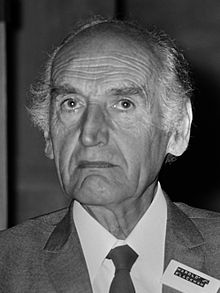


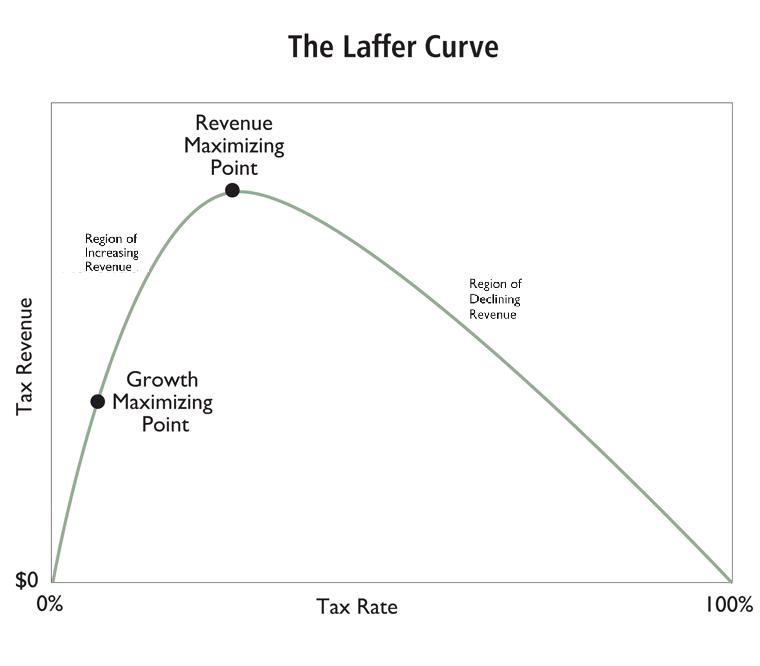


 The Daily Hatch