Monthly Archives: May 2012

Exclusive Interview with Heritage Foundation: John Stossel Says Government Can’t Solve Our Problems

Rob Bluey and Brandon Stewart

April 12, 2012 at 11:51 am

John Stossel on Government, Free Enterprise, and Media

Published on Apr 12, 2012 by

http://blog.heritage.org/2012/04/12/exclusive-interview-john-stossel-says-gov… | John Stossel’s skepticism of government and his storytelling approach about free-market economics have made him a rock star in conservative and libertarian circles.

He spoke at The Heritage Foundation on Wednesday about his new book, “No, They Can’t: Why Government Fails—But Individuals Succeed.” It is Stossel’s latest attempt to debunk the myths that government can solve America’s problems. He tackles everything from crony capitalism and federal regulations to teachers’ unions and gun control.

______________________

John Stossel’s skepticism of government and his storytelling approach about free-market economics have made him a rock star in conservative and libertarian circles.

He spoke at The Heritage Foundation on Wednesday about his new book, “No, They Can’t: Why Government Fails—But Individuals Succeed.” It is Stossel’s latest attempt to debunk the myths that government can solve America’s problems. He tackles everything from crony capitalism and federal regulations to teachers’ unions and gun control.

“Our instinct is to believe in the central planners,” Stossel said in the interview. “It was nuts in the Obama election. It was like he was a magic politician who was going to do these things.”

Yet despite government’s failures, the left never retreats. President Obama’s class-warfare rhetoric, Stossel conceded, is a current example of how liberals shape the narrative.

“I live in the shallow media world,” Stossel said, “and on a subject like that, shallow wins.”

In the interview, Stossel didn’t mince words when asked why he left ABC News in 2009: “Because it sucked there.”

He currently hosts “Stossel,” a one-hour weekly Fox Business Network show and other specials on Fox News. The book reveals his rift with ABC and why Stossel approached Fox for a job.

Here’s what he told us:

They were hostile to these ideas that have made us prosperous and I consider so important. I mean, they tolerated me for years. I got good ratings, so they put the stuff on. They sort of held their nose and put it on. But by the end, they were saying, ‘Ah, you’re predictable Stossel. You use libertarian economics all the time. I don’t want to watch that.’ … I was not offered a job by Fox. I went over and begged, ‘Please, hire me, I cannot stand it anymore.’

The interview runs about five minutes. Hosted by Rob Bluey and produced by Brandon Stewart. For more videos from Heritage, subscribe to our YouTube channel.

Got to avoid raising taxes if we want the economy to grow and eventually balance the budget

Dan Mitchell on Austerity in Europe 2012

In order to balance the budget we must make deep cuts. Take a look at the study refers to below by Dan Mitchell of the Cato Institute in his fine article on the French mess. Raising taxes has not worked in the thirty countries studied.

Having written several times about crazy French statism, you will understand why I like this cartoon.

Though, to be fair, France hasn’t gotten to the point where it’s being bailed out (it’s probably just a matter of time).

If you want some good analysis of the situation in Europe, Veronique de Rugy of the Mercatus Center hits the nail on the head in her column in today’s Washington Examiner.

France has yet to cut spending. In fact, to the extent that the French are frustrated with “budget cuts,” it’s only because the increase in future spending won’t be as large as they had planned. The same can be said about the United Kingdom. Spain, Italy and Greece have had no choice to cut some spending. However, in the case of these particular countries, the cuts were implemented alongside large tax increases. …This approach to austerity, also known in the United States as the “balanced approach,” has unfortunately proven a recipe for disaster. In a 2009 paper, Harvard University’s Alberto Alesina and Silvia Ardagna looked at 107 attempts to reduce the ratio of debt to gross domestic product over 30 years in countries in the Organisation for Economic Co-operation and Development. They found fiscal adjustments consisting of both tax increases and spending cuts generally failed to stabilize the debt and were also more likely to cause economic contractions. On the other hand, successful austerity packages resulted from making spending cuts without tax increases. They also found this form of austerity is more likely associated with economic expansion rather than with recession. …While the debate over austerity continues, the evidence seems to point to the conclusion that austerity can be successful, if it isn’t modeled after the “balanced approach.” It’s a lesson for the French and other European countries, as well as for American lawmakers who often seem tempted by the lure of closing budget gaps with higher taxes.

This is similar to my recent analysis, and Veronique also is kind enough to cite my analysis of how the Baltic nations have done the right thing and cut spending.

There are obvious lessons from Europe for the United States. If politicians don’t reform entitlement programs, we’re doomed to have our own fiscal crisis at some point in the not-too-distant future.

Only there won’t be anybody there to bail us out.

Obama’s stupid idea that did not work!!!


Why did Obama’s idea not work in 2009?

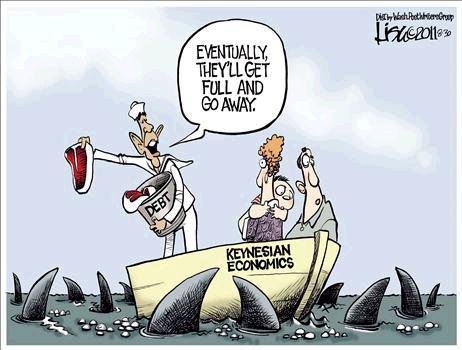
Keynesian Economics in a Cartoon

September 1, 2011 by Dan Mitchell

I’ve written extensively about the flaws of Keynesian economics, and I’ve even narrated a video on the flaws of Keynesian theory.

But this clever cartoon may be more effective than anything I’ve ever done.

If you like cartoons that teach economics, check out this gem. It’s not on Keynesianism, but it’s very good.

Top football stadiums in the country (Part 7)

Final Moments of Kentucky vs. Tennessee Football Game 2011

Uploaded by on Nov 27, 2011

Kentucky wins 10-7 and ends the 26 year losing streak!!

Here is a list of the top football stadiums in the country.

Power Ranking All 124 College Football Stadiums  

By Alex Callos

(Featured Columnist) on April 19, 2012 

When it comes to college football stadiums, for some teams, it is simply not fair. Home-field advantage is a big thing in college football, and some teams have it way more than others.

There are 124 FBS college football teams, and when it comes to the stadiums they play in, they are obviously not all created equal.

There is a monumental difference from the top teams on the list to the bottom teams on the list. Either way, here it is: a complete ranking of the college football stadiums 1-124.

_________________

I want to talk about two Kentucky games that I got to see on tv. Both games were in Lexington.

Here is some info on the Tennessee at Kentucky game in 2011 that ended a 26 year in row of victories for the Vols. Below is a picture of the Vols walking off the field after the game.

Tennessee players leave the field after the 10-7 loss to Kentucky at Commonwealth Stadium in Lexington on Saturday, Nov. 26, 2011. UT lost to UK for the first time since 1984. (AMY SMOTHERMAN BURGESS/NEWS SENTINEL)<br /><br /><br />

Photo by Amy Smotherman Burgess, ©KNS/2011

Tennessee players leave the field after the 10-7 loss to Kentucky at Commonwealth Stadium in Lexington on Saturday, Nov. 26, 2011. UT lost to UK for the first time since 1984. (AMY SMOTHERMAN BURGESS/NEWS SENTINEL)

In the 2003 game, Arkansas won in 7 overtimes. Wikipedia notes:

Seventh overtime

Matt Jones threw an incomplete pass before Decori Birmingham scored on a 25 yard touchdown run to give the Hogs a 69-63 advantage.[4] The all-important two point conversion was a completion to Jason Peters, giving Arkansas a 71-63 cushion.[3] Kentucky first completed a pass for twelve yards, but a fourth and three on the Razorback five proved the game winner, as a Lorenzen fumble was recovered by all-SEC linebacker Tony Bua of Arkansas.[4]

[edit] Aftermath

The game ended at 12:01 am on November 2, 2003.[4] This game also set an NCAA record for the most points scored in a game (after 1950). Arkansas scored 47 points in overtime, breaking their own record of 41. Both teams combined for 86 overtime points, six more than the 2001 seven overtime affair.[3] The game lasted 4 hours and 56 minutes.[4]

78. Davis Wade Stadium: Mississippi State Bulldogs

6a00e553e551d18834010534aaaf06970c-500wi_display_image

Davis Wade Stadium could be considered tiny when it comes to other SEC stadiums.

Built in 1914, it is one of the oldest stadiums out there, with a seating capacity of 55,082. It underwent major renovations about 10 years ago, and while it is still not up to par with some of the larger SEC stadiums, it is improving.

The unique thing about David Wade Stadium is the cowbells that constantly ring out. The atmosphere here is the best of any stadium so far on the list.


77. Carrier Dome: Syracuse Orange

450781027jafaqf_fs_display_image

The Carrier Dome is perhaps better known as the largest college basketball arena in the country.

When it comes to football, it is much less known, but is not a bad place to see a game.

With a seating capacity of 49,262, it is middle of the pack as far as Big East schools are concerned.

Built in 1980, this dome has an excellent atmosphere when the Orange are good.


76. UB Stadium: Buffalo Bulls

386_display_image

This stadium is large by MAC standards with a seating capacity of 29,013 and is relatively new, having been built in 1993.

Buffalo is a newcomer to FBS, and this stadium is one of the best in the MAC.

While everything here is average, the $15 price of a game ticket makes this one of the best deals in the country.

There are a lot of positives as far as this stadium is concerned.


75. Sun Bowl Stadium: UTEP Miners

Sun_bowl_stadium_front_display_image

Originally opening its doors in 1963, this 51,500-seat stadium is home to the Sun Bowl every year, and also the UTEP Miners.

There is beautiful scenery in the surrounding area, and this stadium is a great place to take in a football game, as there is not a bad seat in the house.

It is almost shaped like a bowl and is one big level.


74. Arizona Stadium: Arizona Wildcats

Arizonastadium-arizona_display_image_display_image

Arizona Stadium is known for being loud, and that it certainly is. As far as the rest of the stadium goes, it is average at best.

The stadium is extremely old and was originally built in 1928. It now has a seating capacity of 57,803, and if it was larger, it would be much higher on the list.

While it can get loud and the atmosphere is great, the place is slightly outdated to be ranked any higher.


73. Michie Stadium: Army Black Knights

West_point_michie2_display_image

Built in 1924, Michie Stadium is one of the older stadiums around.

It has that old feel to it and has beautiful scenery in the surrounding area. The stadium, however, leaves a lot to be desired and is outdated to say the least.

Still, the tradition and other interesting aspects of the stadium make it middle of the pack on this list.


72. Reser Stadium: Oregon State Beavers

Reser-280-c_display_image

This medium sized stadium was built in 1953 and seats 45,674. It does offer an excellent home-field advantage for the Beavers, however.

The atmosphere here is great, and it can get really loud, but with the Oregon State team struggling the past few seasons, there is not much to cheer about in here.

Still, a nice venue to take in a game.


71. Glass Bowl: Toledo Rockets

University_of_toledo_glass_bowl_uto2_large_display_image

The Glass Bowl is the cream of the crop when it comes to MAC stadiums.

It was originally built in 1936 and seats 26,248, which is on the higher end as far as MAC standards are concerned.

The outside almost looks like visitors are walking into a fort. The atmosphere here is very good, and things can get a little rowdy on gameday. 


70. Commonwealth Stadium: Kentucky Wildcats

Commonwealth2_display_image

Kentucky is certainly a basketball school, but they have a decent football stadium as well.

Built in 1973 with a capacity of 67,606, Commonwealth Stadium has played host to some major upsets.

It is not nearly as loud as the other SEC fields, but the people here love their Wildcats and be prepared to endure a sea of blue when visiting Lexington.


Woody Allen on politics “Woody Wednesday”

Woody Allen on politics.

Top political strategist Woody Allen thinks Obama would get much more done as dictator; No, really

May 18, 2010 |  2:22 am

Woody Allen

The notorious and formerly funny movie director Woody Allen is apparently frustrated with the cumbersome operations of American democracy too.

The one-time-father-now-husband-of-his-daughter tells the Spanish-language magazine La Vanguardia that the United States’ Democratic Smoker-in-Chief could accomplish a whole lot more from his White House if he didn’t have so many disorderly, annoying people objecting, distracting and criticizing him all the time.

Such social messiness has been known to occur in functioning democracies, even cinematic ones, although less often on celebrity-strewn movie sets under the direction of a dictatorial director.

“It would be good…if (Obama) could be dictator for a few years because he could do a lot of good things quickly,” Allen is quoted as saying.

Allen is also said to have said:

I am pleased with Obama. I think he is brilliant. The Republican Party should get out of his way and stop trying to hurt him.

With healthcare and the economy now fully fixed, no doubt one area in urgent need of sweeping Obama-style reforms would be targeting movie reviewers who write negatively about Hollywood. Or about its politician favorites

Were the founding fathers christian?

3 Of 5 / The Bible’s Influence In America / American

Heritage Series / David Barton

There were 55 gentlemen who put together the constitution and their church affliation is of public record. Greg Koukl notes:

Members of the Constitutional Convention, the most influential group of men shaping the political foundations of our nation, were almost all Christians, 51 of 55–a full 93%. Indeed, 70% were Calvinists (the Episcopalians, Presbyterians, and the Dutch Reformed), considered by some to be the most extreme and dogmatic form of Christianity.

independence The Faith of Our FathersWas the faith of the Founding Fathers deism or Christianity? What does the answer mean for us today? Both the secularists and the Christians have missed the mark. By: Gregory Koukl

There’s been a lot of rustle in the press lately–and in many Christian publications–about the faith of the Founding Fathers and the status of the United States as a “Christian nation.” Home schooling texts abound with references to our religious heritage, and entire organizations are dedicated to returning America to its spiritual roots. On the other side, secularists cry “foul” and parade their own list of notables among our country’s patriarchs. They rally around the cry of “separation of church and state.” Which side is right? Oddly both, after a fashion.

Who Were the Founding Fathers?
Historical proof-texts can be raised on both sides. Certainly there were godless men among the early leadership of our nation, though some of those cited as examples of Founding Fathers turn out to be insignificant players. For example, Thomas Paine and Ethan Allen may have been hostile to evangelical Christianity, but they were firebrands of the Revolution, not intellectual architects of the Constitution. Paine didn’t arrive in this country until 1774 and only stayed a short time.As for others–George Washington, Samuel Adams, James Madison, John Witherspoon, Alexander Hamilton, John Jay, John Adams, Patrick Henry, and even Thomas Jefferson–their personal correspondence, biographies, and public statements are replete with quotations showing that these thinkers had political philosophies deeply influenced by Christianity.The Constitutional ConventionIt’s not necessary to dig through the diaries, however, to determine which faith was the Founder’s guiding light. There’s an easier way to settle the issue.The phrase “Founding Fathers” is a proper noun. It refers to a specific group of men, the 55 delegates to the Constitutional Convention. There were other important players not in attendance, like Jefferson, whose thinking deeply influenced the shaping of our nation. These 55 Founding Fathers, though, made up the core.

The denominational affiliations of these men were a matter of public record. Among the delegates were 28 Episcopalians, 8 Presbyterians, 7 Congregationalists, 2 Lutherans, 2 Dutch Reformed, 2 Methodists, 2 Roman Catholics, 1 unknown, and only 3 deists–Williamson, Wilson, and Franklin–this at a time when church membership entailed a sworn public confession of biblical faith.[1]

This is a revealing tally. It shows that the members of the Constitutional Convention, the most influential group of men shaping the political foundations of our nation, were almost all Christians, 51 of 55–a full 93%. Indeed, 70% were Calvinists (the Episcopalians, Presbyterians, and the Dutch Reformed), considered by some to be the most extreme and dogmatic form of Christianity.

Benjamin Franklin

Even Franklin the deist is equivocal. He was raised in a Puritan family and later adopted then abandoned deism. Though not an orthodox Christian, it was 81-year-old Franklin’s emotional call to humble prayer on June 28, 1787, that was the turning point for a hopelessly stalled Convention. James Madison recorded the event in his collection of notes and debates from the Federal Convention. Franklin’s appeal contained no less than four direct references to Scripture.

And have we forgotten that powerful Friend? Or do we imagine that we no longer need His assistance? I have lived, sir, a long time and the longer I live the more convincing proofs I see of this truth: that God governs in the affairs of men. And if a sparrow cannot fall to the ground without his notice, is it probable that an empire can rise without His aid? We have been assured, sir, in the sacred writings that ‘except the Lord build the house, they labor in vain that build it.’ I firmly believe this and I also believe that without His concurring aid, we shall succeed in this political building no better than the builders of Babel.[2]

Three of the four cornerstones of the Constitution–Franklin, Washington, and Madison–were firmly rooted in Christianity. But what about Thomas Jefferson? His signature cannot be found at the end of the Constitution, but his voice permeates the entire document.

Thomas Jefferson

Though deeply committed to a belief in natural rights, including the self-evident truth that all men are created equal, Jefferson was individualistic when it came to religion; he sifted through the New Testament to find the facts that pleased him.

Sometimes he sounded like a staunch churchman. The Declaration of Independence contains at least four references to God. In his Second Inaugural Address he asked for prayers to Israel’s God on his behalf. Other times Jefferson seemed to go out of his way to be irreverent and disrespectful of organized Christianity, especially Calvinism.

It’s clear that Thomas Jefferson was no evangelical, but neither was he an Enlightenment deist. He was more Unitarian than either deist or Christian.[3]

This analysis, though, misses the point. The most important factor regarding the faith of Thomas Jefferson–or any of our Founding Fathers–isn’t whether or not he had a saving knowledge of Jesus Christ. The debate over the religious heritage of this country is not about who is ultimately going to heaven, but rather about what the dominant convictions were that dictated the structure of this nation.

Even today there are legions of born-again Christians who have absolutely no skill at integrating their beliefs about Christ with the details of their daily life, especially their views of government. They may be “saved,” but they are completely ineffectual as salt and light.

By contrast, some of the Fathers may not have been believers in the narrowest sense of the term, yet in the broader sense–the sense that influences culture–their thinking was thoroughly Christian. Unlike many evangelicals who live lives of practical atheism, these men had political ideals that were deeply informed by a robust Christian world view. They didn’t always believe biblically, having a faith leading to salvation, but almost all thoughtbiblically, resulting in a particular type of government.

Thomas Jefferson was this kind of man. In Defending the Declaration, legal historian Gary Amos observes, “Jefferson is a notable example of how a man can be influenced by biblical ideas and Christian principles even though he never confessed Jesus Christ as Lord in the evangelical sense.”[4]

What Did the Founding Fathers Believe and Value?
When you study the documents of the Revolutionary period, a precise picture comes into focus. Here it is:

  • Virtually all those involved in the founding enterprise were God-fearing men in the Christian sense; most were Calvinistic Protestants.
  • The Founders were deeply influenced by a biblical view of man and government. With a sober understanding of the fallenness of man, they devised a system of limited authority and checks and balances.
  • The Founders understood that fear of God, moral leadership, and a righteous citizenry were necessary for their great experiment to succeed.
  • Therefore, they structured a political climate that was encouraging to Christianity and accommodating to religion, rather than hostile to it.
  • Protestant Christianity was the prevailing religious view for the first 150 years of our history.

However…

  • The Fathers sought to set up a just society, not a Christian theocracy.
  • They specifically prohibited the establishment of Christianity–or any other faith–as the religion of our nation.

A Two-Sided Coin

We can safely draw two conclusions from these facts, which serve to inform our understanding of the relationship between religion and government in the United States.

First, Christianity was the prevailing moral and intellectual influence shaping the nation from its outset. The Christian influence pervaded all aspects of life, from education to politics. Therefore, the present concept of a rigid wall of separation hardly seems historically justified.

Virtually every one of the Founders saw a vital link between civil religion and civil government. George Washington’s admonitions in his Farewell Speech, September 19, 1796, were characteristic of the general sentiment:

Of all the dispositions and habits which lead to political prosperity, religion and morality are indispensable supports….And let us indulge with caution the supposition that morality can be maintained without religion. Reason and experience both forbid us to expect that national morality can prevail in exclusion of religious principles.[5]

Second, the Founders stopped short of giving their Christian religion a position of legal privilege. In the tradition of the early church, believers were to be salt and light. The First Amendment insured the liberty needed for Christianity to be a preserving influence and a moral beacon, but it also insured Christianity would never be the law of the land.

This ought to call into serious question a common tactic of the so-called Religious Right. “We were here first,” their apologists proclaim. “Our country was stolen from us, and we demand it back.” Author John Seel calls this “priority as entitlement.”

The sad fact of the matter is that cultural authority was not stolen from us; we surrendered it through neglect. Os Guinness pointed out that Christians have not been out-thought. Rather, they have not been around when the thinking was being done.

Choosing cultural monasticism rather than hard-thinking advocacy, Christians abandoned the public square to the secularists. When the disciples of Jesus Christ retreated, the disciples of Dewey, Marx, Darwin, Freud, Nietzsche, Skinner, and a host of others replaced them.

Seel warns of the liability of an “appeal to history as a basis of Christian grounds to authority.”[6]Playing the victim will not restore our influence, nor will political strong-arm tactics. Shouldn’t our appeal rather be on the basis of truth rather than on the patterns of the past?

The faith of our Founding Fathers was Christianity, not deism. In this regard, many secularists–and even some Christians–have been wrong in their assessment of our history. On the other hand, many Christians have also been mistaken in their application of the past to the present.

Christians have no special privileges simply because Christianity was America’s first faith. “If America ever was or ever will be a ‘Christian nation,'” Seel observes, “it is not by conscious design or written law, but by free conviction.”[7]

Success for the Christian cannot be measured in numbers or political muscle, but only in faithfulness. Our most important weapon is not our voting power, but the power of the truth freely spoken and freely heard.

Recommended Reading:

Let Freedom Ring–A Basic Outline of American History, available through the Family Research Council, 700 Thirteenth St., N.W., Suite 500, Washington D.C. 20005, 1-800-225-4008

The Light and the Glory, Peter Marshall and David Manuel (Grand Rapids: Revell, 1977)

Christianity and the Constitution–The Faith of Our Founding Fathers, John Eidsmoe (Grand Rapids: Baker, 1987)

Defending the Declaration–How the Bible and Christianity Influenced the Writing of the Declaration of Independence, Gary T. Amos (Brentwood, TN: Wogelmuth & Hyatt, 1989)

Positive Neutrality: Letting Religious Freedom Ring, Stephen T. Monsma, (Grand Rapids: Baker, 1993)


[1] John Eidsmoe, Christianity and the Constitution, (Grand Rapids: Baker, 1987), p. 43.[2] Benjamin Franklin, quoted by James Madison in Notes on Debates in the Federal Convention of 1787(Athens: Ohio University Press, 1966, 1985), p. 209.[3]Eidsmoe has a very thorough and even-handed section on Jefferson.[4] Gary T. Amos, Defending the Declaration, (Brentwood, TN: Wogelmuth & Hyatt, 1989), p. 9.[5] The Annals of America, (Chicago: Encyclopedia Britannica, 1976), vol. 3, p. 612.

[6] John Seel, No God But God–Breaking with the Idols of Our Age, Os Guinness and John Seel, eds., (Chicago: Moody Press, 1992), p. 64.

[7] John Seel, No God But God–Breaking with the Idols of Our Age, Os Guinness and John Seel, eds., (Chicago: Moody Press, 1992), p. 69.


This is a transcript of a commentary from the radio show“Stand to Reason,” with Gregory Koukl. It is made available to you at no charge through the faithful giving of those who support Stand to Reason. Reproduction permitted for non-commercial use only. ©2002 Gregory Koukl

For more information, contact Stand to Reason at 1438 East 33rd St., Signal Hill, CA 90755
(800) 2-REASON (562) 595-7333 www.str.org

Open letter to President Obama (Part 84.1)

President Obama c/o The White House
1600 Pennsylvania Avenue NW
Washington, DC 20500

Dear Mr. President,

I know that you receive 20,000 letters a day and that you actually read 10 of them every day. I really do respect you for trying to get a pulse on what is going on out here.

It seems that government was in control of the desert then we would have a shortage of sand as Milton Friedman used to quip and that is why I am so against Obamacare.

There is another issue that concerns me very much about this fight at the Supreme Court over Obamacare. I know that many people feel strongly that we live in a democracy and because the people want Obamacare then they should be able to get it. However, that is not exactly true that we live in a pure democracy.

My daily email containing the editorials and opinion columns from the Washington Post included an item written by E.J. Dionne entitled “Supreme Court activists: Conservative justices forget we’re a democracy.”

Surely this was a mistake.

I suspect he does understand, at least with regard to the first question. For instance, I’d bet a lot of money that he was correctly in favor of the Court’s decision to protect flag burning as a form of political speech, notwithstanding public opinion and congressional approval.

But he seems to join with other leftists in treating the interstate commerce clause as some sort of blank check for federal intervention into every aspect of our lives. And it shows up in various ways in his column.

…conservative justices are prepared to act as an alternative legislature…discussing whether parts of the law could stand if other parts fell… Sotomayor asked what was wrong with leaving as much discretion as possible “in the hands of the people who should be fixing this, not us.” It was nice to be reminded that we’re a democracy, not a judicial dictatorship. …This is what conservative justices will do if they strike down or cripple the health-care law. …a court that…sees no limits on its power, no need to defer to those elected to make our laws.

At the risk of being blunt, the conservative justices are doing exactly what they should be doing. They’re deciding if a law enacted by Congress is consistent with the powers granted to Congress by the Constitution.

America has a democratic form of government, but we are not a democracy. At least not in the sense that 51 percent of the people have the unlimited right to rape and pillage 49 percent of the people.

I have no idea of the Supreme Court will make the right decision, but I am overwhelmingly confident that the Founding Fathers didn’t envision mandated health insurance as a function of the federal government.

But maybe I’m just too old fashioned, because when I peruse the enumerated powers, I don’t see any authority for a Department of Energy either. Or a Department of Agriculture. Or a Department of Commerce. Or Department of Housing and Urban Development. Or Department of Education. Or a Department of Transportation. Or…well, you get the idea.

Thank you so much for your time. I know how valuable it is. I also appreciate the fine family that you have and your commitment as a father and a husband.

Sincerely,

Everette Hatcher III, 13900 Cottontail Lane, Alexander, AR 72002, ph 501-920-5733, lowcostsqueegees@yahoo.com

Religious Liberty: Obamacare’s First Casualty

Uploaded by on Feb 22, 2012

http://blog.heritage.org/2012/02/22/morning-bell-religious-liberty-under-attack/ | The controversy over the Obama Administration’s anti-conscience mandate and the fight for religious liberty only serves to highlight the inherent flaws in Obamacare. This conflict is a natural result of the centralization laid out under Obamacare and will only continue until the law is repealed in full.

Reasons why Mark Pryor will be defeated in 2014 (Part 13)

It is apparent from this statement below that Senator Mark Pryor is against the Balanced Budget Amendment. He has voted against it over and over like his father did and now I will give reasons in this series why Senator Pryor will be defeated in his re-election bid in 2014. However, first I wanted to quote the statement Senator Pryor gave on December 14, 2011. This information below is from the Arkansas Times Blog on 12-14-11 and Max Brantley:

THREE CHEERS FOR MARK PRYOR: Our senator voted not once, but twice, today against one of the hoariest (and whoriest) of Republican gimmicks, a balanced budget amendment. Let’s quote him:

As H.L. Mencken once said, “For every complex problem there is a solution which is simple, clean, and wrong.” This quote describes the balanced budget amendment. While a balanced budget amendment makes for an easy talking point, it is an empty solution. Moreover, it’s a reckless choice that handcuffs our ability to respond to an economic downturn or national emergencies without massive tax increases or throwing everyone off Medicare, Social Security, or veteran’s care.There is a more responsible alternative to balance the budget. President Clinton led the way in turning deficits into record surpluses. We have that same opportunity today, using the blueprint provided by the debt commission as a starting point. We need to responsibly cut spending, reform our tax code and create job growth. This course requires hard choices over a number of years. However, it offers a more balanced approach over jeopardizing safety net programs and opportunity for robust economic growth.

____________________

SENATOR MARK PRYOR WILL NOT BE RE-ELECTED BECAUSE THIS IS NOT THE SAME DEMOCRATIC STATE THAT RE-ELECTED HIS FATHER OVER AND OVER, BUT ARKANSAS NOW IS A REPUBLICAN STRONGHOLD. HECK, THE ONLY REASON PRYOR GOT RE-ELECTED IN 2008 WAS BECAUSE THE REPUBLICANS THOUGHT FOR SURE HILLARY WOULD BE ON THE DEMOCRATIC PRESIDENTIAL TICKET AND WOULD HAVE COAT TAILS.

Back in 2009 there were 3 Democratic Congressman and 2 Democratic Senators from Arkansas. Now there are 3 Republican Congressman and 1 Republican Senator and the other two seats are held currently by Pryor who is not up for re-election till 2014 and Mike Ross who is vacated his seat at the end of 2012. Could it be that will no longer have any Democrats in Washington representing Arkansas in a couple of years?

I believe that Pryor has miscalculated by opposing the Balanced Budget Amendment and I think that Mike Ross is very popular because of his support of it.

Below is a piece I wrote a while back about Mike Ross.

The Arkansas Times Blog reported today:

U.S. Mike Ross photo

  • U.S. REP. MIKE ROSS

U.S. Mike Rossof Prescott surprised everyone by scheduling an announcement this morning in Little Rock to say he would not seek a seventh term in Congress in 2012.His statement is on the jump. He said he hadn’t decided yet on a race for governor in 2014, which he’s long been expected to make. But his reference to the race indicates it is very much in his sights.

ROSS NEWS RELEASE

WASHINGTON — U.S. Congressman Mike Ross of Prescott on Monday announced he will not be seeking re-election to the U.S. House of Representatives. Ross, who won re-election in 2010 by 18 points and has no announced opponent, has represented Arkansas’s Fourth Congressional District in Congress since 2001. A fifth generation Arkansan, Ross is a former state senator and former small business owner.

Statement from U.S. Congressman Mike Ross:

Representing my home state of Arkansas in the U.S. Congress for the past eleven years has been a real privilege and honor. It is a job that I take very seriously and one that I love. However, as I reflect on turning 50 this year, I believe it is time for me to begin a new chapter in my life by spending more time with my family and exploring new opportunities here at home in Arkansas.

That’s why I have decided not to seek a seventh term to the United States House of Representatives from Arkansas’s Fourth Congressional District. This was not an easy decision and one that I carefully made after a lot of reflection, thought and prayer.

Last year was a tough political environment to seek re-election. Yet, I won by 18 points—one of the largest margins of any member of Congress in a swing district. The trust and confidence the folks here at home have continually placed in me is something I will never forget. The people of Arkansas’s Fourth Congressional District are good, decent, hard working people and I am proud to serve and represent them in the U.S. Congress.

A lot has changed since I was first elected to the U.S. Congress in 2000. Congressional campaigns have gone from several months in length to never-ending, costing millions of dollars every two years. As a result, fundraising never ends nor do the political attacks. While I have worked hard to bring folks to the middle to craft commonsense solutions to the many problems that confront our nation, Washington is mired in gridlock, gamesmanship and constant partisan bickering. Too many issues and votes are based on partisan politics rather than good public policy. Despite our many challenges, I remain optimistic that America’s best days are still ahead of us.

I never believed that my service in the U.S. Congress should become a permanent career. This seat never belonged to me—it belongs to the people of Arkansas. And I know there are many bright people in Arkansas ready to step up, go to Washington and offer a new generation of leadership. Simply put, it is someone else’s turn to represent our state in the U.S. Congress.

I have many good memories of my service in the U.S. Congress, and we have helped thousands of people. None of this would have been possible without the support of the people here in Arkansas, and for that, my family and I will always be grateful to them.

I look forward to serving out the remainder of my term in the U.S. Congress, which doesn’t end until January 2013. I will continue to work each and every day on behalf of the people I represent, just as I have faithfully tried to do from the beginning.

I have received a lot of encouragement to run for Governor of Arkansas when Governor Beebe’s term ends in 2014. I’ve always been very upfront and honest in the fact that, as a fifth generation Arkansan, I love our state and would like very much to help lead it at some point in the future. Whether I run for Governor in 2014 is a decision I have not yet made and won’t make until sometime after my term in this Congress ends.

__________________________________

Ross will tough to beat in the governor race in 2014. However, I do think that the Republicans will have an excellent chance to capture a fourth Congressional seat in 2012. Will there ever be another Democratic member of the House of Representatives from Arkansas? (In fact if you check out some of the information at the Red Arkansas Blog and you will see that most people view this district as a Republican pick up.)

John Brummett in his article “Ross is running, but I repeat myself,” Arkansas News Bureau, July 26, 2011 noted:

To win, a Democrat will need to be as good a politician as Ross. I can’t identify such a Democrat at present.

At this point I’d give tea party pageanteer Beth Anne Rankin, the Sarah Palin wannabe of Arkansas, a decent shot.

Jason Tolbert reported:
With the sudden news from Rep. Mike Ross that he will not seek re-election, potential Republican candidates will quickly emerge.  However, two Republicans have already been busy lining up support behind the scenes before Ross even announced his decision.

Republican Tom Cotton from Dardanelle confirms to the Tolbert Report this morning that he will seek the open seat and is already putting together his team.  Potential donors have confirmed that Cotton is lining up support and may already have over six figures in commitments.  In addition, Cotton has been seen meeting recently with Second District Congressman Tim Griffin who could lend support to Cotton’s campaign.

Cotton was one of the many names considering a run for Senate in 2010 against former Sen. Blanche Lincoln, but ultimately decided against it. Cotton currently works for international consulting firm, McKinsey and Company. A veteran, he also serves in the U.S. Army Reserves. Cotton lives in Yell County, which was part of the Second Congressional District represented by Congressman Griffin. It was moved to the Fourth Congressional Disctrict in the last redistricting process.

In addition, Beth Anne Rankin of Magnolia, former candidate and general election opponent of Mike Ross, has been exploring another run as well.  Rankin is a former Miss Arkansas and worked in former Gov. Mike Huckabee’s administration.  She recently appeared on his Fox News program “Huckabee” cutting her red hair for “Locks of Love” – something she does every few years.  Rankin recieved 40 percent of the vote in 2010 with Ross pulling in 57 percent.

In addition, sources close to State Rep. Lane Jean of Magnolia confirm that he is “strongly considering” getting into the race as well.  Jean was elected to his first term in the Arkansas House in 2010.

Other potential Republicans names mentioned are: State Rep. Matthew Shepherd, former Congressional candidate Glenn Gallas, and Will Rockfeller – the son of the late Lt. Gov. Win Rockfeller.

Sweden reaps benefits of tax cuts

We need to cut taxes and not raise them if we want the economy to grow. Sweden is a good example of that lately.

David Weinberger

May 11, 2012 at 10:00 am

Since the beginning of the recession, academics, authoritative international institutions, and most government officials pushed for massive stimulus spending. Sweden bucked the trend, focusing instead on slashing marginal tax rates and peeling government back. How did it fare?

The Spectator reports:

While most countries in Europeborrowed massively, Borg did not. Since becoming Sweden’s finance minister, his mission has been to pare back government. His ‘stimulus’ was a permanent tax cut. To critics, this was fiscal lunacy — the so-called ‘punk tax cutting’ agenda. Borg, on the other hand, thought lunacy meant repeating the economics of the 1970s and expecting a different result.

Three years on, it’s pretty clear who was right. ‘Look atSpain,Portugalor theUK, whose governments were arguing for large temporary stimulus,’ he says. ‘Well, we can see that very little of the stimulus went to the economy. But they are stuck with the debt.’ Tax-cuttingSweden, by contrast, had the fastest growth inEuropelast year, when it also celebrated the abolition of its deficit.

Too bad the U.S. decided against Sweden’s advice. Still, missing one opportunity doesn’t mean we have to miss another: Tax reform is calling.   

Review of Carl Sagan book (Part 3 of series on Evolution)

Review of Carl Sagan book (Part 3 of series on Evolution)

The Long War against God-Henry Morris, part 4 of 6

Uploaded by  on Aug 30, 2010

http://www.icr.org/
http://store.icr.org/prodinfo.asp?number=BLOWA2
http://store.icr.org/prodinfo.asp?number=BLOWASG
http://www.fliptheworldupsidedown.com/blog

______________________________________

I got this from a blogger in April of 2008 concerning candidate Obama’s view on evolution:

Q: York County was recently in the news for a lawsuit involving the teaching of intelligent design. What’s your attitude regarding the teaching of evolution in public schools?

A: “I’m a Christian, and I believe in parents being able to provide children with religious instruction without interference from the state. But I also believe our schools are there to teach worldly knowledge and science. I believe in evolution, and I believe there’s a difference between science and faith. That doesn’t make faith any less important than science. It just means they’re two different things. And I think it’s a mistake to try to cloud the teaching of science with theories that frankly don’t hold up to scientific inquiry.”

I was really enjoyed this review of Carl Sagan’s book “Pale Blue Dot.”

Carl Sagan’s Pale Blue Dot

by Larry Vardiman, Ph.D. *

On December 6, 1994, Carl Sagan, author of Cosmos, well-known astronomer and speaker, appeared before the Commonwealth Club of California in San Francisco to introduce his new book, Pale Blue Dot.1

Earlier in the day I had the opportunity to briefly talk with him during a break in presentations at the fall meeting of the American Geophysical Union. I introduced myself and found him very cordial but extremely animated and energetic in attempting to convince me that the Bible is not a valid source of truth and that science has proven it wrong.

I was puzzled at his enthusiasm until I purchased and read his book. In it he presents the case that the earth and man are not at the center of the universe or God’s attention. In fact, he stresses that science has disproved the Bible and that man is an insignificant species on a remote planet whirling through the vast reaches of space. He suggests space exploration and colonization as a vision for developing anew meaning in life to replace that given historically by religion.

Since Carl Sagan is such an effective spokesman for the naturalistic world view which prevails in the modern scientific community, and for his concept that a creator God is an outdated “geocentrist conceit” concocted by our less enlightened forefathers and foisted upon the human culture, I felt a review and rebuttal of his new book was in order.

REVIEWAt the heart of Dr. Sagan’s argument for a universe without a creator is the progressive disillusionment he believes science has handed those who believe in religion. This he calls “The Great Demotions.” He suggests that observation of the night-time sky by our ancestors led to a misplaced sense of importance of man:

And if the lights in the sky rise and set around us, isn’t it evident that we’re at the center of the Universe? These celestial bodies—so clearly reveals that we are special. The Universe seems designed for human beings. It’s difficult to contemplate these circumstances without experiencing stirrings of pride and reassurance. The entire Universe, made for us! We must really be something.

This satisfying demonstration of our importance, buttressed by daily observations of the heavens, made the geocentrist conceit a transcultural truth—taught in the schools, built into the language, part and parcel of great literature and sacred scripture. Dissenters were discouraged, sometimes with torture and death. It is no wonder that for the vast bulk of human history, no one questioned it.

Over the past 300 years, Sagan says, science began to strip away this “geocentrist conceit” starting with Copernicus’ finding that the earth revolved around the sun rather than the sun around the earth. Next it was determined that our earth is only one of a myriad of worlds, the sun is only one of our galaxy, and our galaxy is only one of a myriad of galaxies in the universe. Apparently, there is nothing special about our position in the universe. Einstein’s theory of relativity then discredited the view held by Newton and all other great classical physicists that the velocity of the earth in space constituted a “privileged frame of reference.” Next, the age of the solar system was calculated to be about 4.5 billion years old and the universe about 15 billion. The final demotion was the conclusion by Darwin that man is not a special creation but, rather, evolved in the primordial ooze from simple, single-celled organisms. Man is simply the end-product in a long chain of evolutionary change.

These “great demotions” lead to the conclusion that there is no meaning or purpose in our existence. Sagan bemoans this loss of meaning by lampooning the Biblical story of the Garden of Eden:

There was a particular tree of which we were not to partake, a tree of knowledge. Knowledge and understanding and wisdom were forbidden to us in this story. We were to be kept ignorant. But we couldn’t help ourselves. We were starving forknowledge—created hungry, you might say. This was the origin of all our troubles. In particular, it is why we no longer live in a garden: We found out too much. So long as we were incurious and obedient, I imagine, we could console ourselves with our importance and centrality, and tell ourselves that we were the reason the Universe was made. As we began to indulge our curiosity, though, to explore, to learn how the Universe really is, we expelled ourselves from Eden. Angels with a flaming sword were set as sentries at the gates of Paradise to bar our return. The gardeners became exiles and wanderers. Occasionally we mourn that lost world, but that, it seems to me, is maudlin and sentimental. We could not happily have remained ignorant forever.

Sagan admits several times in his book that “there is in this Universe much of what seems to be design.” Yet, he can not bring himself to attribute this design to a Designer. He does go so far as to say in one place that, “Maybe there is one [a designer] hiding, maddeningly unwilling to be revealed.” However, he finally concludes that the evidence does not require a Designer. He also admits that without a Designer there is no purpose and without purpose man cannot survive. Sagan has been building a justification for the remainder of his book. He now states in egotistical terms his agenda for the human race:

The significance of our lives and our fragile planet is then determined only by our own wisdom and courage. We are the custodians of life’s meaning. We long for a Parent to care for us, to forgive us our errors, to save us from our childish mistakes. But knowledge is preferable to ignorance. Better by far to embrace the hard truth than a reassuring fable. If we crave some cosmic purpose, then let us find ourselves a worthy goal. On behalf of Earthlife, I urge that, with full knowledge of our limitations, we vastly increase our knowledge of the Solar System and then begin to settle other worlds.

REBUTTALThe crux of Sagan’s arguments is the validity of his “great demotions.” Has science shown the Bible to be untrue and that the earth and man are insignificant random combinations of molecules near a remote star in a vast, uncaring universe? I do not believe that the sun revolves around the earth. However, I strongly hold to the view that man is at the center of God’s care and concern, if not very near the center of His creation.

The Bible nowhere says that the sun revolves around the earth. It simply uses the common everyday reference system we are all familiar with when referring to the motions of the sun. References to sunrise and sunset appear in the newspaper each day, and there is no difficulty in understanding their meaning. Similar terms are used in surveying, nautical navigation, even orbital mechanics. They communicate information just as does the Bible.

In the covenant with Abraham God implied that there is a myriad of stars in the universe. He said, “look now toward heaven, and tell the stars, if thou be able to number them….”Sagan believes some of these stars may have planets circling them with life on them. However, Sagan recently admitted in a radio interview that after 25 years of searching for intelligent life, he has been unable to find evidence of life anywhere else in the universe. (Sagan has stated that he would even be happy to find stupid life.) He went so far as to say, “there must be something unique about the earth.” Einstein’s theories of relativity and the great ages of our solar system and universe both have yet to be proven. If relativity can be shown to be true, some believe the effect could possibly explain the apparent great times of light traveling from distant stars.2

The theory of evolution is the greatest house of cards of all. It flies in the face of the well-founded Second Law of Thermodynamics, cannot be supported by the fossil record, violates common sense in the development of complex systems, and could not even occur in 15 billion years.

These “great demotions” then are the result of misapplying faulty theories rather than validating God’s statements in Scripture regarding our position and purpose.

God has declared our standing as follows:

“In the beginning God created the heavens and the earth” (Genesis 1:1).

“The heavens declare the glory of God; and the firmament sheweth His handiwork” (Psalm 19:1).

“And God said, Let us make man in our image, after our likeness” (Genesis 1:26).

“For God so loved the world, that He gave His only begotten Son, that whosoever believeth in Him should not perish, but have everlasting life” (John 3:16).

It is evident from only these few selected Scripture passages that God created the universe and cares for us to the point of providing His own Son as a sacrifice for our sins. In our finiteness we don’t fully understand an infinite God, but how dare we arrogantly deny such a God.

REACTIONSDr. Sagan is an excellent writer and public speaker. He has a very engaging writing style and dares to discuss controversial issues. His Cosmos series and book sold more copies than any science book ever written in English. He has won the Pulitzer Prize for his writing. However, he is wrong. Carl Sagan is blinded to the evidence that God exists and created man as His special object of love and concern.

This point of view among so many scientists today is described in Romans 1:20: “For the invisible things of Him from the creation of the world are clearly seen, being understood by the things that are made, even His eternal power and Godhead; so that they are without excuse.” Dr. Sagan has rejected out of hand the evidences he has clearly seen for design in the universe. Although he has expressed a reluctant need to find a Designer, he has given up on the search and has constructed his own “Tower of Babel.”

A recurrent theme throughout the book is his allegorizing of the Biblical account and an assumption that it is a transcription of man’s uninformed experiences. No place is given to the possibility that Scripture is inspired by the Creator. Dr. Sagan’s goal in Pale Blue Dot is to substitute his “creation myth” and purpose for “Earthlife” for the creation account and dominion mandate found in Genesis. Sagan even raises the specter of “becoming like the Most High.” I fear for men who would place themselves in such opposition to God and His Word.

CONCLUSIONSBecause of the kinship I feel toward scientists like Carl Sagan, I am saddened greatly by their actions. Scientists have the greatest opportunities of all to see the evidence of God’s marvelous provision for man in His creation. Those who can’t see God’s hand in the universe around them should be encouraged to ask God to reveal Himself to them. God is not hiding. He is waiting for us to see Him. Please pray for Carl Sagan and others like him who, in their conceit declare, “There is no God!” (Psalm 14:1).

REFERENCES

1. C. Sagan. Pale Blue Dot (Random House, 1994), 429 pp.
2. R. Humphries. Starlight and Time (Master Books, 1994), 133 pp.

* Dr. Vardiman is Administrative Vice President and Chairman of the Astro/Geophysics Department at ICR.

Other posts that relate to Carl Sagan:

Atheist says “It’s not about having a purpose in life..” (Arkansas Atheist, Part 1)

The Bible and Archaeology (1/5) The Bible maintains several characteristics that prove it is from God. One of those is the fact that the Bible is accurate in every one of its details. The field of archaeology brings to light this amazing accuracy. _________________________- I want to make two points today. 1. There is no […]

Ancient Sea Monsters (A Creationist point of view Part 3)

Leviathan: the Fire-Breathing Dragon: Kent Hovind [6 of 7] Everybody is trying to get info on this subject. Here is what the Bible has to say about it. Mace Baker wrote the aritcle, “Sea Dragons – The Institute for Creation Research,” and here is the third portion of that article:  Pterosaurs were the flying reptiles of the ancient world. Why […]

By Everette Hatcher III | Posted in Current Events | Edit | Comments (0)Other posts concerning Carl Sagan:

Atheists confronted: How I confronted Carl Sagan the year before he died

In today’s news you will read about Kirk Cameron taking on the atheist Stephen Hawking over some recent assertions he made concerning the existence of heaven. Back in December of 1995 I had the opportunity to correspond with Carl Sagan about a year before his untimely death. Sarah Anne Hughes in her article,”Kirk Cameron criticizes […]