Monthly Archives: May 2012

A flat tax is the answer

Uploaded by on Mar 29, 2010

This Center for Freedom and Prosperity Foundation video shows how the flat tax would benefit families and businesses, and also explains how this simple and fair system would boost economic growth and eliminate the special-interest corruption of the internal revenue code. www.freedomandprosperity.org

__________________________________

Dan Mitchell hits the nail on the head again.

A Flat Tax Is the Answer

by Daniel J. Mitchell

Daniel J. Mitchell is a top expert on tax reform and supply-side tax policy at the Cato Institute.

Added to cato.org on January 31, 2012

This article appeared on US News and World Report Online on January 31, 2012.

The class-warfare crowd is predictably outraged that Mitt Romney supposedly paid just 13.9 percent of his income to the crowd in Washington. Surely this is a sign of both inequity and iniquity. Meanwhile, previewing a theme for the general election, President Obama said in his State of the Union address that “millionaires and billionaires” should cough up at least 30 percent of their earnings to the IRS.

This is bad policy based on inaccurate data.

Let’s deal first with the flawed numbers. Capital gains taxes and dividend taxes are both forms of double taxation. That income already is hit by the 35 percent corporate income tax. So the real tax rate for people like Mitt Romney is closer to 45 percent. And if you add the death tax to the equation, the effective tax rate begins to approach 60 percent.

Daniel J. Mitchell is a top expert on tax reform and supply-side tax policy at the Cato Institute.

More by Daniel J. Mitchell

Here’s a simply analogy. Imagine you make $50,000 per year and your employer withholds $5,000 for personal income tax. How would you feel if the IRS then told you that your income was $45,000 and you had to pay full tax on that amount, and that you weren’t allowed to count the $5,000 withholding when you filled out your 1040 form? You would be outraged, correctly yelling and screaming that you should be allowed to count those withheld tax payments.

Welcome to the world of double taxation.

The Obama approach is also bad economics. Every economic theory — even socialism and Marxism — agrees that saving and investment are the key to long-run growth and higher living standards. So does it make sense to deprive the economy of productive capital by imposing punitive layers of double taxation? To make matters worse, double taxation means transferring the money to the buffoons in Washington, where it will be squandered on inefficient and wasteful programs.

Europe’s welfare states are on the brink of collapse because they adopted the mentality that government spending was better than private saving and investment. Should we copy their failures?

The right way to ensure both fairness and growth is the flat tax. Get rid of the 72,000 pages of corruption and complexity in the Internal Revenue Service code and replace it with a postcard-sized flat tax. One low tax rate with no double taxation. That’s good for the economy and competitiveness.

And if Mitt Romney makes 100,000 times more than me, he’ll pay 100,000 times more in tax.

Hank Hanegraaff on the issue of abortion (Part 2)

Two Minute Warning: How Then Should We Live?: Francis Schaeffer at 100

Uploaded by on Jan 31, 2012

Under Francis Schaeffer’s tutelage, Evangelicals like Chuck Colson learned to see life through the lens of a Christian worldview. Join Chuck as he celebrates a life well lived.

______________

Despite what the liberals like Max Brantley have to say in the Arkansas Times, it is clear that the unborn child feels pain and should be protected from abortion. Of course instead of looking at this issue Brantley chose to put up a video that tries to act like the unborn baby’s rights should not even be in the conversation. I am including below this two part series on this subject of abortion from the pro-life point of view.

Pro-Life vs Pro-Choice: Annihilating the Abortion Argument

Article ID: DA375

By: Hank Hanegraaff

The following is an excerpt from article DA375 by Hank Hanegraaff. The full article can be found by following the link below the excerpt.

Pro-Life VS Pro-Choice- R = RAPE AND INCEST

An emotional appeal designed to avoid the serious consideration of the pro-life platform, rape and incest are the hard-case “what-ifs” pro-abortionists raise in almost every public forum: “How can you deny a hurting young girl safe medical care and freedom from the terror of rape or incest by forcing her to maintain a pregnancy resulting from the cruel and criminal invasion of her body?” The emotion of this argument often deflects serious examination of its merits and is commonly used as a pretext for abortion on demand.

It is important to note that the incidence of pregnancy as a result of rape is extremely small (one study put it at 0.6 percent).17 As philosopher Francis Beckwith astutely points out, “To argue for abortion on demand from the hard cases of rape and incest is like trying to argue for the elimination of traffic laws from the fact that one might have to violate some of them in rare instances, such as when one’s spouse or child needs to be rushed to the hospital.”18 If we had legislation restricting abortion for all reasons other than rape or incest, we would save the vast majority of the 1.8 million preborn babies who die annually in America through abortion.

Furthermore, one does not obviate the real pain of rape or incest by compounding it with the murder of an innocent preborn child; two wrongs obviously do not make a right. The very thing that makes rape evil also makes abortion evil. In both cases, an innocent human being is brutally dehumanized. The real question that must be answered is whether or not preborn children are indeed fully human. As has been already documented, the answer is a resounding Yes.

Pro-Life VS Pro-Choice- T = TOLERATION

Serving as the “great commandment” of the pro-abortion movement, the argument from toleration is perhaps the most common argument pro-abortionists level against their opponents. For example: “We’re not making you have an abortion, so why can’t you be tolerant of those who choose to?” Translated: “Don’t impose your antiquated morals on me!” At first blush this argument may seem reasonable, but on closer examination its inherent weakness becomes readily apparent. Imagine applying this line of reasoning to the issue of rape by saying, “Don’t like rape? Don’t rape anyone. Just don’t impose your morality on me!”

This false standard of tolerance is frequently supported by an appeal to religious pluralism. In this context, pro-abortionists argue that government should not take one theory of life and impose it on others. The obvious problem with this line of argumentation is that not only is the pro-abortion position forced on Christians, but they are required to fund it as well. Incredibly, pro-abortionists fail to perceive their violation of this ridiculous standard: they’re intolerant of those who think tolerance is less important than preserving innocent human lives!

Yet every society has the obligation to universally impose morals on its citizens. Toleration works in the world of expressing opinions, not in a crowded movie theater when someone chooses to yell “Fire!” We may be tolerant of one’s religious views, but not if they include enslaving grandmothers or cannibalizing teenagers.

Separation between church and state does not extend to divorcing all moral values from the state. If this were the case, we would need to eliminate all legislation that has anything in common with a religious point of view — including the very idea of social law itself.

Remember, tolerance when it comes to personal relationships is a virtue, but tolerance when it comes to truth is a travesty.

Pro-Life VS Pro-Choice- I = INEQUALITY

Inequality between the sexes is one of the most bizarre arguments put forth by the pro-abortion movement. “Women who are forced to be pregnant,” it is said, “can’t compete in employment with men and so cannot be truly equal unless they have an escape from unwanted pregnancy.” Translated, this is like saying, “Women can’t be equal to men without reconstructive surgery”! How much more sexist can an argument become?

Imagine, however, applying this standard to children outside the womb. Following this “logic” would mean that women should be permitted to abandon their children whenever they pose a threat to the mother’s opportunities for advancement.

Another form of the “inequality argument” is graphically portrayed through the image of a rusty coat hanger. Prior to Roe v. Wade, pro-abortionists claimed that because of financial inequality, women who could not afford to fly to another country to get an abortion were condemned to performing abortions on themselves with rusty coat hangers. To add credibility to this assertion, statistics ranging from 5,000 to 10,000 deaths per year due to illegal abortions continue to be widely circulated.19

Dr. Bernard Nathanson, a former leader of the National Abortion Rights Action League (NARAL), had this to say about these preposterous statistics: “I confess I knew the figures were totally false, and I suppose the others did too . . . But in the ‘morality’ of the revolution, it was a useful figure” (emphasis added).20

According to the U. S. Bureau of Vital Statistics, the true figure of the women who died from illegal abortions in 1972 — the year prior to Roe v. Wade — is 39. It is also questionable whether any one of these 39 women died as a result of using a coat hanger. As unpleasant as it may be, consider for a moment the dexterity needed to dislodge a conceptus from a uterine wall using a crude tool like a coat hanger. The truth of the matter is that the pro-abortion argument from inequality is not only illogical, but deliberately deceptive as well.

Pro-Life VS Pro-Choice- O = OPERATION RESCUE

The no. 1 straw-man argument of the pro-abortion lobby, Operation Rescue has been unfairly condemned for using the same lines of argumentation and social protest popularized by the civil rights movement — a movement pro-abortion advocates usually extol. Furthermore, Operation Rescue has been grossly misrepresented, presumably to dismiss all pro-life activities as “extremist.” The truth, however, is that just as abolitionists harbored escaped slaves in defiance of the laws before the Civil War, compassionate Europeans hid Jews from the legally sanctioned extermination of the Nazis, and civil rights marchers violated segregation laws, so Operation Rescue members believe their nonviolent, peaceful interventions to protect preborn children are obeying God rather than man (see Acts 4:19). Nonetheless, it needs to be recognized that many of the mainstream pro-life groups do not approve of using civil disobedience and do not identify with Operation Rescue. Thus pro-abortionists cannot fairly cite Operation Rescue as a reason for rejecting the entire pro-life movement.

While it might be argued that the tactics of Operation Rescue are not the most effective means of stemming the tide of abortion, it is patently false to caricature members of Operation Rescue as social terrorists or worse. Any unbiased evaluation of the principles and procedures employed by the leadership of this organization must conclude that they have consistently advocated nonviolent civil disobedience. It is therefore inexcusable when pro-abortionists attempt to tie Operation Rescue and pro-lifers generally to the few tragic instances in which pro-life extremists have resorted to violence and murder.

On a personal note, I am grateful to God for the documented evidence of lives that have been saved through the self-sacrifice of dedicated men, women, and children involved in this movement.

Pro-Life VS Pro-Choice- N = NONPERSONHOOD

The emerging embryo may not have a fully developed personality, but it does have complete personhood. Nonpersonhood is perhaps the trickiest of the contemporary pro-abortion arguments. Pro-abortionists once argued that the preborn baby was not fully human. Now, however, advances in science have forced most people to concede that the “product of conception” is truly human. As a result, a new version of this argument goes something like this: “The preborn child may be a human life, but it does not possess personhood.”

Dr. Francis Beckwith exploded the latest version of this myth when he wrote, “From a strictly scientific point of view, there is no doubt that the development of an individual human life begins at conception. Consequently, it is vital that the reader understand that she did not come from a zygote, she once was a zygote; she did not come from an embryo, she once was an embryo; she did not come from a fetus, she once was a fetus; she did not come from an adolescent, she once was an adolescent.”21

The abortion epidemic ravaging America today is the tragic consequence of a decadent society that no longer values the individual human worth of each member; that worships the idol of “Selfism”; and that replaces the objective Word of God with subjective preferences and social morés.

One-third of the children conceived in America this year will be savagely slaughtered before they are born. Yet this horrifying holocaust can be halted if those who value human life, worship the true God, and obey His Word will become informed, committed, and involved.

NOTES:

17Charles R. Hayman, M.D., and Charlene Lanza, “Sexual Assault in Women and Girls,” American Journal of Obstetrics and Gynecology 109 (1971): 480-86; cited in Beckwith, 241 n. 69.18Beckwith, 69.19Bernard Nathanson, M.D., Aborting America (New York: Doubleday, 1979), 193; quoted in Beckwith, 55.20Ibid.21Beckwith, 43.

Open letter to President Obama (Part 84.5)

Milton Friedman – Socialized Medicine at Mayo Clinic in 1978

President Obama c/o The White House
1600 Pennsylvania Avenue NW
Washington, DC 20500

Dear Mr. President,

I know that you receive 20,000 letters a day and that you actually read 10 of them every day. I really do respect you for trying to get a pulse on what is going on out here.

I have always opposed Obamacare because it the government control of giving anyone the right to have an abortion paid for by the government and I think that is wrong. However, there are some constitution problems with this power grab of Obamacare too. This article below from the Cato Institute makes this point:

Yes, We Can Wait

by Michael D. Tanner

Michael Tanner is a senior fellow at the Cato Institute and author of Leviathan on the Right: How Big-Government Conservatism Brought Down the Republican Revolution.

Added to cato.org on March 28, 2012

This article appeared in National Review (Online) on March 28, 2012

In pushing through parts of the New Deal, President Franklin Roosevelt reportedly told one wavering congressman, “I hope you will not permit doubts as to constitutionality, however reasonable, to block the suggested legislation.”

As one listens to the Obama administration and others defend the Patient Protection and Affordable Care Act (a.k.a Obamacare), one gets the impression that Roosevelt’s nostrum has been adopted as the official motto of this administration. Their attitude seems to be that, of course Obamacare is constitutional because, well, because it’s important.

The idea that federal government’s power should be limited is dismissed as a quaint relic of a bygone age. There are important national problems to be solved, and we should not be held back by a document from the past. As Representative Kathy Hochul (D., N.Y.) puts it, “Basically we are not looking at the Constitution… The decision has been made by this Congress that American citizens are entitled to health care.”

The genius of the American system is that we are a government of laws and not of men.

This attitude is on display in other areas as well. Constitutional niceties,legislative rules, and democratic debate are all impediments to be dispensed with when “we can’t wait.”

For example, the administration apparently grew tired of Republican opposition to the appointment of Richard Cordray as head of the new Consumer Financial Protection Agency created under the Dodd-Frank law, so they simply made a recess appointment of Cordray — despite the fact that Congress was not in recess. President Obama used the same non-recess recess appointment to name three new members to the National Labor Relations Board. When asked how he could justify doing so, the president simply shrugged and said, “I refuse to take ‘no’ for an answer. I am not going to stand by while a minority in the Senate puts party ideology ahead of the people we were elected to serve.”

President Bush was justly criticized for his extraordinary use of executive orders and signing statements to avoid the untidiness of the legislative process. But President Obama has adopted the same tactics, choosing to act unilaterally or to disregard parts of legislation that he thinks impinges on his authority. For example, rather than go through the difficult and lengthy process of having Congress revise the No Child Left Behind Act, the president simply gave the states waivers from NCLB if they agreed to adopt the administration’s preferred education policies. It is no defense of NCLB to wonder how the president gets the power to make federal education policy, and for that matter state education policy, through the waiver process.

Then again, this is the administration that unilaterally decided to grant some 1,200 waivers from various provisions of Obamacare.

The president has also felt free to repeatedly commit American troops to action without congressional approval. Indeed, not only has the president refused to seek a declaration of war, but in the case of the U.S. bombing of Libya, he didn’t even bother with the congressional notification required under the War Powers Act. The same is true of the president’s dispatch of troops to Uganda.

Democrats in Congress also seem impatient with the normal give and take of the legislative process. Thus, when Senate Republicans used their power to delay consideration of legislation dealing with Chinese currency manipulation, Democrats simply changed the Senate rules to deny Republicans the ability to offer amendments to the legislation. And hardly a week seems to pass without some Democratic proposal to eliminate or restrict the filibuster.

Of course, we should not forget the health-care law was pushed through in the first place with at best minimal concern for congressional rules.

The genius of the American system is that we are a government of laws and not of men. That often makes for a messy and slow process. But it is far better than the alternative. That’s true even when a president believes “we can’t wait.”

____

Thank you so much for your time. I know how valuable it is. I also appreciate the fine family that you have and your commitment as a father and a husband.

Sincerely,

Everette Hatcher III, 13900 Cottontail Lane, Alexander, AR 72002, ph 501-920-5733, lowcostsqueegees@yahoo.com

The Dissatisfaction of Francis Schaeffer part 2

What Ever Happened to the Human Race?

I learned so much from the books and films of Francis Schaeffer. He really got me excited about the pro-life movement. In order to understand where I am coming from it is best to take a look at where Schaeffer was coming from and his thought processes. Take a look at this article below that appeared 13 years after his death in Christianity Today. Schaeffer really was able to relate the Bible to modern culture. In this essay below Michael Hamilton notes:

Francis Schaeffer tore down the gospel curtain that had separated evangelicals from contemporary cultural expression, giving Christians object lessons in how to interpret sculpture, music, painting, and literature as philosophical statements of the modern mind.

Thirteen years after his death, Schaeffer’s vision and frustrations continue to haunt evangelicalism.
by Michael S. Hamilton | posted 3/03/1997 12:00AM

Hospitality at L’Abri
In 1954 Schaeffer took his new message of “observational love” back to the Bible Presbyterians in the U.S., where it was not universally received as a word from the Lord. Moreover, the Schaeffers reported that the simple receiving of guests was an increasingly important part of their work, prompting the mission board to cut their pay. So in 1955 they resigned and set up their own independent ministry organization called L’Abri (“The Shelter”) in the mountain village of Huámoz.

Immediately, the oldest of their three daughters began bringing home fellow students from the University of Lausanne. In short order, students were coming to L’Abri every weekend. The Schaeffers developed a pattern of meals, walks, and a Sunday church service all geared toward providing an atmosphere that would stimulate conversation about philosophical and religious ideas.

In this the Schaeffers were brilliant. For Edith, homemaking was high art, and she created an atmosphere that drew people in and invited them to relax. Francis was a superb and caring interlocutor who listened attentively, made guests feel important, and spoke with earnest confidence of Christianity’s ability to solve the human dilemma. Wrote Francis, “This was and is the real basis of L’Abri. Teaching the historic Christian answers and giving honest answers to honest questions.” A number of students converted to Christianity as a result of these weekends, and a few volunteered to stay on to help with the growing workload.

Word about this unique open home in the mountains quickly spread, and by 1957 they were hosting up to 25 people every weekend. Francis spent weekdays teaching classes for students in several locations in Switzerland and Italy. Though the Schaeffers never appealed directly for funds, Edith kept a growing list of supporters abreast of L’Abri’s activities through her “Family Letter.”

The Schaeffers learned firsthand that keeping their door open was very costly. Francis later remembered, “In about the first three years of L’Abri all our wedding presents were wiped out. Our sheets were torn. Holes were burned in our rugs. Indeed once a whole curtain almost burned up from somebody smoking in our living room. … Drugs came to our place. People vomited in our rooms.”

At this time, many of the students who came to L’Abri were Europeans, well-schooled in the philosophies of Hegel, Kierkegaard, and Heidegger and in the existentialist literature of Sartre and Camus. These students tutored Francis in the details of modern post-Christian thought, while he observed its impact on their lives. They had been taught that human beings were the mere product of time and chance in a materialistic world. This left many of them unable to find any basis for distinctions between right and wrong nor meaning in the normal activities of human life. The young people’s self-destructive moral confusion, alienation from society, and sincere search for something better stirred the Schaeffers’ compassion. It made the cost of an open home worth bearing, and it compelled Francis into ever-deeper reflection on the trajectory of modern culture.

By 1960, L’Abri had become such a phenomenon that it attracted the notice of Time magazine. Facilities had expanded to three chalets, Edith’s “Family Letter” had a circulation of 1,300, and her Sunday evening “High Tea” was hosting upwards of 50 people from around the world every week. Sheer numbers made it necessary to replace the informal weekends with a full-time program of lectures, discussions, study, work, and worship. L’Abri workers taped Francis’s lectures on the philosophical meaning of modern theology and culture, and these tapes quickly developed an international circulation. “Study” at L’Abri consisted of listening to and discussing Francis’s recorded lectures.

These may have been the hardest years of marriage for the Schaeffers, both of whom were extraordinarily intense, work-centered personalities. Edith was by nature proud and competitive, and Francis had for a long time struggled with a plant-throwing, pot-smashing temper. Stormy sessions between them were not infrequent. The most demanding years of L’Abri’s ministry had coincided with their son Franky’s early childhood, made twice difficult because he had contracted polio at age three. L’Abri’s financial situation was always precarious and sometimes desperate—more than once they faced a table full of guests with only a few basic staples in the pantry. Edith, who from the start bore much of the practical burden, began to resent her role. She remembers the early 1960s as “a time that could only be described as one of self-pity. I had begun to look away from ‘willingness for anything’ to a desire for ‘something for myself,’ and this filled far too much of my thoughts and prayer times.”

Francis was receiving an increasing number of invitations to speak to groups in Europe and North America, but Edith resisted his going on extended lecture tours. Giving up this opportunity was terribly frustrating for him. By this time he was the veteran of hundreds of conversations with well-educated doubters, agnostics, and scoffers. He had developed great confidence in his by now standard replies, and he was ambitious for larger audiences. Edith remembers many nights after small-group discussions at L’Abri when he would come upstairs to their bedroom and pound the wall with his fist until it turned red, saying, “Oh, Edith, I’m sure I have true answers. … I know they can help people . …But no one is ever going to hear … except a handful. … What are we doing? What am I doing?”

Return to North America
In 1965 Edith at last relented, and Francis got the larger stage he longed for. Harold O. J. Brown, then working with college students in Boston, arranged for Francis to give several lectures in the area. These were followed by a series of talks at Wheaton College, which were later published as his first book, The God Who Is There. Schaeffer ranged widely over the arts and sciences to argue that all of modern thought and culture was based on the presupposition that human beings were the chance product of an impersonal universe. But systems of thought based on this presupposition could not explain the origin of human personality, of “hope of purpose and significance, love, notions of morality and rationality, beauty and verbal communication.” Apart from Christianity, one is left with two choices—escape into the unreality of mysticism, or descent into nihilistic barbarism that debases humans by reducing them to machines. Christianity alone, because it is true and therefore comports with the lived reality of human existence, has the power to solve this existential dilemma. But Christians cannot effectively present the gospel in this modern era until they first learn to speak the language of twentieth-century culture and thereby persuade non-Christians to face the logical conclusions of their presuppositions.

This small, intense man from the Swiss mountains delivered a message unlike any heard in evangelical circles in the mid-1960s. At Wheaton College, students were fighting to show films like Bambi, while Francis was talking about the films of Bergman and Fellini. Administrators were censoring existential themes out of student publications, while Francis was discussing Camus, Sartre, and Heidegger. He quoted Dylan Thomas, knew the artwork of Salvador Dali, listened to the music of the Beatles and John Cage.

The effect of this tour de force on evangelical students was electrifying. Schaeffer’s Boston lectures, Ronald Wells later wrote, commenced “my excitement about the task of Christian scholarship.” Historian Mark Noll remembers the Wheaton talks as the most stimulating campus intellectual event of his student years. Francis Schaeffer tore down the gospel curtain that had separated evangelicals from contemporary cultural expression, giving Christians object lessons in how to interpret sculpture, music, painting, and literature as philosophical statements of the modern mind. Future historian Arlin Migliazzo was thrilled: “Schaeffer showed me that Christians didn’t have to be dumb.”

In the next ten years, the Schaeffers became well-known figures in American evangelicalism. Francis published 18 books and booklets, most of which came out of lectures and talks he had been giving since the 1950s. (Four more books were to follow after 1975; total U.S. sales alone exceeded 2.5 million copies.) Edith accompanied him on many of his speaking tours, developing her own messages and popular following. On college campuses, Edith liked to treat young women in the dorms to “an intimate, candid talk about marriage, sex, and the career of being creative as a homemaker.” Edith also took up her typewriter, publishing L’Abri in 1969. In the mid-1970s, she wrote a regular column for Christianity Today, and by 1981 had completed a total of eight books on family life and devotional topics that had sold over 1 million copies. In her writing she often voiced opposition to “women’s liberation” and the trend toward two-career families. This latter was curious, given that Francis’s wider ministry commenced for her a new full-time career as a writer and lecturer. Meanwhile, 11-year-old Franky was trundled off to English boarding school.

Her depiction of L’Abri’s early years was perfectly pitched to the countercultural sentiments of young people, with its homey images of young people with backpacks, shared labor, fresh whole-grain bread, and intellectual conversations by the fireside, all under the umbrella of God’s supernatural provision through prayer. The book brought in hundreds of new visitors, mostly American evangelicals. Nevertheless, L’Abri still attracted a fair number of non-Christians—even Timothy Leary, the guru of lsd, managed to find his way there. Francis and Edith now spent but three months per year in residence, the work being carried on by their daughters’ families and by volunteers.

Remembering Francis Schaeffer at 100 (Part 8) “Schaeffer Sunday”

_______________________

schaeffer

This year Francis Schaeffer would have turned 100 on Jan 30, 2012. I remember like yesterday when I first was introduced to his books. I was even more amazed when I first saw his films. I was so influenced by them that I bought every one of his 30 something books and his two film series. Chuck Colson’s website www.breakpoint.org  and I was directed from there to Probe’s website where I found this great article below. I will share it in 4 parts. Todd Kappelman is the author and here is some info on him and Probe.

Todd KappelmanTodd A. Kappelman is a field associate with Probe Ministries. He is a graduate of Dallas Baptist University (B.A. and M.A.B.S., religion and Greek), and the University of Dallas (M.A., philosophy/humanities). Currently he is pursuing a Ph.D. in philosophy at the University of Dallas. He has served as assistant director of the Trinity Institute, a study center devoted to Christian thought and inquiry. He has been the managing editor of The Antithesis, a bi-monthly publication devoted to the critique of foreign and independent film. His central area of expertise is Continental philosophy (especially nineteenth and twentieth century) and postmodern thought.

What is Probe?

Probe Ministries is a non-profit ministry whose mission is to assist the church in renewing the minds of believers with a Christian worldview and to equip the church to engage the world for Christ. Probe fulfills this mission through our Mind Games conferences for youth and adults, our 3-minute daily radio program, and our extensive Web site at www.probe.org.

Further information about Probe’s materials and ministry may be obtained by contacting us at:

Probe Ministries
2001 W. Plano Parkway, Suite 2000
Plano TX 75075
(972) 941-4565
info@probe.org
www.probe.org
Copyright information

This is the second part:

The Need to Read: Francis Schaeffer Print E-mail

Todd Kappelman Written by Todd Kappelman

The Need to Read series began several months ago with a program on C.S. Lewis . The rationale for this series is that many of the great writers who have helped many Christians mature are now either unknown or neglected by many who could use these authors insights into the faith.

This installment focuses on Francis Schaeffer (1912-1984), one of the most recognized and respected Christian authors of the twentieth century.

Schaeffer and The God Who Is There

Francis Schaeffer developed some important themes in three of his books: The God Who Is There, Escape from Reason, and He Is There and He Is Not Silent.

Lets consider The God Who Is There first. The major thesis in this book is that modern man has abandoned the idea of truth, and that has had widespread consequences in every area of life.

In his argumentation, Schaeffer summarizes the last half of the twentieth century, tracing the development of the intellectual climate in Western society. Previous generations had grown up with a basic operational belief that the law of non-contradiction was true. What Schaeffer would have us understand about the law of non- contradiction is this: a statement cannot be both true and false in the same way at the same time. For example, you are either reading this essay or you are not. You cannot be both reading this and not reading it at the same time. Either you are or you are not–choose one.

When we hear something like this, our first reaction is of course we believe in this law of non-contradiction. We believe in it and live by it, even if we did not know what it was called until just a few moments ago. But Schaeffer points out that there has been a gradual decline of belief in this basic principle beginning with philosophy in the late eighteenth century. This first step in the movement away from reason is followed by second and third steps in the areas of art and music. These are, in turn, followed by the fourth steps of general culture and theology. There is much debate about which step came first and who followed whom. The important thing to realize is that after the seventeenth and eighteenth century Enlightenment in Europe, and certainly before the height of the Industrial age, men in the highest positions of academic and artistic life began to think very differently.

In the first half of this century, Western man began to think in terms of mutually exclusive truths. In other words, we began to believe that two people could believe mutually exclusive truths simultaneously and both of them could be correct. This would be like two people seeing an object and one claiming that it existed and the other claiming that it did not exist. The two men shake hands and say that they are both right in their conclusions. Objective reality is completely undermined and nothing is true. The result of this thinking is that man begins to despair of his condition.{3} He doesnt know what is ultimately true.

Schaeffers ambition was to help Christians be salt and light in our world. And to do that, we have to understand how people think. Schaeffer also cautions Christians against capitulation to irrationality themselves.{4} In the spirit of cooperation, many Christians are choosing to remain silent when they hear people say that all religions are the same, or that Christianity may be true for one person, but not true for another. Christians cannot afford to remain silent in a world that is embracing irrationality. The unity of orthodox Christianity should be centered and grounded on truth. This is not always easy, but it is absolutely necessary.

Related posts:

Francis Schaeffer would be 100 years old this year (Schaeffer Sunday)

Dr. Francis Schaeffer – Extra – Interview – Part 2 Francis Schaeffer had a big impact on me in the late 1970′s and I have been enjoying his books and films ever since. Here is great video clip of an interview and below is a fine article about him. Francis Schaeffer 1912-1984 Christian Theologian, Philosopher, […]

Francis Schaeffer’s “How should we then live?” Video and outline of episode 10 “Final Choices” (Schaeffer Sundays)

E P I S O D E 1 0 How Should We Then Live 10#1 FINAL CHOICES I. Authoritarianism the Only Humanistic Social Option One man or an elite giving authoritative arbitrary absolutes. A. Society is sole absolute in absence of other absolutes. B. But society has to be led by an elite: John Kenneth […]

Fellow admirer of Francis Schaeffer, Michele Bachmann quits presidential race

What Ever Happened to the Human Race? Bachmann was a student of the works of Francis Schaeffer like I am and I know she was pro-life because of it. (Observe video clip above and picture of Schaeffer.) I hated to see her go.  DES MOINES, Iowa — Last night, Minnesota Rep. Michele Bachmann vowed to […]

Francis Schaeffer’s “How should we then live?” Video and outline of episode 9 “The Age of Personal Peace and Affluence” (Schaeffer Sundays)

E P I S O D E 9 How Should We Then Live 9#1 T h e Age of Personal Peace and Afflunce I. By the Early 1960s People Were Bombarded From Every Side by Modern Man’s Humanistic Thought II. Modern Form of Humanistic Thought Leads to Pessimism Regarding a Meaning for Life and for Fixed […]

Francis Schaeffer’s “How should we then live?” Video and outline of episode 8 “The Age of Fragmentation” (Schaeffer Sundays)

E P I S O D E 8 How Should We Then Live 8#1 I saw this film series in 1979 and it had a major impact on me. T h e Age of FRAGMENTATION I. Art As a Vehicle Of Modern Thought A. Impressionism (Monet, Renoir, Pissarro, Sisley, Degas) and Post-Impressionism (Cézanne, Van Gogh, Gauguin, […]

Francis Schaeffer’s “How should we then live?” Video and outline of episode 7 “The Age of Non-Reason” (Schaeffer Sundays)

E P I S O D E 7 How Should We Then Live 7#1 I am thrilled to get this film series with you. I saw it first in 1979 and it had such a big impact on me. Today’s episode is where we see modern humanist man act on his belief that we live […]

Francis Schaeffer would be 100 years old this year (Schaeffer Sunday)

Dr. Francis Schaeffer – Extra – Interview – Part 2 Francis Schaeffer had a big impact on me in the late 1970′s and I have been enjoying his books and films ever since. Here is great video clip of an interview and below is a fine article about him. Francis Schaeffer 1912-1984 Christian Theologian, Philosopher, […]

Francis Schaeffer’s “How should we then live?” Video and outline of episode 6 “The Scientific Age” (Schaeffer Sundays)

E P I S O D E 6 How Should We Then Live 6#1 I am sharing with you a film series that I saw in 1979. In this film Francis Schaeffer asserted that was a shift in Modern Science. A. Change in conviction from earlier modern scientists.B. From an open to a closed natural system: […]

Francis Schaeffer’s “How should we then live?” Video and outline of episode 5 “The Revolutionary Age” (Schaeffer Sundays)

E P I S O D E 5 How Should We Then Live 5-1 I was impacted by this film series by Francis Schaeffer back in the 1970′s and I wanted to share it with you. Francis Schaeffer noted, “Reformation Did Not Bring Perfection. But gradually on basis of biblical teaching there was a unique improvement. A. […]

Francis Schaeffer’s “How should we then live?” Video and outline of episode 4 “The Reformation” (Schaeffer Sundays)

How Should We Then Live 4-1 I was impacted by this film series by Francis Schaeffer back in the 1970′s and I wanted to share it with you. Schaeffer makes three key points concerning the Reformation: “1. Erasmian Christian humanism rejected by Farel. 2. Bible gives needed answers not only as to how to be right with […]

Francis Schaeffer’s “How should we then live?” Video and outline of episode 3 “The Renaissance”

How Should We Then Live 3-1 I was impacted by this film series by Francis Schaeffer back in the 1970′s and I wanted to share it with you. Schaeffer really shows why we have so many problems today with this excellent episode. He noted, “Could have gone either way—with emphasis on real people living in […]

Francis Schaeffer’s “How should we then live?” Video and outline of episode 2 “The Middle Ages” (Schaeffer Sundays)

How Should We Then Live 2-1 I was impacted by this film series by Francis Schaeffer back in the 1970′s and I wanted to share it with you. Schaeffer points out that during this time period unfortunately we have the “Church’s deviation from early church’s teaching in regard to authority and the approach to God.” […]

Francis Schaeffer’s “How should we then live?” Video and outline of episode 1 “The Roman Age” (Schaeffer Sundays)

How Should We Then Live 1-1 Today I am starting a series that really had a big impact on my life back in the 1970′s when I first saw it. There are ten parts and today is the first. Francis Schaeffer takes a look at Rome and why it fell. It fell because of inward […]

Andy Rooney was an atheist

How Now Shall We LiveClick here to purchase Chuck Colson and Nancy Pearcey’s How Now Shall We Live?, dedicated to Francis Schaeffer.


Click here for a list of Francis Schaeffer’s greatest works, from the Colson Center store!
SchaefferBooks

Open letter to President Obama (Part 84.4)

Cato’s Michael F. Cannon Discusses ObamaCare’s Individual Mandate

Uploaded by on Mar 26, 2012

http://www.cato.org/event.php?eventid=9074

The individual mandate to purchase health insurance is the linchpin of the Patient Protection and Affordable Care Act. It is among the issues to be handled by the Supreme Court beginning March 26, 2012.

Michael F. Cannon is the director of health policy studies at the Cato Institute.

____________________

President Obama c/o The White House
1600 Pennsylvania Avenue NW
Washington, DC 20500

Dear Mr. President,

I know that you receive 20,000 letters a day and that you actually read 10 of them every day. I really do respect you for trying to get a pulse on what is going on out here.

I have always opposed Obamacare because it gives  anyone the right to have an abortion paid for by the government and I think that is wrong. However, there are some constitution problems with this power grab of Obamacare too. This article below from the Cato Institute makes this point:

Obamacare Gives Congress License to Micromanage Every Facet of Our Lives

by Timothy Sandefur

Timothy Sandefur is an adjunct scholar with the Cato Institute and author of The Right to Earn A Living: Economic Freedom And The Law (2010).

Added to cato.org on March 27, 2012

This article appeared in Christian Science Monitor on March 27, 2012.

The US Supreme Court today heard arguments today on what may be the most important constitutional case in a generation. Some of the nation’s top attorneys are debating the Patient Protection and Affordable Care Act, often known as Obamacare.

The eventual ruling could chart the boundaries of federal power for generations to come — not only for health care, but across the policy spectrum.

A major focus of the Supreme Court hearings is the individual mandate — the law’s requirement that almost all Americans who aren’t covered by employers must purchase a health-care plan, whether they want to or not.

The plaintiffs — including 26 states as well as individuals and businesses — argue that Congress has no authority to force people to buy insurance. Most Americans agree: A recent Gallup poll found that 72 percent — including 56 percent of Democrats – consider the mandate unconstitutional.

If Congress can force us to buy health insurance, what can’t it order us to buy?

Obama administration attorneys counter that Article I, Section 8 of the Constitution, known as “the commerce clause” — giving Congress power to “regulate commerce among the several states” — is more than expansive enough to validate the mandate.

They rely on a list of Supreme Court precedents that stretch the definition of “interstate commerce” pretty far.

In the 1940s, the court allowed Congress to punish a farmer for growing wheat on his own land for his own use, on the theory that wheat prices would be affected if everyone did that. In the 1960s, the court classified civil rights laws as “regulations of commerce” even when they involved businesses that did practically no interstate business. And in 2005, the court ruled that Congress could prohibit someone from growing marijuana in her yard for her personal medical use, because federal laws against drugs are a kind of economic regulation.

Still, the court has never held that the federal government may compel people to participate in commerce. And this is what makes the individual mandate unprecedented: Never before has Congress presumed to order average Americans to purchase a good or a service in the marketplace.

Simply from the standpoint of semantics, the law’s defenders face a challenge. As ordinarily understood, the word, “regulate,” implies rules for activity that people have freely chosen to engage in (running a business, for instance). The word doesn’t imply forcing people, say, to start a business in the first place.

Likewise, “commerce” implies economic activity — but someone who fails to buy health insurance is not engaged in economic activity.

Beyond these disputes over definitions lies a fundamental question about the extent of federal power: If Congress can force us to buy health insurance, what can’t it order us to buy?

Practically any individual decision to buy something, or not to do so, has some theoretical effect on the economy as a whole. And if that’s all that’s needed to justify federal intrusion, limitless dictates could be imagined. For example, what’s to stop Congress from forcing us to buy spa memberships — or electric cars — in the name of making us healthier, or more fuel-efficient, consumers?

As Federal District Court Judge Henry Hudson, who ruled in favor of Virginia’s challenge to the individual mandate in December 2012, put it: The argument for the mandate’s constitutionality “lacks logical limitation.”

Remarkably, the Obama administration has never offered a principled explanation of how to square the mandate with constitutional principles of limited federal government.

Instead, Americans are offered more semantic games. We’re told the mandate only moves forward a purchase that would have happened in any case. People will now pay up-front for health care that they would have eventually paid for, on their own, when they received it.

But again, this is a rationale without “logical limitation.” Some version of this argument could be offered for practically any kind of forced purchase. If Congress commands you to buy something because lawmakers deem it “good for you,” then almost by definition, it’s something you might have bought on your own, eventually — so, voila, the mandate isn’t really a mandate at all!

Bottom line: Upholding the individual mandate would set a treacherous precedent by licensing Congress to start micromanaging every facet of our lives.

Striking down the mandate, on the other hand, could pressure Congress to finally get creative about reforming America’s ailing health care delivery system. With the mandate off the table, Congress could be forced to de-emphasize rigid bureaucratic prescriptions in favor of market-based reforms to expand competition and consumer choice.

So this case is not just a pulse check for constitutional principles of limited government. The health of health care could also be on the line.

____

Thank you so much for your time. I know how valuable it is. I also appreciate the fine family that you have and your commitment as a father and a husband.

Sincerely,

Everette Hatcher III, 13900 Cottontail Lane, Alexander, AR 72002, ph 501-920-5733, lowcostsqueegees@yahoo.com

Some Tea Party heroes (Part 3)

I read some wise comments by Idaho First District Congressman Raúl R. Labrador concerning the passage of the Budget Control Act on August 1, 2011 and I wanted to point them out: “The legislation  lacks a rock solid commitment to passage of a balanced budget amendment, which I believe is necessary to saving our nation.”

I just don’t understand why we don’t have a Balanced Budget Amendment in this country. In Arkansas we have balanced our budget every year because we have a Balanced Budget Law!!!

Michael Tanner of the Cato Institute in his article, “Hitting the Ceiling,” National Review Online, March 7, 2012 noted:

After all, despite all the sturm und drang about spending cuts as part of last year’s debt-ceiling deal, federal spending not only increased from 2011 to 2012, it rose faster than inflation and population growth combined.

We need some national statesmen (and ladies) who are willing to stop running up the nation’s credit card.

Ted DeHaven noted his his article, “Freshman Republicans switch from Tea to Kool-Aid,”  Cato Institute Blog, May 17, 2012:

This week the Club for Growth released a study of votes cast in 2011 by the 87 Republicans elected to the House in November 2010. The Club found that “In many cases, the rhetoric of the so-called “Tea Party” freshmen simply didn’t match their records.” Particularly disconcerting is the fact that so many GOP newcomers cast votes against spending cuts.

The study comes on the heels of three telling votes taken last week in the House that should have been slam-dunks for members who possess the slightest regard for limited government and free markets. Alas, only 26 of the 87 members of the “Tea Party class” voted to defund both the Economic Development Administration and the president’s new Advanced Manufacturing Technology Consortia program (see my previous discussion of these votes here) and against reauthorizing the Export-Import Bank (see my colleague Sallie James’s excoriation of that vote here).

One of those Tea Party heroes was Congressman Labrodor of Idaho. Last year I posted this below concerning his conservative views and his willingness to vote against the debt ceiling increase:

Labrador Statement on Budget Control Act

Aug 1, 2011 Issues: Budget and Spending


Washington, D.C.—Idaho First District Congressman Raúl R. Labrador today issued the following statement following the passage of the Budget Control Act of 2011.

“The debt ceiling agreement that was considered by Congress today represents a good plan to resolve the uncertainty surrounding the debt ceiling debate.  It immediately cuts federal spending and implements new spending caps to prevent government expansion when our economy begins to recover.  While this bill has the potential to reduce the size of our budget and the trajectory of government spending, this bill doesn’t go far enough to make the changes necessary to get us out of our fiscal mess.

“I promised my constituents that I would come to Congress to fundamentally change the way the federal government operates. While this legislation is a good first step towards that goal, it also relies on the time honored Washington tradition of delegating problems to commissions instead of solving them ourselves. It places more confidence in its Super Commission than is warranted.  The legislation also lacks a rock solid commitment to passage of a balanced budget amendment, which I believe is necessary to saving our nation. With the help of the new members of Congress, the standard operating procedure in Washington has begun to change from spending recklessly to cutting spending sensibly, but there is a lot more that needs to change.  ”

Hank Hanegraaff on the issue of abortion (Part 1)

Dr. Francis schaeffer – The flow of Materialism

It is clear that the unborn child feels pain and should be protected from abortion. I am including below this two part series on this subject of abortion from the pro-life point of view. (Notice that some nonbelievers claim that the Bible does not recognize people until they are born, but Hank destroys that view below. My debating opponent Elwood recently made that claim on the Arkansas Times Blog.)

Pro-Life vs Pro-Choice: Annihilating the Abortion Argument

Article ID: DA375

By: Hank Hanegraaff

The following is an excerpt from article DA375 by Hank Hanegraaff. The full article can be found by following the link below the excerpt.


In light of the fact that both science and Scripture corroborate the view that abortion is the painful killing of an innocent human being, it is incumbent upon Christians to do everything in their power to halt the spread of this enormous evil. There are indeed many fronts on which our battle must be waged. Ultimately, however, lasting change only comes when the hearts of people are transformed. For when the heart is transformed, a person’s behavior is revolutionized as well. Because of the transcendent importance of this issue, I’ve developed the acronym A-B-O-R-T-I-O-N as a memorable tool to help believers annihilate abortion arguments.

Remember, however, the goal is not to win an argument but rather to use well-reasoned answers to the arguments of abortion advocates as springboards or opportunities to share a message of life and light.

Pro-Life VS Pro-Choice- A = AD HOMINEM

Attacking people rather than arguing principles, ad hominem arguments are a trick designed to distract attention from the real issue — namely, that abortion is the killing of an innocent human being. Comedienne Whoopi Goldberg used this tactic when she suggested that abortion rights advocates would take pro-lifers more seriously if they were willing to adopt babies slated for abortion.13

What this ad hominem argument is really saying is, “If you won’t adopt my babies, don’t tell me I can’t kill them!” That, of course, makes as much sense as forbidding me from intervening when I see my neighbor physically abusing a child unless I am willing to adopt that child.

The “adoption argument” completely evades the basic morality or immorality of abortion. Instead, it is an attempt to attack character in order to avoid the case against abortion.

Another common ad hominem attack involves the media portrayal of pro-lifers as wild-eyed fanatics. For instance, the death of abortionist Dr. David Gunn has been widely-used to stereotype those who believe in the sanctity of life as “social terrorists.” Senator Edward M. Kennedy has gone so far as to say, “Attacks on clinics are not isolated incidents and health care providers are living in fear for their lives…No doctors should be forced to go to work in a bullet-proof vest.14 Senator Barbara Boxer exudes, “American women have seen their doctors’ offices transformed from safety zones into war zones.15

A final ad hominem attack worth mentioning is the fallacy that pro-lifers are inconsistent because they denounce abortion while supporting capital punishment. In fact, many pro-lifers do not support capital punishment. But for the many others that do, this argument still falls on many counts. The most obvious rebuttal is that abortion involves the killing of an innocent human being while capital punishment involves the killing of someone who has been found guilty of a capital crime.

Pro-Life VS Pro-Choice- B = BIBLICAL PRETEXTS

Using biblical texts out of context as a pretext for abortion, pro-abortionists seek to retain some semblance of religiosity while at the same time espousing the radical planks of the pro-abortion movement. The most common argument in this area is that Scripture nowhere specifically condemns abortion or identifies it as the killing of an innocent human being. Such an argument, however, obscures the fact that the Bible depicts preborn children as living beings who are fully human (see, e.g., Ps. 139:13-16). Furthermore, Scripture clearly denounces the killing of an innocent human being as murder. Thus, abortion is a violation of the Sixth Commandment (Exod. 20:13).

Ironically, one of the most commonly used biblical pretexts for abortion is found only one chapter after God’s explicit command, “Thou shall not murder”: “If men struggle with each other and strike a woman with child so that she has a miscarriage, yet there is no further injury, he shall surely be fined…But if there is any further injury, then you shall appoint as a penalty life for life, eye for eye, tooth for tooth, hand for hand, foot for foot, burn for burn, wound for wound, bruise for bruise.” (Exod. 21:22-25; NASB). The argument goes something like this: If a man strikes a pregnant woman and causes her to have a spontaneous abortion, the penalty is merely a fine. However, if the woman dies, the penalty is death. Thus, no life was taken, according to Exodus 21, unless the woman died.

Thus interpreted, this passage is not being used but abused to support abortion. Let’s take a closer look at what the Hebrew text (as correctly translated by the NIV) really says: “If men who are fighting hit a pregnant woman and she gives birth prematurely but there is no serious injury [the implication here is that no death is involved], the offender must be fined whatever the woman’s husband demands and the court allows. But if there is serious injury, you are to take life for life [in other words, if the woman or child should die, the appropriate punishment is death].”

Another biblical pretext, typically referred to as the “argument from breath,” involves Genesis 2:7: “The Lord God formed man from dust of the ground and breathed into his nostrils the breath of life, and man became a living being.”

The “argument from breath” is frequently presented in the following manner: God did not consider Adam to be a “living soul” until He had breathed the “breath of life” into him. Thus a child does not become a human being until he or she begins to breathe.

Dispensing with this argument is a simple matter. Adam was inanimate before God breathed the breath of life into him. Conversely, as science demonstrates, the conceptus or preborn child is alive from the very moment of conception. It is important to note that the breath of life exists in the preborn child from the moment of conception. In reality, it is the form, not the fact, of oxygen transfer (breath) that changes at birth.

Pro-Life VS Pro-Choice- O = OPIUM

As opium dulls the senses chemically, so the term-twisting tactics of pro-abortionists deaden the perception of the human carnage caused by abortion. In 1844, Karl Marx wrote, “Religion … is the opium of the people.16 While history has demonstrated that true religion doesn’t deaden but rather brings life, it may well be said that the terminology of pro-abortionists is specifically designed to mentally dull the senses of an unquestioning public. For example, pro-abortion is called pro-choice; babies are demoted to the status of POCs or products of conception; killing unwanted children is repositioned as exercising freedom of choice; and committed pro-lifers are tagged as political extremists or even social terrorists.

The list of camouflaged terms employed by pro-abortionists is seemingly endless. Unless we learn to unmask the language of the pro-abortion lobby, millions will continue to become morally numb on the opium of clever code words.

NOTES

1Francis A. Schaeffer and C. Everett Koop, “Whatever Happened to the Human Race?” reprinted in The Complete Works of Francis A. Schaeffer: A Christian Worldview, 5 vols. (Wheaton, IL: Crossway, 1982), 5:293.2Quoted in Policy Review, Spring 1985, 15. This, along with the following four quotes, can be found in Francis J. Beckwith, Politically Correct Death: Answering the Arguments for Abortion Rights (Grand Rapids: Baker, 1993), 174.3Debate with Francis J. Beckwith on the campus of the University of Nevada, Las Vegas, December 1989. 4Quoted in Robert Marshall and Charles Donovan, Blessed Are the Barren: The Social Policy of Planned Parenthood (San Francisco: Ignatius, 1991), 182.5Margaret Sanger, Women and the New Race (New York: Brentano’s, 1920), 63.6AMA Prism, May 1993, 2.7See James C. Dobson, Focus on the Family newsletter, July 1993.8Ibid.9Ibid., 2.10The Human Life Bill , S. 158, Report Together with Additional and Minority Views to the Committee on the Judiciary, United States Senate, made by its Subcommittee on Separation of Powers, 97th Congress, 1st Session (1981), 11; quoted in Beckwith, 43.11The Human Life Bill, Hearings on S. 158 before the Subcommittee on Separation of Powers of the Senate Judiciary Committee, 97th Congress, 1st Session (1981), as quoted in Norman L. Geisler, Christian Ethics: Options and Issues (Grand Rapids: Baker, 1989), 149; cited in Beckwith, 42.12The Human Life Bill, S. 158, Report, 9; quoted in Beckwith, 42.13See Beckwith, 88.14Quoted in Michael Ross, “Senate Bans Use of Force against Abortion Clinics,” Los Angeles Times, 17 November 1993, A1.15Ibid., A1, A22.16From Critique of Hegel’s Philosophy of Right (1843-44).

Top football stadiums in the country (Part 8)

Vanderbilt Highlights vs. Arkansas – Oct. 29, 2011

Memphis 21 Tennessee 17 excerpt from “1996 Tiger Football

Here is a list of the top football stadiums in the country.

Power Ranking All 124 College Football Stadiums  

By Alex Callos

(Featured Columnist) on April 19, 2012 

When it comes to college football stadiums, for some teams, it is simply not fair. Home-field advantage is a big thing in college football, and some teams have it way more than others.

There are 124 FBS college football teams, and when it comes to the stadiums they play in, they are obviously not all created equal.

There is a monumental difference from the top teams on the list to the bottom teams on the list. Either way, here it is: a complete ranking of the college football stadiums 1-124.

_________________

I will never forget the 1989 Houston v. Arkansas football game in Little Rock. It was the loudest game I have ever been to. Arkansas barely won over the highpowered Houston offense. Ken Hatfield later said that stopping Houston when the score was 14-14 was the biggest break in the game since it gave the defense the confidence that they could stop them.

I also went to the 1996 Tennessee at Memphis game and Peyton Manning was slowed down in that game as the Tigers pulled their biggest upset of all time when they beat the #6 ranked Vols.

69. Robertson Stadium: Houston Cougars
Robertson_cusa-champ_display_image

There is not a lot of seating here, as the stadium only holds 32,000, and it is starting to age a little bit, as it is now 70 years old, having been built in 1942.

There are, however, a lot of positives in Robertson Stadium.

The stadium is usually packed, and the fans can get very rowdy. A relaxing day at a football game is not possible here.


68. Liberty Bowl Memorial Stadium: Memphis Tigers

Liberty_bowl_a_display_image

This stadium is rather oddly-shaped and is home to the Memphis Tigers.

Built in 1965 with a capacity of 62,380, Liberty Bowl Memorial Stadium is great. It seems very well updated, and it kept up nicely.

Everything is excellent, except not a lot of fans show up to root on their Tigers. With a little more support, this stadium could be much higher on the list.


67. High Point Solutions Stadium: Rutgers Scarlet Knights

Rutgers_display_image

Rutgers has come a long way over the past two decades, and it all started when this stadium was built in 1994.

It seats 52,454 and is bigger than a lot of other stadiums in the Big East.

The Rutgers campus is huge, and when the football team is good, this is an excellent place to watch a football game.

A game is not complete without the “R-U” chant ringing throughout.


66. Aggie Memorial Stadium: New Mexico State Aggies

Card00196_fr_display_image

This stadium may not seem like much, but has an atmosphere and a feel to it that is different from a lot of places.

It was built in 1978 and seats 30,343. What makes Aggie Memorial Stadium stand out is how nice it is compared to a lot of others.

Even though it is 35 years old, it has been kept up nice, and if the Aggies can find their winning ways, a lot of the fans will come back to cheer them on.


65. Vanderbilt Stadium: Vanderbilt Commodores

Vand-stadium-night_display_image

Vanderbilt Stadium is old and worn down. It was built in 1922 and is the smallest stadium in the SEC as far as seating capacity goes.

Only 39,790 fans can fit inside the stadium.

Usually, the Commodores are not good enough to even support that few people, but things may be changing for a program that looks to be on the rise.


“Feedback Friday” Letter to White House generated form letter response May 23, 2012 on gun control (part 7)

I have been writing President Obama letters and have not received a personal response yet.  (He reads 10 letters a day personally and responds to each of them.) However, I did receive a form letter in the form of an email on May 23, 2012. I don’t know which letter of mine generated this response so I have linked several of the letters I sent to him below with the email that I received. However, I think it was probably this one below:

President Obama c/o The White House
1600 Pennsylvania Avenue NW
Washington, DC 20500

Dear Mr. President,

I know that you receive 20,000 letters a day and that you actually read 10 of them every day. I really do respect you for trying to get a pulse on what is going on out here.

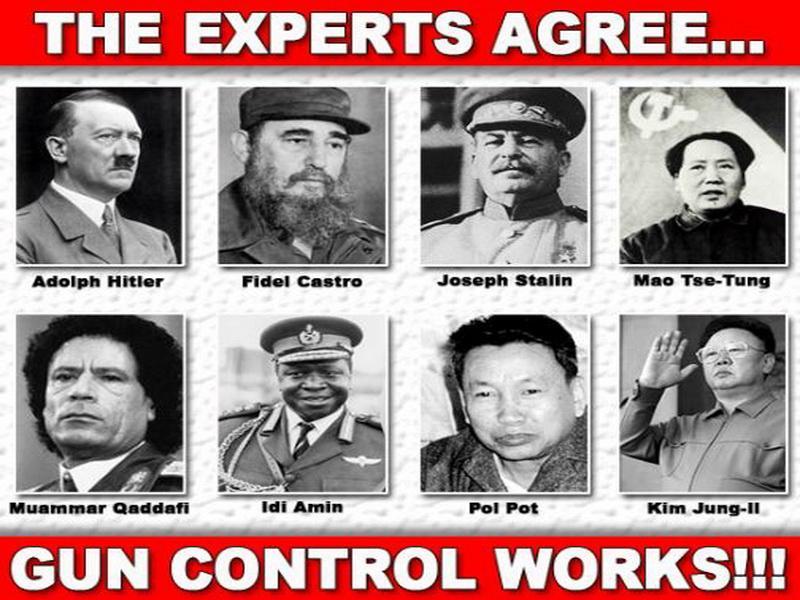
Great post from Dan Mitchell:

This image really captures the essence of the issue. Share this with your statist friends and maybe they’ll begin to understand.

Thank you so much for your time. I know how valuable it is. I also appreciate the fine family that you have and your commitment as a father and a husband.

Sincerely,

Everette Hatcher III, 13900 Cottontail Lane, Alexander, AR 72002, ph 501-920-5733, lowcostsqueegees@yahoo.com

The White House, Washington


May 23, 2012

Dear Everette:

Thank you for taking the time to write.  I have heard from many Americans regarding firearms policy, and I appreciate your perspective.

I am committed to making my Administration the most open and transparent in history, and part of delivering on that promise is hearing from people like you.  I take seriously your opinions and respect your point of view on this important issue.  Please know that your concerns will be on my mind in the days ahead.

Thank you, again, for writing.  I encourage you to visit www.WhiteHouse.gov to learn more about my Administration or to contact me in the future.

Sincerely,

Barack Obama

Visit WhiteHouse.gov

Related posts:

“Feedback Friday” Letter to White House generated form letter response May 9, 2012 (part 6)

I have been writing President Obama letters and have not received a personal response yet.  (He reads 10 letters a day personally and responds to each of them.) However, I did receive a form letter in the form of an email on May 9, 2012. I don’t know which letter of mine generated this response so I have […]

“Feedback Friday” Letter to White House generated form letter response Jan 27, 2011 (part 5)

I have been writing President Obama letters and have not received a personal response yet.  (He reads 10 letters a day personally and responds to each of them.) However, I did receive a form letter in the form of an email on April 16, 2011. First you will see my letter to him which was mailed around April 9th. […]

Open letter to President Obama (Part 84.2)

__________ Milton Friedman – Socialized Medicine at Mayo Clinic in 1978 President Obama c/o The White House 1600 Pennsylvania Avenue NW Washington, DC 20500 Dear Mr. President, I know that you receive 20,000 letters a day and that you actually read 10 of them every day. I really do respect you for trying to get […]

Dear Senator Pryor, why not pass the Balanced Budget Amendment? ( Thirsty Thursday, Open letter to Senator Pryor)

Dear Senator Pryor, Why not pass the Balanced  Budget Amendment? As you know that federal deficit is at all time high (1.6 trillion deficit with revenues of 2.2 trillion and spending at 3.8 trillion). On my blog www.HaltingArkansasLiberalswithTruth.com I took you at your word and sent you over 100 emails with specific spending cut ideas. However, I did […]

Open letter to President Obama (Part 84.1)

President Obama c/o The White House 1600 Pennsylvania Avenue NW Washington, DC 20500 Dear Mr. President, I know that you receive 20,000 letters a day and that you actually read 10 of them every day. I really do respect you for trying to get a pulse on what is going on out here. It seems […]

An open letter to President Obama (Part 84, A response to your budget)

1,000 Days Without A Budget Uploaded by HeritageFoundation on Jan 24, 2012 http://blog.heritage.org | Today marks the 1,000th day since the United States Senate has passed a budget. While the House has put forth (and passed) its own budget, the Senate has failed to do the same. To help illustrate how extraordinary this failure has […]

An open letter to President Obama (Part 83)

Congressman Rick Crawford State of the Union Response 2012 Uploaded by RepRickCrawford on Jan 24, 2012 Rep. Rick Crawford responds to the State of the Union address January 24, 2012 __________ President Obama c/o The White House 1600 Pennsylvania Avenue NW Washington, DC 20500 Dear Mr. President, I know that you receive 20,000 letters a day […]

Open letter to President Obama (Part 82)

Sen Obama in 2006 Against Raising Debt Ceiling Uploaded by RepCliffStearns on Jun 20, 2011 Rep. Stearns on the House Floor cites Sen. Obama’s opposition in 2006 to increasing the debt ceiling, 6-14-11 ________________________ President Obama c/o The White House 1600 Pennsylvania Avenue NW Washington, DC 20500 Dear Mr. President, I know that you receive […]

Open letter to President Obama (Part 81)

President Obama c/o The White House 1600 Pennsylvania Avenue NW Washington, DC 20500 Dear Mr. President, I know that you receive 20,000 letters a day and that you actually read 10 of them every day. I really do respect you for trying to get a pulse on what is going on out here.  Here is […]

Open letter to President Obama (Part 80)

President Obama c/o The White House 1600 Pennsylvania Avenue NW Washington, DC 20500 Dear Mr. President, I know that you receive 20,000 letters a day and that you actually read 10 of them every day. I really do respect you for trying to get a pulse on what is going on out here. It seems […]

Open letter to President Obama (Part 79)

_ President Obama c/o The White House 1600 Pennsylvania Avenue NW Washington, DC 20500 Dear Mr. President, I know that you receive 20,000 letters a day and that you actually read 10 of them every day. I really do respect you for trying to get a pulse on what is going on out here. I […]

Open letter to President Obama (Part 78)

Milton Friedman – Redistribution of Wealth Uploaded by LibertyPen on Feb 12, 2010 Milton Friedman clears up misconceptions about wealth redistribution, in general, and inheritance tax, in particular. http://www.LibertyPen.com __________________ President Obama c/o The White House 1600 Pennsylvania Avenue NW Washington, DC 20500 Dear Mr. President, I know that you receive 20,000 letters a day […]