Monthly Archives: April 2012

Francis Schaeffer’s film series “How should we then live?” (The Scientific Age) can be seen on the www.thedailyhatch.org

Photo: of Francis and Edith Schaeffer.

Edith and Francis Schaeffer

This is one of the most insightful episodes and here is a portion of it with links to complete episodes below:

E P I S O D E 6

How Should We Then Live 6#1

I am sharing with you a film series that I saw in 1979. In this film Francis Schaeffer asserted that was a shift in Modern Science. A. Change in conviction from earlier modern scientists.B. From an open to a closed natural system: elimination of belief in a Creator.1. Closed system derives not from the findings of science but from philosophy.2. Now there is no place for the significance of Man, for morals, or for love.C. Darwin taught that all life evolved through the survival of the fittest.1. Serious problems inherent in Darwinism and Neo-Darwinism.

This is probably one of the most important episodes in the series.

T h e

SCIENTIFIC AGE

I. Church Attacks on Copernican Science Were Philosophical

Galileo’s and Copernicus’ works did not contradict the Bible but the elements of Aristotle’s teaching which had entered the Church.

II. Examples of Biblical Influence

A. Pascal’s work.

1. First successful barometer; great writing of French prose.

2. Understood Man’s uniqueness: Man could contemplate, and Man had value to God.

B. Newton

1. Speed of sound and gravity.

2. For Newton and the other early scientists, no problem concerning the why, because they began with the existence of a personal God who had created the universe.

C. Francis Bacon

1. Stressed careful observation and systematic collection of information.

2. Bacon and the other early scientists took the Bible seriously, including its teaching concerning history and the cosmos.

D. Faraday

1. Crowning discovery was the induction of the electric current.

2. As a Christian, believed God’s Creation is for all men to understand and enjoy, not just for a scientific elite.

III. Scientific Aspects of Biblical Influence

A. Oppenheimer and Whitehead: biblical foundations of scientific revolution.

B. Not all early scientists individually Christian, but all lived within Christian thought forms. This gave a base for science to continue and develop.

C. The contrast between Christian-based science and Chinese and Arab science.

D. Christian emphasis on an ordered Creation reflects nature of reality and is therefore acted upon in all cultures, regardless of what they say their world view is.

1. Einstein’s theory of relativity does not imply relative universe.

2. Man acts on assumption of order, whether he likes it or not.

3. Master idea of biblical science.

a) Uniformity of natural causes in an open system: cause and effect works, but God and Man not trapped in a process.

b) All that exists is not a total cosmic machine.

c) Human choices therefore have meaning and effect.

d) The cosmic machine and the machines people make therefore not a threat.

Other segments:

Francis Schaeffer’s “How should we then live?” Video and outline of episode 10 “Final Choices” (Schaeffer Sundays)

E P I S O D E 1 0 How Should We Then Live 10#1 FINAL CHOICES I. Authoritarianism the Only Humanistic Social Option One man or an elite giving authoritative arbitrary absolutes. A. Society is sole absolute in absence of other absolutes. B. But society has to be led by an elite: John Kenneth […]

Francis Schaeffer’s “How should we then live?” Video and outline of episode 9 “The Age of Personal Peace and Affluence” (Schaeffer Sundays)

E P I S O D E 9 How Should We Then Live 9#1 T h e Age of Personal Peace and Afflunce I. By the Early 1960s People Were Bombarded From Every Side by Modern Man’s Humanistic Thought II. Modern Form of Humanistic Thought Leads to Pessimism Regarding a Meaning for Life and for Fixed […]

Francis Schaeffer’s “How should we then live?” Video and outline of episode 8 “The Age of Fragmentation” (Schaeffer Sundays)

E P I S O D E 8 How Should We Then Live 8#1 I saw this film series in 1979 and it had a major impact on me. T h e Age of FRAGMENTATION I. Art As a Vehicle Of Modern Thought A. Impressionism (Monet, Renoir, Pissarro, Sisley, Degas) and Post-Impressionism (Cézanne, Van Gogh, Gauguin, […]

Francis Schaeffer’s “How should we then live?” Video and outline of episode 7 “The Age of Non-Reason” (Schaeffer Sundays)

E P I S O D E 7 How Should We Then Live 7#1 I am thrilled to get this film series with you. I saw it first in 1979 and it had such a big impact on me. Today’s episode is where we see modern humanist man act on his belief that we live […]

Francis Schaeffer’s “How should we then live?” Video and outline of episode 6 “The Scientific Age” (Schaeffer Sundays)

E P I S O D E 6 How Should We Then Live 6#1 I am sharing with you a film series that I saw in 1979. In this film Francis Schaeffer asserted that was a shift in Modern Science. A. Change in conviction from earlier modern scientists.B. From an open to a closed natural system: […]

Francis Schaeffer’s “How should we then live?” Video and outline of episode 5 “The Revolutionary Age” (Schaeffer Sundays)

E P I S O D E 5 How Should We Then Live 5-1 I was impacted by this film series by Francis Schaeffer back in the 1970′s and I wanted to share it with you. Francis Schaeffer noted, “Reformation Did Not Bring Perfection. But gradually on basis of biblical teaching there was a unique improvement. A. […]

Francis Schaeffer’s “How should we then live?” Video and outline of episode 4 “The Reformation” (Schaeffer Sundays)

How Should We Then Live 4-1 I was impacted by this film series by Francis Schaeffer back in the 1970′s and I wanted to share it with you. Schaeffer makes three key points concerning the Reformation: “1. Erasmian Christian humanism rejected by Farel. 2. Bible gives needed answers not only as to how to be right with […]

Francis Schaeffer’s “How should we then live?” Video and outline of episode 3 “The Renaissance”

How Should We Then Live 3-1 I was impacted by this film series by Francis Schaeffer back in the 1970′s and I wanted to share it with you. Schaeffer really shows why we have so many problems today with this excellent episode. He noted, “Could have gone either way—with emphasis on real people living in […]

Francis Schaeffer’s “How should we then live?” Video and outline of episode 2 “The Middle Ages” (Schaeffer Sundays)

How Should We Then Live 2-1 I was impacted by this film series by Francis Schaeffer back in the 1970′s and I wanted to share it with you. Schaeffer points out that during this time period unfortunately we have the “Church’s deviation from early church’s teaching in regard to authority and the approach to God.” […]

Francis Schaeffer’s “How should we then live?” Video and outline of episode 1 “The Roman Age” (Schaeffer Sundays)

How Should We Then Live 1-1 Today I am starting a series that really had a big impact on my life back in the 1970′s when I first saw it. There are ten parts and today is the first. Francis Schaeffer takes a look at Rome and why it fell. It fell because of inward […]
An open letter to President Obama (Part 61)

Rep. James Lankford Responds to President Obama’s $3.8 Trillion Budget

Uploaded by  on Feb 13, 2012

Rep. James Lankford (R-OK) responded to President Obama’s FY 2013 budget proposal that fails to cut the deficit in half by the end of his first term as promised. The budget also delayed the tough decisions to cut spending and reform entitlements that are needed to avoid a debt crisis.

_______________________

President Obama c/o The White House
1600 Pennsylvania Avenue NW
Washington, DC 20500

Dear Mr. President,

I know that you receive 20,000 letters a day and that you actually read 10 of them every day. I really do respect you for trying to get a pulse on what is going on out here.

I really am offended when I hear that you claim that your budget cuts 4 trillion in the next 10 years but it really adds to the deficit many trillions of dollars. What kind of funny math is that? Take a look at this article below:

Feb 13 2012

Boozman Comments on President Obama’s Budget Proposal

WASHINGTON D.C. – U.S. Senator John Boozman (R-AR) issued the following statement on the release of President Obama’s budget proposal:

“America deserves better than a collection of tax hikes, phony savings and additional debt.  The President’s budget proposal is bad for seniors as it takes no steps to protect and strengthen Medicare and Social Security, will hurt chances of an economic recovery through tax hikes and will add $11 trillion more to our already staggering national debt in a 10-year period.”

“This is clearly an election year proposal.  Rather than a serious attempt to outline a direction for our economic future, the President is trying to be all for everyone with this plan.  Just as the President’s previous proposals have been voted down, I would not expect this one to pass should it come up for a vote in the Senate.”

“This budget proposal from the White House is stark reminder that we need to pass the Honest Budget Act that I have cosponsored.  The President’s budget is loaded with gimmicks and accounting tricks that our bill would put an end to so that the American people would have an opportunity to weigh in on a real budget that would get our fiscal house in order.”

“When it comes to our country’s budget, Americans have a right to expect accountability, honesty and responsibility.  This proposal has none of those.”

Thank you so much for your time. I know how valuable it is. I also appreciate the fine family that you have and your committment as a father and a husband.Sincerely,Everette Hatcher III, 13900 Cottontail Lane, Alexander, AR 72002, ph 501-920-5733, lowcostsqueegees@yahoo.com

Obama is wrong about about Buffett Rule

Matt Welch Discusses the Buffett Rule and His Favorite Beatles Songs on Varney & Co.

Here he goes again with the class warfare.

NPR, Obama, and the Misleading ‘Buffett Rule’

Posted by David Boaz

NPR says that President Obama will propose that millionaires pay income taxes “at the same rates as average working Americans.” On the 9:00 a.m. hourly news.)

That would be good news for most millionaires:

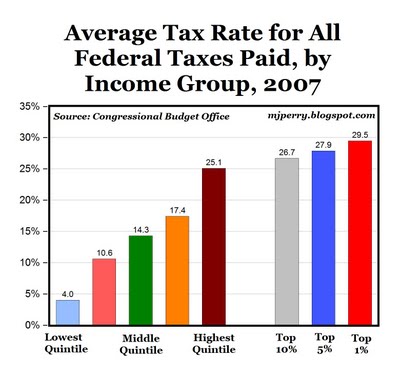
To be sure, NPR’s longer stories on Obama and the “Buffett rule” are more precise, as in Tuesday’s story that said the proposed law “would require anyone making a million dollars a year or more to pay at least 30 percent in taxes.” Even there, though, the sentence went on to say “- about twice what some millionaires pay now.” And as the charts above show, that’s quite misleading. The Congressional Budget Office reported in 2010,

The overall federal tax system is progressive—that is, average tax rates generally rise with income. Households in the bottom quintile (fifth) of the income distribution paid 4 percent of their income in federal taxes, while the middle quintile paid 14 percent, and the highest quintile paid 25 percent. Average rates continued to rise within the top quintile, with the top 1 percent facing an average rate of close to 30 percent.

An open letter to President Obama (Part 60)

_________________________

Corker Says President’s 2012 Budget Proposal Shows “Lack of Urgency” on Spending

Uploaded by  on Feb 14, 2011

In remarks on the Senate floor today, U.S. Senator Bob Corker, R-Tenn., expressed disappointment in President Obama’s 2012 budget proposal, saying it displayed a “lack of urgency” to get federal spending under control. Corker has introduced the CAP Act to dramatically cut federal spending over the next decade.

_________________________________________

President Obama c/o The White House
1600 Pennsylvania Avenue NW
Washington, DC 20500

Dear Mr. President,

I know that you receive 20,000 letters a day and that you actually read 10 of them every day. I really do respect you for trying to get a pulse on what is going on out here.

Below are some comments that might interest you.

Feb 15 2012

Boozman Urges America to Reject the President’s Reckless Budget

WASHINGTON D.C. – U.S. Senator John Boozman (R-AR) took to the Senate floor today to urge America to reject President Obama’s reckless budget proposal and focus on passing a fiscally responsible budget.

“When you get down to it, President Obama was never serious about his pledge to cut the deficit in half by the end of his first term.  Like every budget this administration has proposed, this one was written with red ink.  The deficit spending proposed in the President’s FY13 budget topped a trillion once again.  This is an unsustainable rate of spending,” Boozman said in his speech.

The full text of the speech can be found here:

Madam President: On Monday morning, the country was presented with President Obama’s budget proposal for the fiscal year.

If you were to only listen to the President and his surrogates, you would think this proposal is great for the nation.

The acting budget director says the President’s budget “makes the right investments.”

The head of the President’s National Economic Council used a litany of sports metaphors to make the case that “the president has very much stepped up to the plate.”

And the President himself said his budget makes “some tough choices in order to put this country back on a more sustainable fiscal path.”

The reason they are so excited about this proposal is that, they believe, in an election year, they have offered every ally something to woe their support.  This budget proposal truly does try to be everything for everyone.  The problem is, however, no one wins with it.

When you scratch the surface of this proposal, the shine quickly wears off.

The deficit reduction claims that the administration throws out to defend this proposal don’t hold water.

You can’t claim $1 trillion in cuts that Congress pushed through during the debt ceiling debate as new cuts.

Nor can you say with all honesty that $850 billion in war savings are real cuts.  This money was never going to be spent in the first place.

When you get down to it, President Obama was never serious about his pledge to cut the deficit in half by the end of his first term.  Like every budget this administration has proposed, this one was written with red ink.  The deficit spending proposed in the President’s FY13 budget topped a trillion once again.  This is an unsustainable rate of spending.

On Monday, the President’s team was doing a full-scale PR push for this budget.  At one point during the rollout, a reporter asked the President’s top economic aides whatever happened to that pledge the President had made to the American people.

Gone from their answers was the tough talk of making “difficult decisions” and facing “challenges we’ve long neglected.”  Instead, his advisors were left to pull out the old standby excuse that the President and his team simply “didn’t realize how bad” the economy actually is when they first took over.

Clearly, they still don’t realize it now.

Not only does the President’s budget ignore the very real disarray our fiscal house is in, it makes the mess worse.

Since President Obama took office, our national debt has shot up 42%.   Under President Obama’s watch, the national debt has jumped to a jaw-dropping $15.1 trillion.

This is the fourth year in a row that the budget would run a deficit above $1.29 trillion.  When it comes to fiscal responsibility, this is not a record to be proud of.

America deserves better than a collection of tax hikes, phony savings and additional debt.

The President’s budget proposal is bad for seniors as it takes no steps to protect and strengthen Medicare and Social Security, will hurt chances of an economic recovery through tax hikes and will add $11 trillion more to our already staggering national debt in a 10-year period.

We cannot continue to keep going down this road.   America’s fiscal health is at stake.  We’ve got to stop spending more than we take in.  If not, we risk going the direction of Greece, Portugal, Italy and other European countries that have spent their way to the brink of default.

As we head into the final year of President Obama’s first term, we have already witnessed the most rapid increase in debt under any U.S. President.  With our national debt already the size of our entire economy, the President has proposed a budget that calls for hundreds of billions of dollars in new spending.

If we followed through with this budget, deficit spending would exceed $600 billion every year but one over the next decade.  Our national debt would grow to $18.7 trillion.

President Obama would like you to believe that if we simply raise taxes we can solve all of our fiscal problems. A recent CBO report shows that spending is the primary cause of our fiscal crisis and supports spending cuts rather than tax increases to reverse this trend.  But the President is holding steadfast to his desire to raise taxes as an answer.

The President’s failed policy of borrowing, spending and taxing is just what the CBO is warning us to avoid.   It hasn’t worked in the past and it won’t work in the future.

Washington does not have a revenue problem, it has a spending problem.  The fact that President Obama still believes we can tax our way out of the problem reveals a huge disconnect with the American people.

Madam President, when it comes to our country’s budget, Americans have a right to expect accountability, honesty and responsibility.  This proposal has none of those.

If President Obama refuses to acknowledge and address the very real economic crisis facing our country, let’s show America that we will.  We can do so by rejecting the White House’s proposal and passing a responsible budget that puts our nation back on a fiscally responsible path. 

___________________

We got to start making major cuts in our budget or we will never balance the budget and we will end up like Greece.

Thank you so much for your time. I know how valuable it is. I also appreciate the fine family that you have and your committment as a father and a husband.Sincerely,Everette Hatcher III, 13900 Cottontail Lane, Alexander, AR 72002, ph 501-920-5733, lowcostsqueegees@yahoo.com

Woody Allen’s career in pictures “Woody Wednesday”

September (1987)September (1987)

The director famously re-wrote, re-cast and re-shot this film after seeing his original finished product. The second go-round starred (from left) Jack Warden, Elaine Stritch and Mia Farrow (with Allen, second from right). “I usually reshoot tons of material,” he explained at the time. “The fact is, I’d like to shoot September a third time.”

__________________

It is my view that this next movie is Woody Allen’s best by far:

Crimes and Misdemeanors (1989) 
Crimes and Misdemeanors (1989)

Roger Ebert called this flick one of Allen’s best. The director, pictured with cinematographer Sven Nykvist on set, was nominated for three Academy Awards, including best director and writing. “Who else but Woody Allen could make a movie in which virtue is punished, evildoing is rewarded and there is a lot of laughter – even subversive laughter at the most shocking times?” wrote the famous reviewer. 

Mighty Aphrodite (1995) 
Mighty Aphrodite (1995)

Mira Sorvino won an Oscar for her portrayal of a hooker in this comedy. “Woody does not care if you say his lines,” she has said. “For our greatest comedic film writer, I think that’s incredible. I said them anyway, but I had the leeway, if I wanted, to ad lib.” 

Related posts:

According to Woody Allen Life is meaningless (Woody Wednesday Part 2)

Woody Allen, the film writer, director, and actor, has consistently populated his scripts with characters who exchange dialogue concerning meaning and purpose. In Hannah and Her Sisters a character named Mickey says, “Do you realize what a thread were all hanging by? Can you understand how meaningless everything is? Everything. I gotta get some answers.”{7} […]

“Woody Wednesday” Part 1 starts today, Complete listing of all posts on the historical people mentioned in “Midnight in Paris”

I have gone to see Woody Allen’s latest movie “Midnight in Paris” three times and taken lots of notes during the films. I have attempted since June 12th when I first started posting to give a historical rundown on every person mentioned in the film. Below are the results of my study. I welcome any […]

What can we learn from Woody Allen Films?

Looking at the (sometimes skewed) morality of Woody Allen’s best films. In the late ’60s, Woody Allen left the world of stand-up comedy behind for the movies. Since then, he’s become one of American cinema’s most celebrated filmmakers. Sure, he’s had his stinkers and his private life hasn’t been without controversy. But he’s also crafted […]

Nihilism can be seen in Woody Allen’s latest film “Midnight in Paris”

In one of his philosophical and melancholy musings Woody Allen once drily observed: “More than any other time in history, mankind faces a crossroads. One path leads to despair and utter hopelessness. The other, to total extinction. Let us pray we have the wisdom to choose correctly.” Life tortures Woody Allen posted by Rod Dreher […]

Movie Review of “Midnight in Paris” lastest movie by Woody Allen

Midnight in Paris – a delightfully entertaining film of wit, wonder and love Have you ever thought that you were born in the wrong time? Since I was a child, I found my love for MGM musicals set me apart from my friends. Are we really out of place, or is a sense of nostalgia […]

“Midnight in Paris” movie review plus review of 5 Woody Allen classics (video clips from Annie Hall)

Five favorite Woody Allen classics Add a comment Sean Kernan , Davenport Classic Movies Examiner June 11, 2011 Woody Allen’s new film “Midnight in Paris” starring Owen Wilson, Rachel McAdams and Oscar winner Marion Cotillard opened Friday, June 10th at Rave Motion Pictures in Davenport, Iowa. “Midnight in Paris” stars Owen Wilson as a blocked […]

The government’s recipe for success has been 7 stimulus programs

Reminds me of the success of these kids at making a cake.

Obama wants executives to be chariable but Henry Ford and Steve Jobs helped by creating jobs

Steve Jobs did not give away a lot of money to charity, but he did help many to go up the economic ladder. Henry Ford did the same thing.

Mike Kelsey

April 17, 2012 at 1:15 pm

President Obama has a new role model for his Buffett Rule tax—Henry Ford. It’s an odd choice considering that Ford advocated free-market capitalism and opposed redistributive policies.

Despite the lucrative government contracts, Henry Ford refused to participate in FDR’s 1933 National Recovery Act. (Let’s not forget that Ford Motors was the only “big-three” automaker to decline the recent government bailout.)

So why cite Ford as support for a redistributive “fairness tax”—especially one that discourages investment in the sort of successful companies that Ford worked to create?

In his stump speech for the Buffett Rule, Obama argues that Ford was a progressive who understood that “prosperity has never trickled down from the wealthy few.” Accordingly, Ford paid high wages to redistribute his unwarranted profits to the middle class.

Yes, Ford’s $5-a-day wage in 1914 (a little over $100 by today’s measure) was more than double the average autoworker’s pay. And yes, Ford felt a personal moral obligation to pay his workers well and help reduce poverty (what he called “welfare capitalism”). But paying high wages to valuable employees wasn’t a redistributive plan—it was good business.

We were not distributing anything,” he explained in his autobiography. “We were building a future. A low wage business is always insecure.” Ford needed the $5-a-day wage to attract and retain skilled workers and stay ahead of his competitors. He estimated that the high wage reduced the number of new employees he had to hire and train by 200,000 people per year.

Henry Ford was the Steve Jobs of his day, and cars were iPods of the 1920s. Just as Apple pays high wages to engineers to produce cutting-edge gadgets, so Ford paid high wages to retain skilled labor to build cars. Ford paid these wages because the market allowed—nay, demanded—them. Far from driving a top-down progressive policy, Ford was effectively responding to the needs of the market.

And how did Ford react to blatantly redistributive policies? “I do not think that this country is ready to be treated like Russia for a while,” Ford said of the New Deal. “There is a lot of the pioneer spirit here yet.”

That sentiment applies to the Buffett Rule. The rule would impose a 30 percent alternative minimum tax rate on all income (now defined to include wages, capital gains, and dividends) above $1 million. The Buffett Rule would stifle American industriousness and weaken the economy by discouraging investment, all while reducing the deficit by a mere 0.5 percent. Worse than the policy outcome is the destructive hubris underlying the proposal: the Buffett Rule assumes that only government redistribution can help the middle class.

Obama learned the wrong lesson from Ford’s $5-a-day wage. Ford created remunerative jobs for the middle class not because of stringent progressive regulations and redistributive programs but because his company had the freedom and the flexibility to respond to the needs of market.

_______________

Related posts:

Should Steve Jobs have been ashamed of the sweatshops he used in China? (Part 2)

In the first post I included the liberal case against Steve Jobs concerning the “sweat shop” he used. Here I am just going to show the conservative view.  It is best done by this 9 minute video clip and transcript. “FREE TO CHOOSE” 1: The Power of the Market (Milton Friedman) Free to Choose ^ […]

Should Steve Jobs been ashamed of the sweat shops he used in China? (Part 1)

This is a very easy issue for me. Milton Friedman noted in 1973:  Sweatshops and child labor were conditions that resulted more from poverty than from laissez-faire economics. Wretched working conditions still exist in nations with all sorts of enlightened social legislation but where poverty is still extreme. We in the United States no longer […]

Steve Jobs to the President: “You’re headed for a one-term presidency,”

I have posted a lot about Steve Jobs and I have the links below after this fine aricle: Steve Jobs to Obama in 2010: ‘You’re Headed for a One-Term Presidency’ Lachlan Markay October 21, 2011 at 12:04 pm Steve Jobs, the late Apple founder and digital pioneer, told President Obama in a 2010 meeting that […]

Did Steve Jobs help people even though he did not give away a lot of money?

Did Steve Jobs help people even though he did not give away a lot of money? Uploaded by UM0kusha0kusha on Sep 16, 2010 clip from The First Round Up *1934* ~~enjoy!! ______________________________________________ In the short film above you can see that it was the kindness of the two “haves” to the other “havenots” that allowed everyone to eat. […]

The many sides of Steve Jobs

Another look at Steve Jobs. Best Bits From the Steve Jobs Bio By Sadie Bass | The Daily Beast – 1 hr 0 mins ago The Profound Effect of Being Adopted What’s the key to understanding Steve Jobs? According to his biographer, Walter Isaacson, it starts at the beginning—literally. Jobs was born to unwed parents and placed […]

Steve Jobs’ last words and his spiritual views

Steve Jobs’ 2005 Stanford Commencement Address Uploaded by StanfordUniversity on Mar 7, 2008 Drawing from some of the most pivotal points in his life, Steve Jobs, chief executive officer and co-founder of Apple Computer and of Pixar Animation Studios, urged graduates to pursue their dreams and see the opportunities in life’s setbacks — including death […]

If you want to check out other posts I have done about about Steve Jobs:Some say Steve Jobs was an atheist , Steve Jobs and Adoption , What is the eternal impact of Steve Jobs’ life? ,Steve Jobs versus President Obama: Who created more jobs? ,Steve Jobs’ view of death and what the Bible has to say about it ,8 things you might not know about Steve Jobs ,Steve Jobs was a Buddhist: What is Buddhism? ,Did Steve Jobs help people even though he did not give away a lot of money?

Apple CEO Steve Jobs  (AP Photo/Paul Sakuma)

An open letter to President Obama (Part 59)


President Obama c/o The White House
1600 Pennsylvania Avenue NW
Washington, DC 20500

Dear Mr. President,

I know that you receive 20,000 letters a day and that you actually read 10 of them every day. I really do respect you for trying to get a pulse on what is going on out here.

Dan Mitchell of the Cato Institute shows why your plan to tax the rich will not solve our deficit problem.  

Explaining in the New York Post Why Obama’s Soak-the-Rich Tax Policy Is Doomed to Failure

April 17, 2012 by Dan Mitchell

I think high tax rates on certain classes of citizens are immoral and discriminatory. If the government is going to collect revenue, all taxpayers should be treated equally, with something akin to a simple flat tax.

But most people don’t seem to care about having the law apply the same to all people, so I make a strictly utilitarian case for low tax rates in today’s New York Post. Here some of what I wrote.

Whether it’s through the Buffett Rule, higher income-tax rates or double taxation of dividends and capital gains, President Obama often demands that “rich” taxpayers and big corporations send more money to Washington. But…trying to get more money from upper-income taxpayers is like playing whack-a-mole. So long as tax rates are high, rich people will figure out ways to protect their income.It doesn’t take a tax genius; any rich person can make a phone call or hit a few computer keys and shift his or her investments to tax-free municipal bonds. It’s not good for the economy when capital gets diverted to help finance the excess spending of Detroit or California, but it’s an effective way of stiff-arming the IRS. Or the rich can play the green-energy scam, getting all sorts of credits to offset their tax liabilities. …Even if lawmakers abolished the various tax-code distortions, they might still be disappointed. The one sure way for rich people to lower their tax bills is by generating less income. …This isn’t some sort of modern-day revelation. Andrew Mellon, a Treasury secretary during the 1920s, noted that “the history of taxation shows that taxes which are inherently excessive are not paid. The high rates inevitably put pressure upon the taxpayer to withdraw his capital from productive business.”

I then provide a specific example, looking at how Reagan’s lower tax rates resulted in a lot more revenue from the rich.

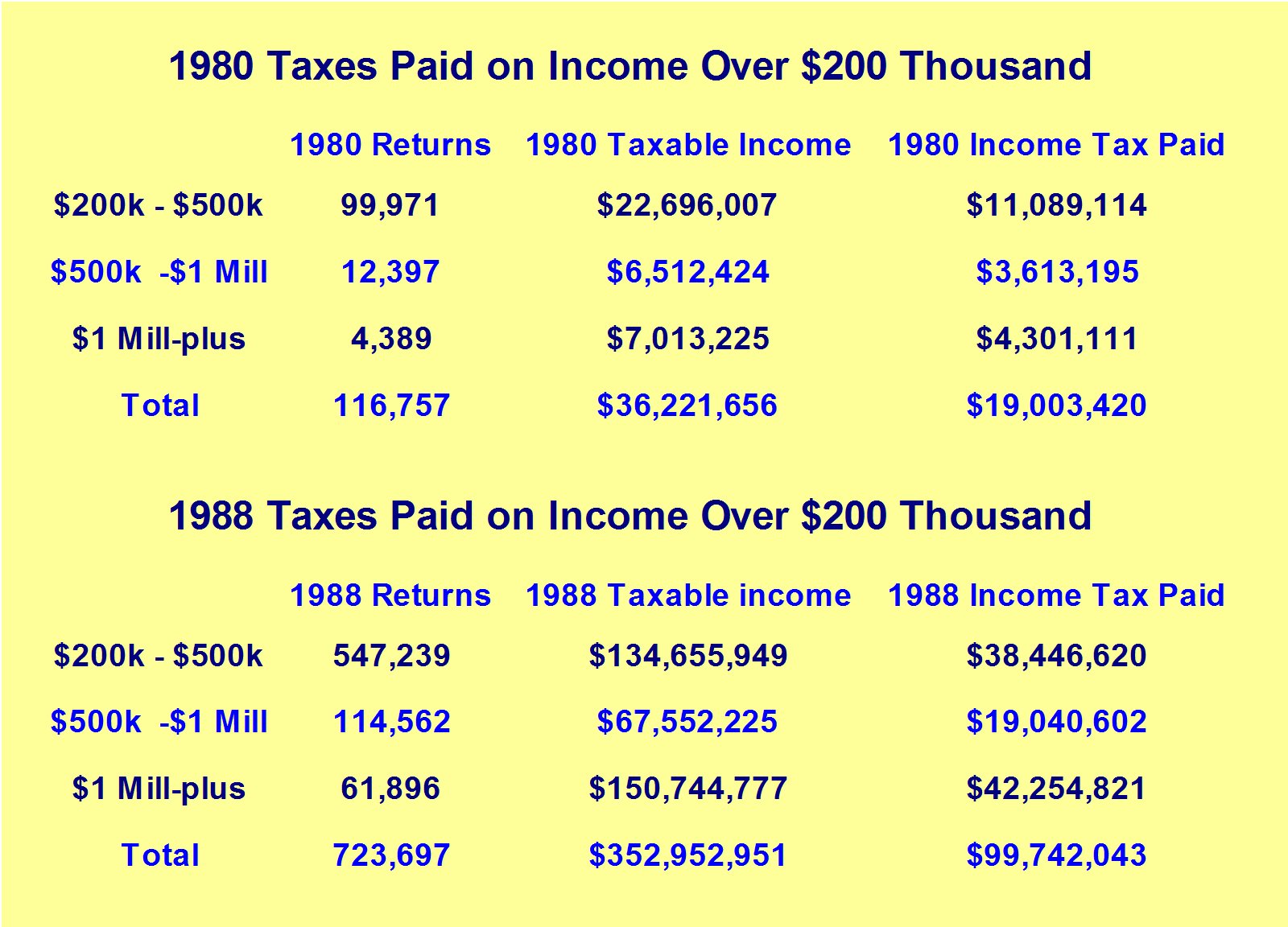
Unlike the rest of us, the rich have a great ability to alter the timing, amount and composition of their income. That’s because, according to IRS data, those with more than $1 million of adjusted gross income get only 33 percent of it from wages and salaries. The super-rich (those with income above $10 million) rely on wages and salaries for only 19 percent of their income. In 1980, when the top tax rate was 70 percent, rich people (those with incomes of more than $200,000) reported about $36 billion of income; the IRS collected about $19 billion of that amount. So what happened when President Ronald Reagan lowered the top tax rate to 28 percent by 1988? Did revenue fall proportionately, to about $8 billion? Folks on the left thought that would happen, complaining that Reagan’s “tax cuts for the rich” would starve the government of revenue and give upper-income taxpayers a free ride. But if we look at the 1988 IRS data, rich people paid more than $99 billion to Uncle Sam. That is, because rich taxpayers were willing to earn and report much more income, the government collected five times as much revenue with a lower rate.

I also included above, for readers of this blog, a table with the raw numbers from the IRS. Feel free to click for a larger image and see how the “rich” responded to better tax policy.

I then close with a warning about Obama’s class warfare policy.

Obama wants to run the experiment in reverse. He hasn’t proposed to push the top tax rate up to 70 percent, thank goodness, but the combined effect of his class-warfare policies would mean a big increase in marginal tax rates. That might be good for workers in China, India or Ireland, because American jobs and investment would migrate to those places. But it’s not the right policy for the United States.

In other words, even if you’re a leftist and your main goal is giving the government more revenue, higher tax rates are a bad idea. The rich will simply figure out ways to protect their earnings while the rest of us suffer because the economy loses some of its dynamism.

______________

Thank you so much for your time. I know how valuable it is. I also appreciate the fine family that you have and your committment as a father and a husband.

Sincerely,

Everette Hatcher III, 13900 Cottontail Lane, Alexander, AR 72002, ph 501-920-5733, lowcostsqueegees@yahoo.com

Arkansas should make a run at James Franklin

I think that Derek Dooley has the biggest rebuilding of the coaches mentioned below. I heard Vince Dooley speak at the Little Rock Touchdown Club meeting in October of 2010 and he said that his son inherited a program that had been set back by defections. In fact, I read recently that the great recruiting class that Lane Kiffin  brought in had flopped because of various reasons and only one player out of those 23 have even started over 10 ten games. Vince Dooley wondered if the Vol fans would be patient enough for Derek to get the job done. I don’t think they will.

James Franklin has been a great hire for Vandy. I know there are coaches who could motivate players to overacheive, but they may not be able to take very talented players and get the most out of them. I wish Arkansas would make a run at Franklin. I have been very impressed with him so far. He is great with the press and the x’s and o’s and will keep the current Arkansas system.

Below is the latest story from Arkansas Sports 360:

4/16/2012 at 10:30am

Vanderbilt's James Franklin is one of the five most recent coaching hires in the SEC. He guided the Commodores to six wins and a bowl appearance in his first season.
Image by Mark Wagner

Vanderbilt’s James Franklin is one of the five most recent coaching hires in the SEC. He guided the Commodores to six wins and a bowl appearance in his first season.

Arkansas appeared to have one of the more stable coaching situations in the SEC entering April. Now, thanks to Bobby Petrino’s wild ride, the Razorbacks find themselves with a rare spring coaching opening.

Athletic Director Jeff Long is evaluating the situation, trying to decide if he should hire now or go the interim route for 2012, then make a hire (I’ve got thoughts on that I’ll share later in the week). Long raised the bar at Arkansas when hiring Petrino (we’re talking about the bar for pure football, not for good citizenry, btw).

Long has money to spend. Petrino was making $3.56 million. The Razorbacks are coming off a two-year stretch in which they finished in the Top 10 twice and went 21-5.

Seems like there is much more to offer than when Long hired Petrino.

So where is the bar when it comes to filling SEC coaching positions?

While it’s hard to make a true comparison between the UA’s situation and those of other SEC schools – for a variety of reasons, not the least of which is the timing of the Razorbacks’ opening — let’s look at what other ADs have done when filling the past five openings.

Below are the six most recent hires in the SEC, the jobs they inherited and money they’re making:

Hugh Freeze, Ole Miss
Entering:
First Season
Previous Stop:
Arkansas State (10-2, one season)
Replaced:
Houston Nutt (24-26, 10-22)
Previous Salary:
$255,000
Current Salary:
$1.3 million
Season Before He Arrived:
Ole Miss finished 2-10, 0-8
Since He Arrived:
Hired In December

Kevin Sumlin, Texas A&M
Entering:
First Season
Previous Stop:
Houston (35-17, 24-8)
Replaced:
Mike Sherman (25-25, 15-8 Big 12)
Previous Salary:
  $1 million
Current Salary:
  $2 million
Season Before He Arrived:
A&M was 6-6, 4-5 Big 12
Since He Arrived:
 Hired In December

Will Muschamp, Florida
Entering:
Second Season
Previous Stop:
Texas Defensive Coordinator
Replaced:
Urban Meyer (65-15, 36-12 SEC)
Previous Salary:
  $900,000
Current Salary:
  $2.7 million
Season Before He Arrived:
Florida was 8-5, 4-4
Since He Arrived:
Gators were 7-6, 3-5; Gator Bowl victory for 2011

James Franklin, Vanderbilt
Entering:
Second Season
Previous Stop:
Maryland Offensive Coordinator
Replaced:
Robbie Caldwell (2-10, 1-7 SEC)
Previous Salary:
  $486,500
Current Salary:
 “Approximately $3 million”
Before He Arrived:
Vanderbilt was 2-10, 1-7
Since He Arrived:
6-7, 2-6; Liberty Bowl appearance for 2011

Derek Dooley, Tennessee
Entering:
Third Season
Previous Stop:
Louisiana Tech (17-20, 12-12)
Replaced:
Lane Kiffin (7-6, 4-4 SEC)
Previous Salary:
  $400,000
Current Salary:  $1.8 million
Before He Arrived:
Tennessee was 7-6, 4-4
Since He Arrived:
11-14, 12-12 overall; 5-7, 1-7 SEC in 2011

Joker Phillips, Kentucky
Entering: Third Season
Previous Stop:
Kentucky OC, Coach in Waiting
Replaced: Rich Brooks (39-46, 16-39 SEC)
Previous Salary:
$323,460
Current Salary:
 $1.7 million
Before He Arrived:
Kentucky was 7-6, 3-4
Since He Arrived:
11-14, 4-12 overall; 5-7, 2-6 2011

*Salary figures are compiled from a variety of sources, including the USA Today salary database.

An open letter to President Obama (Part 58) “Our national debt threatens our security”

Liam Fox Issues a Warning to America

Uploaded by on Feb 28, 2012

Britain’s Liam Fox has a warning for America: Fix the debt problem now or suffer the consequences of less power on the world stage. The former U.K. secretary of state for defense visited Heritage to explain why the America’s debt is a national security issue.

____________________

President Obama c/o The White House
1600 Pennsylvania Avenue NW
Washington, DC 20500

Dear Mr. President,

I know that you receive 20,000 letters a day and that you actually read 10 of them every day. I really do respect you for trying to get a pulse on what is going on out here.

The Heritage Foundation points out how much the national debt has the potential of ultimately harming our ability to defend ourselves.

Britain’s Liam Fox has a warning for America: Fix the debt problem now or suffer the consequences of less power on the world stage. The former U.K. secretary of state for defense visited Heritage to explain why America’s debt is a national security issue.

>> Watch the full 45-minute speech, “Warning to a Superpower”

Fox faced cuts to the armed forces in the United Kingdom during his tenure. He said the amount of interest Britain pays on its debt is larger today than its budget for defense. Fox explained that both Britain and America should be concerned about the impact our national debt has on our security.

“The real issue is the indebtedness of Western nations,” he stressed, “Here in the United States, there is a certain irony in the fact that in order to maintain debt interest payment by the national government, America is having to cut its security budget so that some of that money on the debt interest ends up in Moscow and Beijing.” He underscored to the need for serious reforms to tackle what he described as our “absolutely unsustainable” level of national debt. Western economies, he warned “are up to their necks in debt and if they don’t do something about it, [they] will drown in that debt.”

___________

Thank you so much for your time. I know how valuable it is. I also appreciate the fine family that you have and your committment as a father and a husband.

Sincerely,

Everette Hatcher III, 13900 Cottontail Lane, Alexander, AR 72002, ph 501-920-5733, lowcostsqueegees@yahoo.com