The way to grow the economy is to cut taxes. Last night in the State of the Union address President Obama said he wanted to close tax loopholes which is another way of saying that he is not through raising taxes yet.
Not that it makes any difference. I’m slowly coming the conclusion that my friends on the left will never learn – in large part because they’re more interested in punishing success with class warfare tax policy than they are in collecting extra revenue for government.
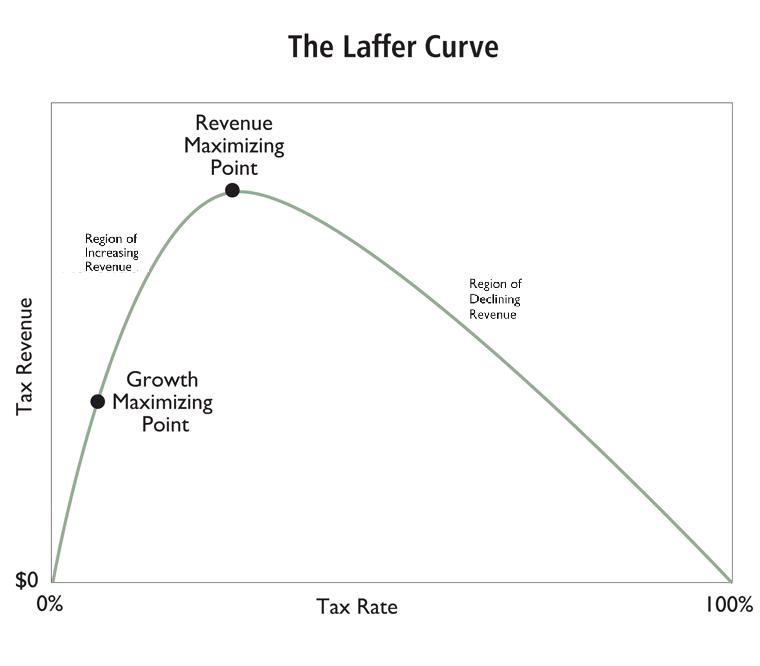
But surely there are some statists who are motivated by emotions other than spite, so I refuse to give up. Let’s look at some evidence from Spain to further confirm that high tax rates aren’t necessarily the way to maximize tax revenue (this also is a story showing that tax competition between nations is a good way of disciplining governments that are too greedy, but that’s another issue).
Spain’s corporate tax take has tumbled by almost two thirds from pre-crisis levels as small businesses fail and a growing number of big corporations seek profits abroad to compensate for the prolonged downturn at home. …Spain has a headline corporate tax rate of 30 percent, broadly in line with other large European economies. Switzerland, however, has a headline rate of 8.5 percent, and lawyers say deductions can be made to reduce this further. “A fundamental right of EU law is the freedom of establishment. All companies and taxpayers look after their tax affairs, and if they can pay a lower rate somewhere else, it’s better for their business and natural that they would do so,” a global tax lawyer based in Spain said. …Rajoy did eliminate some corporate tax breaks in 2012, a policy he will continue in 2013, and has also brought forward some tax payments, though that could be storing up problems.
The one tax rate that hasn’t been increased, though, is the top rate of corporate tax. So how can this be a story about the Laffer Curve?
Well, sometimes standing still is a recipe for defeat. And sometimes moving in the right direction isn’t enough when everybody else is going in the right direction at a faster rate.
Here’s a chart showing changes in the average EU corporate tax rate compared to Spain’s corporate tax rate.
Spain’s corporate tax rate has dropped by five percentage points. That’s progress, but other nations have moved more rapidly in the right direction. Back in 1995, the Spanish corporate rate was slightly lower than the EU average. Now it’s noticeably higher.
And as the excerpt above notes, there are nations such as Switzerland that have far lower tax rates and much better fiscal policy.
To be sure, Spain’s main challenge is the need to dramatically reduce the burden of government spending. That will help long-run growth because more resources will be allocated by private markets.
But Spain also should seek an immediate boost to growth by reducing tax rates on productive behavior. A lower corporate tax rate should be part of the answer.
I got to hear Arthur Laffer speak back in 1981 and he predicted what would happen in the next few years with the Reagan tax cuts and he was right with every prediction. The Laffer Curve Wreaks Havoc in the United Kingdom July 1, 2012 by Dan Mitchell Back in 2010, I excoriated the new […]
Raising taxes will not work. Liberals act like the Laffer Curve does not exist. The Laffer Curve Shows that Tax Increases Are a Very Bad Idea – even if They Generate More Tax Revenue April 10, 2012 by Dan Mitchell The Laffer Curve is a graphical representation of the relationship between tax rates, tax revenue, and […]
The Laffer Curve, Part I: Understanding the Theory Uploaded by afq2007 on Jan 28, 2008 The Laffer Curve charts a relationship between tax rates and tax revenue. While the theory behind the Laffer Curve is widely accepted, the concept has become very controversial because politicians on both sides of the debate exaggerate. This video shows […]
If we want the economy to grow then we should look closely at a flat tax. A Primer on the Flat Tax and Fundamental Tax Reform August 11, 2012 by Dan Mitchell In previous posts, I put together tutorials on the Laffer Curve, tax competition, and the economics of government spending. Today, we’re going to look […]
President Obama c/o The White House 1600 Pennsylvania Avenue NW Washington, DC 20500 Dear Mr. President, I know that you receive 20,000 letters a day and that you actually read 10 of them every day. I really do respect you for trying to get a pulse on what is going on out here. I got […]
I have written a lot about this in the past and sometimes you just have to sit back and laugh. Laughing at Obama’s Bumbling Class Warfare Agenda July 13, 2012 by Dan Mitchell We know that President Obama’s class-warfare agenda is bad economic policy. We know high tax rates undermine competitiveness. And we know tax increases […]
President Obama c/o The White House 1600 Pennsylvania Avenue NW Washington, DC 20500 Dear Mr. President, I know that you receive 20,000 letters a day and that you actually read 10 of them every day. I really do respect you for trying to get a pulse on what is going on out here. If our […]
Late Amy Winehouse gets Grammy award for best pop performance by a duo for duet with Tony Bennett.
Singer Tony Bennett and parents of the late Amy Winehouse Mitch and Janis Winehouse accept the award for Best Pop Duo/Group Performance for “Body and Soul” onstage at the 54th Annual GRAMMY Awards held at Staples Center on February 12, 2012 in Los Angeles, California. Photo: Getty
Mitch and Janis Winehouse, the parents of the British singer Amy who died last year at the age of 27 following a battle with drugs and alcohol, were invited on stage at theGrammy awardsto jointly accept a posthumous award on her behalf.
The gong for best pop performance by a duo or group was awarded for Winehouse’s duet with Tony Bennett on the single Body and Soul.
“We shouldn’t be here. Our darling daughter should be here. These are the cards that we’re dealt,” said Mitch after he was called on stage by Bennett.
Paying tribute to his daughter and Houston as well as Etta James who died earlier this year, he added: “Long live Whitney Houston, long live Amy Winehouse, Long live Etta James. There’s a beautiful girl band up in heaven.”
Songstress Adele and Winehouse led an early British charge at this year’s sombre Grammy Awards, which were dampened by the shock death of singing star Whitney Houston.
Adele captured two of her six possible Grammys, including best pop vocal album for 21, at the pre-telecast ceremony which came just 24 hours after the troubled 48-year-old Houston was discovered in a bathtub at her Los Angeles hotel.
British singer/songwriter Corinne Bailey Rae also picked up a Grammy for best R&B performance as the night kicked off.
The televised segment of the 54th annual awards opened with a prayer and standing ovation to the singer, who herself won a clutch of six prestigious Recording Academy gongs over a turbulent career marred by spells of drug addiction.
Host LL Cool J said: “There is no way around this. We’ve had a death in our family so at least for me, the only thing that seems right is to start with a prayer for our fallen sister Whitney Houston.”
He declared the night one to “celebrate and remember”, and played a clip of Houston performing I Will Always Love You from the 1994 Grammys.
Houston, one of the world’s best-selling artists in the 1980s and 1990s, died on Saturday at the Beverly Hilton Hotel, where she was preparing to attend a pre-Grammy party.
Sad news about Whitney Houston’s death tonight. I have included some earlier posts about drugs and alcohol and rock stars. LOS ANGELES (AP) — Whitney Houston, who ruled as pop music’s queen until her majestic voice and regal image were ravaged by drug use, erratic behavior and a tumultuous marriage to singer Bobby Brown, has […]
It was so sad to lose these people so soon. The Curse of 27 This page is in response to my most frequently asked questions – is there really a Curse of 27, how many musicians actually died at that age, and who are they. When legendary Blues man, Robert Johnson, was killed at the age […]
A curve ball in the Amy Winehouse case. Troubled Brit singer Amy Winehouse was found dead at her London home in July. / AP FILE PHOTO Written by JILL LAWLESS, | Associated Press FILED UNDER Entertainment LONDON — The coroner who oversaw the inquest into the death of singer Amy Winehouse has resigned after her […]
Jim Morrison’s picture above. He died way too young and many of our young people turn to drugs and suicide because of loneliness. It is sad that this is such a pressing problem. I think of songs that point this out: Adam’s Song, The Last Resort, etc. There are two usual approaches to this problem that […]
CNN reported today: NEW YORK (CNNMoney) — Ilya Zhitomirskiy, one of four co-founders of social network Diaspora, died over the weekend in San Francisco at age 22. Zhitomirskiy committed suicide, a source close to the company told CNNMoney on Sunday. A San Francisco Police Department officer confirmed on Monday that a police report about […]
I have posted a lot about Amy before. Posted at 04:38 PM ET, 10/31/2011 Amy Winehouse releases posthumous album: why we keep listening after she stops singing By Jessica Goldstein Despite her death in July, Amy Winehouse will be releasing a new album: “Lioness: Hidden Treasures” this year. This is not a posthumous album of […]
There is a truth that many people know. You can die from drinking too much alcohol at one time. I remember like yesterday when AC/DC lead singer Bon Scott died while on tour in England in 1980. According to Wikipedia: On 19 February 1980, Scott, 33 at the time, passed out after a night of […]
Charles Murray is the W.H. Brady Scholar at the American Enterprise Institute. He received his B.A. in history at Harvard University and his Ph.D. in political science from the Massachusetts Institute of Technology. He has written for numerous newspapers and journals, including the Washington Post, the Wall Street Journal, the New York Times, the Weekly Standard, Commentary, and National Review. His books include Losing Ground: American Social Policy 1950-1980, What It Means to Be a Libertarian, and Real Education: Four Simple Truths for Bringing America’s Schools Back to Reality. His new book, Coming Apart: The State of White America, 1960-2010, will be published at the end of January.
The following is adapted from a speech delivered in Atlanta, Georgia, on October 28, 2011, at a conference on “Markets, Government, and the Common Good,” sponsored by Hillsdale College’s Center for the Study of Monetary Systems and Free Enterprise.
THE CASE FOR the Department of Education could rest on one or more of three legs: its constitutional appropriateness, the existence of serious problems in education that could be solved only at the federal level, and/or its track record since it came into being. Let us consider these in order.
(The last two parts were covered earlier.)
(3) So what is the federal government’s track record in education?
The most obvious way to look at the track record is the long-term trend data of the National Assessment of Educational Progress (NAEP). Consider, for instance, the results for the math test for students in fourth, eighth and twelfth grades from 1978 through 2004. The good news is that the scores for fourth graders showed significant improvement in both reading and math—although those gains diminished slightly as the children got older. The bad news is that the baseline year of 1978 represents the nadir of the test score decline from the mid-1960s through the 1970s. Probably we are today about where we were in math achievement in the 1960s. For reading, the story is even bleaker. The small gains among fourth graders diminish by eighth grade and vanish by the twelfth grade. And once again, the baseline tests in the 1970s represent a nadir.
From 1942 through the 1990s, the state of Iowa administered a consistent and comprehensive test to all of its public school students in grade school, middle school, and high school—making it, to my knowledge, the only state in the union to have good longitudinal data that go back that far. The Iowa Test of Basic Skills offers not a sample, but an entire state population of students. What can we learn from a single state? Not much, if we are mainly interested in the education of minorities—Iowa from 1942 through 1970 was 97 percent white, and even in the 2010 census was 91 percent white. But, paradoxically, that racial homogeneity is also an advantage, because it sidesteps all the complications associated with changing ethnic populations.
Since retention through high school has changed greatly over the last 70 years, I will consider here only the data for ninth graders. What the data show is that when the federal government decided to get involved on a large scale in K-12 education in 1965, Iowa’s education had been improving substantially since the first test was administered in 1942. There is reason to think that the same thing had been happening throughout the country. As I documented in my book, Real Education, collateral data from other sources are not as detailed, nor do they go back to the 1940s, but they tell a consistent story. American education had been improving since World War II. Then, when the federal government began to get involved, it got worse.
I will not try to make the case that federal involvement caused the downturn. The effort that went into programs associated with the Elementary and Secondary Education Act of 1965 in the early years was not enough to have changed American education, and the more likely causes for the downturn are the spirit of the 1960s—do your own thing—and the rise of progressive education to dominance over American public education. But this much can certainly be said: The overall data on the performance of American K-12 students give no reason to think that federal involvement, which took the form of the Department of Education after 1979, has been an engine of improvement.
What about the education of the disadvantaged, especially minorities? After all, this was arguably the main reason that the federal government began to get involved in education—to reduce the achievement gap separating poor children and rich children, and especially the gap separating poor black children and the rest of the country.
The most famous part of the Elementary and Secondary Education Act was Title I, initially authorizing more than a billion dollars annually (equivalent to more than $7 billion today) to upgrade the schools attended by children from low-income families. The program has continued to grow ever since, disposing of about $19 billion in 2010 (No Child Left Behind has also been part of Title I).
Supporters of Title I confidently expected to see progress, and so formal evaluation of Title I was built into the legislation from the beginning. Over the years, the evaluations became progressively more ambitious and more methodologically sophisticated. But while the evaluations have improved, the story they tell has not changed. Despite being conducted by people who wished the program well, no evaluation of Title I from the 1970s onward has found credible evidence of a significant positive impact on student achievement. If one steps back from the formal evaluations and looks at the NAEP test score gap between high-poverty schools (the ones that qualify for Title I support) and low-poverty schools, the implications are worse. A study by the Department of Education published in 2001 revealed that the gap grew rather than diminished from 1986—the earliest year such comparisons have been made—through 1999.
That brings us to No Child Left Behind. Have you noticed that no one talks about No Child Left Behind any more? The explanation is that its one-time advocates are no longer willing to defend it. The nearly-flat NAEP trendlines since 2002 make that much-ballyhooed legislative mandate—a mandate to bring all children to proficiency in math and reading by 2014—too embarrassing to mention.
In summary: the long, intrusive, expensive role of the federal government in K-12 education does not have any credible evidence for a positive effect on American education.
* * *
I have chosen to focus on K-12 because everyone agrees that K-12 education leaves much to be desired in this country and that it is reasonable to hold the government’s feet to the fire when there is no evidence that K-12 education has improved. When we turn to post-secondary education, there is much less agreement on first principles.
The bachelor of arts degree as it has evolved over the last half-century has become the work of the devil. It is now a substantively meaningless piece of paper—genuinely meaningless, if you don’t know where the degree was obtained and what courses were taken. It is expensive, too, as documented by the College Board: Public four-year colleges average about $7,000 per year in tuition, not including transportation, housing, and food. Tuition at the average private four-year college is more than $27,000 per year. And yet the B.A. has become the minimum requirement for getting a job interview for millions of jobs, a cost-free way for employers to screen for a certain amount of IQ and perseverance. Employers seldom even bother to check grades or courses, being able to tell enough about a graduate just by knowing the institution that he or she got into as an 18-year-old.
So what happens when a paper credential is essential for securing a job interview, but that credential can be obtained by taking the easiest courses and doing the minimum amount of work? The result is hundreds of thousands of college students who go to college not to get an education, but to get a piece of paper. When the dean of one East Coast college is asked how many students are in his institution, he likes to answer, “Oh, maybe six or seven.” The situation at his college is not unusual. The degradation of American college education is not a matter of a few parents horrified at stories of silly courses, trivial study requirements, and campus binge drinking. It has been documented in detail, affects a large proportion of the students in colleges, and is a disgrace.
The Department of Education, with decades of student loans and scholarships for university education, has not just been complicit in this evolution of the B.A. It has been its enabler. The size of these programs is immense. In 2010, the federal government issued new loans totaling $125 billion. It handed out more than eight million Pell Grants totaling more than $32 billion dollars. Absent this level of intervention, the last three decades would have seen a much healthier evolution of post-secondary education that focused on concrete job credentials and courses of studies not constricted by the traditional model of the four-year residential college. The absence of this artificial subsidy would also have let market forces hold down costs. Defenders of the Department of Education can unquestionably make the case that its policies have increased the number of people going to four-year residential colleges. But I view that as part of the Department of Education’s indictment, not its defense.
* * *
What other case might be made for federal involvement in education? Its contributions to good educational practice? Think of the good things that have happened to education in the last 30 years—the growth of homeschooling and the invention and spread of charter schools. The Department of Education had nothing to do with either development. Both happened because of the initiatives taken by parents who were disgusted with standard public education and took matters into their own hands. To watch the process by which charter schools are created, against the resistance of school boards and administrators, is to watch the best of American traditions in operation. Government has had nothing to do with it, except as a drag on what citizens are trying to do for their children.
Think of the best books on educational practice, such as Howard Gardner’s many innovative writings and E.D. Hirsch’s Core Knowledge Curriculum, developed after his landmark book, Cultural Literacy, was published in 1987. None of this came out of the Department of Education. The Department of Education spends about $200 million a year on research intended to improve educational practice. No evidence exists that these expenditures have done any significant good.
As far as I can determine, the Department of Education has no track record of positive accomplishment—nothing in the national numbers on educational achievement, nothing in the improvement of educational outcomes for the disadvantaged, nothing in the advancement of educational practice. It just spends a lot of money. This brings us to the practical question: If the Department of Education disappeared from next year’s budget, would anyone notice? The only reason that anyone would notice is the money. The nation’s public schools have developed a dependence on the federal infusion of funds. As a practical matter, actually doing away with the Department of Education would involve creating block grants so that school district budgets throughout the nation wouldn’t crater.
Sadly, even that isn’t practical. The education lobby will prevent any serious inroads on the Department of Education for the foreseeable future. But the answer to the question posed in the title of this talk—“Do we need the Department of Education?”—is to me unambiguous: No.
Florida’s Patric Young (4) goes to the basket as Tennessee’s Jarnell Stokes (5) tries to block the shot during the first half of an NCAA college basketball game in Gainesville, Fla., Saturday, Feb. 11, 2012. (AP Photo/Phil Sandlin)
_____________________________
It appears the Arkansas Razorbacks will be facing a new and improved Tennessee Vols basketball team after UT went to Gainesville and beat the ranked Gators on Saturday.
The Hogs will also be facing Jarnell Stokes who chose the Vols over the Hogs just a few weeks ago. Arkansas really needed the presence of a good big man and is still searching for one on the recruiting trail.
I think this game will come down to one simple fact: WILL THE HOGS FIND THE SAME MENTAL EDGE THAT THE VOLS DID IN GAINESVILLE TO WIN THEIR FIRST BIG ROAD GAME?
Below is an article from Knoxville that indicates the Vols are looking to the Arkansas game for a key victory on their way back to the upper part of the SEC standings.
Key stretch has Vols in position to rise in SEC standings
By Mike Griffith
Originally published 07:08 p.m., February 12, 2012
Updated 09:20 p.m., February 12, 2012
Cuonzo Martin tried to explain what he saw in his basketball team that made him confident Tennessee would beat Florida in the days leading up to Saturday’s game.
“When players walk with a certain type of swagger, a level of confidence — not cockiness, not arrogance — they can play, and they can compete,” the first-year Vols coach said after UT shocked No. 8 Florida in Gainesville, 75-70. “Before, we just weren’t mentally ready.”
Martin’s not ready to get too carried away with his young team; especially not with an upcoming stretch run of games against teams for positions.
The Vols’ 13-12 overall and 5-5 SEC mark has lifted them into a four-way tie for fifth-place in the SEC, well ahead of the 11th-place projection they were dealt at SEC Basketball Media Day in October.
UT plays host to Arkansas (17-8, 5-5) at 8 p.m. Wednesday (TV: MyVLT) at Thompson-Boling Arena before traveling to play at Alabama (16-8, 5-5) at 1:30 p.m. Saturday.
___________
Florida’s Erving Walker (11) has to reach out to get around Tennessee’s Kenny Hall (20) during the first half of an NCAA college basketball game in Gainesville, Fla., Saturday, Feb. 11, 2012. (AP Photo/Phil Sandlin)
____________________
Martin has taken to Twitter to urge Vols fans to turn out for the game against the Razorbacks. There was an announced (paid) attendance of 14,784 for UT’s home win over South Carolina last Wednesday, but the arena appeared half empty.
“We need our fans, and we need their support to help get us over the hump,” Martin said. “If our guys are giving effort, and they are leaving everything out on the floor, they deserve that support.”
Wins this week would
strengthen the Vols’ postseason résumé as they look to secure a spot in the NIT while also maintaining mathematical possibilities for an NCAA tournament at-large berth.
Tennessee’s RPI rating is 110, 10th-best in the SEC, while the Vols rank No. 91 in the Sagarin USA Today computer ratings and No. 81 in Ken Pomeroy’s computer rankings.
Martin had estimated at the start of the season it would take at least a year for him to get the program competing at an acceptable level.
But the Vols showed the makings of a tough, achieving unit on Saturday, playing solid defense and passing the ball unselfishly en route to snapping the Gators’ 19-game home win streak.
“We’re getting there right now,” Martin said, asked if his team has arrived. “Once we get to the point where hard work is a way of life for them, and they’re doing all the little things because they want to instead of because coach tells them to, then we’ll be successful.”
______________
Florida’s Kenny Boynton (1) goes for two points as he gets over Tennessee’s Kenny Hall (20) during the first half of an NCAA college basketball game in Gainesville, Fla., Saturday, Feb. 11, 2012. (AP Photo/Phil Sandlin)
_______________
UT sophomore point guard Trae Golden was the catalyst for what Martin said was the team’s most complete win of the season.
Golden had 17 points and seven assists while making four of seven shots from the floor and nine of 11 from the free-throw line in his 38 minutes.
“I think the last two games Trae has led the team on both ends of the floor and been very vocal,” Martin said. “The things I talk to him about are leading the team, getting the assists, feeding your teammates. It goes a long way when your point guard leads like that.
“That (Florida) win started with Trae putting pressure on their point guard.”
The Gators committed 15 turnovers while getting just nine assists as UT dominated throughout the game.
“I just think we’re getting better as a team,” Golden said. “We all know what we need to do now, and we all know our roles.”
McBee for Threes: Vols shooting guard Skylar McBee played a career-high 38 minutes alongside Golden, scoring 13 points on 4-of-7 shooting beyond the 3-point arc. McBee is averaging 13.7 points in his three starts.
“Skylar does a good job taking what the defense gives him,” Martin said. “He stretches the defense, he can make shots and he can get the ball inside. With Skylar being a player they have to identify on the perimeter, our big guys can play one-on-one.”
No Fuss: UT freshman Jarnell Stokes said he didn’t mean for Florida’s Patric Young to fall to the floor when he fouled him and was assessed a flagrant foul.
“Basketball is a competitive game, and I wasn’t going to let him score,” Stokes said. “But he’s a big guy, and I’m surprised he fell like that.”
Vols freshman Wes Washpun got a late technical foul after blocking a shot.
“Apparently, he used a bad word after the block,” said Martin, who replaced Washpun immediately.
Orange Slices: Jeronne Maymon recorded his seventh double-double of the season (15 points, 11 rebounds) and played 36 minutes. … Cam Tatum played 17 minutes before fouling out without having attempted a shot. … Jordan McRae’s 12-point effort in 26 minutes marked the third time in the past five games he has scored in double figures.
Florida’s Erick Murphy (33) reaches up for the basket during the first half of an NCAA college basketball game against Tennessee in Gainesville, Fla., Saturday, Feb. 11, 2012. (AP Photo/Phil Sandlin)
There is considerable academic research on the growth-maximizing level of government spending. Based on a good bit of research, I’m fairly confident that Cato’s Richard Rahn was the first to popularize this concept, so we are going to make him famous (sort of like Art Laffer) in this new video explaining that there is a spending version of the Laffer Curve and that it shows how government is far too large and that this means less prosperity.
Over the past several years, President Barack Obama has repeatedly claimed that America is not a Christian nation. He asserted that while a U. S. Senator, 1 repeated it as a presidential candidate, 2 and on a recent presidential trip to Turkey announced to the world that Americans “do not consider ourselves a Christian nation.” 3 (He made that announcement in Turkey because he said it was “a location he said he chose to send a clear message.” 4 ) Then preceding a subsequent trip to Egypt, he declared that America was “one of the largest Muslim countries in the world” 5 (even though the federal government’s own statistics show that less than one-percent of Americans are Muslims. 6
The President’s statements were publicized across the world but received little attention in the American media. Had they been carried here, the President might have been surprised to learn that nearly two-thirds of Americans currently consider America to be a Christian nation 7 and therefore certainly might have taken exception with his remarks. But regardless of what today’s Americans might think, it is unquestionable that four previous centuries of American leaders would definitely take umbrage with the President’s statements.
Modern claims that America is not a Christian nation are rarely noticed or refuted today because of the nation’s widespread lack of knowledge about America’s history and foundation. To help provide the missing historical knowledge necessary to combat today’s post-modern revisionism, presented below will be some statements by previous presidents, legislatures, and courts (as well as by current national Jewish spokesmen) about America being a Christian nation. These declarations from all three branches of government are representative of scores of others and therefore comprise only the proverbial “tip of the iceberg.”
Defining a Christian Nation
Contemporary post-modern critics (including President Obama) who assert that America is not a Christian nation always refrain from offering any definition of what the term “Christian nation” means. So what is an accurate definition of that term as demonstrated by the American experience?
Contrary to what critics imply, a Christian nation is not one in which all citizens are Christians, or the laws require everyone to adhere to Christian theology, or all leaders are Christians, or any other such superficial measurement. As Supreme Court Justice David Brewer (1837-1910) explained:
[I]n what sense can [America] be called a Christian nation? Not in the sense that Christianity is the established religion or that the people are in any manner compelled to support it. On the contrary, the Constitution specifically provides that “Congress shall make no law respecting an establishment of religion, or prohibiting the free exercise thereof.” Neither is it Christian in the sense that all its citizens are either in fact or name Christians. On the contrary, all religions have free scope within our borders. Numbers of our people profess other religions, and many reject all. Nor is it Christian in the sense that a profession of Christianity is a condition of holding office or otherwise engaging in public service, or essential to recognition either politically or socially. In fact, the government as a legal organization is independent of all religions. Nevertheless, we constantly speak of this republic as a Christian nation – in fact, as the leading Christian nation of the world. 8
So, if being a Christian nation is not based on any of the above criterion, then what makes America a Christian nation? According to Justice Brewer, America was “of all the nations in the world . . . most justly called a Christian nation” because Christianity “has so largely shaped and molded it.” 9
Constitutional law professor Edward Mansfield (1801-1880) similarly acknowledged:
In every country, the morals of a people – whatever they may be – take their form and spirit from their religion. For example, the marriage of brothers and sisters was permitted among the Egyptians because such had been the precedent set by their gods, Isis and Osiris. So, too, the classic nations celebrated the drunken rites of Bacchus. Thus, too, the Turk has become lazy and inert because dependent upon Fate, as taught by the Koran. And when in recent times there arose a nation [i.e., France] whose philosophers [e.g. Voltaire, Rousseau, Diderot, Helvetius, etc.] discovered there was no God and no religion, the nation was thrown into that dismal case in which there was no law and no morals. . . . In the United States, Christianity is the original, spontaneous, and national religion. 10
Founding Father and U. S. Supreme Court Chief Justice John Marshall agreed:
[W]ith us, Christianity and religion are identified. It would be strange, indeed, if with such a people our institutions did not presuppose Christianity and did not often refer to it and exhibit relations with it. 11
Christianity is the religion that shaped America and made her what she is today. In fact, historically speaking, it can be irrefutably demonstrated that Biblical Christianity in America produced many of the cherished traditions still enjoyed today, including:
A republican rather than a theocratic form of government;
The institutional separation of church and state (as opposed to today’s enforced institutional secularization of church and state);
Protection for religious toleration and the rights of conscience;
A distinction between theology and behavior, thus allowing the incorporation into public policy of religious principles that promote good behavior but which do not enforce theological tenets (examples of this would include religious teachings such as the Good Samaritan, The Golden Rule, the Ten Commandments, the Sermon on the Mount, etc., all of which promote positive civil behavior but do not impose ecclesiastical rites); and
A free-market approach to religion, thus ensuring religious diversity.
Consequently, a Christian nation as demonstrated by the American experience is a nation founded upon Christian and Biblical principles, whose values, society, and institutions have largely been shaped by those principles. This definition was reaffirmed by American legal scholars and historians for generations 12 but is widely ignored by today’s revisionists.
7. “Survey Reports: Beyond Red vs. Blue,” Pew Research Center for the People and the Press, March 17-27, 2005 (at: http://people-press.org/reports/print.php3?PageID=953), reports that in 1996, 60% of Americans believed that America was indeed a Christian nation and that by 2004, the number had risen to 71%; the 2009 poll showed that the number had dropped to 69% and then to 62% (see “Newsweek Poll: A Post-Christian Nation?,” Newsweek, April 3, 2009 (at:http://www.newsweek.com/id/192311), in which 62% answered Yes, 32% answer No, and 6% answered Don’t Know to the question “Do you consider the United States a Christian nation, or not?” See also “This Easter, Smaller Percentage of Americans are Christians,” Gallup, April 10, 2009 (at:http://www.gallup.com/poll/117409/Easter-Smaller-Percentage-Americans-Christian.aspx), in which this statement appears: “The United States remains a dominantly Christian nation. More than three-quarters of all Americans identify as Christian,” according to this poll 77% of Americans identify themselves as Christians (55% Protestant, 22% Catholic). (Return)
8. David J. Brewer, The United States: A Christian Nation (Philadelphia: John C. Winston Company, 1905), p. 13. (Return)
9. David J. Brewer, The United States: A Christian Nation (Philadelphia: John C. Winston Company, 1905), p. 40. (Return)
10. Edward Mansfield, American Education, Its Principle and Elements (New York: A. S. Barnes & Co., 1851), p. 43. (Return)
11. John Marshall, The Papers of John Marshall, Charles Hobson, editor (Chapel Hill: University of North Carolina Press, 2006), Vol. XII, p. 278, to Rev. Jasper Adams, May 9, 1833. (Return)
12. Stephen Cowell, The Position of Christianity in the United States in its Relations with our Political Institutions (Philadelphia: Lippincott, Grambio & Co., 1854), pp. 11-12, Joseph Story, A Familiar Exposition of the Constitution of the United States (New York: Harper & Brothers, 1847), p. 260, §442. (Return)
The President’s deafening silence on health care reform – Kate Nix
The President’s health care law has been dubbed his “signature legislative accomplishment”, but he barely even mentioned the law in this evening’s address.
The President did claim that Obamacare relies on a “reformed private market, not a Government program”. This is not quite the case. Obamacare dumps millions of Americans into Medicaid, a poorly performing government health program, and creates a new federal entitlement to purchase coverage in federally-created exchanges. Its rules and regulations on insurance reduce choice, hinder competition, and will result in higher premiums for families and individuals. The law’s expansion of bureaucracy and government price controls in Medicare will limit seniors’ access to providers and reduce physician autonomy. And new penalties and taxes burden business and the growth of the economy by making it harder to grow and create new jobs.
True market-driven reform doesn’t require an expansion of government. It requires empowering patients, not bureaucrats, and creating a true marketplace with a number of options, offered by competing insurers. It means saving Medicare for future generations by giving seniors choice, and transforming Medicaid to better meet need in each state. And it means enacting rational, targeted insurance market reforms that won’t increase premiums or drive insurers out of business.
The impact of Obamacare will be felt by every American. The fact that the President failed to take ownership of his health law and its consequences tonight builds the case for its full repeal and moving in a different direction in health care reform.
_________________________
I know that you do not agree with the description that the government is taking over the healthcare system but it seems to me that is going to happen. Just look at your recent decision that makes Catholic Hospitals distribute the abortion pill against their wishes.
Thank you so much for your time. I know how valuable it is. I also appreciate the fine family that you have and your committment as a father and a husband.
Sincerely,
Everette Hatcher III, 13900 Cottontail Lane, Alexander, AR 72002, ph 501-920-5733, lowcostsqueegees@yahoo.com
Tom Ortenberg, CEO
Open Road Films
12301 Wilshire Blvd., Suite 600
Los Angeles, CA 90025
Phone: (310) 571-2200
Fax: (310) 571-2278
Website: http://www.openroadfilms.com
Content:
(HH, AbAb, C, B, Pa, H, LLL, VV, S, AA, D, M) Strong Nihilistic, Humanist worldview ultimately demeaning and denying belief in God and an afterlife, with very little Christian elements such as prayer and references to Jesus Christ, marred, however, by a pagan use of abundant foul language and some anti-religious comments by two humanists/atheists in debates over God and religion and man shouts out to God in angry, and realizes that there is no God so he has to survive himself; up to 200 obscenities and profanities or more, including many strong ones; strong violence and implied violence includes scenes of wolf attacks on humans, humans fight off wolf attacks, plane crash, man eases dying man’s passing, character drowns, brief drunken brawl, freezing river sweeps away one man trying to escape wolves, and man contemplates suicide with shotgun in mouth; some verbal references to sex with prostitutes; no nudity; alcohol use and scene with a drunken brawl; brief smoking; and, men argue about the existence of God and how best to survive being stranded in a frozen wilderness.
Summary:
THE GREY stars Liam Neeson as an oilman who gets stranded in an Arctic wilderness with four men and a pack of vicious wolves. THE GREY is an intense tale of survival and life or death issues, with a strong nihilistic message denying God. However, THE GREY’S pervasive foul language and scary battles with wolves warrant excessive.
Review:
iam Neeson fights with wolves in THE GREY. The movie is survival action-thriller that has atheist characters and a pervasive stream of foul language.The movie centers on an oilman named Ottway (Neeson), who’s burned out on the harsh, male-dominated and frozen terrain of his job in the Arctic. Desperate to get back with a wife the audience sees in flashbacks, he has written her a note but takes a shotgun out and nearly commits suicide by shoving it in his mouth. He changes his mind in favor of flying home the next day. However, the plane transporting him and other workers crashes in the middle of the snowy wilderness, leaving only himself and four other survivors.Surrounded by vicious wolves and only known to each other by their last names, the men must bond quickly if they are to form a plan for survival. As they alternate between arguing and friendship while contending with the terrifying prospect of hungry wolves, raging blizzards, and hunger, they speak to each other with pervasive foul language.
Yet writer-director Joe Carnahan, who co-wrote the script with Ian Mackenzie Jeffers based on a short story Jeffers wrote, has a much deeper than expected agenda for his movie. The action elements are the hook to draw audiences into the theater, but he’s crafted a movie that will also make people think that life is meaningless.
For instance, one man in the group of survivors has an ardent faith in God, though he wonders if there was a purpose behind the hardship they’re enduring. Another is an atheist who laughs at the idea of God. Ottway himself is in the middle. He is respectful of others’ faith and invites the believer to make a sign of the cross over one of the men who dies, but he says he only wishes he had faith.
[SPOILERS FOLLOW] As the movie progresses, however, some of the men have visions of loved ones as they die, such as a long-lost daughter embracing one man while another sees the sister he lost in childhood. Ultimately, Ottway is left alone, and yells at the sky, profanely demanding for God to prove His existence with a sign or some help. None comes, so he concludes that there is no God, and survival is up to himself. So, Ottway gets on his feet again and keeps going before finally stopping, dropping to his knees and digging out the wallets of his now-dead fellow travelers, stacking them into a memorial. Finally, we see that his wife had died before his eyes. He is resigned to dying.
At that moment, he hears and sees the alpha wolf, a fearsome black beast coming toward him. A remembered nihilistic poem from his father brings Ottway to his feet as he decides to challenge the alpha wolf in a fight to the death.
[END SPOILERS]
Everything about THE GREY is beautifully shot and harrowingly presented. Even the wolves sound as if they’re in the theater with the viewer. The cumulative effect of THE GREY is depressing. The movie takes an atheist position that nothing matters, although there are some overt references to faith.
However, the constant foul language should have been cut or greatly reduced. THE GREY also has some intense, strong, and scary violence. Finally, the nihilistic content destroys any merit the movie might have.
In Brief:
THE GREY stars Liam Neeson as an oilman who gets stranded in an Arctic wilderness with four men when their plane crashes. The men learn vicious, hungry wolves are after them. They must bond quickly if they are going to come up with a good survival plan. As the men work to survive the wolves, the cold and a raging blizzard, they discuss the existence of God and faith. One man is a Christian. Another is an atheist who laughs at the idea of God. The oilman is in the middle. How will this religious debate play out when the men begin dying one by one?Everything about THE GREY is beautifully shot and harrowingly presented. Even the wolves sound like they’re in the theater. The cumulative effect of THE GREY is depressing. While it sometimes appears to take an Christian tone, it has a disturbing, relentless transition to denying God, faith and prayer. There are also some clear indications of the meaninglessness of life. However, the movie’s constant foul language should have been cut or greatly reduced. THE GREY also has some intense, strong, and scary violence, making it excessive.
A review of the new Liam Neeson film, the grey, as iI say there may be some minor spoilers but nothing too drastic, enjoy and dont forget to comment, rate and subscribe
Cast: Liam Neeson, Dallas Roberts, James Badge Dale, Dermot Mulroney, Frank Grillo, Nonso Anozie, Joe Anderson
In THE GREY, Liam Neeson leads an unruly group of oil-rig roughnecks when their plane crashes into the remote Alaskan wilderness. Battling mortal injuries and merciless weather, the survivors have only a few days to escape the icy elements — and a vicious pack of rogue wolves on the hunt — before their time runs out.
Woody Allen interviews Billy Graham on Religion This article below makes we think of the lady tied to the Railroad in the Schaeffer video. Dr. Francis schaeffer – The flow of Materialism (Modern man sees no hope for the future and has deluded himself by appealing to nonreason to stay sane. Look at the example […]
Woody Allen and the Abandonment of Guilt Dr. Marc T. Newman : AgapePress Print In considering filmmaking as a pure visual art form, Woody Allen would have to be considered a master of the medium. From his humble beginnings as a comedy writer and filmmaker, he has emerged as a major influential force in Hollywood. […]
September 3, 2011 · 5:16 PM ↓ Jump to Comments Woody Allen on the Emptiness of Life In the final scene of Manhattan, Woody Allen’s character, Isaac, is lying on the sofa with a microphone and a tape-recorder, dictating to himself an idea for a short story. It will be about “people in Manhattan,” he says, […]
John Whitehead in an article noted: Bacon, however, clearly expressed his atheistic pessimism: “Man now realizes that he is an accident, that he is a completely futile being, that he has to play out the game without purpose, other than of his own choosing.” On another occasion, he remarked: “We are born and we die […]
The Bible and Archaeology (1/5) The Bible maintains several characteristics that prove it is from God. One of those is the fact that the Bible is accurate in every one of its details. The field of archaeology brings to light this amazing accuracy. _________________________- I want to make two points today. 1. There is no […]
A review of the new Liam Neeson film, the grey, as iI say there may be some minor spoilers but nothing too drastic, enjoy and dont forget to comment, rate and subscribe
Cast: Liam Neeson, Dallas Roberts, James Badge Dale, Dermot Mulroney, Frank Grillo, Nonso Anozie, Joe Anderson
In THE GREY, Liam Neeson leads an unruly group of oil-rig roughnecks when their plane crashes into the remote Alaskan wilderness. Battling mortal injuries and merciless weather, the survivors have only a few days to escape the icy elements — and a vicious pack of rogue wolves on the hunt — before their time runs out.
The Grey trailer courtesy Open Road Films.
__________________
The movie “The Grey” is filled with nihilism and here is the answer in the Book of Ecclesiastes to nihilism from Solomon himself. I follow that with an excellent riview of “The Grey” and some links to previous posts on nihilism. Also here is a link to some historical evidence showing how accurate and reliable the bible is.
Here is an article I wrote a couple of years ago:
Solomon, Woody Allen, Coldplay and Kansas
What does King Solomon, the movie director Woody Allen and the modern rock bands Coldplay and Kansas have in common? All four took on the issues surrounding death, the meaning of life and a possible afterlife, although they all came up with their own conclusions on these weighty matters.
Let me start off by pointing out what they all had in common. First, they were very successful and rose to the top of their fields. Second, they were very famous and of course, thirdly they were wealthy and experienced the privileges that fame and wealth brought. Finally, they were still seeking answers to life’s great questions even though it seemed they had experienced all the world had to offer.
Unlike many the past grammy winners of “Best Rock Album,” Viva La Vida or Death and All His Friends by Coldplay is filled with songs that deal with spiritual themes such as death, the meaning of life and searching for an afterlife.
Leadsinger Chris Martin notes, “…because we’ve had some people close to us we’ve lost, but some miracles — we’ve got kids. So, life has been very extreme recently, and so both death and life pop up quite often” (MTV News interview, June 9, 2008).
Russ Briermeier of Christianity Today observes that this album is “often provocative, spiritual, and seemingly on the verge of identifying a greater truth, asking and inspiring many questions without providing the answers.” It reminded me of King Solomon’s search for answers in the Book of Ecclesiastes in the Old Testament. Solomon also dealt the subject of death a lot. Ecclesiastes 7:2-4 asserts, “It is better to spend your time at funerals than at festivals. For you are going to die, and you should think about it while there is still time. Sorrow is better than laughter, it may sadden your face, but it sharpens your understanding.”
The subject of death is prominent in the songs “Poppyfields,” “Violet Hill,” “Death and All His Friends,” “42,” and the “Cemeteries of London.” Then the song “The Escapist” states, “And in the end, We lie awake and we dream, we’re makin our escape.” In the end we all die. Therefore, I assume this song is searching for an afterlife to escape to. The song “Glass of Water” sheds some more light on where we possibly escape to: “Oh he said you could see a future inside a glass of water, with riddles and the rhymes, He asked ‘Will I see heaven in mine?’
Coldplay is clearly searching for spiritual answers but it seems they have not found them quite yet. The song “42“: “Time is so short and I’m sure, There must be something more.” Then the song “Lost“: “Every river that I tried to cross, Every door I ever tried was locked, I’m just waiting til the shine wears off, You might be a big fish in a little pond, Doesn’t mean you’ve won, Because along may come a bigger one and you will be lost.”
Solomon went to the extreme in his searching in the Book of Ecclesiastes for this “something more” that Coldplay is talking about, but he did not find any satisfaction in pleasure (2:1), education (2:3), work (2:4), wealth (2:8) or fame (2:9). All of his accomplishments would not be remembered (1:11) and who is to say that they had not already been done before by others (1:10)? This reminds me of the big fish in the little pond that Coldplay was talking about. Even if you think you are on top, are you really? Also Solomon’s upcoming death depressed him because both people and animals alike “go to the same place — they came from dust and they return to dust” (3:20).
In 1978 I heard the song “Dust in the Wind” by Kansas when it rose to #6 on the charts. That song told me thatKerry Livgren the writer of that song and a member of Kansas had come to the same conclusion that Solomon had. I remember mentioning to my friends at church that we may soon see some members of Kansas become Christians because their search for the meaning of life had obviously come up empty even though they had risen from being an unknown band to the top of the music business and had all the wealth and fame that came with that. Furthermore, like Solomon and Coldplay, they realized death comes to everyone and “there must be something more.”
Livgren wrote:
“All we do, crumbles to the ground though we refuse to see, Dust in the Wind, All we are is dust in the wind, Don’t hang on, Nothing lasts forever but the Earth and Sky, It slips away, And all your money won’t another minute buy.”
Both Kerry Livgren and Dave Hope of Kansas became Christians eventually. Kerry Livgren first tried Eastern Religions and Dave Hope had to come out of a heavy drug addiction. I was shocked and elated to see their personal testimony on The 700 Club in 1981 and that same interview can be seen on youtube today. Livgren lives in Topeka, Kansas today where he teaches “Diggers,” a Sunday school class at Topeka Bible Church. Hope is the head of Worship, Evangelism and Outreach at Immanuel Anglican Church in Destin, Florida.
The movie maker Woody Allen has embraced the nihilistic message of the song “Dust in the Wind” by Kansas. David Segal in his article, “Things are Looking Up for the Director Woody Allen. No?” (Washington Post, July 26, 2006), wrote, “Allen is evangelically passionate about a few subjects. None more so than the chilling emptiness of life…The 70-year-old writer and director has been musing about life, sex, work, death and his generally futile search for hope…the world according to Woody is so bereft of meaning, so godless and absurd, that the only proper response is to curl up on a sofa and howl for your mommy.”
The song “Dust in the Wind” recommends, “Don’t hang on.” Allen himself says, “It’s just an awful thing and in that context you’ve got to find an answer to the question: ‘Why go on?’ ” It is ironic that Chris Martin the leader of Coldplay regards Woody Allen as his favorite director.
Lets sum up the final conclusions of these gentlemen: Coldplay is still searching for that “something more.” Woody Allen has concluded the search is futile. Livgren and Hope of Kansas have become Christians and are involved in fulltime ministry. Solomon’s experiment was a search for meaning to life “under the sun.” Then in last few words in the Book of Ecclesiastes he looks above the sun and brings God back into the picture: “The conclusion, when all has been heard, is: Fear God and keep His commandments, because this applies to every person. For God will bring every act to judgment, everything which is hidden, whether it is good or evil.”
You can hear Kerry Livgren’s story from this youtube link:
The Grey
A chilling adventure that builds to a compelling climax of faith vs. faithlessness.
David Roark | posted 1/27/2012 12:00AM
Midpoint in The Grey, while trying to survive a pack of wolves in Alaska’s wilderness, a group of men sit around a fire reflecting on their lives while literally staring death in face. One of them insists on the pertinence of faith and the existence of God in the midst of their suffering, while two others refute the claim and call his belief a “fairy tale,” claiming there’s no life after death. These opposing ideologies stand front and center of this chilling new adventure by writer-director Joe Carnahan (The A-Team). He puts the two ideas to the test in his grey and desolate wasteland, looking to see which prevails.
Liam Neeson stars as Ottway, an Irish hunter and one of the two men without faith. After surviving a plane crash in the freezing conditions of Alaska, he and a few members of an oil drilling team, including Diaz, an arrogant womanizer (Frank Grillo), and Talget, a passive family man (Dermot Mulroney), find themselves being hunted by a pack of wolves. Hopeless with nowhere to go, they do all they can to escape into a wooded area, which may or may not be a safe haven, but the wolves begin to take their lives, one by one.
A pack of men, about to meet a pack of something worse
Within these bleak circumstances, Ottway voluntarily becomes the leader because of his experience killing wolves. But even though he may be a trained hunter, he secretly faces problems of his own. In the opening sequence, we see him walk outside a bar and proceed to attempt suicide, with a rifle placed in his mouth, only to be distracted by the howl of a wolf in the distance. We learn that his inner struggles stem from his wife leaving him—and now he’s got hungry wolves circling for the kill. Much to fret about.
The film, adapted from the short story Ghost Walkers by Ian MacKenzie Jeffers, weaves Ottway’s struggles together in redemptive fashion. Forced to be the leader and give hope to the rest of the men, despite his own feelings of hopelessness, Ottway faces his internal demons because of the external, fang-baring ones. Ironically, the dire circumstances act as a catalyst for his personal redemption.
Such optimism doesn’t extend to every character or the entire situation, so The Greyis hardly a morality tale. As the title implies an underlying moral ambiguity, the film often settles into a cynical outlook void of redemption and God. In many ways, these darker aspects actually trump the small, personal thread of Ottway finally coming to terms with the absence of his wife and, even more so, with his life.
Liam Neeson as Ottway, who has some issues
This nihilistic worldview and unbelief in God emerges first and foremost visually. Working with few colors, a range of grays and a fixed graininess, Carnahan gives his film dark and lifeless imagery that, in turn, creates a prevalently melancholic tone. He takes the same approach with the scenery. The cold, dreary climate, with no hope in sight and an enemy in the middle of it, further establishes it.
But the bleakest component of all is the wolves and their relentless attacks. In the course of all the blood, guts, and death, the question surfaces: Where is God and meaning in all of it? Like the wolves themselves, this rhetorical question runs rampantly throughout the story as the group becomes smaller and smaller, death after death, until a moment in which Ottway cries out to God, pleading for help. Desperate and facing death, he admits his need for a savior only to remark, “Fine, I’ll do it myself.” The scene epitomizes the moral haziness ofThe Grey, but it also leads the film into its gripping finale. Seamlessly paced with suspense and anticipation throughout—thanks in part to a vigorous score—the whole story points to this intense moment, putting Ottway face to face with the wolves and the alpha of the pack.
Diaz (Frank Grillo, right) and Ottway plan their next move
Neeson carries the film, bringing physical action and human emotion from start to finish. He balances out his tough, grizzly persona with a hurting, vulnerable side. His role, autobiographical in regard to the loss of wife three years ago, keeps the film grounded in humanity and, in the end, stops it from falling into cynicism, despite Ottway’s conflicted morality. In one scene, he looks at pictures of the families of men who died, thinking about his own wife. This moment of pure sentiment feels so personal, so transcendent.
Moments like these elevate the film from being just another action movie, or just another drama with lofty ideas yet no heart or soul. Even more, such moments almost provide enough clarity to keep it from being a complete moral vacuum. But as the film concludes and we seek hope, God, and life in the midst of the mess, we’re still left in The Grey.
One large marketing firm has prepared a “film companion” discussion guide for faith-based audiences; the guide explores the movie’s spiritual themes.
Talk About It Discussion starters
The film clearly pits two opposing ideologies, a belief and unbelief in God. In the end, which ideology prevails? Why?
How does Ottway deal with his wife leaving him through his circumstances (the weather and wolves)? What does he ultimately learn?
What does the film say about suffering? Why does God allow us to suffer, or does he? Can suffering change and mold us? How?
The Family Corner For parents to consider
The Grey is rated R for violence/disturbing content including bloody images, and for pervasive language. Throughout the movie, men are killed in bloody battles with wolves. Though violent and intense, these scenes move rapidly and chaotically, making them less graphic than they could be. The characters use excessive profanity, especially the f-word. But the language never proves to be exploitive or out of context.
Woody Allen interviews Billy Graham on Religion This article below makes we think of the lady tied to the Railroad in the Schaeffer video. Dr. Francis schaeffer – The flow of Materialism (Modern man sees no hope for the future and has deluded himself by appealing to nonreason to stay sane. Look at the example […]
Woody Allen and the Abandonment of Guilt Dr. Marc T. Newman : AgapePress Print In considering filmmaking as a pure visual art form, Woody Allen would have to be considered a master of the medium. From his humble beginnings as a comedy writer and filmmaker, he has emerged as a major influential force in Hollywood. […]
September 3, 2011 · 5:16 PM ↓ Jump to Comments Woody Allen on the Emptiness of Life In the final scene of Manhattan, Woody Allen’s character, Isaac, is lying on the sofa with a microphone and a tape-recorder, dictating to himself an idea for a short story. It will be about “people in Manhattan,” he says, […]
John Whitehead in an article noted: Bacon, however, clearly expressed his atheistic pessimism: “Man now realizes that he is an accident, that he is a completely futile being, that he has to play out the game without purpose, other than of his own choosing.” On another occasion, he remarked: “We are born and we die […]
The Bible and Archaeology (1/5) The Bible maintains several characteristics that prove it is from God. One of those is the fact that the Bible is accurate in every one of its details. The field of archaeology brings to light this amazing accuracy. _________________________- I want to make two points today. 1. There is no […]

 Not that it makes any difference. I’m slowly coming the conclusion that my friends on the left will never learn – in large part because they’re more interested in punishing success with class warfare tax policy than they are in collecting extra revenue for government.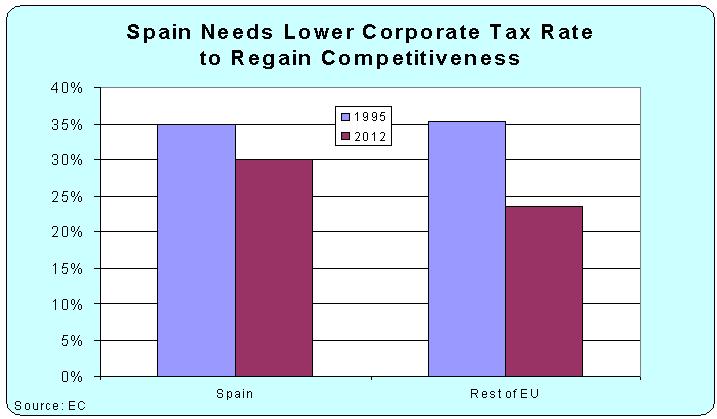


 Modern claims that America is not a Christian nation are rarely noticed or refuted today because of the nation’s widespread lack of knowledge about America’s history and foundation. To help provide the missing historical knowledge necessary to combat today’s post-modern revisionism, presented below will be some statements by previous presidents, legislatures, and courts (as well as by current national Jewish spokesmen) about America being a Christian nation. These declarations from all three branches of government are representative of scores of others and therefore comprise only the proverbial “tip of the iceberg.”
 in which all citizens are Christians, or the laws require everyone to adhere to Christian theology, or all leaders are Christians, or any other such superficial measurement. As Supreme Court Justice David Brewer (1837-1910) explained:


 The Daily Hatch