Yearly Archives: 2011

Welfare States in Europe can not keep their promises of goodies (Part 1)

I have been saying over and over that the USA is heading to Greece. I will post this story in two different posts. It should show us why the destination of European Welfare State is not a good one even though we are heading there fast under President Obama.

Flashing Red: European Debt Crisis Signals Collapse of Social Welfare State

By James Roberts and J.D. Foster, Ph.D.
August 16, 2011

Europe’s socialist (or “social democratic”) welfare state is collapsing under the load of unsustainable debt. There is no chance European politicians will ever make good on the many costly and unfunded entitlements they have promised their citizens.

The fundamental problem in the European Union is a monetary policy failure. In conjunction with the debilitating effects of the social welfare state, this has led to a broad economic collapse among the lesser states—notably the PIIGS (Portugal, Ireland, Italy, Greece, and Spain), but also some of the EU’s newer members—and it threatens to envelop the greater states.

For years, this collapse among the lesser states was disguised by debt accumulation—countries would borrow (at de facto concessionary interest rates) to overcome their inability to generate adequate income by producing and selling. The lack of actual and prospective growth combined with growing debt burdens has led to a long-term solvency crisis, which has been bubbling up of late into a series of liquidity crises.

The monetary and fiscal situation in the EU is increasingly unmanageable, as the debt burdens grow and growth prospects diminish further. To paraphrase an old saying: You can fool some of the credit markets all the time, and all the markets some of the time, but you cannot fool all the credit markets indefinitely.

The Ill-fated Euro Experiment  

The vision of a “euro zone” was ill-conceived from the start. It is now increasingly acknowledged that Brussels’ lack of control over social spending, especially in the PIIGS, doomed it from the beginning. Agreements (e.g., the Maastricht Treaty)[1] to stay within EU member government spending targets were routinely flouted, even by the largest EU countries.

But the growing gap in competitiveness amongst EU members was far more important. Some, like Germany, tended to adopt policies like labor market reforms that built on their inherent economic strengths. The strong got stronger, while others, like Italy and Greece, stood still or even retreated on policies that would have sustained their international competitiveness. The focus today on shifting painfully to policies that can make these countries competitive is simply too little, too late.

And now, the instability is rapidly spreading to the pillars of Europe—first Spain, then Italy, and now apparently to France. Southern Europeans kept borrowing in low-interest-rate euros (which simultaneously inflated housing bubbles in their countries) until, in Margaret Thatcher’s words, their socialist governments “ran out of other peoples’ money!”[2] As a result, some of Europe’s large private banks now hold toxic quantities of sovereign debt issued by the PIIGS and are threatened with extinction through serial defaults—thus they are deemed “too big to fail.” Already there is growing worry over the solvency of France’s Societe General Bank because of this crisis, with several other major European banks likely to be in trouble if the situation is not resolved.

To reduce federal spending and prevent economic collapse, U.S. policymakers should follow The Heritage Foundation’s plan in “Saving the American Dream.[8]

James M. Roberts is Research Fellow for Economic Freedom and Growth in the Center for International Trade and Economics, and J. D. Foster, Ph.D., is Norman B. Ture Senior Fellow in the Economics of Fiscal Policy in the Thomas A. Roe Institute for Economic Policy Studies at The Heritage Foundation.

Tea Party representatives claim debt deal responsible for downgrade because it did not cut enough (Part 4)

The Tea Party members in the Republican Party voted against the debt deal and have even claimed that the debt deal did not cut enough out of the budget and that is why the USA got a downgrade in the  credit rating.

Republican presidential candidate and Minnesota Rep. Michele Bachmann slammed President Obama late Friday, blaming his administration for a downgrade of the U.S. AAA credit rating by Standard & Poor’s.

“This president has destroyed the credit rating of the United States through his failed economic policies and his inability to control government spending by raising the debt ceiling,” Ms. Bachmann said. “President Obama is destroying the foundations of the U.S. economy one beam at a time.”

The Minnesota Republican, who continues to gain support in a series of recently released polls, has remained vocal in her opposition of the Obama administration’s economic policies. Earlier in the week Ms. Bachmann expressed opposition to a deal to increase the nation’s debt ceiling, calling on the Republican leadership to allow the debt limit to expire.

The Minnesota Republican made the statement just hours after the Obama administration pushed Standard & Poor’s to reconsider it’s downgrade of the U.S. credit rating.

While Ms. Bachmann placed the blame squarely on the Obama administration, S&P said unceartinity resulting from the recent debate to increase the nation’s debt ceiling contributed to the decision to decrease the U.S. credit rating.

‘We lowered our long-term rating on the U.S. because we believe that the prolonged controversy over raising the statutory debt ceiling and the related fiscal policy debate indicate that further near-term progress containing the growth in public spending, especially on entitlements, or on reaching an agreement on raising revenues is less likely than we previously assumed and will remain a contentious and fitful process,” the credit rating agency said in a statement.

It remains unclear what effect the credit downgrade will have on financial markets. The Dow suffered its worst day since the 2008 financial crisis, losing 513 points on Thursday, a sign that markets may have already priced in a credit downgrade.

With President Obama’s job-approval rating at 48 percent and an all- time high of 82 percent of Americans giving Congress negative marks in a New York Times/CBS News Poll taken this week, the downgrade could place further blame on the president and congressional lawmakers, analysts say.

Cravaack Statement on S & P Credit Rating Downgrade

08/08/11

Washington, D.C.– U.S. Representative Chip Cravaack (MN) issued the following statement in response to loss of the nation’s  AAA credit rating: 

“Standard & Poor’s downgrade of the nation’s AAA credit rating is extremely unfortunate, but not unexpected.  I urge the President and Senate Majority Leader Reid to put forth their plans to achieve long-term fiscal sustainability and confidence in our nation’s credit; the House-passed ‘Cut, Cap, and Balance’ would have prevented a national credit downgrade.  I look forward to working with my colleagues on a responsible path forward that protects Minnesota working families and job creators.”

The Sixty Six who resisted “Sugar-coated Satan Sandwich” Debt Deal (Part 15)

Sen Obama in 2006 Against Raising Debt Ceiling

The Sixty Six who resisted “Sugar-coated Satan Sandwich” Debt Deal (Part 15)

This post today is a part of a series I am doing on the 66 Republican Tea Party favorites that resisted eating the “Sugar-coated Satan Sandwich” Debt Deal. Actually that name did not originate from a representative who agrees with the Tea Party, but from a liberal.

Rep. Emanuel Clever (D-Mo.) called the newly agreed-upon bipartisan compromise deal to raise the  debt limit “a sugar-coated satan sandwich.”

“This deal is a sugar-coated satan sandwich. If you lift the bun, you will not like what you see,” Clever tweeted on August 1, 2011.

STEARNS OPPOSES LARGEST DEBT LIMIT INCREASE IN NATION’S HISTORY – ONLY REDUCES SPENDING NEXT YEAR BY $6 BILLION WITH $1.5 TRILLION BUDGET DEFICIT
LESS STRINGENT SAFEGUARDS ON THE PRESIDENT IN RAISING THE DEBT CEILING NEXT YEAR


Washington, Aug 1 

“The Chairman of the Joint Chiefs of Staff identified our deficit crisis as America’s greatest threat, and this measure does not go far enough in holding down the growth in our national debt,” said Rep. Cliff Stearns (R-Sixth).  “Without significant spending cuts and reforms to essential programs, we are facing fiscal insolvency and the collapse of essential programs such as Social Security and Medicare.”

Stearns today opposed passage of S. 365, the Budget Control Act, which would increase the debt limit by $2.4 trillion.  “The final measure cuts less spending in the first year than the Boehner plan; the Boehner plan cut $22 billion compared with as little as $6 billion in this measure,” added Stearns.  “I supported the Boehner plan to move us forward in reaching the $4 trillion in savings needed to avoid a ratings downgrade.  This bill is $1.6 trillion short of what is needed to prevent a downgrade.”

Concluded Stearns, “This measure also makes it easier for the President to increase the debt limit in the future.  In addition, the language for a balanced budget amendment is less precise and only requires a vote in the House and Senate instead of its actual passage by both that would result in it being sent to the states for ratification.   Another concern was that this final plan sets discretionary spending for fiscal year 2012 at $24 billion higher than in the Ryan Budget Resolution, which I supported.”

Dear Senator Pryor, why not pass the Balance Budget Amendment? (Part 3 Thirsty Thursday, Open letter to Senator Pryor)

Dear Senator Pryor,

Why not pass the Balanced  Budget amendment? As you know that federal deficit is at all time high (1.6 trillion deficit with revenues of 2.2 trillion and spending at 3.8 trillion).

On my blog www.HaltingArkansasLiberalswithTruth.com I took you at your word and sent you over 100 emails with specific spending cut ideas. However, I did not see any of them in the recent debt deal that Congress adopted. Now I am trying another approach. Every week from now on I will send you an email explaining different reasons why we need the Balanced Budget Amendment. It will appear on my blog on “Thirsty Thursday” because the government is always thirsty for more money to spend.

Marco Rubio is one of your fellow citizens and he noted:

A balanced budget amendment would be a necessary step in reversing Washington’s tax-borrow-spend mantra. It would force Congress to balance its budget each year – not allow it to pass our problems on to the next generation any longer.

The Balanced Budget Amendment is the only thing I can think of that would force Washington to cut spending. We have only a handful of balanced budgets in the last 60 years, so obviously what we are doing is not working. We are passing along this debt to the next generation.

Thank you for this opportunity to share my ideas with you.

Sincerely,

Everette Hatcher, lowcostsqueegees@yahoo.com

 In my two short months in office, it has become clear to me that the spending problem in Washington is far worse than many of us feared. For years, politicians have blindly poured more and more borrowed money into ineffective government programs, leaving us with trillion dollar deficits and a crippling debt burden that threatens prosperity and economic growth.

In the Florida House of Representatives, where a balanced budget is a requirement, we had to make the tough choices to cut spending where necessary because it was required by state law. By no means was this an easy process, but it was our duty as elected officials to be accountable to our constituents and to future generations of Floridians. In Washington, a balanced budget amendment is not just a fiscally-responsible proposal, it’s a necessary step to curb politicians’ decades-long penchant for overspending.

Several senators have proposed balanced budget amendments that ensure Congress will not spend a penny more than we take in, while setting a high hurdle for future tax hikes. I am a co-sponsor of two balanced budget amendments, since it is clear that these measures would go a long way to reversing the spending gusher we’ve seen from Washington in recent years.

During my Senate campaign, while surrounded by the employees of Jacksonville’s Meridian Technologies, I proposed 12 simple ways to cut spending in Washington. That company, founded 13 years ago, has grown into a 200-employee, high-tech business, and the ideas I proposed would help ensure that similar companies have the opportunity to start or expand just like Meridian did.

To be clear, our unsustainable debt and deficits are threatening companies like Meridian and impeding job creation. In addition to proposing a balanced budget amendment, I recommended canceling unspent “stimulus” funds, banning all earmarks and returning discretionary spending to 2008 levels.

Fortunately, some of my ideas have found their way to the Senate chamber. The first bill I co-sponsored in the Senate was to repeal ObamaCare, the costly overhaul of our nation’s health care system that destroys jobs and impedes our economic recovery. Democratic leaders in the Senate have expressed their willingness to ban earmarks for two years after the Senate Republican conference adopted a moratorium. I have also co-sponsored the REINS Act, a common-sense measure that would increase accountability and transparency in our outdated and burdensome regulatory process. These bills, along with a balanced budget amendment, would help get our country back on a sustainable path and provide certainty to job creators.

While Republicans are proposing a variety of ideas to rein in Washington’s out-of-control spending, unfortunately, President Obama’s budget for the upcoming fiscal year proposes to spend $46 trillion, and even in its best year, the deficit would remain above $600 billion. Worst of all, the President’s budget completely avoids addressing the biggest drivers of our long-term debt – Social Security, Medicare and Medicaid.

Rather than tackle these tough, serious issues, President Obama is proposing a litany of tax hikes on small businesses and entrepreneurs, to the tune of more than $1.6 trillion. These tax increases destroy jobs, make us less competitive internationally and hurt our efforts to grow the economy and get our fiscal house in order.

A balanced budget amendment would be a necessary step in reversing Washington’s tax-borrow-spend mantra. It would force Congress to balance its budget each year – not allow it to pass our problems on to the next generation any longer.

Marco Rubio

Marco Rubio, a Republican, is a U.S. senator from Florida and former speaker of the Florida House of Representatives.

China calls U.S. debt a “ticking time bomb” while the Congress keeps raising the debt ceiling

US Vice President Joe Biden (L) and his granddaughter Ashley arrive in Beijing

US Vice President Joe Biden (L) and his granddaughter Ashley arrive in Beijing for his visit to China and Mongolia. China is the biggest foreign holder of US debt and the country’s state run media have delivered a barrage of criticism of Washington’s handling of its near-default crisis, which it has described as a “ticking time bomb”

More stories like this one from AFP will be coming in the future:

US Vice President Joe Biden will meet the man widely expected to become China’s next leader as he begins his first official visit on Thursday under a cloud of criticism over America’s debt crisis.

Biden is under pressure to revive the image of the United States after the world’s largest economy came close to a disastrous default on its debts earlier this month and suffered a historic credit rating downgrade.

China is the biggest foreign holder of US debt and the country’s state run media have delivered a barrage of criticism of Washington’s handling of the crisis, which it has described as a “ticking time bomb”.

On Thursday Biden, 68, will attend a welcoming ceremony at the Great Hall of the People in Beijing before meeting Xi Jinping, who is expected to be named as successor to President Hu Jintao next year.

President Obama taking orders from Michael Moore? (Part 2 of series “What is the cause of the U.S. credit downgrade?”)

Still of Alan Alda, John Candy, Kevin Pollak, Rip Torn, Michael Moore and Rhea Perlman in Canadian Bacon

7 January 2011
© 1995 Metro-Goldwyn-Mayer Studios Inc. All Rights Reserved.
Still of Alan Alda, John Candy, Kevin Pollak, Rip Torn, Michael Moore and Rhea Perlman in Canadian Bacon

Michael Moore is a liberal movie director and his films have been pitiful. However, I did enjoy the movie “Canadian Bacon” which was very funny. Above is a clip from that movie.

Liberal firebrand Michael Moore called on President Obama to respond to the U.S. credit downgrade by arresting the leaders of the credit-ratings agencies.

On his Twitter feed Monday, the Oscar-winning film director also blamed the 2008 economic collapse on Standard & Poor’s — apparently because it and other credit-ratings agencies did not downgrade mortgage-based bonds, which encouraged the housing bubble and let it spread throughout the economy.

“Pres Obama, show some guts & arrest the CEO of Standard & Poors. These criminals brought down the economy in 2008& now they will do it again,” Mr. Moore wrote.

Standard & Poor’s, one of three key debt agencies, stripped the U.S. federal government of its AAA status Friday night and reduced it to AA+ for the first time in the nation’s history.

Now I read this story that just came out at 10:30pm CST on August 17th that evidently President Obama thinks that he better get to marching to Michael Moore’s orders!!!!

The Associated Press reported:

 The Justice Department is investigating whether the Standard & Poor’s credit ratings agency improperly rated dozens of mortgage securities in the years leading up to the financial crisis, The New York Times reported Wednesday.

The investigation began before Standard & Poor’s cut the United States’ AAA credit rating this month, but it’s likely to add to the political firestorm created by the downgrade, the newspaper said. Some government officials have since questioned the agency’s secretive process, its credibility and the competence of its analysts, claiming to have found an error in its debt calculations.

The Times cites two people interviewed by the government and another briefed on such interviews as its sources. According to people with knowledge of the interviews, the Justice Department has been asking about instances in which the company’s analysts wanted to award lower ratings on mortgage bonds but may have been overruled by other S&P business managers.

If the government finds enough evidence to support a case, it could undercut S&P’s longstanding claim that its analysts act independently from business concerns. The newspaper said it was unclear whether the Justice Department investigation involves the other two major ratings agencies, Moody’s and Fitch, or only S&P.

__________________________

I don’t think that Standard and Poors did anything wrong and I think they would have been wrong if they did not act because of all the political pressure they were receiving from the Obama administration. My views are much closer to those below.

Ron and Rand Paul say downgrade is fault of Washington, not Tea Party
CBS ^ | Lucy Madison

Posted on Monday, August 08, 2011 9:02:27 PM by dragnet2

Rep. Ron Paul, R-Tex., and his son, Sen. Rand Paul, R-Ky., both blasted Tea Party critics on Monday for suggesting that the conservative movement with which they’re both linked may have had something to do with America’s recent credit downgrade by the ratings agency Standard & Poor’s.

The elder Paul, a longtime lawmaker, staunch libertarian, and presidential candidate, decried the allegations as an “attempt to scapegoat” Tea Party lawmakers. He pinned the downgrade on the Washington establishment.

“This attempt to scapegoat folks who recognize that our debt is out of control and that we must change course should not be tolerated,” he said in a Monday statement. “They are simply demanding that Washington do its job.”

He continued: “We were downgraded because of years of reckless spending, not because concerned Americans demanded we get our finances in order.

The Washington establishment has spent us into near default and now a downgrade, and here they are again trying to escape responsibility for their negligence in handling the economy.”

In a Sunday appearance on CBS’ “Face the Nation,” Obama campaign adviser David Axelrod pinned responsibility for America’s recent downgrade – arguing that the group’s political “brinksmanship” during debt ceiling negotiations “brought us to the brink of a default.”

“The fact of the matter is that this is essentially a Tea Party downgrade,” Axelrod declared.

Former presidential candidate Howard Dean, also speaking on “Face the Nation,” argued that the “radical right” had essentially scared mainstream Republicans off of voting for a debt limit package that could have included tax increases – and staved off the ratings dip.

Dean said the American people are there, the Democrats are there, a lot of reasonable Republicans are there, but they are terrified of these right wing splinter groups, the radical right, because they are so powerful in the primaries.”

Rand Paul, the first-term Kentucky Senator who was elected in 2010 with the support of the Tea Party, argued that blaming the movement for America’s economic woes was like “blaming the fireman for fires “he said in a statement. “The Tea Party has been fighting for a serious solution that would rescue our finances through immediate spending cuts, spending caps and most importantly, a Balanced Budget Amendment to the Constitution.”

“While Democrats would like to lay blame on the Tea Party for the current economic failure, it is their President who has failed in leadership, failed to lower unemployment, failed to rescue our economy, failed to prevent a downgrade of our debt, and failed to control spending,” he added.

The Dow Jones industrial fell 634.76 points on Monday, as anxiety plagued Wall Street on the first trading day since Standard & Poor’s downgraded American debt. The drop is the sixth worst point decline for the Dow in the last 112 years. Every stock in the S&P’s 500 index declined Monday.

Ron Paul: S&P Downgraded US Credit Rating… The Day Of Reckoning Is Coming

Time again for Grady Fish Fry on fourth Thursday in August!!!

I went to the Grady Fish Fry last year and got to visit with Rex Nelson, Senator Pryor and Boozman, Lt. Gov. Mark Darr and many others. Below is a story by Rex Nelson on last year’s fish fry:

Back to Grady (and other Arkansas favorites)

At the first of every year, I mark the annual Grady Lions Club Catfish Supper on my calendar.

It’s always the third Thursday in August. Always.

It’s always in the Ned Hardin pecan grove.

And it’s almost always hot.

Commonly known as the Grady Fish Fry, it’s among my favorite annual events. I’ve written about it before.

In an election year, the politicians flock to Grady. Among congressional and statewide officeholders and candidates, I saw Sen. Blanche Lincoln, Sen. Mark Pryor, Rep. John Boozman, Jim Keet, Shane Broadway, Mark Darr and Beth Anne Rankin there last night.

There likely were others who left before I arrived or maybe I just just missed seeing them. The event begins at 4 p.m. and ends at 8 p.m. As I said in a post at this time last year, the Grady Fish Fry marks the unofficial end of summer for me. Bring on football season.

I also mentioned last year (but must mention again) what is perhaps the most fascinating contraption in the state — the famed Grady hushpuppy machine, constructed decades ago from pieces of equipment found on area farms. One after another, the huspuppies come out of the machine and are put into the hot grease. If they ever stop using it, it should be donated to the Smithsonian as an example of American ingenuity.

I had a great visit last night with Sherwood Haisty, 85, a Lions Club member who has been a part of 40 of the 55 fish fries. He told me how the members of the Lions Club once worked for days in the hot sun setting up tables, bringing in the products, etc.

Then somebody had the bright idea of asking the Arkansas Department of Correction for help. For years now, it has been a mutually beneficial relationship.

For the Lions Club members, there’s a captive workforce, if you will.

For those who work at the nearby state prisons, there’s a carrot they can dangle in front of inmates – in exchange for good behavior, you can get out for one night and receive a great meal in the process.

Those men from around Arkansas in their white prison garb who are handing out slices of watermelon, filling glasses of iced tea and cleaning off the tables are now just as much a part of the event as the giant pecan trees in the Hardin grove. And the prison band sounded better than ever last night. The lead vocalist has true talent.

Think about it. There are politicians shaking hands. Inmates wearing white and guards wearing blue. A pecan orchard. People cooling themselves with the funeral home-style fans handed out by the politicians. Catfish. Hushpuppies. Watermelon. It just doesn’t get more Southern. It’s like something out of a movie.

Sadly, as the population of rural southeast Arkansas grows older and smaller, we lose members of the Lions Club each year. Rev. Clyde Venable passed away in 2009. Earlier this year, charter members Bill Blankenship and R.C. Johnson died.

Hopefully, there’s some young blood in the area to keep this landmark event going.

A lot of people help out. Hardin Farms supplies the watermelons. Simmons First supplies the plates. St. Michaels Farms supplies catfish. I could go on and on.

Money raised from this annual event (it’s $12 each for all you can eat) allows the Grady Lions Club to provide college scholarships, pay for eye exams and pay for glasses for those who could not otherwise afford them.

Speculations on where Burt Reynolds lives by Ark Times bloggers

I wrote a blog post after Reynolds died at this linkLink

(Burt Reynolds interview at 14 min mark)

If you want to see Burt Reynolds living in Arkansas then you will have to watch the film White Lightning which was filmed in Benton, Arkansas. I put a few clips below and if you are familiar with Benton you will recognize many of the streets during the chases. Also there is one scene at I-30 Speedway.

Image result for burt reynolds frank sinatra
(L-R) Burt Reynolds, Dean Martin, Shirley MacLaine, Sammy Davis, Jr., and Frank Sinatra in “Cannonball Run II.”20th Century Fox
Image result for burt reynolds frank sinatra
_______
Image result for burt reynolds evening shade

Max Brantley wrote today on the Arkansas Times Blog:

News article from Florida about foreclosure action against actor Burt Reynolds for debt on a Florida mansion says legal papers were sent to Reynolds’ home in Little Rock. However, Ark. Business found,that address apparently was for Reynolds’ Arkansas accountant, Young and Associates, to whom his property tax bill was mailed for several years through 2009 (the tab was about $40,000 in 2010 local property taxes on a home appraised at $2.4 million, down from $2.9 million.)

These are some other comments made on the Arkansas Times Blog:

max,

didn’t Stephens used to handle his investments. wonder if the address is for them

Posted by bobbyt

Yes, either that or hopefully he’s not being treated at UAMS…

I saw him having lunch with Billy Bob Thornton one day in July but I just figured he was in town for a show, or business or something. I had no idea he had a residence here.

Posted by HolyGuano

Burton Leon Reynolds aka Burt Reynolds has a listing as a director and active officer in Clematis Films, Inc. and Clematis Productions, Inc., with locations in North Little Rock, AR and Tequesta, FL…a Lenore Haas is also listed with dealings in those companies….I also know that YEARS ago…the mid to late 70’s he had a physician in Little Rock.

Posted by Southernbelle

This is so strange but my wife said last night she thought she saw Burt Reynolds in downtown LR yesterday. Now comes this story. So maybe she did.

Posted by Dan

Funniest Joke Show #01 Act 05 Real People Joke F Dr Jess Moody Pastor

Published on Oct 3, 2012

Jess Moody, a pastor, tells a joke about Burt Reynolds. Burt wanted to hunt, but they could only go to one land. The landowner doesn’t like Jess, but when he got there he was excited to see him and asked him to kill his mule since it was ill. He plays a trick on Burt and tells him it went bad and kills the mule in front of him. Burt kills two of his cows and they run.

_____________________


Image Detail

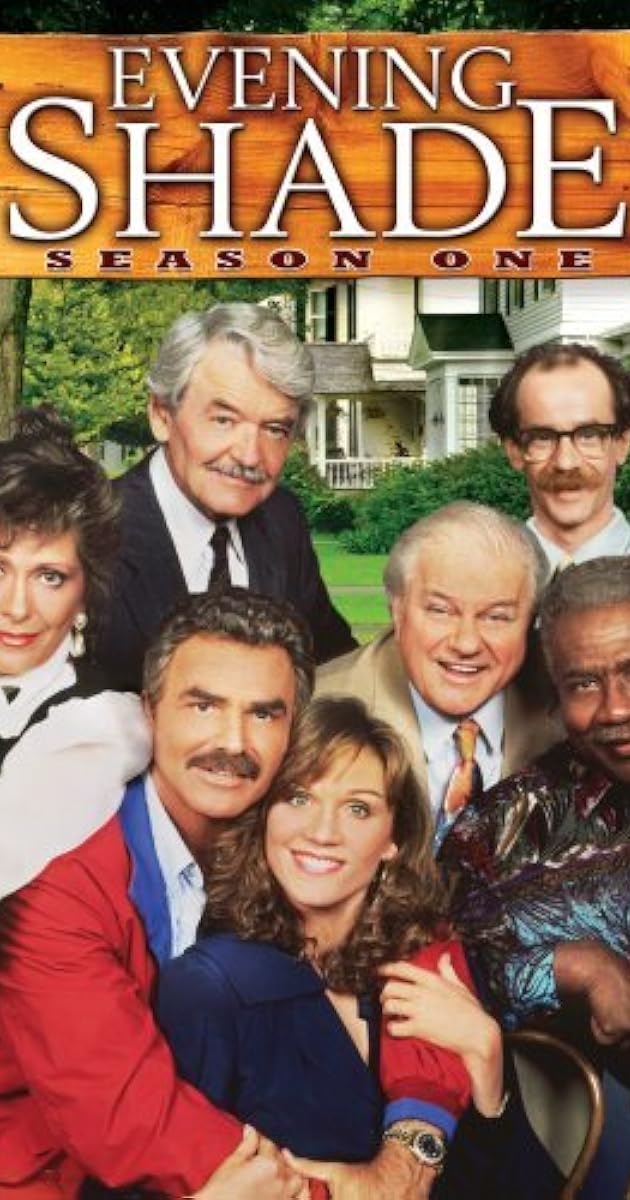
Remember the tv series “Evening Shade” that ran from 1990 to 1994? A friend told me that Reynolds was very impressed with the neighborhood in the Heights on Edgehill Road. He was told the prices of several of the homes back in 1994 and he was amazed the prices were all under 10 million. He said the homes in Beverly Hills were 5 times as much. Maybe he bought one of those “inexpensive houses?” Not likely though. The reason the papers in Florida were sent to Arkansas is because the accounting firm that handles some of his business is in Little Rock as Max pointed out earlier.  He still lives in Beverly Hills according to reports I got off the internet.


https://i0.wp.com/www.reagan.utexas.edu/archives/photographs/large/C19401-20.jpg

Nancy Reagan with Dinah Shore and Burt Reynolds in the Blue Room during a state dinner for Premier Zhao Ziyang of the Peoples Republic of China. 1/10/84.

I remember going down to the Robinson Center in Little Rock back around 1995 to see “An evening with Burt Reynolds.” It was very enjoyable as Reynolds told stories about his life. One story I found very funny was the night that Frank Sinatra took Reynolds out to a restaurant.  Dinah Shore was a longtime friend of Sinatra and he always wanted to protect her. He had a talk with Reynolds and he wanted to know Reynolds intentions.
Before the evening started, Reynolds told Dinah that he was not going to stay out late with Sinatra and he was going to leave after he got his “Sinatra story.” Well, Sinatra was served in a private room in the back of his favorite restaurant and there was a server who was nervous and he spilled some soup at Sinatra’s table. The owner came out and fired the server on the spot. Sinatra responded, “Everytime I come back here in the future, I better see this particular server working here or I will never come back again.”
Reynolds got up from the table and started to leave. Sinatra said, “Where are you going?” Reynolds said he was leaving because he told Dinah he would be back as soon as he got a “Sinatra story” and now he had one.
https://i0.wp.com/www.reagan.utexas.edu/archives/photographs/large/c32275-30.jpg
President Reagan and Nancy Reagan attending “All Star Tribute to Dutch Reagan” at NBC Studios(from left to right sitting) Colleen Reagan, Neil Reagan, Maureen Reagan, President, Nancy Reagan, Dennis Revell. (From left to right standing) Emmanuel Lewis, Charlton Heston, Ben Vereen, Monty Hall, Frank Sinatra, Burt Reynolds, Dean Martin, Eydie Gorme, Vin Scully, Steve Lawrence, last 2 unidentified. Burbank, California 12/1/85.
______________________

In England the welfare state has eroded respect for property rights

If the riots in Britain have taught us anything, it is that when government fails in its most basic function — protecting persons and property — civil society ends, and warfare begins. The rise of the welfare state has eroded respect for private property rights and fostered a socialist mentality that dulls individual responsibility.

The welfare state in the USA is almost as big as it is in Europe. Therefore, we may be in for some riots here soon. Take a look at the Founding Fathers had to say about the purpose of government and then compare to what it is doing today.

The Welfare State’s Road to Riots

by James A. Dorn

This article appeared on Orange County Register on August 17, 2011.

The U.S. is quickly catching up with European welfare states. Entitlement spending has skyrocketed since the Great Society programs of the mid-1960s, especially Medicare and Medicaid. Those two programs along with Social Security now account for more than 40 percent of federal spending, which itself has risen to 25 percent of GDP, or nearly $4 trillion. If all entitlement spending is included, payments to individuals account for 66 percent of federal spending.

The transformation from limited government (true liberalism) to the welfare state has no constitutional basis. The three branches of government have failed in their solemn duty to uphold the Framers’ Constitution, or what F. A. Hayek called “the constitution of liberty.”

The lesson from the British riots is that when government overextends itself, it will fail to do what it is supposed to do: protect persons and property.

It is not free enterprise and limited government that led to the riots in Britain; it is rather their demise. The U.S. should wake up and recognize the danger the welfare state poses to property — broadly understood as rights to life, liberty, and the pursuit of happiness.

The most fundamental question facing any society is the role and scope of government. The Framers of the Constitution accepted the idea that the primary role of government is to safeguard private property. In 1792, James Madison, the chief architect of the Constitution, wrote, “Government is instituted to protect property of every sort. … This being the end of government, that alone is a just government, which impartially secures to every man, whatever is his own.”

The Preamble to the Constitution states that the purpose of the charter is to “establish justice, insure domestic Tranquility, provide for the common defence, promote the general Welfare, and secure the Blessings of Liberty.” To “establish justice” means to prevent the violation of an individual’s natural rights or property rights; it does not give the federal government an unlimited power to take private property and interfere with freedom of contract.

Madison and the other framers would not have enumerated — and therefore limited — the powers of the federal government in Article 1, section 8, if they thought a redistributive state was just. Nor would they have added a Bill of Rights.

James A. Dorn is vice president for academic affairs with the Washington, D.C.-based Cato Institute and editor of theCato Journal.

More by James A. Dorn

Amendments to the Constitution — notably the Thirteenth, Fourteenth, and Fifteenth — further strengthened property rights. But the Progressive Movement (1890s–1920s) began to erode the Framers’ Constitution. Today, the broad interpretation of the General Welfare Clause, the Commerce Clause, and other clauses have expanded the powers of the federal government far beyond that envisioned by the Framers. In doing so, the meaning of justice has been turned on its head: from its legitimate meaning of safeguarding property to its modern meaning of using taxes, regulation, and laws to redistribute income and wealth to achieve “social justice.”

The problem is that when government is seen as an instrument for “doing good” rather than a force for preventing harm, there is no end to government mischief. By its very nature government operates by coercion, not consent; and as Milton Friedman liked to remind us, when government spends other people’s money, it will naturally want to do more and more.

The lesson from the British riots is that when government overextends itself, it will fail to do what it is supposed to do: protect persons and property. If an anti-market and socialist mentality replace an ethos of liberty and responsibility, then the harmony that results from limited government and free markets will disappear — and hooligans will gain the upper hand.

The massive U.S. debt is a reflection of the rapid growth of entitlements and a do-good vision of government. Next year’s elections will be a referendum on the size and scope of government. If Americans return to the Madisonian principle of justice that underlies the Constitution — and is the foundation of morality — the future of peace and prosperity will be bright. If they adhere to the illiberal principle of “doing good with other people’s money,” the welfare state will grow and eventually put out the light of liberty.

99th anniversary of Milton Friedman’s birth (Part 10)

Milton Friedman was born on July 31, 1912 and he died November 16, 2006. I started posting tributes of him on July 31 and I hope to continue them until his 100th birthday.

Young Man, You Owe Milton Friedman a Thank You

By Andrew Kaluza

Every young man living after 1973 owes his life to Milton Friedman. In that year, Friedman, became the intellectual father behind ending conscripted military service. He wasn’t the first person to voice his opposition to the draft, but he was the first to communicate his ideas effectively enough to change the public mindset on the issue.

Ideas lay the groundwork for a philosophy and provide the foundation for a society. As Peter Kreeft said, “Philosophy is just thought, but sow a thought, reap an act; sow an act, reap a habit; sow a habit, reap a character; sow a character, reap a destiny. This is just as true for societies as it is for individuals.” Given that ideas guide our every action, we must look to have not just valid ideas, but ones that are intellectually grounded and sound.  Ideas must be communicated, compared and pieced together in order to create even better ideas. Communication is particularly important, as the better the communication, the more accessible and understandable ideas become. Fortunately, Friedman was a great communicator. His ability to communicate the message of liberty and free choice in regard to the draft kept young American males out of compulsory military service.

What was he able to communicate about the draft? When making a case for the draft, advocates claimed that if soldiers enlisted for pay, it would create an army of mercenaries.  They argued that a paid volunteer army would not be a virtuous army, because the soldiers would join for monetary desire and not for patriotic duty.  Milton Friedman rebutted this by pointing out that mandatory conscription hypocritically fails this patriotic test, since forced servitude, rather than inner volition, causes individuals to serve.  Friedman believed that incentives are the foundation of each individual’s action, and therefore, it was inappropriate to attribute unpatriotic motives to paid army volunteers.

Friedman’s repudiation of such mercenary concerns are illustrated in a famous confrontation with General William Westmoreland:

 In the course of his [General Westmoreland’s] testimony, he made the statement that he did not want to command an army of mercenaries. I [Milton Friedman] stopped him and said, ‘General, would you rather command an army of slaves?’ He drew himself up and said, ‘I don’t like to hear our patriotic draftees referred to as slaves.’ I replied, ‘I don’t like to hear our patriotic volunteers referred to as mercenaries.’ But I went on to say, ‘If they are mercenaries, then I, sir, am a mercenary professor, and you, sir, are a mercenary general; we are served by mercenary physicians, we use a mercenary lawyer, and we get our meat from a mercenary butcher.’ That was the last that we heard from the general about mercenaries.  

This example highlights the importance of communicating ideas effectively. By doing so, Friedman successfully convinced people of the ills of conscripted military service and persevered in the all-important court of public opinion. Friedman changed the landscape of modern war — and along with it the destiny of young Americans everywhere.