A Defined Contribution Adjusted by Income. Five years after enactment,
all newretirees receive a contribution (premium support) from the
government, just as federal employees and retirees do today. They can use this
contribution to choose Medicare’s premium-based FFS plan or one of the other
health plans. After one year of operation, Medicare enrollees in the traditional
Medicare FFS program are free to join the new Medicare premium-support program.
They can then choose a premium-based FFS plan or an alternative.
During the first five years of the premium-support program, the government’s
contribution is based on the weighted average premium of the regional bids of
competing health plans. After the first five years, the government contribution
is based on the lowest bid of competing plans in a region. The bidding system
will be phased in and will include the bids of the competing managed care plans,
other private plans, and the Medicare premium-based FFS plans offering an
approved range and quality of services.
Under the Heritage plan, low-income enrollees receive the full Medicare
defined contribution. The amount of the defined contribution starts to phase out
for Medicare enrollees with annual non–Social Security incomes between $55,000
and $110,000 and couples with incomes between $110,000 and $165,000. Enrollees
with incomes over $110,000 and couples with incomes over $165,000 receive no
government contribution and pay full, unsubsidized premiums. As with Social
Security, married couples can decide whether they want to qualify for benefits
as individuals or jointly as a couple. The phaseout income levels will be
inflation-indexed. However, Medicare remains a valuable program for
higher-income seniors because they retain access to a guaranteed-issue and
community-rated insurance program.
Under the Heritage plan over 90 percent of seniors would receive the full
defined contribution. Only just over 3.5 percent have such high incomes that
they would pay the entire premium without any contribution from the
government.
This income-adjustment of Medicare is not new. Today, for instance, Medicare
Part B and Part D premiums are changed significantly according to income. For
single retirees, Part B premiums can range widely, from $96.40 per month to as
much as $369.10 per month, depending on their income. Upper-income retirees can
pay as much as $69.10 per month more for the same Part D coverage as a
lower-income senior. What the Heritage plan does is rationalize the income
adjustment of Medicare so that it fulfills the true insurance purpose of the
program while assuring that the program will be available for future
generations.
I am really reaching at this point. Up until this point I have really been trying to only talk about the characters that Woody Allen referenced in his latest movie “Midnight in Paris.” However, now I am stepping over the line and talking about famous philosophers who ate regularly at Les Deux Magots which is featured in the movie. So be it.
The Deux Magots literary prize has been awarded to a French novel every year since 1933.
The name originally belonged to a fabric and novelty shop at nearby 23 Rue de Buci. The shop sold silk lingerie and took its name from a popular play of the moment (1800s) entitled Les Deux Magots de la Chine (Two Figurines from China.)[2] In 1873 the business transferred to its current location in the Place Saint-Germain-des-Prés. In 1884 the business changed to a café and liquoriste, keeping the name.
Auguste Boulay bought the business in 1914, when it was on the brink of bankruptcy, for 400,000 francs (anciens). The present manager, Catherine Mathivat, is his great-great-granddaughter.
Sartre’s worldview is discussed in the film series “How should we then live?” by Francis Schaeffer below.
Transcript from “How Should we then live?”:
Humanist man beginning only from himself has concluded that he is only a machine. Humanist man has no place for a personal God, but there is also no place for man’s significance as man and no place for love, no place for freedom.
Man is only a machine, but the men who hold this position could not and can not live like machines. If they could then modern man would not have his tensions either in his intellectual position or in his life, but he can’t. So they leap away from reason to try to find something that gives meaning to their lives, to life itself, even though to do so they deny their reason.
Once this is done any type of thing could be put there. Because in the area of nonreason, reason gives no basis for a choice. This is the hallmark of modern man. How did it happen? It happened because proud humanist man, though he was finite, insisted in beginning only from himself and only from what he could learn and not from other knowledge, he did not succeed. Perhaps the best known of existentialist philosophers was Jean Paul Sartre. He used to spend much of his time here in Paris at the Les Deux Magots.
Sartre’s position is in the area of reason everything is absurd, but one can authenticate himself, that is give validity to his existence by an act of the will. In Sartre’s position one could equally help an old woman across the street or run her down.
Reason was not involved, and there was nothing to show the direction this authentication by an act of the will should take. But Sartre himself could live consistantly with his own position. At a certain point he signed the Algerian Manifesto which declared that the Algerian war was a dirty war. This action meant that man could use his reason to decide that some things were right and some things were wrong and so he destroyed his own system.
How Should We then Live Episode 7 small (Age of Nonreason)
#02 How Should We Then Live? (Promo Clip) Dr. Francis Schaeffer
10 Worldview and Truth
Two Minute Warning: How Then Should We Live?: Francis Schaeffer at 100
Francis Schaeffer Whatever Happened to the Human Race (Episode 1) ABORTION
Francis Schaeffer “BASIS FOR HUMAN DIGNITY” Whatever…HTTHR
The unity and true knowledge of reality defined as starting from Man alone.
II. Shift in Modern Philosophy
A. Eighteenth century as the vital watershed.
B. Rousseau: ideas and influence.
1. Rousseau and autonomous freedom.
2. Personal freedom and social necessity clash in Rousseau.
3. Rousseau’s influence.
a) Robespierre and the ideology of the Terror.
b) Gauguin, natural freedom, and disillusionment.
C. DeSade: If nature is the absolute, cruelty equals non-cruelty.
D. Impossible tension between autonomous freedom and autonomous reasons conclusion that the universe and people are a part of the total cosmic machine.
E. Kant, Hegel, and Kierkegaard and their followers sought for a unity but they did not solve the problem.
1. After these men and their followers, there came an absolute break between the area of meaning and values, and the area of reason.
2. Now humanistic philosophy sees reason as always leading to pessimism; any hope of optimism lies in non-reason.
III. Existentialism and Non-Reason
A. French existentialism.
1. Total separation of reason and will: Sartre.
2. Not possible to live consistently with this position.
B. German existentialism.
1. Jaspers and the “final experience.”
2. Heidegger and angst.
C. Influence of existentialism.
1. As a formal philosophy it is declining.
2. As a generalized attitude it dominates modern thought.
IV. Forms of Popularization of Nonrational Experience
A. Drug experience.
1. Aldous Huxley and “truth inside one’s head.”
2. Influence of rock groups in spreading the drug culture; psychedelic rock.
B. Eastern religious experience: from the drug trip to the Eastern religious trip.
C. The occult as a basis for “hope” in the area of non-reason.
V. Theological Liberalism and Existentialism
A. Preparation for theological existentialism.
1. Renaissance’s attempt to “synthesize” Greek philosophers and Christianity; religious liberals’ attempt to “synthesize” Enlightenment and Christianity.
2. Religious liberals denied supernatural but accepted reason.
3. Schweitzer’s demolition of liberal aim to separate the natural from the supernatural in the New Testament.
B. Theological existentialism.
1. Intellectual failure of rationalist theology opened door to theological existentialism.
2. Barth brought the existential methodology into theology.
a) Barth’s teaching led to theologians who said that the Bible is not true in the areas of science and history, but they nevertheless look for a religious experience from it.
b) For many adherents of this theology, the Bible does not give absolutes in regard to what is right or wrong in human behavior.
3. Theological existentialism as a cul-de-sac.
a) If Bible is divorced from its teaching concerning the cosmos and history, its values can’t be applied to a historic situation in either morals or law; theological pronouncements
about morals or law are arbitrary.
b) No way to explain evil or distinguish good from evil. Therefore, these theologians are in same position as Hindu philosophers (as illustrated by Kali).
c) Tillich, prayer as reflection, and the deadness of “god.”
d) Religious words used for manipulation of society.
VI. Conclusion
With what Christ and the Bible teach, Man can have life instead of death—in having knowledge that is more than finite Man can have from himself.
Questions
1. What is the difference between theologians and philosophers of the rationalist tradition and those of the existentialist tradition?
2. “If the early church had embraced an existentialist theology, it would have been absorbed into the Roman pantheon.” It didn’t. Why not?
3. “It is true that existentialist theology is foreign to biblical religion. But biblical religion was the product of a particular culture and, though useful for societies in the same cultural stream, it is no longer suitable for an age in which an entire range of world cultures requires a common religious denominator. Religious existentialism provides that, without losing the universal instinct for the holy.” Study this statement carefully. What assumptions are betrayed by it?
4. Can you isolate attitudes and tendencies in yourself, your church, and your community which reflect the “existentialist methodology” described by Dr. Schaeffer?
Key Events and Persons
Rousseau: 1712-1778
Kant: 1724-1804
Marquis de Sade: 1740-1814
The Social Contract: 1762
Hegel: 1770-1831
Kierkegaard: 1813-1855
Paul Gauguin: 1848-1903
Whence, What Whither?: 1897-1898
Albert Schweitzer: 1875-1965
Quest for the Historical Jesus: 1906
Karl Jaspers: 1883-1969
Paul Tillich: 1886-1965
Karl Barth: 1886-1968
Martin Heidegger: 1889-1976
Aldous Huxley: 1894-1963
J.P. Sartre: 1905-1980
Beatles’ Sergeant Pepper: 1967
Further Study
Unless already familiar with them, take time to listen to the Beatles’ records, as well as to discs put out by other groups at the time.
Albert Camus, The Stranger (1942).
Aldous Huxley, The Doors of Perception (1954).
Rousseau, The Social Contract (1762).
J.P. Sartre, Nausea (1938).
Paul Tillich, The Courage to Be (1952).
Following Rousseau, the exaggeration of the delights and the pathos of nature and experience which marks Romanticism may be sampled in, for example, Wordsworth’s poems, Casper David Friedrich’s paintings, and Schubert’s songs.
J.G. Fichte, Addresses to the German Nation (1968).
J.W. von Goethe, The Sorrows of Young Werther (1962).
Erich Heller, The Disinherited Mind (1952).
______________________________________
Jean-Paul Sartre, (1905-1980) born in Paris in 1905, studied at the École Normale Supérieure from 1924 to 1929 and became Professor of Philosophy at Le Havre in 1931. With the help of a stipend from the Institut Français he studied in Berlin (1932) the philosophies of Edmund Husserl and Martin Heidegger. After further teaching at Le Havre, and then in Laon, he taught at the Lycée Pasteur in Paris from 1937 to 1939. Since the end of the Second World War, Sartre has been living as an independent writer.
Sartre is one of those writers for whom a determined philosophical position is the centre of their artistic being. Although drawn from many sources, for example, Husserl’s idea of a free, fully intentional consciousness and Heidegger’s existentialism, the existentialism Sartre formulated and popularized is profoundly original. Its popularity and that of its author reached a climax in the forties, and Sartre’s theoretical writings as well as his novels and plays constitute one of the main inspirational sources of modern literature. In his philosophical view atheism is taken for granted; the “loss of God” is not mourned. Man is condemned to freedom, a freedom from all authority, which he may seek to evade, distort, and deny but which he will have to face if he is to become a moral being. The meaning of man’s life is not established before his existence. Once the terrible freedom is acknowledged, man has to make this meaning himself, has to commit himself to a role in this world, has to commit his freedom. And this attempt to make oneself is futile without the “solidarity” of others.
The conclusions a writer must draw from this position were set forth in “Qu’est-ce que la littérature?” (What Is Literature?), 1948: literature is no longer an activity for itself, nor primarily descriptive of characters and situations, but is concerned with human freedom and its (and the author’s) commitment. Literature is committed; artistic creation is a moral activity.
While the publication of his early, largely psychological studies, L’Imagination (1936), Esquisse d’une théorie des émotions (Outline of a Theory of the Emotions), 1939, and L’Imaginaire: psychologie phénoménologique de l’imagination (The Psychology of Imagination), 1940, remained relatively unnoticed, Sartre’s first novel, La Nausée (Nausea), 1938, and the collection of stories Le Mur (The Wall and other Stories), 1938, brought him immediate recognition and success. They dramatically express Sartre’s early existentialist themes of alienation and commitment, and of salvation through art.
His central philosophical work, L’Etre et le néant (Being and Nothingness), 1943, is a massive structuralization of his concept of being, from which much of modern existentialism derives. The existentialist humanism which Sartre propagates in his popular essay L’Existentialisme est un humanisme (Existentialism is a Humanism), 1946, can be glimpsed in the series of novels, Les Chemins de la Liberté (The Roads to Freedom), 1945-49.
Sartre is perhaps best known as a playwright. In Les Mouches (The Flies), 1943, the young killer’s committed freedom is pitted against the powerless Jupiter, while in Huis Clos (No Exit), 1947, hell emerges as the togetherness of people.
Sartre has engaged extensively in literary critisicm and has written studies on Baudelaire (1947) and Jean Genet (1952). A biography of his childhood, Les Mots (The Words), appeared in 1964.
Roger Arpajou/Versitil Cinema & Gravier Productions, Courtesy of Sony Pictures Classics
Owen Wilson, left, is Gil, who travels back in time to 1920s Paris, and Marion Cotillard is Adriana, a fictional mistress of Picasso’s who catches Gil’s eye. More Photos »
He runs into Scott and Zelda Fitzgerald at an elegant soiree, where he hears Cole Porter crooning “Let’s Do It (Let’s Fall in Love).” He gets writing advice from a laconic Hemingway, persuades Gertrude Stein to read the manuscript of his novel, and falls in love with Picasso’s mistress. He meets Salvador Dalí, T. S. Eliot, Djuna Barnes, Josephine Baker, Luis Buñuel, Man Ray and others in the enormously talented cast of expatriates and bohemians that peopled Jazz Age Paris. Reeling from the folly of World War I and so offering fodder for novels and paintings dripping with disillusionment, Paris was the center of the artistic universe then, and those legends really did converge on Paris around the same time.
“If you are lucky enough to have lived in Paris as a young man then wherever you go for the rest of your life, it stays with you, for Paris is a moveable feast,” Hemingway wrote in “A Moveable Feast,” his memoir that was posthumously published in 1964.
The movie sometimes assumes viewers know the details of these luminous lives, so it may be helpful to understand some of the complicated relationships that made Paris in that era both a dream and often something less.
In 1922 Hemingway and his first wife, Hadley, took a two-room flat near the Sorbonne that had no hot water and no indoor toilet. He also rented a room around the corner to write, something like the “attic with a skylight” Gil craves. It had a view of the smokestacks and rooftops that Mr. Allen captures in worshipful shots of the city.
Hemingway also discovered Shakespeare & Company, a bookstore near the Jardin du Luxembourg owned by Sylvia Beach that became a crossroads for Americans in Paris. It’s where he borrowed books by Turgenev and Tolstoy, and it makes a cameo in the film.
Gil meets Hemingway in a run-down cafe not unlike the legendary Dingo, where Hemingway’s less than beautiful friendship with Fitzgerald began with the latter’s drunken near-blackout. Hemingway, who is parodied in the film with dialogue like “no subject is terrible if the story is true and if the prose is clean and honest,” was envious of the seemingly effortless lyricism of Fitzgerald’s writing in works like “The Great Gatsby.” In “Midnight in Paris,” Hemingway tells Fitzgerald that Zelda, a writer herself, sees her husband as a competitor. But “A Moveable Feast” offers a more full-throated account. Hemingway grew to despise Zelda, partly because she had betrayed Fitzgerald with a French aviator and partly because he blamed her decadent tempestuousness for ruining her husband’s productivity.
Picasso and Matisse, who appear in the film, also had a rivalry, barely acknowledged in the film, with the two artists echoing — some critics say swiping — each other’s themes. Both gained the attention of the art collector Leo Stein and his sister, Gertrude. In the film Gil hears that Gertrude Stein has bought a Matisse for 500 francs and, in the hope of making a time-bending killing, asks her if he could pick up “six or seven” Matisses as well. The twice-married Picasso was famous for mistresses, and in the film Marion Cotillard plays Adriana, a capricious, if melancholy stand-in for all of Picasso’s lovers, models and muses. She claims to have been the lover of Modigliani and Braque as well. In actuality, Picasso’s mistresses were relatively constant. Marie-Thérèse Walter, who was 17 when she met Picasso, was with him for eight years, bearing him a daughter, Maya. Dora Maar, whom he met around 1935, was his lover for at least eight years as well.
The Indiana-born Cole Porter maintained an elegant apartment, where he gave hedonistic parties that were daring for their mingling of gay and straight friends. Porter met and married Linda Lee Thomas, a divorcée from Louisville who was eight years older and aware that Porter was gay. They set up an even more lavish apartment — walls covered in zebra hide — near Les Invalides, a home that seems like the setting for the on-screen party where Porter entertains his guests at the piano.
The film recounts how many Porter songs were hommages to Paris —“I Love Paris” and “C’est Magnifique,” among them — and indeed Porter wrote a musical, “Paris,” for the chanteuse Irene Bordoni. One of the show’s songs was “Let’s Do It,” with teasingly suggestive lines including: “In shallow shoals English soles do it./Goldfish in the privacy of bowls do it.”
When Gil sits down in a cafe with Dalí and Man Ray, he confides to those artists his shock at being catapulted back in time. Man Ray is delighted with the idea, but Gil tells him that’s because “you’re a Surrealist and I’m a normal guy.”
Dalí, played here by Adrien Brody, first visited Paris in 1926, grew the mustache that would become his trademark, and met his idol and fellow Spaniard, Picasso. Experimenting with many forms, Dalí fell in with a circle of Surrealists in Montparnasse whose members were probing the Freudian depths of their psyches for what they regarded as a new expressive frontier. He met his future wife, Gala, who was inconveniently married to a Surrealist poet.
Dalí collaborated with Buñuel on the short avant-garde film “Un Chien Andalou.” In “Midnight in Paris,” Gil suggests to Buñuel that he make a film about a dinner party gone haywire. Buñuel, of course, took up the suggestion. The film was “The Exterminating Angel,” released in 1962.
This article has been revised to reflect the following correction:
Correction: May 31, 2011
An earlier version of this article omitted the final paragraph.
This article has been revised to reflect the following correction:
Correction: June 1, 2011
An article on Saturday about figures from the Paris arts scene in the 1920s who appear in the new Woody Allen movie, “Midnight in Paris,” including the filmmaker Luis Buñuel, misidentified a film by Buñuel that the Allen movie’s protagonist urges him to make some day. It is “The Exterminating Angel,”
The Reformed System. When the changes are fully phased in, seniors
will enroll in the health plans of their choice and receive a defined
contribution (known as premium support) toward the cost of their plans, much as
Members of Congress and millions of federal employees and retirees do through
the FEHBP. Unlike today, all plans will include catastrophic protection. Thanks
to the structure and insurance rules in Medicare, the premium support will be
sufficient for seniors to afford an adequate level of benefits, regardless of
age or health care condition.
The range of choices in the transformed system includes Medicare
premium-based fee-for-service insurance as well as other fee-for-service plans,
Medicare Advantage plans, managed care plans, association plans, and
Taft–Hartley Act and employer-based plans. Existing health savings accounts
(HSAs) can also be carried into retirement.
Medicare’s basic rules for insurance are retained, together with an improved
risk-adjustment mechanism to offset the impact of any adverse selection.
Underthe reformed system, Medicare’s Center for Drug and Health Plan
Choice, whose mission today is to identify abuse and oversee marketing rules for
Medicare Advantage and Medicare drug plans, carries out that function for all
plans.
Beyond retaining the Medicare insurance rules, the reform provides for fiscal
solvency and reserve requirements for all health plans to ensure that plans have
the financial resources to pay insurance claims. It also provides marketing
rules to protect consumers against fraud and a requirement that benefits be
described in plain English without surprises or denials in fine print. By
increasing choice and competition, the reformed Medicare program will deliver
better care and provide true health care security for less money than under
current projections.
The cash value of premium support is reduced for upper-income seniors and
eventually phased out for those with the highest incomes. However, all seniors
will have access to the same Medicare system with no need to buy a separate plan
to cover catastrophic expenses. Poor seniors remain eligible for Medicaid
assistance. Like the Social Security adjustments in retirement age, Medicare’s
eligibility age becomes 68 in 10 years and is indexed thereafter for increases
in longevity.
During the five-year transition period, Medicare’s traditional
fee-for-service system also changes. Part A costs are offset by a new premium
payment system for upper-income retirees. The premiums for Parts B and D rise
according to income. The highest-income seniors pay an unsubsidized premium for
Parts B and D during the transition.
Medicare must be reformed to solve this huge financing problem, to improve
access to quality care, and to ensure that health care will be available for
younger Americans when they retire.
The Heritage plan accomplishes this by transforming Medicare from an
open-ended and unsustainable defined-benefit entitlement into a properly
budgeted program that focuses Medicare subsidies on those who need them most.
The new Medicare program would look much more like the Federal Employees Health
Benefits Program (FEHBP), the health care system for Members of Congress and
federal employees.
Over a five-year period, the plan transforms Medicare into a
defined-contribution system, with stronger health security for the poor and less
healthy, and guarantees new protections against catastrophic costs for all
enrollees. Today’s traditional fee-for-service Medicare program provides no such
protections. Because of this gap, nine out of 10 seniors feel compelled to buy
supplemental private health insurance, including Medigap, to cover themselves
against the financial devastation of catastrophic illness. This means that
seniors pay an extra set of premiums and often incur high out-of-pocket costs
for both premium and non-premium medical expenses.
Finally, the plan establishes a true long-term budget for Medicare.
Senator Mark Pryor wants our ideas on how to cut federal spending. Take a look at this video clip below:
Senator Pryor has asked us to send our ideas to him at cutspending@pryor.senate.gov and I have done so in the past and will continue to do so in the future.
On May 11, 2011, I emailed to this above address and I got this email back from Senator Pryor’s office:
Please note, this is not a monitored email account. Due to the sheer volume of correspondence I receive, I ask that constituents please contact me via my website with any responses or additional concerns. If you would like a specific reply to your message, please visit http://pryor.senate.gov/contact. This system ensures that I will continue to keep Arkansas First by allowing me to better organize the thousands of emails I get from Arkansans each week and ensuring that I have all the information I need to respond to your particular communication in timely manner. I appreciate you writing. I always welcome your input and suggestions. Please do not hesitate to contact me on any issue of concern to you in the future.
GUIDELINE #8: Convert several remaining programs into vouchers.
Government programs should not be bloated bureaucracies that shepherd recipients into one-size-fits-all programs. Voucher programs, which allow individuals to purchase goods and services on the open market rather than receiving them from the government, have two distinct advantages:
Choice. Instead of forcing program recipients to take what a bureaucracy provides, vouchers allow them to shop around and find the goods and services that fit their needs.
Efficiency. Providing health insurance or housing vouchers is much less costly to government than the construction and maintenance of government-owned hospitals or housing. Competition among private firms for vouchers would bring about lower prices than government monopolies.
Some policymakers believe that low-income individuals cannot be trusted to make intelligent economic decisions with their vouchers, condescendingly implying that government employees know best how to run the lives of poor families. Those worrying that private markets could not accommodate the influx of voucher-wielding families fail to recognize that vouchers create markets by strengthening demand and thereby inducing new supply.
Food stamps provide the model for a successful voucher program.29 Instead of building a bureaucracy to grow and distribute government food to low-income families, the program simply provides families with vouchers to purchase food themselves. Housing vouchers that subsidize private rent costs have proven better for low-income families than dilapidated, dangerous public housing. Most child-care programs subsidize the private facilities that parents choose instead of forcing them into government-run facilities. Federal student loan programs exist as a type of education vouchers.
Vouchers can provide choice without bureaucracy in many other areas. Medicare and Medicaid could be made more like the Federal Employees Health Benefits Program (FEHBP), in which federal employees choose between competing private health plans with the federal government subsidizing the premium. More public housing programs can be replaced with rent vouchers.
Despite increased borrowing, record-low interest rates have kept net interest costs down.
Under the President’s budget, the combination of rising interest rates and a doubling of the national debt would nearly quadruple inflation-adjusted net interest costs over the next decade.
By 2020, net interest costs would account for a record 16.1 percent of the federal budget and 4.1 percent of GDP. Net interests costs would be nearly three-quarters the size of the entire $1,041 billion deficit.
I have enjoyed Woody Allen’s latest movie “Midnight in Paris.” Going through all the characters referenced has been a real education. Today I am discussing Jean Cocteau. There is a scene in the movie when Gil is invited by Scott and Zelda Fitzgerald to attend a party hosted by Jean Cocteau. They all jump into a back of a car with Cole Porter and the Spanish bull fighter Juan Belmonte (who was personal friends of Ernest Heminingway) and take off to the Cocteau party where they see the famous Josephine Baker dance.
Jean Maurice Eugène Clément Cocteau
5 July 1889 Maisons-Laffitte, France
His work was played out in the theatrical world of the Grands Theatres, the Boulevards and beyond during the Parisian epoque he both lived through and helped define and create. His versatile, unconventional approach and enormous output brought him international acclaim.
Cocteau was born in Maisons-Laffitte, Yvelines, once a small village near Paris to Georges Cocteau and his wife Eugénie Lecomte, a prominent Parisian family. His father was a lawyer and amateur painter, who committed suicide when Cocteau was nine. He left home at age fifteen. Despite his achievements in virtually all literary and artistic fields, Cocteau insisted that he was primarily a poet and that all his work was poetry. He published his first volume of poems, Aladdin’s Lamp, at nineteen. Soon Cocteau became known in the Bohemian artistic circles as ‘The Frivolous Prince’—the title of a volume he published at twenty-two. Edith Wharton described him as a man “to whom every great line of poetry was a sunrise, every sunset the foundation of the Heavenly City…”[citation needed]
In his early twenties, Cocteau became associated with the writers Marcel Proust, André Gide, and Maurice Barrès. In 1912 he collaborated withLéon Bakst to produce Le Dieu bleu for the Ballets Russes – the principal dancers being Tamara Karsavina and Vaslav Nijinsky. During World War I Cocteau served in the Red Cross as an ambulance driver. This was the period in which he met the poet Guillaume Apollinaire, artists Pablo Picasso and Amedeo Modigliani, and numerous other writers and artists with whom he later collaborated. The Russian ballet-master Sergei Diaghilev challenged Cocteau to write a scenario for the ballet – “Astonish me,”[citation needed] he urged. This resulted in Parade which was produced by Diaghilev, designed by Picasso, and composed by Erik Satie in 1917. An important exponent of avant-garde art, he had great influence on the work of others, including the group of composer friends in Montparnasse known as Les six. “If it had not been for Apollinaire in uniform,” wrote Cocteau, “with his skull shaved, the scar on his temple and the bandage around his head, women would have gouged our eyes out with hairpins.”[citation needed] Cocteau denied being a Surrealist or being in any way attached to the movement.[citation needed]
Portrait of Jean Cocteau by Federico de Madrazo de Ochoa
In 1918 he met the French poet Raymond Radiguet. They collaborated extensively, socialized, and undertook many journeys and vacations together. Cocteau also got Radiguet exempted from military service. In admiration of Radiguet’s great literary talent, Cocteau promoted his friend’s works in his artistic circle and also arranged for the publication by Grasset of Le Diable au corps (a largely autobiographical story of an adulterous relationship between a married woman and a younger man), exerting his influence to have the novel awarded the “Nouveau Monde” literary prize. Some contemporaries and later commentators thought there might have been a romantic component to their friendship.[1] Cocteau himself was aware of this perception, and worked earnestly to dispel the notion that their relationship was sexual in nature.[2]
There is disagreement over Cocteau’s reaction to Radiguet’s sudden death in 1923, with some claiming that it left him stunned, despondent and prey toopium addiction. Opponents of that interpretation point out that he did not attend the funeral (he generally did not attend funerals) and immediately left Paris with Diaghilev for a performance of Les noces (The Wedding) by the Ballets Russes at Monte Carlo. Cocteau himself much later characterised his reaction as one of “stupor and disgust.”[citation needed] His opium addiction at the time,[3] Cocteau said, was only coincidental, due to a chance meeting with Louis Laloy, the administrator of the Monte Carlo Opera. Cocteau’s opium use and his efforts to stop profoundly changed his literary style. His most notable book,Les Enfants terribles, was written in a week during a strenuous opium weaning. In Opium, Diary of an Addict, he recounts the experience of his recovery from opium addiction in 1929. His account, which includes vivid pen-and-ink illustrations, alternates between his moment-to-moment experiences of drug withdrawal and his current thoughts about people and events in his world. Cocteau was supported throughout his recovery by his friend and correspondent philosopher Jacques Maritain. Under Maritain’s influence Cocteau made a temporary return to the sacraments of the Catholic Church.
Cocteau’s experiments with the human voice peaked with his play La Voix humaine. The story involves one woman on stage speaking on the telephone with her (invisible and inaudible) departing lover, who is leaving her to marry another woman. The telephone proved to be the perfect prop for Cocteau to explore his ideas, feelings, and “algebra” concerning human needs and realities in communication.
Cocteau acknowledged in the introduction to the script that the play was motivated, in part, by complaints from his actresses that his works were too writer/director-dominated and gave the players little opportunity to show off their full range of talents. La Voix humaine was written, in effect, as an extravagant aria for Madame Berthe Bovy. Before came Orphée, later turned into one of his more successful films; after came La Machine infernale, arguably his most fully realized work of art. La Voix humaine is deceptively simple—a woman alone on stage for almost one hour of non-stop theatre speaking on the telephone with her departing lover. It is, in fact, full of theatrical codes harking back to the Dadaists’ Vox Humana experiments after World War One, Alphonse de Lamartine’s “La Voix humaine”, part of his larger work Harmonies poétiques et religieuses and the effect of the creation of the Vox Humana (“voix humaine”), an organ stop of the Regal Class by Church organ masters (late 16th century) that attempted to imitate the human voice but never succeeded in doing better than the sound of a male chorus at a distance.
Reviews varied at the time and since but whatever the critique, the play represents Cocteau’s state of mind and feelings towards his actors at the time: on the one hand, he wanted to spoil and please them; on the other, he was fed up by their diva antics and was ready for revenge. It is also true that none of Cocteau’s works has inspired as much imitation: Francis Poulenc‘s opera La Voix humaine, Gian Carlo Menotti‘s “opera bouffa” The Telephone and Roberto Rosselini‘s film version in Italian with Anna MagnaniL’Amore (1948). There has also been a long line of interpreters including Simone Signoret, Ingrid Bergman and Liv Ullmann (in the play) and Julia Migenes (in the opera).
According to one theory about how Cocteau was inspired to write La Voix humaine, he was experimenting with an idea by fellow French playwright Henri Bernstein.[4] “When, in 1930, theComedie-Française produced his La Voix humaine… Cocteau disavowed both literary right and literary left, as if to say, ‘I’m standing as far right as Bernstein, in his very place, but it is an optical illusion: the avant-garde is spheroid and I’ve gone farther left than anyone else.'”[citation needed]
In the 1930s, Cocteau had an affair with Princess Natalie Paley, the beautiful daughter of a Romanovgrand duke and herself a sometimes actress, model, and former wife of couturierLucien Lelong. She became pregnant. To Cocteau’s distress and Paley’s life-long regret, the fetus was aborted. Cocteau’s longest-lasting relationships were with the French actors Jean Marais and Edouard Dermithe, whom Cocteau formally adopted. Cocteau cast Marais in The Eternal Return (1943), Beauty and the Beast (1946), Ruy Blas (1947), and Orpheus (1949).
During the Nazi occupation of France, Cocteau’s friend Arno Breker convinced him that Adolf Hitler was a pacifist and patron of the arts with France’s best interests in mind. In his diary, Cocteau accused France of disrespect towards Hitler and speculated on the Führer’s sexuality. Cocteau effusively praised Breker’s sculptures in an article entitled ‘Salut à Breker’ published in 1942. This piece caused him to be arraigned on charges of collaboration after the war, though he was cleared of any wrongdoing and had in fact used his contacts to attempt to save friends such as Max Jacob.[5]
In 1940, Le Bel Indifférent, Cocteau’s play written for and starring Édith Piaf, was enormously successful. He also worked with Pablo Picasso on several projects and was friends with most of the European art community. Cocteau’s films, most of which he both wrote and directed, were particularly important in introducing the avant-garde into French cinema and influenced to a certain degree the upcoming French New Wave genre.
Cocteau died of a heart attack at his chateau in Milly-la-Forêt, Essonne, France, on 11 October 1963 at the age of 74. It is said that upon hearing of the death of his friend, the French singer Édith Piaf the same day, he choked so badly that his heart failed. He is buried beneath the floor of the Chapelle Saint Blaise Des Simples in Milly-la-Forêt. The epitaph on his gravestone set in the floor of the chapel reads: “I stay with you” (“Je reste avec vous”).
Midnight in Paris begins with a Manhattan-esque montage of the titular city, and after so many consecutive duds, Woody Allen has finally rediscovered (and relocated) the vital essence that traces back to his very best films. Don’t mistake his latest for a nostalgic throwback, though–in fact, it’s something of an essay on the dangerous intoxication of nostalgic throwbacks. Take it, too, as fair indication that Allen has shared our frustrations with his recent output and knew that the only way to get out of his rut was to confront the spectre of his earlier work. While he probably hates himself for it, it was bound to happen sooner or later: the pull of the past is simply too great to resist. Here, Manhattan becomes Paris, Paris becomes Manhattan, and we’re left to wonder what, exactly, that’s supposed to mean in the long run. Allen projects himself onto a younger avatar, who in turn projects himself onto the artists who came before him, who in turn have their own projections to deal with. As usual, Allen stops the action cold to explain his theses in a brief monologue, but for the first time in a long time, it feels necessary. It feels like legitimate self-criticism.
Hollywood screenwriter Gil (Owen Wilson) is struggling through a novel, convinced that he would’ve seen greater artistic success had he sacrificed the big paydays for a little more time spent daydreaming in the City of Lights. He returns there for a mini-vacation, and after several frustrating nights in the company of selfish fiancé Inez (Rachel McAdams), Gil wanders alone in search of inspiration. On a random street corner, he’s picked up by an old-timey car and transported to 1920s Paris, where he meets a who’s who of the era’s cultural elite: F. Scott Fitzgerald (Tom Hiddleston), Ernest Hemingway (Corey Stoll), Salvador Dalí (Adrien Brody), Gertrude Stein (Kathy Bates), and what seems like every other major artist of the early twentieth century. Naturally, they love his gaping naïveté and (obnoxious) hero worship. He gets to show off his work to some pretty big names and maybe even enjoy an affair with resident muse Adriana (Marion Cotillard), though as these excursions continue, they demonstrate little purpose beyond fulfilling the writer’s desire for self-gratification. (In a brief stay back in his own reality, Gil uses his newfound historical knowledge to take the piss out of a pompous, wannabe art critic (Michael Sheen) with eyes on Inez.) Would it have been possible for someone to meet all of these artists in the same place in such rapid succession? More importantly, does Gil make any real progress on his much-ballyhooed novel? It doesn’t really matter, because if he’s getting all this attention from these idols, well, he must be a good writer.
Gil’s superficial interactions in yesteryear mirror his relationships in the modern day. If we are to conclude that Inez is wrong for Gil, then we must also ask why they got engaged in the first place. Early political conversations with his future father-in-law (Kurt Fuller) reveal an unwillingness to engage opposing viewpoints, while Gil’s flirtation with a local merchant (Léa Seydoux) only seems to transpire because he thinks the romantic setting demands it. “‘Prufrock’ is my mantra,” Gil says upon meeting T.S. Eliot, unaware of just how well he embodies that poem as an aging romantic, an interloper gawking impotently as the women come and go, talking of Michelangelo. The entire thing is an exercise in intellectual tourism and impossible fever dreams (as all art may be, the film’s wink of an ending suggests) Allen understands only too well. Ultimately, Midnight in Parisis about the struggle to figure out where the “true self” emerges from a cacophony of influences and preconceived notions of an unlived past.
In other words, the film follows through on the career retrospective Allen promised with Whatever Works. He recognizes nostalgia as poisonous to his craft, yet at the same time, he can’t suppress his curiosity over revisiting his old stuff. In the movie’s funniest moment, Gil pitches The Exterminating Angel to a confused Luis Buñuel (Adrien de Van), and suddenly Woody appears overly concerned about what Bergman and Fellini thought about his own pastiches of the same. (Does he feel differently about them, and their impact on him, now that they’re dead?)) Armed with the appropriate time and distance, Woody takes a good, long look at his career and the man he used to be, and despite decades of denial, he betrays his desire to understand what he has accomplished and what he’ll leave behind. Does he regard his younger self as a separate entity? What has he really learned in his career as an artist? Thankfully, unlike his last few films, Midnight in Paris actually explores these themes and lets enough questions linger to keep it interesting. It’s almost as if Allen decided to punish himself with the power of true introspection. After all’s said and done, it’s not hard to imagine him traveling back in time to visit his much younger self–a much more persuasive artistic force–to tell him how much he loves his movies… particularly the early, funny ones. Truly, we have come full circle.–Ian Pugh
The Medicare program faces a 75-year unfunded liability in excess of $30
trillion even as it is plagued by serious gaps in coverage, an increasing number
of demoralized doctors refusing to accept new Medicare patients, a sluggish and
outdated system of inflexible governance, and tens of billions of dollars in
annual losses to waste, fraud, and abuse.
What Is Medicare?
Medicare is the federal government’s health insurance program for all
Americans age 65 and older and for the disabled. In 2010, the program covered 47
million enrollees. Almost half (47 percent) have annual incomes below 200
percent of the federal poverty level ($21,660 in 2010 dollars for individuals
and $29,140 for couples). An estimated 45 percent have three or more chronic
medical conditions, and 17 percent are non-elderly people with disabilities.
Medicare is projected to spend $549 billion in 2011, increasing to $891 billion
per year by 2019.
Medicare has four parts.
Part A covers in-patient hospitalization, hospice care,
and some home health care. It is funded by a 2.9 percent payroll tax, but
projected spending will far exceed future tax revenue.
Part B is voluntary and covers physician services,
outpatient hospital services, preventive care, and some home health services.
Beneficiary premiums cover just 25 percent of Part B costs. Taxpayers pay for
the remaining 75 percent. Federal Insurance Contributions Act (FICA) payroll
taxes contribute nothing to Part B. Premiums are income-related.
Part C, the Medicare Advantage program, is also
voluntary. It consists of private plans that already compete in the Medicare
program. They are funded by a combination of enrollee premiums and taxpayer
subsidies, including Part A funds.
Part D is the voluntary Medicare prescription drug
program. FICA payroll taxes do not fund this part of Medicare. Enrollees pay
income-adjusted premiums, but the costs for all beneficiaries are subsidized by
taxpayers, with greater subsidies for low-income enrollees. While beneficiary
premiums account for approximately 10 percent of Part D financing, 82 percent
comes from general federal revenues, and approximately 8 percent of the funding
comes from states and other sources. As with Medicare Part B, wealthy retirees
pay higher premiums, up to 80 percent of the costs of the drug benefit.
Medicare Part A and Part B together are sometimes referred to as traditional
Medicare or Medicare fee-for-service (FFS). This means that doctors, hospitals,
and other medical professionals are paid for the individual services that they
provide to patients as opposed to being paid salaries or given “capitated”
payments as payment for all of the care provided to a senior. The fees are
governed by government fee schedules or payment formulas for specific medical
services.
Senator Mark Pryor wants our ideas on how to cut federal spending. Take a look at this video clip below:
Senator Pryor has asked us to send our ideas to him at cutspending@pryor.senate.gov and I have done so in the past and will continue to do so in the future.
On May 11, 2011, I emailed to this above address and I got this email back from Senator Pryor’s office:
Please note, this is not a monitored email account. Due to the sheer volume of correspondence I receive, I ask that constituents please contact me via my website with any responses or additional concerns. If you would like a specific reply to your message, please visit http://pryor.senate.gov/contact. This system ensures that I will continue to keep Arkansas First by allowing me to better organize the thousands of emails I get from Arkansans each week and ensuring that I have all the information I need to respond to your particular communication in timely manner. I appreciate you writing. I always welcome your input and suggestions. Please do not hesitate to contact me on any issue of concern to you in the future.
Consolidating duplicative programs will save money and improve government service. Merging related block grants will give states more flexibility to target their funds. The new Department of Homeland Security provides one example of a successful consolidation of separate agencies and programs. A recently announced consolidation of the 22 different federal payroll systems into just two will save $1.2 billion over the next decade. At the state level, governors such as Virginia’s Mark Warner (D) are proposing consolidations that will save hundreds of millions of dollars.
Except for those that should be eliminated altogether, Congress should consolidate the following sets28 of programs:
342 economic development programs;
130 programs serving the disabled;
130 programs serving at-risk youth;
90 early childhood development programs;
75 programs funding international education, cultural, and training exchange activities;
72 federal programs dedicated to assuring safe water;
50 homeless assistance programs;
45 federal agencies conducting federal criminal investigations;
40 separate employment and training programs;
28 rural development programs;
27 teen pregnancy programs;
26 small, extraneous K-12 school grant programs;
23 agencies providing aid to the former Soviet republics;
19 programs fighting substance abuse;
17 rural water and waste-water programs in eight agencies;
17 trade agencies monitoring 400 international trade agreements;
Using stimulus funds to help build a walking bridge in Little Rock may look nicer than a broken window but the principle is still the same and it has never worked in the past, so why should it work now. Brian Riedl of the Heritage Foundation shows in an article I posted below both that the stimulus has failed and why it has failed.
Paul Krugman grows wearier of President Obama’s move to the right, particularly recent pronouncements on the budget.
One striking example of this rightward shift came in last weekend’s presidential address, in which Mr. Obama had this to say about the economics of the budget: “Government has to start living within its means, just like families do. We have to cut the spending we can’t afford so we can put the economy on sounder footing, and give our businesses the confidence they need to grow and create jobs.”
That’s three of the right’s favorite economic fallacies in just two sentences. No, the government shouldn’t budget the way families do; on the contrary, trying to balance the budget in times of economic distress is a recipe for deepening the slump. Spending cuts right now wouldn’t “put the economy on sounder footing.” They would reduce growth and raise unemployment. And last but not least, businesses aren’t holding back because they lack confidence in government policies; they’re holding back because they don’t have enough customers — a problem that would be made worse, not better, by short-term spending cuts.
People just don’t understand how wasteful government can be and how giving government more control of our lives destroys much of the freedom that we should have. This series on the stimulus demostrates these points. This whole series started because of a post I did on July 6, 2011 about an post in the Arkansas Times Blog.
Tim Griffin spoke in Central Arkansas recently at a townhall meeting and mentioned that a couple of million of stimulus money went to build the walking bridge in Little Rock that will be opening this summer. Then he went on to show how it was silly for our government to try to stimulate the economy with our national credit card. Steve Chapman rightly noted in his article “Stimulus to Nowhere” noted:
The federal government took out loans that it will have to cover with future tax increases … so states don’t have to. It’s like paying your Visa bill with your MasterCard.
Bridge = good stuff for Central Arkansas. Not sure why it is a bad thing. It is your money at work here being used for your benefit. I applaud this type of government activity. This is the type of project and progress you can see, touch, smell, hear.
That being said, Saline Republican, is this a waste of your money? You can use it as you wish.
__________________________________
Yes it has been a waste of money and it has not helped the economy at all.
Conservatives have correctly declared President Obama’s $787 billion “stimulus” a flop. In a January report, White House economists predicted the bill would create (not merely save) 3.3 million jobs. Since then, 2.8 million jobs have been lost, pushing unemployment toward 10 percent.
Yet few have explained correctly why the stimulus failed. By blaming the slow pace of stimulus spending (even though it’s ahead of schedule), many conservatives have accepted the premise that government spending stimulates the economy. Their thinking implies that we should have spent much more by now.
History proves otherwise. In 1939, after a doubling of federal spending failed to relieve the Great Depression, Treasury Secretary Henry Morgenthau said that “we have tried spending money. We are spending more than we have ever spent before and it does not work. . . . After eight years of this administration we have just as much unemployment as when we started . . . and an enormous debt to boot!” Japan made the same mistake in the 1990s (building the largest government debt in the industrial world), and the United States is making it today.
This repeated failure has nothing to do with the pace or type of spending. Rather, the problem is found in the oft-repeated Keynesian myth that deficit spending “injects new dollars into the economy,” thereby increasing demand and spurring economic growth. According to this theory, government spending adds money to the economy, taxes remove money, and the budget deficit represents net new dollars injected. Therefore, it scarcely matters how the dollars are spent. John Maynard Keynes famously asserted that a government program paying people to dig and then refill ditches would provide new income for those workers to spend and circulate through the economy, creating even more jobs and income. Today, lawmakers cling to estimates by Mark Zandi of Economy.com that on average, $1 in new deficit spending expands the economy by roughly $1.50.
If that were true, the record $1.6 trillion in deficit spending over the past fiscal year would have already overheated the economy. Yet despite this spending, which is equal to fully 9 percent of GDP, the economy is expected to shrink by at least 3 percent this fiscal year. If the spending constitutes an injection of “new money” into the economy, we may conclude that, without it, the economy would contract 12 percent — hardly a plausible claim.
If $1.6 trillion in deficit spending failed to slow the economy’s slide, there’s no reason to believe that adding $185 billion — the 2009 portion of the stimulus bill — will suddenly do the trick. But if budget deficits of nearly $2 trillion are insufficient stimulus, how much would be enough? $3 trillion? $4 trillion?
This is no longer a theoretical exercise. The idea that increased deficit spending can cure recessions has been tested, and it has failed. If growing the economy were as simple as expanding government spending and deficits, then Italy, France, and Germany would be the global economic kings. And there would be no reason to stop at $787 billion: Congress could guarantee unlimited prosperity by endlessly borrowing and spending trillions of dollars.
The simple reason government spending fails to end recessions is that Congress does not have a vault of money waiting to be distributed. Every dollar Congress “injects” into the economy must first be taxed or borrowed out of the economy. No new income, and therefore no new demand, is created. They are merely redistributed from one group of people to another. Congress cannot create new purchasing power out of thin air.
This is intuitively clear in the case of funding new spending with new taxes. Yet funding new spending with new borrowing is also pure redistribution, since the investors who lend Washington the money will have that much less to invest in the economy. The fact that borrowed funds (unlike taxes) must later be repaid by the government makes them no less of a zero-sum transfer today.
Even during recessions — when total production falls, leaving people with less income to spend — Congress cannot create new demand and income. Any government spending that increases production at factories and puts unemployed individuals to work will be financed by removing funds (and thus idling resources) elsewhere in the economy. This is true whether the unemployment rate is 5 percent or 50 percent.
For example, many lawmakers claim that every $1 billion in highway stimulus will create 47,576 new construction jobs. But Congress must first borrow that $1 billion out of the private economy, which will then lose a roughly equivalent number of jobs. As transportation-policy expert Ronald Utt has explained, “the only way that $1 billion of new highway spending can create 47,576 new jobs is if the $1 billion appears out of nowhere as if it were manna from heaven.” Removing water from one end of a swimming pool and dumping it in the other end will not raise the overall water level. Similarly, moving dollars from one part of the economy to the other will not expand the economy. Not even in the short run.
Consider a simpler example. Under normal circumstances, a family might put its $1,000 savings in a certificate of deposit at the local bank. The bank would then lend that $1,000 to the local hardware store. This would have the effect of recycling that spending around the town, supporting local jobs. Now suppose that, induced by an offer of higher interest rates, the family instead buys a $1,000 government bond that funds the stimulus bill. Washington spends that $1,000 in a different town, creating jobs there instead. The stimulus bill has changed only the location of the spending.
The mistaken view of fiscal stimulus persists because we can easily see the people put to work with government funds. We don’t see the jobs that would have been created elsewhere in the economy with those same dollars had they not been lent to Washington.
In his 1848 essay “What Is Seen and What Is Not Seen,” French economist Frédéric Bastiat termed this the “broken window” fallacy, in reference to a local myth that breaking windows would stimulate the economy by creating window-repair jobs. Today, the broken-window fallacy explains why thousands of new stimulus jobs are not improving the total employment picture.
Keynesian economists counter that redistribution can increase demand if the money is transferred from savers to spenders. Yet this “idle savings” theory assumes that savings fall out of the economy, which clearly is not the case. Nearly all individuals and businesses invest their savings or put it in banks (which in turn invest it or lend it out) — so the money is still being spent somewhere in the economy. Even in this recession, with tightened lending standards, banks are performing their traditional role of intermediating between those who have savings and those who need to borrow. They are not building extensive basement vaults to hoard cash.
Since the financial system transfers savings into investment spending, the only savings that drop out of the economy are those dollars literally hoarded in mattresses and safes — and there is no evidence that this is occurring en masse. And even if individuals, businesses, and banks did distrust the financial system enough to hoard their dollars, why would they suddenly lend them to the government to finance a stimulus bill?
Once the idle-savings theory collapses, so does all the intellectual support for government spending as stimulus. If there are no idle savings to acquire, then the government is merely borrowing purchasing power from one part of the economy and moving it into another part of the economy. Washington becomes nothing more than a pricey middleman, redistributing existing demand.
Even foreign borrowing is no free lunch. Before China can lend us dollars, it must acquire them from us. This requires either attracting American investment or raising the Chinese trade surplus (and the American trade deficit). The balance of payments between America and other nations must eventually net out to zero, which means government spending funded from foreign borrowing is zero-sum.
I’ve purposely ignored the Federal Reserve, which actually can inject cash into the economy, but not in a way that constitutes stimulus. Congress can deficit-spend; Treasury can finance the deficit spending by issuing bonds; and the Federal Reserve can buy those bonds by printing money. Any economic boost is then due to the Federal Reserve’s actions, not the deficit spending — and of course the Federal Reserve will have to raise interest rates, slowing the economy again, to bring the resulting inflation under control.
If government spending doesn’t cause economic growth, what does? Growth happens when more goods and services are produced, and the only true source of this is an expanding labor force combined with high productivity. High productivity in turn requires educated and motivated workers, advanced technology, adequate infrastructure, physical capital such as factories and tools, and the rule of law.
Government spending could boost long-run productivity through investments in education and infrastructure — but only if politicians could target those investments better than the private sector would. And it turns out that politicians cannot outsmart the marketplace. Mountains of academic studies show that government spending generally reduces long-term productivity.
Furthermore, most government programs that could increase productivity don’t work fast enough to counteract a recession. Education spending cannot raise productivity until its student beneficiaries graduate and enter the work force. It can take more than a decade to build new highways and bridges.
The only policy proven to increase productivity in the short term is to lower tax rates and reduce regulation. Businesses can grow only through consistent investment and an expanding, skilled workforce. Cutting marginal tax rates promotes these conditions, by creating incentives to work, save, and invest.
It’s happened before. In 1981, President Reagan inherited an economy stagnating under the weight of 70 percent marginal income-tax rates. Under Reagan, the top rate fell to 28 percent, and the subsequent surge in investment and labor supply created the strongest 25-year economic boom in American history.
Such tax-rate reductions are superior to tax rebates designed to “put money in people’s pockets.” Rebates — like government spending — simply redistribute existing dollars. They don’t increase productivity because they don’t change incentives: No one has to work, save, or invest more to get a tax rebate. The 2001 and 2008 rebates failed because Congress borrowed money from investors and foreigners and redistributed it to families. Not surprisingly, any new personal-consumption spending was matched by corresponding declines in investment spending and net exports, and the economy remained stagnant.
If conservatives wish to provide economic leadership, they must get this argument right. The stimulus is not failing because it is too small or because too much of it is being saved. It’s failing because Congress can only redistribute existing demand, not create new demand. This recession will eventually end. The more serious, long-term danger is that President Obama’s Europeanization of the economy will bring the same slow growth, stagnant wages, job losses, high taxes, and lack of competitiveness that have plagued Western Europe, leaving the United States at an ever-growing disadvantage with Asian countries not so afflicted.
To prevent this, conservatives and free marketeers will need to promote policies that support long-term prosperity. The first step will be articulating why big government does not bring economic growth.
Mr. Riedl is a research fellow at the Heritage Foundation.
I am really reaching at this point. Up until this point I have really been trying to only talk about the characters that Woody Allen referenced in his latest movie “Midnight in Paris.” However, now I am stepping over the line and talking about famous philosophers who ate regularly at Les Deux Magots which is featured in the movie. So be it.
The Deux Magots literary prize has been awarded to a French novel every year since 1933.
The name originally belonged to a fabric and novelty shop at nearby 23 Rue de Buci. The shop sold silk lingerie and took its name from a popular play of the moment (1800s) entitled Les Deux Magots de la Chine (Two Figurines from China.)[2] In 1873 the business transferred to its current location in the Place Saint-Germain-des-Prés. In 1884 the business changed to a café and liquoriste, keeping the name.
Auguste Boulay bought the business in 1914, when it was on the brink of bankruptcy, for 400,000 francs (anciens). The present manager, Catherine Mathivat, is his great-great-granddaughter.
__________________________________
Albert Camus, (1913-60)
Life in AlgeriaAlthough born in extreme poverty, Camus attended the lycee and university in Algiers, where he developed an abiding interest in sports and the theater. His university career was cut short by a severe attack of tuberculosis, an illness from which he suffered periodically throughout his life. The themes of poverty, sport, and the horror of human mortality all figure prominently in his volumes of so-called Algerian essays: L’Envers et l’endroit (The Wrong Side and the Right Side, 1937), Noces (Nuptials, 1938), and L’Ete (Summer, 1954). In 1938 he became a journalist with Alger-Republicain, an anticolonialist newspaper. While working for this daily he wrote detailed reports on the condition of poor Arabs in the Kabyles region. These reports were later published in abridged form in Actuelles III (1958).
The War YearsSuch journalistic experience proved invaluable when Camus went to France during World War II. There he worked for the Combat resistance network and undertook the editorship of the Parisian daily Combat, which first appeared clandestinely in 1943. His editorials, both before and after the liberation, showed a deep desire to combine political action with strict adherence to moral principles.During the war Camus published the main works associated with his doctrine of the absurd–his view that human life is rendered ultimately meaningless by the fact of death and that the individual cannot make rational sense of his experience. These works include the novel The Stranger (1942; Eng. trans., 1946), perhaps his finest work of fiction, which memorably embodies the 20th-century theme of the alienated stranger or outsider; a long essay on the absurd, The Myth of Sysiphysus (1942; Eng. trans., 1955); and two plays published in 1944, Cross Purpose (Eng. trans., 1948) and Caligula (Eng. trans., 1948). In these works Camus explored contemporary nihilism with considerable sympathy, but his own attitude toward the “absurd” remained ambivalent. In theory, philosophical absurdism logically entails total moral indifference. Camus found, however, that neither his own temperament nor his experiences in occupied France allowed him to be satisfied with such total moral neutrality. The growth of his ideas on moral responsibility is partly sketched in the four Letters to a German Friend (1945) included, with a number of other political essays, in Resistance, Rebellion, and Death (1960).
RebellionFrom this point on, Camus was concerned mainly with exploring avenues of rebellion against the absurd as he strove to create something like a humane stoicism. The Plague (1947; Eng. trans., 1948) is a symbolic novel in which the important achievement of those who fight bubonic plague in Oran lies not in the little success they have but in their assertion of human dignity and endurance. In the controversial essay The Rebel (1951; Eng. trans., 1954), he criticized what he regarded as the deceptive doctrines of “absolutist” philosophies–the vertical (eternal) transcendence of Christianity and the horizontal (historical) transcendence of Marxism. He argued in favor of Mediterranean humanism, advocating nature and moderation rather than historicism and violence. He subsequently became involved in a bitter controversy with Jean Paul Sartre over the issues raised in this essay.Camus wrote two overtly political plays, the satirical State of Siege (1948; Eng. trans., 1958) and The Just Assassins (1950; Eng. trans., 1958). It can be argued, however, that Camus scored his major theatrical success with stage adaptations of such novels as William Faulkner’s Requiem for a Nun (1956) and Dostoyevsky’s The Possessed (1959). He also published a third novel, The Fall (1956; Eng. trans., 1957), which some critics read as a flirtation with Christian ideas, and a collection of short stories noteworthy for their technical virtuosity,Exile and the Kingdom (1957; Eng. trans., 1958). Posthumous publications include two sets of Notebooks covering the period 1935-51, an early novel, A Happy Death (1971; Eng. trans., 1972), and a collection of essays, Youthful Writings (1973; Eng. trans., 1976 and 1977)John Cruickshank
The unity and true knowledge of reality defined as starting from Man alone.
II. Shift in Modern Philosophy
A. Eighteenth century as the vital watershed.
B. Rousseau: ideas and influence.
1. Rousseau and autonomous freedom.
2. Personal freedom and social necessity clash in Rousseau.
3. Rousseau’s influence.
a) Robespierre and the ideology of the Terror.
b) Gauguin, natural freedom, and disillusionment.
C. DeSade: If nature is the absolute, cruelty equals non-cruelty.
D. Impossible tension between autonomous freedom and autonomous reasons conclusion that the universe and people are a part of the total cosmic machine.
E. Kant, Hegel, and Kierkegaard and their followers sought for a unity but they did not solve the problem.
1. After these men and their followers, there came an absolute break between the area of meaning and values, and the area of reason.
2. Now humanistic philosophy sees reason as always leading to pessimism; any hope of optimism lies in non-reason.
III. Existentialism and Non-Reason
A. French existentialism.
1. Total separation of reason and will: Sartre.
2. Not possible to live consistently with this position.
B. German existentialism.
1. Jaspers and the “final experience.”
2. Heidegger and angst.
C. Influence of existentialism.
1. As a formal philosophy it is declining.
2. As a generalized attitude it dominates modern thought.
IV. Forms of Popularization of Nonrational Experience
A. Drug experience.
1. Aldous Huxley and “truth inside one’s head.”
2. Influence of rock groups in spreading the drug culture; psychedelic rock.
B. Eastern religious experience: from the drug trip to the Eastern religious trip.
C. The occult as a basis for “hope” in the area of non-reason.
V. Theological Liberalism and Existentialism
A. Preparation for theological existentialism.
1. Renaissance’s attempt to “synthesize” Greek philosophers and Christianity; religious liberals’ attempt to “synthesize” Enlightenment and Christianity.
2. Religious liberals denied supernatural but accepted reason.
3. Schweitzer’s demolition of liberal aim to separate the natural from the supernatural in the New Testament.
B. Theological existentialism.
1. Intellectual failure of rationalist theology opened door to theological existentialism.
2. Barth brought the existential methodology into theology.
a) Barth’s teaching led to theologians who said that the Bible is not true in the areas of science and history, but they nevertheless look for a religious experience from it.
b) For many adherents of this theology, the Bible does not give absolutes in regard to what is right or wrong in human behavior.
3. Theological existentialism as a cul-de-sac.
a) If Bible is divorced from its teaching concerning the cosmos and history, its values can’t be applied to a historic situation in either morals or law; theological pronouncements
about morals or law are arbitrary.
b) No way to explain evil or distinguish good from evil. Therefore, these theologians are in same position as Hindu philosophers (as illustrated by Kali).
c) Tillich, prayer as reflection, and the deadness of “god.”
d) Religious words used for manipulation of society.
VI. Conclusion
With what Christ and the Bible teach, Man can have life instead of death—in having knowledge that is more than finite Man can have from himself.
Questions
1. What is the difference between theologians and philosophers of the rationalist tradition and those of the existentialist tradition?
2. “If the early church had embraced an existentialist theology, it would have been absorbed into the Roman pantheon.” It didn’t. Why not?
3. “It is true that existentialist theology is foreign to biblical religion. But biblical religion was the product of a particular culture and, though useful for societies in the same cultural stream, it is no longer suitable for an age in which an entire range of world cultures requires a common religious denominator. Religious existentialism provides that, without losing the universal instinct for the holy.” Study this statement carefully. What assumptions are betrayed by it?
4. Can you isolate attitudes and tendencies in yourself, your church, and your community which reflect the “existentialist methodology” described by Dr. Schaeffer?
Key Events and Persons
Rousseau: 1712-1778
Kant: 1724-1804
Marquis de Sade: 1740-1814
The Social Contract: 1762
Hegel: 1770-1831
Kierkegaard: 1813-1855
Paul Gauguin: 1848-1903
Whence, What Whither?: 1897-1898
Albert Schweitzer: 1875-1965
Quest for the Historical Jesus: 1906
Karl Jaspers: 1883-1969
Paul Tillich: 1886-1965
Karl Barth: 1886-1968
Martin Heidegger: 1889-1976
Aldous Huxley: 1894-1963
J.P. Sartre: 1905-1980
Beatles’ Sergeant Pepper: 1967
Further Study
Unless already familiar with them, take time to listen to the Beatles’ records, as well as to discs put out by other groups at the time.
Albert Camus, The Stranger (1942).
Aldous Huxley, The Doors of Perception (1954).
Rousseau, The Social Contract (1762).
J.P. Sartre, Nausea (1938).
Paul Tillich, The Courage to Be (1952).
Following Rousseau, the exaggeration of the delights and the pathos of nature and experience which marks Romanticism may be sampled in, for example, Wordsworth’s poems, Casper David Friedrich’s paintings, and Schubert’s songs.
J.G. Fichte, Addresses to the German Nation (1968).
J.W. von Goethe, The Sorrows of Young Werther (1962).
The Fall is a work absolutely drenched in Christian, particularly Catholic, symbolism. The title is an obvious reference to the Biblical story of Adam and Eve; the novel’s setting of Amsterdam is a stand-in for Dante’s Nine Circles of Hell; and the work is structured as an extended confession of the narrator’s sins, with the reader playing the role of the priest. Yet the novel was written by Albert Camus, a man generally considered a leading light of the atheistic French existentialist movement of the mid-twentieth century. By taking a closer look at Camus’ life and thought, we may discover that there really is no contradiction here. The literary establishment has a constant tendency to lump thinkers together into easily digestable categories. I believe that Camus was, at least partially, a victim of this lust for simplicity.
Camus never expressed the same contempt toward religion as Jean-Paul Sartre and other prominent existentialists. This marked lack, so unfashionable in the French literary circle in which Camus traveled, was perhaps partially due to the fact that Camus never had a religious upbringing to rebel against. Although the young Albert went through certain polite motions of Catholicism, such as first communion, the religion was not taken particularly seriously by anyone within his extended family. Biographer Oliver Todd notes that Albert’s grandmother’s typical response upon learning of someone’s death was, “Well, he’s farted his last” (12). With no family coercion to react emotionally against, Camus exhibited an intellectual, if not spiritual, interest in Christianity from a young age. Indeed, his first work to attract attention in the world of letters was entitled “Christian Metaphysics and Neoplatonism: Plotinus and Saint Augustine.”
Lack of hostility toward Christianity does not of course imply acceptance. Camus throughout his life was very much a secular philosopher. One is thus left wondering what to make of The Fall, steeped as it is in Christian imagery and thought, and positively crying out for the sort of spiritual redemption that Catholics would say can only be found in the confessional. Perhaps as he reached middle age Camus was questioning the relentlessly amoral, self-centered worldview of the existentialists, along with their notion of an essentially meaningless universe devoid of absolutes. To paraphrase Nietzsche, the existentialists had killed God, yet they offered nothing to replace Him, thus leaving a guilt-ridden man like Jean-Baptiste Clamence with nowhere to turn. Clamence desperately wants to confess his sins to a higher power, but the intelligentsia, with their pseudo-sophisticated chattering about relativity and modernity, have taken that option away from him. And so he turns to his only alternative, his fellow man. The Fall documents the sick results of Clamence’s compulsion. He talks and talks to us, confessing sin after sin over the course of several long evenings, yet never achieves the redemption he craves. He is left exhausted but not redeemed, able to take satisfaction only in the notion that he may have dragged the reader down to his own level of empty spiritual misery. Clamence seeks redemption, yet redemption is not something that mortal man can provide.
The issue that Clamence, and by extension Camus, is wrestling with here is hardly unknown to those who have rejected metaphysics. The problem is implicit in our language itself. When it comes to the really important matters, to life and death and love, the secular man finds that words fail him. The old words, much as he would love to dismiss them as outmoded, superstitious nonsense, are the only ones that fit. Faced with a death, the atheist has no alternative that resonates in the same way as the “God rest his soul” of the man of faith. Similarly, a guilt-wracked secularist like Clamence can find no solace in confession, because he does not believe anyone is qualified to hear him and wash him clean. And so the stain remains, and devours him. Religion remains such a potent force in society, against all the evidence of science and rational thought, because it offers something those things cannot. If one would discredit religion, one should perhaps be required to offer something other than empty rationalizations to replace it. I do not know what that something might be, of course, and, for all of his intellectual brilliance, neither did Camus. His novel provides no answers, only painful, almost desperate questions.
The Fall has the feeling of a deeply personal book. One senses somehow that the questions that torment Clamence are the questions that also torment the author. Certainly many commentators at the time of the book’s publication took it as direct description of Camus’ state of mind, circa 1956. Its note of questioning dissatisfaction led many to conclude that Camus was himself on the verge of embracing Christianity, not just intellectually but also spiritually. Speculation on this point is now rather pointless, of course. Camus may just as likely have been casting about for some new value system that could fill the void of traditional religion. Most likely, he had little idea of his own future. We certainly cannot know where Camus’ thoughts would eventually have taken him had he not died so soon after The Fall’s publication, but we do know that he was growing increasingly critical of the existential philosophies of Sartre and others. He wrote shortly after completing the novel that “far from leading to a decent solution of the problem of freedom versus authority, [existentialism can only lead] to servitude” (Oliver 346).
Up to this point, I have been equating Camus very closely with his novel’s protagonist, Clamence. One might question the wisdom of doing so. It is after all a truism in literary criticism that a novel is not a work of autobiography. In the case of The Fall, however, I believe that drawing a close parallel between the author and his protagonist is justified. Certainly there is much circumstantial evidence supporting my case. Clamence is forty years old; Camus was forty-three at the time of the novel’s publication. Both men were socially adept, both were notably polite and patient, and both were quite generous with their money. Both seduced women seemingly effortlessly, but shied away from serious involvement with their conquests. Todd notes in his biography that “when he slept with a woman, and she insisted on further involvement, Camus would explain that his real attachments were elsewhere. …brief sexual adventures posed no problem for him” (345). The similarities are rather striking.
That is not to say that Camus is Clamence, or vice versa. While Camus seems to have drawn from his own psyche in constructing the character, there is no reason to believe that he ever reached the state of bitter despair that marked Clamence. One proof of this might be the fact that the novel exists at all. If one accepts the premise that the creation of art, even deeply tragic art, is fundamentally life-affirming, one has to conclude that by the very act of writing The Fall Camus has transcended Clamence’s existential nihilism. Certainly Camus denied, repeatedly and vehemently, that he and Clamence were one. Some of this may have been self-serving, for no one would want to be too closely associated in the public mind with such an unpleasant character as Clamence, but nevertheless those who remember Camus generally describe him as a fundamentally gentle person, a far cry from the reprobate Clamence has become by the end of the novel. We are on much firmer ground in saying that Clamence, while an individual distinctly separate from his creator, represents the consequence of certain aspects of Camus’ psyche taken to their extremes.
The Fall feels like a transitional work to this reader. Unfortunately, we never got to see where that transition would eventually lead Camus, for his life was cut short in the middle of his stream of thought. Having rejected Christianity, at least as a workable belief system for himself personally, very early in his career, and now having rejected Sartre’s brand of existential atheism, he seems to be searching for some third, better path. If he found it, he never had the chance to share it with us. This gives The Fall an unsettled feeling of incompletion. We are left in limbo, waiting for some sort of answer to the dilemmas it poses, an answer that will of course never arrive. There are no happy endings, and certainly no redemption. We have only some of the most difficult questions one can ask, accompanied by a protagonist who is the very definition of existential angst. Clamence is a martyr for the modern, smugly sophisticated, secular man embodied by thinkers like Sartre, and, yes, his sometimes friend and sometimes enemy Albert Camus himself.
A pastor describes how the great existentialist atheist asked him late in life, Do you perform baptisms?
James W. Sire | posted 10/23/2000 12:00AM
Albert Camus and the Ministerby Howard Mumma
Paraclete, 217 pages, $15.95When Albert Camus’s The Fall was published in 1956, “numerous pious souls” thought the famous atheist, existentialist novelist, and philosopher was nearing conversion—so says French critic Alain Costes. Methodist pastor Howard Mumma was one of those pious souls and for good reason.Mumma is no wishful thinker, no pious Christian admirer who imagines reasons to list Camus among the saints. Over several summers, as he served as guest minister at the American Church in Paris, Mumma was sought out by Camus. Sworn to secrecy at the time, Mumma now reconstructs the “irregular and occasional” dialogues that took place before Camus’s tragic death in a car accident on January 4, 1960. These dialogues climaxed with Camus’s request to be baptized privately.To me and, I imagine, to many not quite so pious readers of Camus, the conversations this book describes come as a stunning revelation—but not one lacking credibility. Still, some readers will surely find this revelation a serious challenge to Camus’s intellectual stature and will refuse to believe it.There is, of course, little way for readers now to verify whether these dialogues took place, or to verify the accuracy of Mumma’s memory then or now, 40 years later, when he is in his 90s. Still, the details of the setting for the dialogues and the reconstructed interchanges have the ring of truth.The problem of painCamus had long dealt with religious issues: the meaning of life, the problem of evil, the feelings of guilt, the foundation for morality, the longing for eternal life.Though, as Camus tells Mumma, “The silence of the universe has led me to conclude that the world is without meaning,” he had already confessed in an essay written in 1950 that he had made his whole life an attempt to “transcend nihilism.” His three major novels—The Stranger (1942), The Plague (1947), and The Fall (1956)—deal with profound moral and spiritual issues. Still, none of them—nor any of his short stories, dramas or essays—gives any indication that he was seriously considering conversion to Christianity.
Camus rejected both Marxism, his constant enemy, and Christianity, his frequent sparring partner. His main sticking point was the problem of suffering and evil. Camus refused to believe in the existence of a God who is both omnipotent and good. The world taken on its own is meaningless. If there were a God, then there might be a meaning to the world. But the profound suffering of the innocent is universal. God—if there is a God—does nothing to prevent it or alleviate it. Therefore he either does not exist or he is not omnipotent and not worth believing in. Worse, he may be evil himself.
Camus’s response to this meaningless world is to rebel, to launch an attack on suffering. In the image of his novel, it is to fight the plague.
What attracts all morally sensitive readers to Camus’s philosophy is its honesty, its openness to the reality of suffering, his refusal to accept any cheap answers, but at the same time his passion to act positively, not only to have compassion on the suffering but, as an intellectual with stellar gifts as a writer, to encourage others to do so as well. Without believing in anything “transcendent,” he calls us to “transcend” nihilism by our actions, to make meaning where there is no meaning.
What Mumma shows us, however, is a Camus who had doubts about his own solution and premonitions that genuine meaning did in fact exist in God as understood by traditional Christianity. “I am searching for something I do not have, something I’m not sure I can define,” he tells Mumma in their first encounter. The world is not rational, it does not fit human needs and desire. “In a word, our very existence is absurd.” Suicide seems the only logical response.
Mumma does not hasten to counter Camus’s charge; rather, he sympathizes with Camus’s frustration and confesses his own inability to make sense of the world. This at first seems like strange behavior for a pastor. In fact, however, it mirrors the behavior of Job’s friends—the one thing they got right. They sat with Job for seven days and seven nights without speaking. Camus returns for a second visit and the dialogue resumes.
As the conversations continue, Camus begins to read the Bible, something he confesses not to have done before. In fact he does not even own one; so Mumma gets one for him, and Camus starts with Genesis. This raises the issue of the whether the Bible is to be taken literally, especially the story of Adam and Eve. When Mumma interprets it as a parable of the origin of the conscience, in short, a tale putting the origin of human evil in the attempt of human beings to make themselves gods, Camus finds the story to ring true.
While Mumma’s answers are broadly speaking neo-orthodox, not quite those an evangelical would likely give, the theology is traditional at heart, and it is in line with Camus’s own understanding of human nature.
Sartre the blusterer.
Mumma then mentions the well-known relationship between Jean-Paul Sartre and Camus. Mumma has already had two significant encounters with Sartre; these become a springboard for further dialogue with Camus. In his conversation with Mumma, Sartre held that there is no god of any kind. Human beings alone have a nonmaterial dimension; from that, they are able to break free of their material constraints and create their own nature, their own character.
When Mumma asks where this nonmaterial nature comes from, Sartre has no explanation. He merely blusters, “I have no answers to this question, but I emphatically deny any natural or biological origin for the spiritual freedom with which man is cursed or blessed. … Let us drop the subject.” Still, a bit dejected, he asks Mumma to explain the Christian view of the question. When Mumma replies, Sartre says, “I have not heard this reasoning before and will have to think on it further.”
The conversation with Sartre then moves to morality. According to Sartre, free individuals create by their choices both their own character and the moral principles by which they live. They are obligated only to themselves. But if they are obligated to no one else, how can ethics be anything but relative? In short, how can there be a morality—an ought in a world of contrary notions of what is good, none of which has a claim on any other? Mumma has only two encounters with Sartre, neither of which stirs Sartre from his commitment to atheism.
Private baptism?
Mumma is no novelist; he does not try to picture the movement of Camus’s mind. What he does is to shock us as he himself is shocked by what Camus suddenly asks: “Howard, do you perform baptisms?” What does “You must be born again” mean? After being told that “baptism is a symbolic commitment to God” and being born again means “to enter anew or afresh into the process of spiritual growth … to receive forgiveness because you have asked God to forgive you of all your sins,” Camus says, “Howard, I am ready. I want this.”
Then came the dilemma for Mumma. Camus had already been baptized in the Roman Catholic Church. According to Methodist belief and that of many other denominations, once is enough. Moreover, baptism is a public affair. It means becoming a part of the visible community of faith. It is the latter that now becomes the sticking point. Camus is a very public figure.
But Mumma would not agree to a private baptism. Instead, he counseled Camus to continue his study of the faith and to postpone baptism till the two of them could reach the same persuasion. Camus accompanied Mumma to the airport as he prepared to return to the States, expecting to see Camus again the next year. “My friend, mon ché;ri, thank you. … I am going to keep striving for the Faith!” Suddenly Mumma has second thoughts. Should he have baptized and confirmed him?
But it is too late. A few months later, Mumma hears of Camus’s sudden death. Although he wonders if he had made a mistake, Mumma writes:
I had implied that baptism was an event that usually only happens once, and I certainly wasn’t worried for his soul. God had set aside a special place for him, I was sure.
Apologetic questions
For any Christian interested in apologetics, this book raises a host of questions.
What if Mumma had answered Camus’s questions in a more evangelical way, arguing for the historicity of Adam and Eve and a less exclusively theological reading of the Bible? Camus could see the power of the theological understanding of evil, one with which most evangelicals would be in basic agreement. Would he have been so ready to proceed if Mumma insisted that he accept a more literal understanding of the Old Testament?
What if Mumma had directed Camus to the Gospels first? Would that have raised a different set of questions in Camus’s mind? Camus has shown some sympathy with Jesus in his writing. Would his fresh and direct encounter with him in the New Testament have given a different focus to his struggle with the problem of evil?
When a seeker asks for baptism, how much must be believed? Given Camus’s status as a celebrity, how important is the public aspect of baptism? We know, for example, the strain on public figures who are converted. Already in the limelight, they are prone to overconfidence and too often fade from overexposure. Worse, the Christian community often parades them before the public as arguments for the faith.
This book is an important addition to apologetic literature—not because of the details of the argument, for there is nothing new here—but because of who Sartre and Camus were and continue to be in the intellectual world. If Sartre could only bluster when a key weakness of his philosophy is pointed out by an ordinary pastor, how solid is the intellectual foundation of atheism? If Camus, more honest and open than Sartre to the flaws of his own system, could finally see the truth of Christianity, how optimistic could we be about the conversion of honest atheists?
James W. Sire, author of The Universe Next Door, has recently published Habits of the Mind: Intellectual Life as a Christian Calling (InterVarsity Press).
In October’s The New Republic James Wood’s ” The Sickness Unto Life” examines why Camus, and thinkers who question God most rigorously, often arrive at highly orthodox conclusions.
Roger Arpajou/Versitil Cinema & Gravier Productions, Courtesy of Sony Pictures Classics
Owen Wilson, left, is Gil, who travels back in time to 1920s Paris, and Marion Cotillard is Adriana, a fictional mistress of Picasso’s who catches Gil’s eye. More Photos »
He runs into Scott and Zelda Fitzgerald at an elegant soiree, where he hears Cole Porter crooning “Let’s Do It (Let’s Fall in Love).” He gets writing advice from a laconic Hemingway, persuades Gertrude Stein to read the manuscript of his novel, and falls in love with Picasso’s mistress. He meets Salvador Dalí, T. S. Eliot, Djuna Barnes, Josephine Baker, Luis Buñuel, Man Ray and others in the enormously talented cast of expatriates and bohemians that peopled Jazz Age Paris. Reeling from the folly of World War I and so offering fodder for novels and paintings dripping with disillusionment, Paris was the center of the artistic universe then, and those legends really did converge on Paris around the same time.
“If you are lucky enough to have lived in Paris as a young man then wherever you go for the rest of your life, it stays with you, for Paris is a moveable feast,” Hemingway wrote in “A Moveable Feast,” his memoir that was posthumously published in 1964.
The movie sometimes assumes viewers know the details of these luminous lives, so it may be helpful to understand some of the complicated relationships that made Paris in that era both a dream and often something less.
In 1922 Hemingway and his first wife, Hadley, took a two-room flat near the Sorbonne that had no hot water and no indoor toilet. He also rented a room around the corner to write, something like the “attic with a skylight” Gil craves. It had a view of the smokestacks and rooftops that Mr. Allen captures in worshipful shots of the city.
Hemingway also discovered Shakespeare & Company, a bookstore near the Jardin du Luxembourg owned by Sylvia Beach that became a crossroads for Americans in Paris. It’s where he borrowed books by Turgenev and Tolstoy, and it makes a cameo in the film.
Gil meets Hemingway in a run-down cafe not unlike the legendary Dingo, where Hemingway’s less than beautiful friendship with Fitzgerald began with the latter’s drunken near-blackout. Hemingway, who is parodied in the film with dialogue like “no subject is terrible if the story is true and if the prose is clean and honest,” was envious of the seemingly effortless lyricism of Fitzgerald’s writing in works like “The Great Gatsby.” In “Midnight in Paris,” Hemingway tells Fitzgerald that Zelda, a writer herself, sees her husband as a competitor. But “A Moveable Feast” offers a more full-throated account. Hemingway grew to despise Zelda, partly because she had betrayed Fitzgerald with a French aviator and partly because he blamed her decadent tempestuousness for ruining her husband’s productivity.
Picasso and Matisse, who appear in the film, also had a rivalry, barely acknowledged in the film, with the two artists echoing — some critics say swiping — each other’s themes. Both gained the attention of the art collector Leo Stein and his sister, Gertrude. In the film Gil hears that Gertrude Stein has bought a Matisse for 500 francs and, in the hope of making a time-bending killing, asks her if he could pick up “six or seven” Matisses as well. The twice-married Picasso was famous for mistresses, and in the film Marion Cotillard plays Adriana, a capricious, if melancholy stand-in for all of Picasso’s lovers, models and muses. She claims to have been the lover of Modigliani and Braque as well. In actuality, Picasso’s mistresses were relatively constant. Marie-Thérèse Walter, who was 17 when she met Picasso, was with him for eight years, bearing him a daughter, Maya. Dora Maar, whom he met around 1935, was his lover for at least eight years as well.
The Indiana-born Cole Porter maintained an elegant apartment, where he gave hedonistic parties that were daring for their mingling of gay and straight friends. Porter met and married Linda Lee Thomas, a divorcée from Louisville who was eight years older and aware that Porter was gay. They set up an even more lavish apartment — walls covered in zebra hide — near Les Invalides, a home that seems like the setting for the on-screen party where Porter entertains his guests at the piano.
The film recounts how many Porter songs were hommages to Paris —“I Love Paris” and “C’est Magnifique,” among them — and indeed Porter wrote a musical, “Paris,” for the chanteuse Irene Bordoni. One of the show’s songs was “Let’s Do It,” with teasingly suggestive lines including: “In shallow shoals English soles do it./Goldfish in the privacy of bowls do it.”
When Gil sits down in a cafe with Dalí and Man Ray, he confides to those artists his shock at being catapulted back in time. Man Ray is delighted with the idea, but Gil tells him that’s because “you’re a Surrealist and I’m a normal guy.”
Dalí, played here by Adrien Brody, first visited Paris in 1926, grew the mustache that would become his trademark, and met his idol and fellow Spaniard, Picasso. Experimenting with many forms, Dalí fell in with a circle of Surrealists in Montparnasse whose members were probing the Freudian depths of their psyches for what they regarded as a new expressive frontier. He met his future wife, Gala, who was inconveniently married to a Surrealist poet.
Dalí collaborated with Buñuel on the short avant-garde film “Un Chien Andalou.” In “Midnight in Paris,” Gil suggests to Buñuel that he make a film about a dinner party gone haywire. Buñuel, of course, took up the suggestion. The film was “The Exterminating Angel,” released in 1962.
This article has been revised to reflect the following correction:
Correction: May 31, 2011
An earlier version of this article omitted the final paragraph.
This article has been revised to reflect the following correction:
Correction: June 1, 2011
An article on Saturday about figures from the Paris arts scene in the 1920s who appear in the new Woody Allen movie, “Midnight in Paris,” including the filmmaker Luis Buñuel, misidentified a film by Buñuel that the Allen movie’s protagonist urges him to make some day. It is “The Exterminating Angel,”


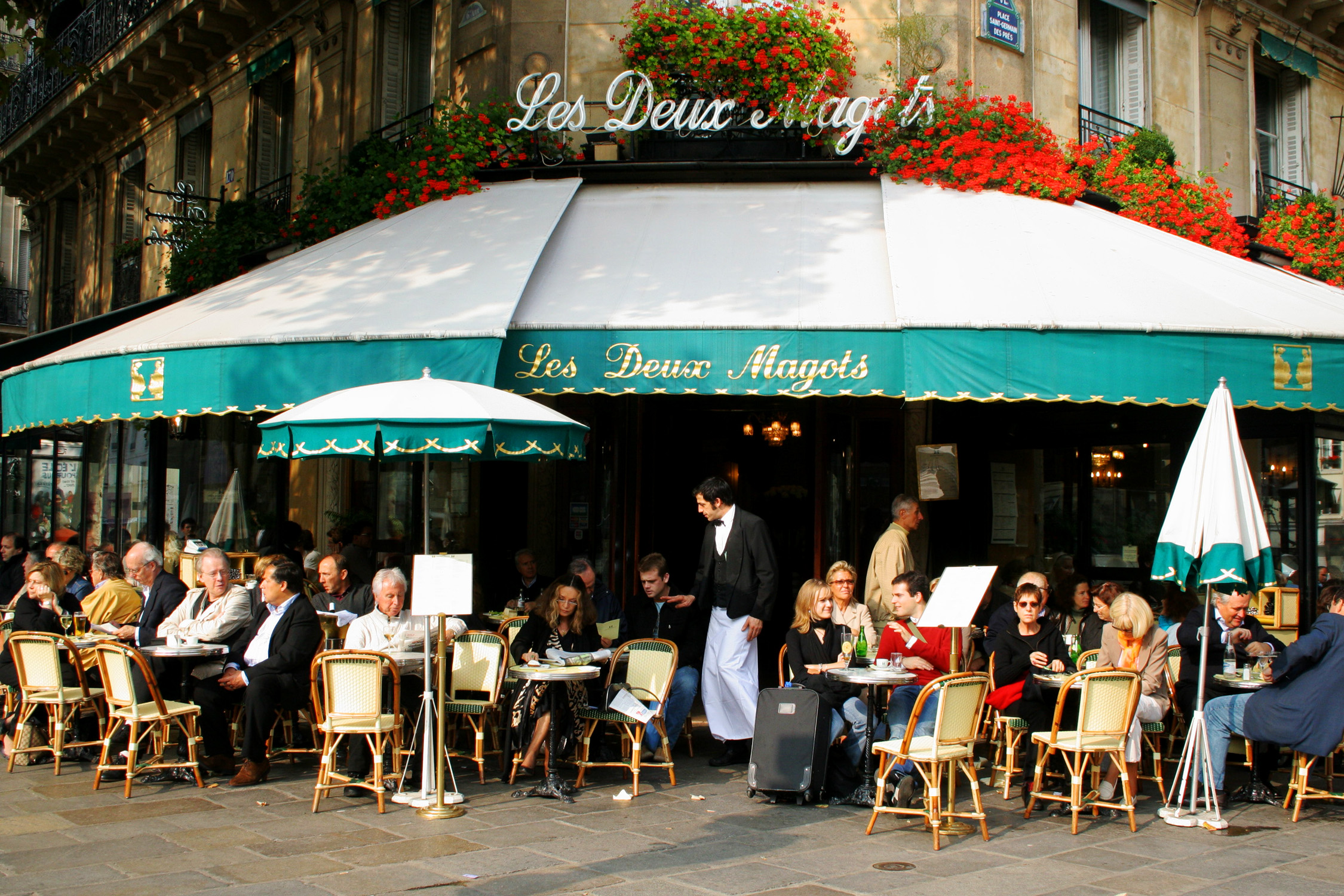
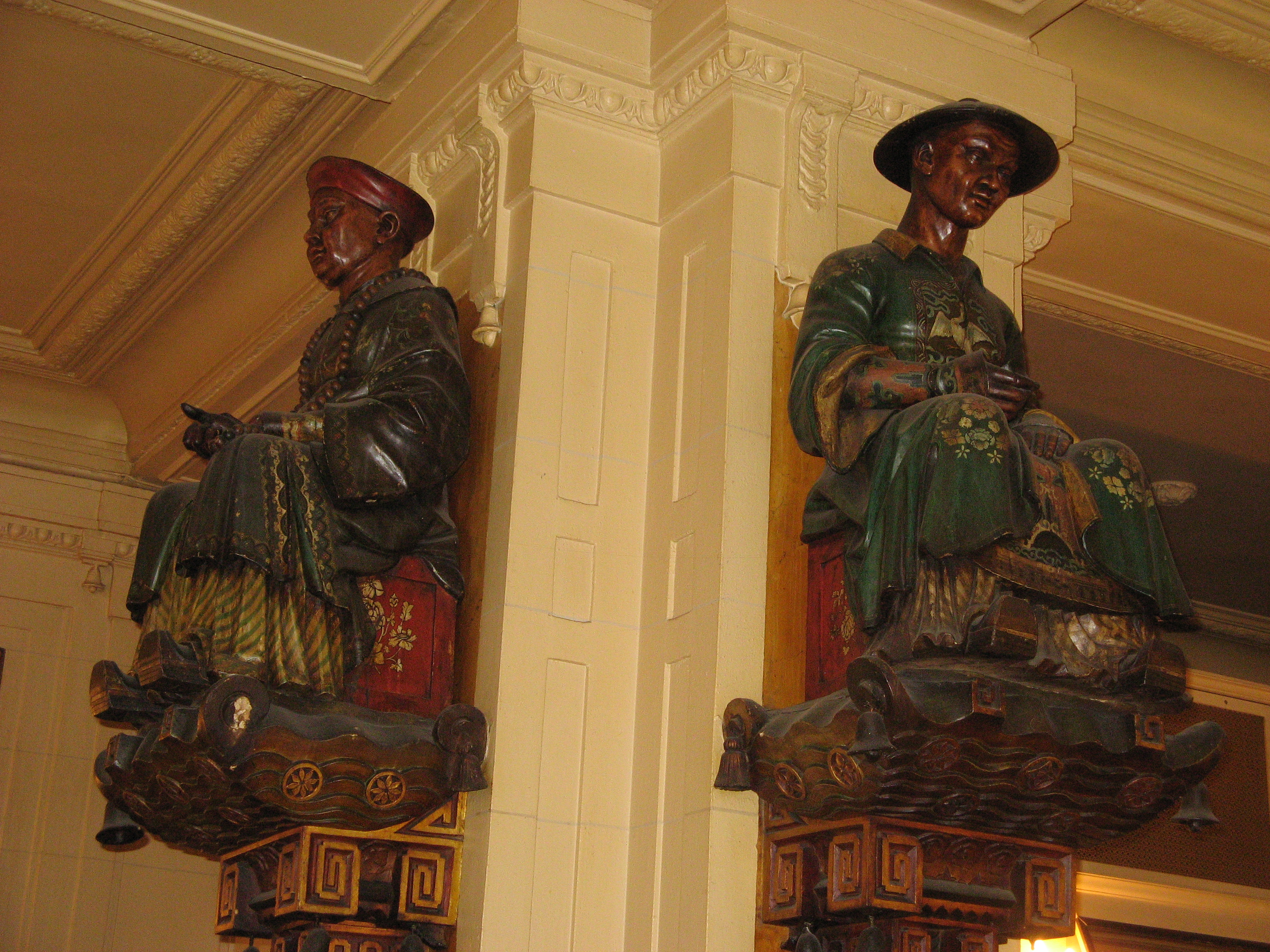
 Jean-Paul Sartre, (1905-1980) born in Paris in
 Slide Show


 Although born in extreme poverty, Camus attended the lycee and university in Algiers, where he developed an abiding interest in sports and the theater. His university career was cut short by a severe attack of tuberculosis, an illness from which he suffered periodically throughout his life. The themes of poverty, sport, and the horror of human mortality all figure prominently in his volumes of so-called Algerian essays: L’Envers et l’endroit (The Wrong Side and the Right Side, 1937), Noces (Nuptials, 1938), and L’Ete (Summer, 1954). In 1938 he became a journalist with Alger-Republicain, an anticolonialist newspaper. While working for this daily he wrote detailed reports on the condition of poor Arabs in the Kabyles region. These reports were later published in abridged form in Actuelles III (1958).
 From this point on, Camus was concerned mainly with exploring avenues of rebellion against the absurd as he strove to create something like a humane stoicism. The Plague (1947; Eng. trans., 1948) is a symbolic novel in which the important achievement of those who fight bubonic plague in Oran lies not in the little success they have but in their assertion of human dignity and endurance. In the controversial essay The Rebel (1951; Eng. trans., 1954), he criticized what he regarded as the deceptive doctrines of “absolutist” philosophies–the vertical (eternal) transcendence of Christianity and the horizontal (historical) transcendence of Marxism. He argued in favor of Mediterranean humanism, advocating nature and moderation rather than historicism and violence. He subsequently became involved in a bitter controversy with Jean Paul Sartre over the issues raised in this essay.Camus wrote two overtly political plays, the satirical State of Siege (1948; Eng. trans., 1958) and The Just Assassins (1950; Eng. trans., 1958). It can be argued, however, that Camus scored his major theatrical success with stage adaptations of such novels as William Faulkner’s Requiem for a Nun (1956) and Dostoyevsky’s The Possessed (1959). He also published a third novel, The Fall (1956; Eng. trans., 1957), which some critics read as a flirtation with Christian ideas, and a collection of short stories noteworthy for their technical virtuosity,Exile and the Kingdom (1957; Eng. trans., 1958). Posthumous publications include two sets of Notebooks covering the period 1935-51, an early novel, A Happy Death (1971; Eng. trans., 1972), and a collection of essays, Youthful Writings (1973; Eng. trans., 1976 and 1977)John Cruickshank


 The Daily Hatch