Saline and her ilk are again in violation of God’s law. In Genesis, when God created Adam he “breathed life” into Adam and he became a “living soul.” God clearly meant that with the “breath” comes humanity, and being a soul. Not at conception. So, human life starts at the first breath taken and ends when the last breath leaves.
That’s the perfect solution to me over the whole abortion issue. I’ve never heard one of them refute it yet. That’s IF you want to discuss it from a Biblical standpoint.
____________________________________________
I have two responses to this post by “spunkrat.” The first response is that many secular people who do not believe as I do spiritually have come to the pro-life conclusion because of advances in technology. They see how developed the unborn child is even at 4 1/2 months. Dr. C. Everett Koop actually became famous because he was one of the first doctors to bring us to the point where a 4 1/2 month unborn child could survive an early child birth and live a normal life.
My good friend Dr. Kevin Henke is an atheist but he told me that he was pro-life because the unborn baby has all the genetic code at the time of conception that they will have for the rest of their life.
Dr. Hymie Gordon (Mayo Clinic): “By all criteria of modern molecular biology, life is present from the moment of conception.”
“the Father of Modern Genetics” (University of Descartes, Paris): “To accept the fact that after fertilization has taken place a new human has come into being is no longer a matter of taste or opinion . . . it is plain experimental evidence.”
Second, it my view that Psalms 139 clearly shows that David speaks of God’s relationship with him while he was growing and developing before birth. There are many other scriptures like Jeremiah 1:5 that I could talk about too.
__________________________________
Science Matters #2: Former supermodel Kathy Ireland tells Mike Huckabee about how she became pro-life after reading what the science books have to say.
My good friend Dr. Kevin R. Henke is a scientist and also an atheistic evolutionist. I had a lot of discussions with Kevin over religious views. I remember going over John 7:17 with him one day. It says:
John 7:17 (Amplified Bible)
17If any man desires to do His will (God’s pleasure), he will know (have the needed illumination to recognize, and can tell for himself) whether the teaching is from God or whether I am speaking from Myself and of My own accord and on My own authority.
I challenged Kevin to read a chapter a day of the Book of John and pray to God and ask God, “Dear God, if you are there then reveal yourself to me, and I pledge to serve you the rest of my life.”
Kevin did that and he even wrote down the thoughts that came to his mind and sent it to me and these thoughts filled a notebook.
Kevin did not become a Christian, but I am still praying for him. I do respect Kevin because he is an honest man. Interestingly enough he told me that he was pro-life because the unborn baby has all the genetic code at the time of conception that they will have for the rest of their life. Below are some other comments by other scientists:
Dr. Hymie Gordon (Mayo Clinic): “By all criteria of modern molecular biology, life is present from the moment of conception.”
Dr. Micheline Matthews-Roth (Harvard University Medical School): “It is scientifically correct to say that an individual human life begins at conception.”
Dr. Alfred Bongioanni (University of Pennsylvania): “I have learned from my earliest medical education that human life begins at the time of conception.”
Dr. Jerome LeJeune, “the Father of Modern Genetics” (University of Descartes, Paris): “To accept the fact that after fertilization has taken place a new human has come into being is no longer a matter of taste or opinion . . . it is plain experimental evidence.”
Back on April 27, 2009 Fox News ran a story by Hollie McKay(“Supermodel Kathy Ireland Lashes Out Against Pro Choice,”) on Jill Ireland.
It’s no secret that the majority of Hollywood stars are strong advocates for a woman’s right to choose whether or not she wants to terminate a pregnancy, however former “Sports Illustrated” supermodel-turned-entrepreneur-turned-author Kathy Ireland has gone against the grain of the glitterati and spoken out against abortion.
“My entire life I was pro-choice — who was I to tell another woman what she could or couldn’t do with her body? But when I was 18, I became a Christian and I dove into the medical books, I dove into science,” Ireland told Tarts while promoting her insightful new book “Real Solutions for Busy Mom: Your Guide to Success and Sanity.”
“What I read was astounding and I learned that at the moment of conception a new life comes into being. The complete genetic blueprint is there, the DNA is determined, the blood type is determined, the sex is determined, the unique set of fingerprints that nobody has had or ever will have is already there.”
However Ireland admitted that she did everything she could to avoid becoming a believer in pro-life.
“I called Planned Parenthood and begged them to give me their best argument and all they could come up with that it is really just a clump of cells and if you get it early enough it doesn’t even look like a baby. Well, we’re all clumps of cells and the unborn does not look like a baby the same way the baby does not look like a teenager, a teenager does not look like a senior citizen. That unborn baby looks exactly the way human beings are supposed to look at that stage of development. It doesn’t suddenly become a human being at a certain point in time,” Ireland argued. “I’ve also asked leading scientists across our country to please show me some shred of evidence that the unborn is not a human being. I didn’t want to be pro-life, but this is not a woman’s rights issue but a human rights issue.”
One of the key verses to understand in developing a biblical view of the sanctity of human life is Psalm 139. This psalm is the inspired record of David’s praise for God’s sovereignty in his life. He begins by acknowledging that God is omniscient and knows what David is doing at any given point in time. He goes on to acknowledge that God is aware of David’s thoughts before he expresses them. David adds that wherever he might go, he cannot escape from God, whether he travels to heaven or ventures into Sheol. God is in the remotest part of the sea and even in the darkness. Finally David contemplates the origin of his life and confesses that God was there forming him in the womb:
For you created my inmost being; you knit me together in my mother’s womb. I praise you because I am fearfully and wonderfully made; your works are wonderful, I know that full well. My frame was not hidden from you when I was made in the secret place. When I was woven together in the depths of the earth, your eyes saw my unformed body. All the days ordained for me were written in your book before one of them came to be (vv. 13-16).
Here David speaks of God’s relationship with him while he was growing and developing before birth. Notice that the Bible doesn’t speak of fetal life as mere biochemistry. The description here is not of a piece of protoplasm that becomes David: this is David already being cared for by God while in the womb.
In verse 13, we see that God is the Master Craftsman fashioning David into a living person. In verses 14 and 15, David reflects on the fact that he is a product of God’s creative work within his mother’s womb, and he praises God for how wonderfully God has woven him together.
David draws a parallel between his development in the womb and Adam’s creation from the earth. Using figurative language in verse 15, he refers to his life before birth when “I was made in secret, and skillfully wrought in the depths of the earth.” This poetic allusion harkens back to Genesis 2:7 which says that Adam was made from the dust of the earth.
David also notes that “Thine eyes have seen my unformed substance.” This shows that God knew David even before he was known to others. The term translated unformed substance is a noun derivative of a verb meaning “to roll up.” When David was just forming as a fetus, God’s care and compassion already extended to him. The reference to “God’s eyes” is an Old Testament term used to connotate divine oversight of God in the life of an individual or group of people.
Senator Mark Pryor wants our ideas on how to cut federal spending. Take a look at this video clip below:
Senator Pryor has asked us to send our ideas to him at cutspending@pryor.senate.gov and I have done so in the past and will continue to do so in the future.
On May 11, 2011, I emailed to this above address and I got this email back from Senator Pryor’s office:
Please note, this is not a monitored email account. Due to the sheer volume of correspondence I receive, I ask that constituents please contact me via my website with any responses or additional concerns. If you would like a specific reply to your message, please visit http://pryor.senate.gov/contact. This system ensures that I will continue to keep Arkansas First by allowing me to better organize the thousands of emails I get from Arkansans each week and ensuring that I have all the information I need to respond to your particular communication in timely manner. I appreciate you writing. I always welcome your input and suggestions. Please do not hesitate to contact me on any issue of concern to you in the future.
Therefore, I went to the website and sent this email below:
Reform entitlements. Spending cannot be restrained without reforming entitlements, which comprise two-thirds of all federal spending and threaten the country’s long-term finances. (See Chart 2.) These programs are projected to grow by 6 percent annually for the next decade. Table 1, which displays the spending restraint needed to balance the budget by 2014, shows that all scenarios to balance the budget by 2014 require reducing the 6 percent annual growth rate of mandatory spending. Lawmakers seeking to rein in spending should put all entitlement spending on the table, including the 2003 Medicare drug bill and the 2002 farm bill.
From 2000 to 2010, real federal spending will have increased from $21,875 per household to $30,543 per household.
In 2010, the federal government will spend $30,543 per household, collect taxes of $17,879 per household, and run a budget deficit of $12,664 per household.
Under President Obama’s budget, deficits from 2010 through 2020 would total $82,219 per household.
Surging Social Security, Medicare, and net interest costs are set to crowd out spending on other programs.
surrealism definition. A movement in art and literature that flourished in the early twentieth century.Surrealism aimed at expressing imaginative dreams and visions free from conscious rational control. Salvador Dali was an influential surrealist painter; Jean Cocteau was a master of surrealist film.
After this apprenticeship, Buñuel shot and directed a 16-minute short, Un Chien Andalou, with Salvador Dalí. The film, financed by Buñuel’s mother,[42] consists of a series of startling images of a Freudian nature,[43] starting with a woman’s eyeball being sliced open with a razor blade. Un Chien Andalou was enthusiastically received by the burgeoning French surrealist movement of the time[44] and continues to be shown regularly in film societies to this day.[45]
The script was written in six days at Dalí’s home in Cadaqués. In a letter to a friend written in February 1929, Buñuel described the writing process: “We had to look for the plot line. Dalí said to me, ‘I dreamed last night of ants swarming around in my hands’, and I said, ‘Good Lord, and I dreamed that I had sliced somebody or other’s eye. There’s the film, let’s go and make it.'”[46]
….When his first film (Un Chien Andalou) was released, Buñuel became the first filmmaker to be officially welcomed into the ranks of the Surrealists by the movement’s leader André Breton, an event recalled by film historian Georges Sadoul: “Breton had convoked the creators to our usual venue [the Café Radio]… one summer’s evening. Dalí had the large eyes, grace, and timidity of a gazelle. To us, Buñuel, big and athletic, his black eyes protruding a little, seemed exactly like he always is in Un Chien Andalou, meticulously honing the razor that will slice the open eye in two.”
The SURREALISTS were the same men who started the “Dada Movement” and Francis Schaeffer noted concerning that movement:
Dada was started in Zurich and came along in modern art. Dada means nothing. The word “Dada” means rocking horse, but it was chosen by chance. The whole concept of Dada is everything means nothing. [In this materialistic mindset Chance and Time have determined the past, and they will determine the future according to Solomon in life UNDER THE SUN (Ecclesiastes 9:11 says this)]… Dada carried to its logical conclusion the notion of all having come about by chance; the result was the final absurdity of everything, including humanity.
(Surrealists: Man Ray, Jean Arp, Yves Tanguy, André Breton; Tristan Tzara, Salvador Dalí, Paul Eluard, Max Ernst and Rene Clevel, 1930.)
“It is often said that Søren Kierkegaard, the Dane (1813-55)… is the father of modern secular thinking and of the new theological thinking…. Why is it that Kierkegaard can so aptly be thought of as the father of both? What proposition did he add to Hegel’s thought that made the difference? Kierkegaard came to the conclusion that you could notarrive at synthesis by reason. Instead, you achieved everything of real importance by a leap of faith. So he separated absolutely the rational and logical from faith…...from that time on, if rationalistic man wants to deal with the real things of human life (such as purpose, significance, the validity of love) he must discard rational thought about them and MAKE A GIGANTIC, NON-RATIONAL LEAP OF FAITH. The rationalistic framework had FAILED TO PRODUCE AN ANSWER ON THE BASIS OF REASON, and so all hope of a uniform field of knowledge had to be abandoned.”
(Francis Schaeffer pictured below)
(Luis Bunuel, Man Ray, Salvador Dali visit with Gil Pender in the movie MIDNIGHT IN PARIS)
(Luis Buñuel & Salvador Dali, circa 1930 pictured below)
_-
(Pictured above Adrien de Van in MIDNIGHT IN PARIS and filmmaker Luis Buñuel and below Tom Cordier as Man Ray)
The principle of making A GIGANTIC, NON-RATIONAL LEAP OF FAITH is demonstrated by the Surrealists in a scene in MIDNIGHT IN PARIS when Salvador Dali introduces his friends Luis Bunuel and Man Ray to Gil Pender and then comments to them “Pender is in a perplexing situation.”
Gil Pender tells the SURREALISTS, “It sounds so crazy to say. You guys are going to think I’m drunk, but I have to tell someone. I’m…from a…a different time. Another era.The future. OK? I come…from the 2000th millennium to here.I get in a car, and I slide through time.”
When they accept this then Gil responds, “Yeah, you’re surrealists!But I’m a normal guy.” In other words the SURREALISTS understand Gil’s predicament and realize that they too have attempted to escape from reason in their own lives (sometimes probing their own dreams in an attempt to find meaning). That is the reason Gil suddenly realizes that he is getting no where with them. Luis Bunuel did this often in his movies.
I am presently going through the characters referenced in Woody Allen’s film “Midnight in Paris.” Luis Bunuel is a surrealist film director that is responsible for the film “Belle de Jour” which Francis Schaeffer discusses below.
In the book HOW SHOULD WE THEN LIVE? Schaeffer notes:
Especially in the sixties the major philosophic statements which received a wide hearing were made through films. These philosophic movies reached many more people than philosophic writings or even painting and literature. Among these films were THE LAST YEAR AT MARIENBAD by Alain Resnais (1961), THE SILENCE by Ingmar Bergman (1967), JULIET OF THE SPIRITS by Federico Fellini (1965), BLOW UP by Michelangelo Antonioni (1966), BELLE DE JOUR by Luis Bunuel (1967), and THE HOUR OF THE WOLF by Ingmar Bergman (1967).
They showed pictorially (and with great force) what it is like if man is a machine and also what it is like if man tries to live in the area of non-reason. In the area of non-reason man is left without categories. He has no way to distinguish between right and wrong, or even between what is objectively true as opposed to illusion or fantasy….One could view these films a hundred times and there still would be no way to be sure what was portrayed as objectively true and what was part of a character’s imagination. if people begin only from themselves and really live in a universe in which there is no personal God to speak, they have no final way to be sure of the difference between reality and fantasy or illusion (pp. 201-203).
Belle de Jour Presentation
Uploaded on Jul 19, 2006 (run time 14:43)
(You will notice in the last part of the 14 minute clip above, it shows how the movie “Belle de Jour” ends. Even though her husband has been shot three times which was the result of the horrible friends she had associated with, he is pictured in her dreams as recovering from his wheel chair and blindness and he gladly kisses her. Francis Schaeffer in his film series shows how this film was appealing to “nonreason” to answer our problems.)
(I got this clip from youtube and below is the paragraph by the author of the youtube clip.)
In a film class my partner and I did a video presentation on the film Belle de Jour and the filmmaker Luis Bunuel. Bunuel was a surrealist, so if the video doesn’t quite makes sense, its not supposed to.
Catherine Deneuve, “Belle de Jour”, 1967
Francis Schaeffer and C. Everett Koop in their book WHATEVER HAPPENED TO THE HUMAN RACE? asserted concerning Woody Allen:
The thinkers in our society have been admitting for a long time that they have no final answers at all. Take Woody Allen, for example. Most people know his as a comedian, but he has thought through where mankind stands after the “religious answers” have been abandoned. In an article in Esquire (May 1977), he says that man is left with: … alienation, loneliness [and] emptiness verging on madness…. The fundamental thing behind all motivation and all activity is the constant struggle against annihilation and against death. It’s absolutely stupefying in its terror, and it renders anyone’s accomplishments meaningless. As Camus wrote, it’s not only that he (the individual) dies, or that man (as a whole) dies, but that you struggle to do a work of art that will last and then you realize that the universe itself is not going to exist after a period of time. Until those issues are resolved within each person – religiously or psychologically or existentially – the social and political issues will never be resolved, except in a slapdash way. Allen sums up his view in his film Annie Hall with these words: “Life is divided into the horrible and the miserable.” Many would like to dismiss this sort of statement as coming from one who is merely a pessimist by temperament, one who sees life without the benefit of a sense of humor. Woody Allen does not allow us that luxury. He speaks as a human being who has simply looked life in the face and has the courage to say what he sees. If there is no personal God, nothing beyond what our eyes can see and our hands can touch, then Woody Allen is right: life is both meaningless and terrifying. As the famous artist Paul Gauguin wrote on his last painting shortly before he tried to commit suicide: “Whence come we? What are we? Whither do we go?” The answers are nowhere, nothing, and nowhere.
PEOPLE MIGHT EVEN WONDER WHY WOODY ALLEN KEEPS MAKING FILMS IF HE TRULY HAS A NIHILISTIC OUTLOOK ON LIFE? Woody tells us:
It’s just an accident that we happen to be on earth, enjoying our silly little moments, distracting ourselves as often as possible so we don’t have to really face up to the fact that, you know, we’re just temporary people with a very short time in a universe that will eventually be completely gone. And everything that you value, whether it’s Shakespeare, Beethoven, da Vinci, or whatever, will be gone. The earth will be gone. The sun will be gone. There’ll be nothing. The best you can do to get through life is distraction. Love works as a distraction. And work works as a distraction. You can distract yourself a billion different ways. But the key is to distract yourself.
LET ME OFFER UP ANOTHER REASON WHY WOODY ALLEN KEEPS PRODUCING MOVIES ABOUT LOVE!!!! God created us so we can’t deny that we are created for a purpose and when a person falls truly in love with another person then they have a hard time maintaining we are only just a product of evolution and our lives have no lasting significance.
Solomon wisely noted in Ecclesiastes 3:11 “God has planted eternity in the heart of men…” (Living Bible). No wonder Bertrand Russell wrote in his autobiography, “It is odd, isn’t it? I feel passionately for this worldand many things and people in it, and yet…what is it all? There must be something more important, one feels, though I don’t believe there is. I am haunted. Some ghosts, for some extra mundane regions, seem always trying to tell me something that I am to repeat to the world, but I cannot understand that message.”
Mark Twain admitted:
It is the strangest thing, that the world is not full of books that scoff at the pitiful world, and the useless universe and the vile and contemptible race–books that laugh at the whole paltry scheme and deride it…Why don’t I write such a book? Because I have a family. There is no other reason.
– Notebook #29, 10 November 1895
The Clemens family from left to right: Clara, Livy, Jean, Sam, and Susy. Photo courtesy of the The Mark Twain House
Francis Schaeffer noted in his book HE IS THERE AND HE IS NOT SILENT:
So just as all men love even if they say love does not exist, and all men have moral motions even though they say moral motions do not exit, so all men act as though they there is a correlation between the external and the internal world, even if they have no basis for that correlation…Let me draw the parallel again. Modern men say there is no love, there is only sex, but they fall in love. Men say there are no moral motions, everything is behavioristic, but they all have moral motions. Even in the more profound area of epistemology, no matter what a man says he believes, actually–every moment of his life–he is acting as though Christianity were true, and it is only the Christian system that tells him why he can, must, and does act the way he does (Chapter 4, HE IS THERE AND HE IS NOT SILENT ).
WOODY ALLEN LOVES HIS FAMILY AND DEEP DOWN HE KNOWS THAT HE WAS PUT ON THIS EARTH FOR A PURPOSE!!!! The surrealists knew it too and they could not accept that life had no meaning and that is why they kept looking for meaning.
____________
In the film “Midnight in Paris” the character Gil discusses the future movie “The Exterminating Angel” by Bunuel with Bunuel. Below is a review of that movie.
The loose plot is this: during a formal dinner party, the guests and hosts realize they can’t leave the room they’re in. This may suddenly spark many questions for you, but the true talent of the movie is its ability to stick with its perplexing plot.
Buñuel is a surrealist, making the dream sequences in this film a treat for the eye. Eventually the guests take morphine which adds more surrealism to the film.
I was recently reminded of this movie in Midnight In Paris, when Owen Wilson talks to Buñuel and gives him an idea of what later becomes the Exterminating Angel. In Woody Allen’s scene, even Buñuel is confused why they can’t leave the room.
The ending is shocking and open to interpretation. I’d recommend watching this movie with a group of people to discuss the significance or lack thereof with everything that happens. If I ever had a dinner party, I’d probably project The Exterminating Angel on a wall not only for its relevance but for its interesting visuals. Did I mention there’s a pet Grizzly Bear at the party?
I really wish there was more to say about this film, but it leaves you a little speechless.
*There are so many cool posters for this movie so I put more than one in.
Luis Buñuel was born in Span in 1900. In studied first with Jesuits before enrolling in the University of Madrid, majoring in science. At the University he met Salvador Dali and Federico Garcia Lorca. Inspired by Fritz Lang’s film, Destiny , Buñuel went to Paris to study film during the 1920’s amidst a flourish of avant-garde experimentation. There he became an assistant to the experimental filmmaker Jean Epstein, and in 1928 collaborated with some friends including Salvador Dali on Un Chien andalou , which became a surrealist classic. It provoked a scandal, but Buñuel went on to film L’Age d’Or in 1930, creating another scandal. L’Age d’Or would also be the last time Salvador Dali would collaborate with Buñuel as he fought with Buñuel over the film’s anti-Catholicism. After L’Age d’Or , Buñuel further pursued his interests in anti-clericalism when he turned his attentions to making a documentary called Land Without Bread . (1932), studying the contrast between the poverty, disease, and death of the Spanish people and the lush, jewel-filled world of the Spanish Catholic Church. Buñuel went on to work for the foreign branches of major Hollywood studios, dubbing for Paramount in Paris and supervising co-productions for Warner Brothers in Spain. He produced several more Spanish pictures before leaving Spain for the United States during the Spanish Civil War.While in the United States, he was director of documentaries at the Museum of Modern Art in New York. He also found himself working for major Hollywood studios again as well as the U. S. government, supervising Spanish-language versions of films for MGM, making documentaries for the U. S. Army, and dubbing for Warner Brothers. Buñuel began to direct films again after a creative hiatus of almost 15 years when he went to Mexico.In association with producer Oscar Dancigers, Buñuel made a series of films, including Los olvidados (1950), El (1952), and Criminal Life of Archibaldo de la Cruz (1955). The best of these films brought Buñuel once more to international acclaim. It was with his Mexican films that Buñuel began to fully develop his unique mix of surrealist humor and social melancholy, combining a documentary sense with surrealist qualities into a loose, discontinuous form of narrative that his films would continue to follow as his career would progress. With his Mexican films, he paid especially close attention to the details of average Mexican life. Buñuel would continue to make films in Mexico, most notably Nazarin (1958), even after leaving the continent.Buñuel returned to France in 1955 to begin three co-productions that placed him in the center of cinematic art. His first opportunity to work and live in Spain came when he made Viridiana in 1961. Though his script was initially approved, the film was banned upon release due to its anticlerical images, notably Buñuel’s famous parodical shot of Leonardo Da Vinci’s painting, The Last Supper . Nevertheless the film achieved international recognition. Controversy and problems with either distribution or censorship continued to appear throughout his career, as in his French film, Belle de Jour (1967), which would later go out of distribution for many years until Martin Scorsese rereleased it in 1996. Despite the complications Buñuel continued to be one of the most creative and productive of all film directors.
Rear Window: Buñuelian Dreams: Jean-Claude Carrière Interview
Published on Jan 20, 2016
Luis Buñuel was one of the greatest filmmakers of the 20th century. Screenwriters Emilie Bickerton and Jean-Claude Carrière discuss his 50 year career, dreams, brothels and terrorism. http://multimedia.telesurtv.net/v/rea…
Francis Schaeffer was a Christian philosopher who studied culture and made observations about people’s worldview. Below we will see three short clips from his film series “How Should we then live?” and I have included an outline. If you enjoy this work of Schaeffer then you might want to refer back to posts I did on Paul Gauguin and Henri de Toulouse Lautrec who are also in the film “Midnight in Paris.” Both Gauguin and Lautrec are from the 1890’s and they believed the golden period was not the 1890’s, but the Renaissance according to a scene in the movie “Midnight in Paris.”
A Christian Manifesto Francis Schaeffer
Published on Dec 18, 2012
A video important to today. The man was very wise in the ways of God. And of government. Hope you enjoy a good solis teaching from the past. The truth never gets old.
The Roots of the Emergent Church by Francis Schaeffer
How Should We then Live Episode 7 small (Age of Nonreason)
#02 How Should We Then Live? (Promo Clip) Dr. Francis Schaeffer
10 Worldview and Truth
Two Minute Warning: How Then Should We Live?: Francis Schaeffer at 100
Francis Schaeffer Whatever Happened to the Human Race (Episode 1) ABORTION
Francis Schaeffer “BASIS FOR HUMAN DIGNITY” Whatever…HTTHR
__________
The above clip is from the film series by Francis Schaeffer “How should we then live?” Below is an outline of the 8th episode on the Impressionists and the age of Fragmentation. The third part discusses surrealist films like Belle de Jour that mixes our reality with our day dreams.
You will notice in the last part of the 14 minute clip above, it shows how the movie “Belle de Jour” ends. Even though her husband has been shot three times which was the result of the horrible friends she had associated with, he is pictured in her dreams as recovering from his wheel chair and blindness and he gladly kisses her.
AGE OF FRAGMENTATION
I. Art As a Vehicle Of Modern Thought
A. Impressionism (Monet, Renoir, Pissarro, Sisley, Degas) and Post-Impressionism (Cézanne, Van Gogh, Gauguin, Seurat): appearance and reality.
1. Problem of reality in Impressionism: no universal.
2. Post-Impression seeks the universal behind appearances.
3. Painting expresses an idea in its own terms as a work of art; to discuss the idea in a painting is not to intellectualize art.
4. Parallel search for universal in art and philosophy; Cézanne.
B. Fragmentation.
1. Extremes of ultra-naturalism or abstraction: Wassily Kandinsky.
2. Picasso leads choice for abstraction: relevance of this choice.
3. Failure of Picasso (like Sartre, and for similar reasons) to be fully consistent with his choice.
C. Retreat to absurdity.
1. Dada , and Marcel Duchamp: art as absurd. (Dada gave birth to Surrealism).
2. Art followed philosophy but came sooner to logical end.
3. Chance in his art technique as an art theory impossible to practice: Pollock.
II. Music As a Vehicle of Modern Thought
A. Non-resolution and fragmentation: German and French streams.
1. Influence of Beethoven’s last Quartets.
2. Direction and influence of Debussy.
3. Schoenberg’s non-resolution; contrast with Bach.
4. Stockhausen: electronic music and concern with the element of change.
B. Cage: a case study in confusion.
1. Deliberate chance and confusion in Cage’s music.
2. Cage’s inability to live the philosophy of his music.
C. Contrast of music-by-chance and the world around us.
1. Inconsistency of indulging in expression of chaos when we acknowledge order for practical matters like airplane design.
2. Art as anti-art when it is mere intellectual statement, divorced from reality of who people are and the fullness of what the universe is.
III. General Culture As the Vehicle of Modern Thought
A. Propagation of idea of fragmentation in literature.
1. Effect of Eliot’s Wasteland and Picasso’s Demoiselles d’ Avignon
compared; the drift of general culture.
2. Eliot’s change in his form of writing when he became a Christian.
3. Philosophic popularization by novel: Sartre, Camus, de Beauvoir.
B. Cinema as advanced medium of philosophy.
1. Cinema in the 1960s used to express Man’s destruction: e.g. Blow-up.
2. Cinema and the leap into fantasy:
The Hour of the Wolf, Belle de Jour, Juliet of the Spirits,
The Last Year at Marienbad.
3. Bergman’s inability to live out his philosophy (see Cage):
Silence and The Hour of the Wolf.
IV. Only on Christian Base Can Reality Be Faced Squarely
(1920s-1930s) Surrealism was both a art and literary movement that stressed the significance of letting one’s imagination rule through the use of the sub-conscious without the hindrances of logic and normal standards. The anti-rationalist characteristic that stemmed from the Dadaist movement was a part of Surrealism. However, Surrealism involved more playful and spontaneous in spirit. Ways of thinking about how a viewer perceives the world around himself helped to shape the movement. The movement was begun in 1924 in the city Paris by Andre Breton, the author of the ‘Manifeste du surrealisme.’ His writings encouraged the expression of one’s imagination through the use of dreams. His writings attracted many artists of the Dadaist movement. The Surrealist movement was helped along in its development during the 1920s and 1930s with the famous artist Salvador Dali.
_____________________________________________
2011 Roger Arpajou / Sony Pictures Classics
Director Woody Allen and Owen Wilson on the set of “Midnight in Paris.”
As beguiling as a stroll around Paris on a warm spring evening — something that Owen Wilson’s character here becomes very fond of himself — Midnight in Paris represents Woody Allen’s companion piece to his The Purple Rose of Cairo, a fanciful time machine that allows him to indulge playfully in the artistic Paris of his, and many other people’s, dreams. A sure-fire source of gentle amusement to Allen’s core audience but unlikely to connect with those with no knowledge of or feel for the Paris of the Fitzgeralds, Hemingway, Gertrude Stein and Picasso, this love letter to the City of Light looks to do better-than-average business for the writer-director in the U.S. upon its May 20 release, and expectations in certain foreign territories could be even higher.
As has happened before when Allen has filmed in photogenic foreign locales — London in Match Point, Barcelona in Vicki Cristina Barcelona — the director seems stimulated by discovering the possibilities of a new environment. In fact, Allen has worked in Paris before, as a writer and actor in What’s New Pussycat? 46 years ago and in one section of Everyone Says I Love You, but this is the first time he’s given the city the royal treatment.
Granted, it’s mostly a touristic view of the city, as witness the voluptuously photographed opening montage of famous sites, but that’s entirely acceptable given that the leading characters are well-off Americans on vacation. Playing Allen’s alter ego this time around is Owen Wilson as Gil, a highly successful hack Hollywood screenwriter still young enough to feel pangs over not having seriously tested himself as a novelist.
That things may not be entirely right between Gil and his pushy fiancée Inez (Rachel McAdams) becomes clear early on, as the couple tours around with Inez’s friends Carol (Nina Arianda) and Paul (Michael Sheen), the latter an insufferable expert on all things cultural (that Inez’s parents are right-wingers also allows Allen to sneak in some Tea Party jokes). “Nostalgia is denial,” Paul intones to Gil, who is keen to break off on his own to indulge his own reveries of the literary Paris that fuels his creative imagination.
Lo and behold, that night, while wandering through a quiet part of the city, Gil is invited into an elegant old car carrying some inebriated revelers. Arriving at an even more elegant party, Gil shortly finds that he’s in the company of F. Scott and Zelda Fitzgerald and that it’s Cole Porter playing the piano. Later, they end up at a bar with Ernest Hemingway, who promises to show Gil’s unfinished novel to Gertrude Stein.
And so begins a flight of fancy that allows Gil to circulate with, and receive a measure of approval from, his lifelong literary heroes, not to mention such other giants as Dali (a vastly amusing Adrien Brody), Picasso, Man Ray, T.S. Eliot and Luis Bunuel, to whom the young American gives the premise of The Exterminating Angel. If not more important, he also meets the beauteous Adriana (Marion Cotillard), the former lover of Braque and Modigliani who’s now involved with Picasso, will shortly go off with Hemingway but is also curiously receptive to Gil, who seems somehow different than everyone else.
After trying but failing to bring the balky Inez along through the midnight portal along with him, Gil keeps returning to the 1920s night after night, getting pertinent advice from Stein about his novel and becoming seriously distracted by Adriana, who herself would prefer to have lived during La Belle Epoque. Although it’s all done glibly in traditional Allen one-liner style, the format nonetheless allows the writer, who has never been shy about honoring his idols in his work, to reflect on the way people have always idealized earlier periods and cultural moments, as if they were automatically superior to whatever exists at the time. “Surely you don’t think the ‘20s is a Golden Age?” Adriana asks a bewildered Gil, who has always been so certain of it. “It’s the present. It’s dull,” she insists.
For anyone whose historical and cultural fantasies run anywhere near those that Allen toys with here, Midnight in Paris will be a pretty constant delight. As Allen surrogates go, Wilson is a pretty good one, being so different from the author physically and vocally that there’s little possibility of the annoying traces of imitation that have sometimes afflicted other actors in such roles. Cotillard is the perfect object of Gil’s romantic and creative dreams; Kathy Bates, speaking English, French and Spanish, makes Stein into a wonderfully appealing straight-shooter, Sheen has fun with his fatuous walking encyclopedia role and McAdams is a bundle of argumentative energy in a role one is meant to find a bit off-putting. French first lady Carla Bruni is perfectly acceptable in her three scenes as a tour guide at the Rodin Museum, while Corey Stoll very nicely pulls off the trick of both sending up Hemingway’s manly pretentions and honestly conveying his core artistic values.
Darius Khondji’s cinematography evokes to the hilt the gorgeously inviting Paris of so many people’s imaginations (while conveniently ignoring the rest), and the film has the concision and snappy pace of Allen’s best work.
Venue: Cannes Film Festival (Opening night, Out of Competition)
Opens: May 20 (Sony Pictures Classics)
Production: Mediapro, Versatil Cinema, Gravier Prods., Pontchartrain Prods.)
Cast: Owen Wilson, Rachel McAdams, Marion Cotillard, Michael Sheen, Kathy Bates, Adrien Brody, Carla Bruni, Nina Arianda, Kurt Fuller, Tom Hiddleston, Alison Pill, Lea Seydoux, Corey Stoll
Director-screenwriter: Woody Allen
Producers: Letty Aronson, Stephen Tenenbaum, Jaume Roures
Executive producers: Javier Mendez
Director of photography: Darius Khondji
Production designer: Anne Seibel
Costume designer: Sonia Grande
Editor: Alisa Lepselter
Rated PG-13, 94 minutes
Belle de Jour Presentation In a film class my partner and I did a video presentation on the film Belle de Jour and the filmmaker Luis Bunuel. Bunuel was a surrealist, so if the video doesn’t quite makes sense, its not supposed to. ___________________________________________________ I am presently going through the characters referenced in Woody Allen’s […]
I am currently going through the characters referenced in the Woody Allen movie “Midnight in Paris.” Today I am looking at Henri Matisse. Below is a press release from a museum in San Francisco: the steins were known for their saturday evening salons, where artists, writers, musicians, intellectuals, and collectors gathered to discuss contemporary art, […]
Adriana and Gil are seen above walking together in the movie “Midnight in Paris.” Adriana was a fictional character who was Picasso’s mistress in the film. Earlier she had been Modigliani’s mistress and later Georges Braque’s mistress before moving on to Picasso according to the film story line. Actually Picasso had taken girls from others […]
An article from Biography.com below. I am currently going through all the personalities mentioned in Woody Allen’s movie “Midnight in Paris.” Today I am spending time on Coco Chanel. By the way, I know that some of you are wondering how many posts I will have before I am finished. Right now I have plans […]
The Thinker (1879–1889) is among the most recognized works in all of sculpture. In fact, below you can see Paul who constantly is showing up Gil with his knowledge about these pieces of art. He shows off while describing Rodin’s life story when all four of them are taking in “The Thinker.” However, he is […]
Artists and bohemians inspired Woody Allen for ‘Midnight in Paris I love the movie “Midnight in Paris” by Woody Allen and I am going through the whole list of famous writers and artists that he included in the movie. Today we will look at Salvador Dali. In this clip below you will see when Picasso […]
2011 Roger Arpajou / Sony Pictures Classics Lea Seydoux as Gabrielle in “Midnight in Paris.” Adriana and Gil are seen above walking together in the movie “Midnight in Paris.” Adriana was a fictional character who was Picasso’s mistress in the film. Earlier she had been Georges Braque’s mistress before moving on to Picasso according to […]
How Should We Then Live 7#3 2011 Roger Arpajou / Sony Pictures Classics Owen Wilson as Gil in “Midnight in Paris.” Paul Gauguin and Henri Toulouse Lautrec were the greatest painters of the post-impressionists. They are pictured together in 1890 in Paris in Woody Allen’s new movie “Midnight in Paris.” My favorite philosopher Francis Schaeffer […]
How Should We Then Live 7#1 Dr. Francis Schaeffer examines the Age of Non-Reason and he mentions the work of Paul Gauguin. 2011 Roger Arpajou / Sony Pictures Classics Kurt Fuller as John and Mimi Kennedy as Helen in “Midnight in Paris.” I love the movie “Midnight in Paris” by Woody Allen and I am […]
Midnight In Paris – SPOILER Discussion by What The Flick?! Associated Press Gertrude Stein and Alice B. Toklas in 1934 This video clip below discusses Gertrude Stein’s friendship with Pablo Picasso: I love the movie “Midnight in Paris” by Woody Allen and I am going through the whole list of famous writers and artists that […]
2011 Roger Arpajou / Sony Pictures Classics Gad Elmaleh as Detective Tisserant in “Midnight in Paris.” I love the movie “Midnight in Paris” by Woody Allen and I am going through the whole list of famous writers and artists that he included in the movie. Juan Belmonte was the most famous bullfighter of the time […]
Woody Allen explores fantasy world with “Midnight in Paris” 2011 Roger Arpajou / Sony Pictures Classics Corey Stoll as Ernest Hemingway in “Midnight in Paris.” The New York Times Ernest Hemingway, around 1937 I love the movie “Midnight in Paris” by Woody Allen and I am going through the whole list of famous writers […]
What The Flick?!: Midnight In Paris – Review by What The Flick?! 2011 Roger Arpajou / Sony Pictures Classics Alison Pill as Zelda Fitzgerald and Tom Hiddleston as F. Scott Fitzgerald in “Midnight in Paris.” 2011 Roger Arpajou / Sony Pictures Classics Owen Wilson as Gil in “Midnight in Paris.” 2011 Roger Arpajou / Sony […]
The song used in “Midnight in Paris” I am going through the famous characters that Woody Allen presents in his excellent movie “Midnight in Paris.” This series may be a long one since there are so many great characters. De-Lovely – Movie Trailer De-Lovely – So in Love – Kevin Kline, Ashley Judd & Others […]
Photo by Phill Mullen The only known photograph of William Faulkner (right) with his eldest brother, John, was taken in 1949. Like his brother, John Faulkner was also a writer, though their writing styles differed considerably. My grandfather, John Murphey, (born 1910) grew up in Oxford, Mississippi and knew both Johncy and “Bill” Faulkner. He […]
I love the movie “Midnight in Paris” was so good that I will be doing a series on it. My favorite Woody Allen movie is Crimes and Misdemeanors and I will provide links to my earlier posts on that great movie. Movie Guide the Christian website had the following review: MIDNIGHT IN PARIS is the […]
Here is an article I wrote a couple of years ago: Solomon, Woody Allen, Coldplay and Kansas What does King Solomon, the movie director Woody Allen and the modern rock bands Coldplay and Kansas have in common? All four took on the issues surrounding death, the meaning of life and a possible afterlife, although they all came up with their own conclusions on […]
Coldplay seeks to corner the market on earnest and expressive rock music that currently appeals to wide audiences Here is an article I wrote a couple of years ago about Chris Martin’s view of hell. He says he does not believe in it but for some reason he writes a song that teaches that it […]
The Book of Mormon vs The Bible, Part 6 of an indepth study of Latter Day Saints Archeology
The Book of Mormon verses The Bible, Part 6 of an indepth study
With the great vast amounts of evidence we find in the Bible through archeology, why is there no evidence for anything writte in the Book of Mormon?
Tags: church false mormon christian bible book of mormon joseph smith cult LDS latter day saints.
_______________________________________
From time to time you will read articles in the Arkansas press by such writers as John Brummett, Max Brantley and Gene Lyons that poke fun at those that actually believe the Bible is historically accurate when in fact the Bible is backed up by many archaeological facts. The Book of Mormon is blindly accepted even though archaeology has disproven many of the facts that are claimed by it.
“Barley” is mentioned three times in the Book of Mormon narrative dating to the 1st and 2nd century BC.[59] “Wheat” is mentioned once in the Book of Mormon narrative dating to the same time period.[60] The introduction of domesticated modern barley and wheat to the New World was made by Europeans after 1492, many centuries after the time in which the Book of Mormon is set.
THE DEAD SEA SCROLLS: Early in 1947 a young Bedouin shepherd was searching for a lost goat among the rocky ravines of the north shore of the Dead Sea at Wadi-Qumran in Israel. He found in the course of his search a cave, which contained what has been for Bible students great treasure indeed – the Dead Sea Scrolls. The careless handling of these valuable documents as they were ‘hawked’ around the Arab ‘black markets’ makes agonizing reading [The Bible as History – Keller] but in the course of time they became available for the careful scrutiny of experts.
Probably the most valuable of these documents is the ‘Isaiah Scroll’. Some 23 feet long and made of leather, it is a remarkable testimony to the textual accuracy of the Bible as we know it today. Modern methods of estimating the age of the scroll and its flax, or linen cover, reveal the fact that it is a transcription of the complete text of the book of Isaiah made in about 100 B.C. The value of this ‘find’ lies in the fact that it pre-dates the oldest manuscripts available in Hebrew The Masoretic Text 9th – 10th Century A.D.] by some 1,000 years, and comparisons made between our modern translation of the book of the prophet Isaiah and this ancient scroll, show that the book we have in our hands today accurately reflects what was originally written.
This scroll, made of seventeen sheets of leather sewn together, reminds us of the scene in the synagogue at Galilee depicted in the Gospel record through Luke:
“And there was delivered unto him (Jesus) the book of the prophet Esaias. And when he had opened the book, he found the place where it was written, The Spirit of the Lord is upon me, because he hath anointed me to preach the gospel to the poor…” [Luke 4.17,18]
About 1991, the Institute for Mittelnergiephysick in Zurich conducted Carbon 14 tests on eight scrolls from Qumran caves and six scrolls from nearby sites. These were Masada, Wadi Dayiyeh, Khirbet Mird, Wadi Murrabba’at and Wadi Seyal where manuscripts found are considered to be part of the Dead Sea Scroll collection. Ten of the scrolls had already been dated by a method known as ‘Palaeographic’ which is based upon the style of script used, when the script is known and proved from other sources. In addition was the dating of pottery which was found in the vicinity of the scrolls as well as coins. Eight of the ten scrolls were from Qumran with the other two from Masada and as a result of the tests, it was confirmed that seven of the eight Qumran scrolls matched the Palaeographic dates allocated to them. One of them was the Isaiah scroll which is now confirmed as being no later than 100 BC, with the other scrolls being a `Paraphrase of the Pentateuch’, the `Testament of Levi’, `Samuel’, the `Temple Scroll’, the `Genesis Apocryphon’ and the `Thanksgiving Scroll’. The results from this renowned Institute is a further example that the continual advance of science never conflicts with, but establishes the truth of the Scriptural record. The word of God has since been preached in almost every language in the world. It is reassuring to know that the Bible we have today is accurate and reliable – a book to be trusted.
[Light on the Dead Sea Scrolls is another special issue of Light which gives more detailed information on this subject.]
Former Massachusetts Gov. Mitt Romney answers a question as former House Speaker Newt Gingrich, left, and Rep. Ron Paul, R-Texas, listen during the first New Hampshire Republican presidential debate at St. Anselm College in Manchester, N.H., Monday, June 13, 2011. (AP Photo/Jim Cole)
Republican Presidential Debate In New Hampshire pt.10
KING: We’re in the closing moments of our Republican presidential debate here on the St. Anselm College campus, Manchester, New Hampshire. Time flies when you’re having fun. One last segment with the candidates.
Let’s kick off by going down on to the floor, WMUR’s Jennifer Vaughn.
VAUGHN: Hi, Mr. Cain. This one is for you. Public opinion polls consistently result in low approval ratings for Congress as a whole. And early polls show a lack of enthusiasm for this field of candidates. Most of you will say that you don’t watch polls, but shouldn’t you pay attention to public sentiment? And aren’t these polls a direct reflection of what voters are and are not looking for?
CAIN: Yes. I happen to believe that the polls do represent a barometer, because it’s way too early. Secondly, probably a lot of the people don’t know us yet, because it’s still real early in the process.
So as people get to know us more and more, I think they’re going to find that this really is a good field of candidates, at least in my opinion. But the people that know the most about everybody up here, they don’t see this as a weak field, and neither do I.
KING: All right. It is likely that the Republican nominee for president is standing on the stage tonight. If you win the nomination, you’ll have to make the choice that a nominee makes, and that is picking a running mate.
Governor Pawlenty to you, look back on 2008 and the process. President Obama made a pick. Senator McCain made a pick. Who made the best choice?
PAWLENTY: Senator Biden has been wrong about every major strategic decision in the modern history of the international conflict and military. Look at his judgment about partitioning Iraq, for example. Now we have Iraq being probably one of the shining example of success in the Middle East.
If Vice President Biden would have had his way, we would have had a partitioned Iraq and probably more mayhem in the Middle East. I think Governor Palin is a remarkable leader. I think she’s qualified to be president of the United States.
I think she’s equally as qualified or more qualified, and would have been as strong of a president as Joe Biden. He’s wrong on everything.
KING: Go ahead, Governor.
ROMNEY: John, any one of the people on this stage would be a better president than President Obama. He has failed in job one, which was to get this economy going again. He failed in job two, which was to restrain the growth of the government. And he failed in job three, which is to have a coherent, consistent foreign policy.
We’ve had presidents in the past that had bad foreign policies. This is the first time we’ve had a president that doesn’t have a foreign policy. And this hit or miss approach has meant a couple of successes, like getting Osama bin Laden — congratulations — but a lot of misses, like throwing our friends under the bus. And that’s why any of these people who gets better known by the American people will serve as president with distinction over the future.
KING: If that is you, if there is a President Bachmann, and you’re only allowed to hire one of the candidates on the stage, which one would it be and why?
ROMNEY: Don’t choose the old guys.
BACHMANN: Well, maybe we’ll have to have an “American Idol” contest and go from there. We’ll let the audience decide.
KING: Let the audience decide. Congressman Paul, if you were the president of the United States and you could pick one, but just one of these gentlemen and the lady, to join your administration, who would it be and why?
PAUL: Join the administration?
KING: Yes.
PAUL: I would think everybody would qualify.
KING: You only get to pick one. It’s about choices.
PAUL: I have to pick one? Hum? Let me look — let me look them over. I would have to do a bit more quizzing. I would have to — they haven’t even told me how they feel about the Federal Reserve yet. They haven’t told me about the foreign policy. So I have to do some more quizzing.
KING: We’re down to our last minute. I want to try to get to everybody. I want to start with you, Senator Santorum. What have you learned in the last two hours.
SANTORUM: I think what Hermann said. We have a great field of candidates. I was very impressed by what I heard. I hope everybody else was. These are folks that answered the questions that were asked of them.
KING: Congresswoman?
BACHMANN: In the last two hours, I’ve learned more about the goodness of the American people — from the question from John, his three sons that are serving in the Navy, his wonderful service. Everyone who asked a question has talked to me about —
KING: Don’t mean to interrupt you.
GINGRICH: I think once again, New Hampshire is proving why it’s first in the nation as the primary, because the questions are so good.
KING: Governor?
ROMNEY: And New Hampshire is proving that the issue people care most about is getting this economy growing again, so that we can have rising housing prices again. People can have the kind of incomes they deserve. They don’t have to wonder whether the future is brighter than the past. People in New Hampshire love the future.
PAUL: I’ve learned with the group here that disagrees on some issues, we can talk about it and be civil to each other.
KING: Governor?
PAWLENTY: I learned that if you trust the people, our future is bright and I learned that the Boston Bruins have more heart than the Vancouver Canucks.
KING: Mr. Cain?
CAIN: What I’ve learned is that all of these candidates up here share one thing in common. And that is, it’s not about us. It’s about the children and the grandchildren. We’re not that far apart on all of the big issues.
KING: I want to thank all seven of our candidates tonight. I want to thank “The Union Leader,” WMUR and St. Anselm College for having us. We have a feisty campaign to come. Please pay attention at home.
I want to thank everybody here. I’m John King. I’ll see you tomorrow on “JOHN KING USA.” Anderson Cooper continues our coverage. Post-debate analysis right now.
FILE – In this April 4, 2011 file photo, actor and former California Gov. Arnold Schwarzenegger, poses after receiving the insignia of Chevalier in the Order of the Legion of Honor during the MIPTV (International Television Programme Market) in Cannes, southern France. Schwarzenegger delayed his Hollywood comeback Thursday, May 19, 2011 as he braced for what could be a costly divorce prompted by revelations that he had an affair and child with a housekeeper who worked for his family for 20 years
Schwarzenegger’s Love Child Bombshell
Maria Shriver Asks – How Do You Handle Transitions in Your Life?
Arnold Schwarzenegger admitted to his wife several months ago that he had fathered a child about 10 years ago with a member of their household staff. Maria moved out, but has not filed for divorce. In the you tube clip above she comments:
“Like a lot of you I’m in transition: people come up to me all the time, asking, what are you doing next?” she said, adding: “It’s so stressful to not know what you are doing next when people ask what you are doing and they can’t believe you don’t know what you are doing.”
“I’d like to hear from other people who are in transition,” she said. “How did you find your transition: Personal, professional, emotional, spiritual, financial? How did you get through it?”
Mrs. Shriver has asked for spiritual input and I personally think that unless she gets the spiritual help that she needs then she will end up in the divorce court. I am starting a series on how a marriage can survive an infidelity. My first suggestion would be to attend a “Weekend to Remember” put on by the organization “Family Life” out of Little Rock, Arkansas. I actually posted this as a response to Mrs. Shriver’s request on you tube.
Here is an article I found very helpful:
The Freedom in Forgiveness
If you’re like many people, you may want to be free of past offenses, but you still carry bitter memories of or hard feelings toward those who have wronged you.
by Grace Ketterman, M.D., David Hazard
If you’re like many people, you may want to be free of past offenses, but you still carry bitter memories of or hard feelings toward those who have wronged you. Take comfort: Forgiving even the worst offenses against you is not impossible. You can find freedom from the past and peace that comes from God by learning to really forgive from the heart.
Forgiveness is easier to grasp when broken into a five-step process.
Admit the Pain
Offenses always cause pain; our pride makes us deny it. Some take an attitude, “Who cares? You’re insignificant in my life. You can’t hurt me!” This insulates us from the acute pain of the moment, but it allows the infectious agent of resentment, like toxic bacteria, to enter our soul where it festers, creating a spiritual disease of bitterness. Such a condition gradually estranges us from others and even from God.
Denying pain keeps us from starting on the path to forgiveness. But the degree of pain required in this exercise is bearable. Honestly experiencing it long enough to understand the exact nature of the offense is actually the beginning of healing.
Work Through Confused Feelings
When an offense has occurred, we often need to clearly and carefully sort out responsibilities in a particular incident. As children, we believe the world revolves around us. Although this tendency is strongest in our formative years, it also persists somewhat into adulthood. When traumatic events occur, kids believe it’s mostly their fault. (“If I hadn’t made Dad angry, he wouldn’t have had a heart attack and died.”)
As adults we need to develop firm ground within ourselves — to set boundaries and defend them when limits are violated.
Seek Information
Once we’re clear as to who’s responsible for what, the next step is to discover why the offender hurt us. This keeps us from dwelling single-mindedly on how we were hurt or how we wish to see the other person punished. If appropriate, we may need to ask friends or family members for information. Or we can use our imagination and place ourselves in the offender’s position.
What we’re not doing is looking for an excuse. No reasoning can excuse, for example, crimes against humanity such as torture, rape, extortion, blackmail, murder and the like. But gathering information is important.
Consider Rita’s experience. Her husband had an affair with an emotionally disturbed woman. He eventually broke off the relationship and tried to repair the damage he’d done to Rita, whom he still loved. But Rita couldn’t forgive her husband or the other woman. It was bad enough he’d had an affair — but to choose such a wretchedly unhappy and abused woman added insult to injury.
Inadvertently, Rita learned a bit about the other woman’s history. As a little girl, she’d often been made to bend naked over the bathtub while her father beat her with a belt until blood ran down her legs. As Rita heard this story, she found tears running down her cheeks. Any child raised by such a criminally abusive father might wind up seducing men in a desperate search for love. This information also lent credibility to her husband’s story that he’d first befriended the woman because he felt sorry for her; he then felt affectionate toward this “hurting soul.” … Eventually, the lines between affection and sexual involvement blurred. Further searching unearthed events in her husband’s life that explained his vulnerability to such a strange relationship.
It didn’t happen overnight, but the more Rita understood the facts, the more she was able to relinquish her anger and pain. She could truly forgive and sincerely pray for the woman. Understanding was not condoning the affair. And much work had to be done to heal her husband’s past to prevent further offenses.
But for Rita, the restoration process took a step forward when the truth was known.
Allow Information to Become Insight
Once the facts are clear, we might imagine that forgiveness occurs automatically. Too often, however, our humanity gets in the way. Our self-protective and vengeful impulses can pitch us into rounds of self-pity, bitterness and anger.
It takes heroic effort to move beyond our own pain to understand what prevents us from saying, “I forgive you.”
In her book The Hiding Place, Corrie Ten Boom describes the most extreme abuses imaginable perpetrated on her and the other inmates of a Nazi concentration camp during World War II. Months after the war was over, Corrie was traveling through Germany speaking in churches about God’s love and forgiveness. Inwardly, though, she knew her words had a hollow sound.
After speaking in a church in Munich, she was approached by a man she recognized as one of her former guards, a particularly cruel one. He now reflected a semblance of humanity and smiled brightly as he talked about his newfound faith in God. Looking Corrie in the eye, he held out his hand. “Fraülein, if you can forgive me, then I’ll know what you say is true — that God forgives me.”
Gripped by a terrible conflict, Corrie wanted either to turn her back on this man or do violence to him. In her mind’s eye she could see her father and sister, who were both killed by the Nazis; she’d wanted to forgive those who were responsible. And this moment brought insight as to why she’d been unable to do more than speak hollowly about forgiveness. She was daily reliving the horror of the camp.
Corrie also realized that she would continue to be haunted by old feelings and memories if she did not move beyond them. This was her chance. But could she do it?
Her arm remained frozen at her side, while the man’s remained outstretched. As he stared at her, Corrie prayed for strength she could not find in herself. Giving her will over to God, unable to change it on her own, coldly she stuck out her hand and clasped the palm of her former enemy.
“In that moment,” she later wrote, “something miraculous happened. A current seemed to pass from me to him, while into my heart sprang a love for this stranger that almost overwhelmed me.”
Forgiveness is a gift of God’s grace. What Corrie described — the healing of one heart, the freeing of another — is a true miracle. The wonder of it is that God gives us insight into our own heart and involves us with Him in the freeing of another.
Choose to Relinquish the Whole Event
It was, interestingly, in a psychiatry class that I (Grace) learned relinquishment.
The class was discussing how to let go of past tragedies and trauma that hurt and scar. One man, Lou, had been weeping copiously, obviously reliving some pain of his own.
“Lou,” the professor said, “I want you to wrap up that handkerchief and hold it tightly in your hand.” After a long silence, he said, “Now, let it fall.” The bunched handkerchief landed on the floor.
In a few moments, Lou reached down to pick up his handkerchief. But another student observed him and suggested that this was the way we all tried to “pick up our old burdens again.” With a smile now, Lou left the handkerchief there.
We all saw that it’s our choice — an act of our will — that sets us free from burdens of the past.
It seems that human beings have always had trouble with the idea of forgiving someone who has wronged them. It’s just not natural to us. But Jesus Christ, the master of forgiveness came to show us a new way, a supernatural way, to live. He teaches us how to adopt new attitudes of the heart that help us live “above” our natural impulses.
You, too, can be healed and set free as you learn to walk the path of forgiveness. The gifts of personal wholeness in Jesus Christ can be yours, even when you think forgiveness is impossible. The question is, are you willing to begin?
Here’s a couple who went to a FamilyLife Conference and how it made a difference in their marriage.
Chip Ingram – Three Ways to Improve your Conflict Resolution Skills (pt 2)
Why is conflict so hard to resolve? Whether in your marriage or other relationships – conflict can be a huge barrier that most of us would rather avoid. I want to share with you some common mistakes in conflict resolution and three important realizations that will bring fresh perspective to even the most difficult conversations. If you want to learn more, you can listen to the full message on conflict resolution from our guest speaker Tim Lundy here: http://www.venturechristian.org/files/sermons2/t032011.mp3
______________________________________________
The clip above has some material that originally came from a video from Family Life. I have mentioned this organization several times in this post. Contacting them would be a great place for Arnold and Maria to begin their recovering. I am hoping that Maria realizes that this family is worth saving. It will take a lot of forgiveness and she will have to turn to Christ for his supernatural help to make it happen
On Wednesday, Right Wing Watch flagged a recent interview Barton gave with an evangelcial talk show, in which he argues that the Founding Fathers had explicitly rejected Charles Darwin’s theory of evolution. Yes, that Darwin. The one whose seminal work, On the Origin of Species, wasn’t even published until 1859. Barton declared, “As far as the Founding Fathers were concerned, they’d already had the entire debate over creation and evolution, and you get Thomas Paine, who is the least religious Founding Father, saying you’ve got to teach Creation science in the classroom. Scientific method demands that!” Paine died in 1809, the same year Darwin was born.
While uninformed laymen erroneously believe the theory of evolution to be a product of Charles Darwin in his first major work of 1859 (The Origin of Species), the historical records are exceedingly clear that the evolution-creation-intelligent design debate was largely formulated well before the birth of Christ. Numerous famous writings have appeared on the topic for almost two thousand years; in fact, our Founding Fathers were well-acquainted with these writings and therefore the principle theories and teachings of evolution – as well as the science and philosophy both for and against that thesis – well before Darwin synthesized those centuries-old teachings in his writings.
Nobel-Prize winner Bertrand Russell (1872-1970) explains: “The general idea of evolution is very old; it is already to be found in Anaximander (sixth century B.C.). . . . [and] Descartes [1596-1650], Kant [1724-1804], and Laplace [1749-1827] had advocated a gradual origin for the solar system in place of sudden creation.” 1 ( Bertrand Russell, Human Knowledge: Its Scope and Limits (New York: Simon and Schuster, 1948), pp. 33-34.)…
Benjamin Franklin
It might be judged an affront to your understandings should I go about to prove this first principle: the existence of a Deity and that He is the Creator of the universe; for that would suppose you ignorant of what all mankind in all ages have agreed in. I shall therefore proceed to observe that He must be a being of infinite wisdom (as appears in His admirable order and disposition of things), whether we consider the heavenly bodies, the stars and planets and their wonderful regular motions; or this earth, compounded of such an excellent mixture of all the elements; or the admirable structure of animate bodies of such infinite variety and yet every one adapted to its nature and the way of life is to be placed in, whether on earth, in the air, or in the water, and so exactly that the highest and most exquisite human reason cannot find a fault; and say this would have been better so, or in such a manner which whoever considers attentively and thoroughly will be astonished and swallowed up in admiration. 21
That the Deity is a being of great goodness appears in His giving life to so many creatures, each of which acknowledges it a benefit by its unwillingness to leave it; in His providing plentiful sustenance for them all and making those things that are most useful, most common and easy to be had, such as water (necessary for almost every creature to drink); air (without which few could subsist); the inexpressible benefits of light and sunshine to almost all animals in general; and to men, the most useful vegetables, such as corn, the most useful of metals, as iron, & c.; the most useful animals as horses, oxen, and sheep, He has made easiest to raise or procure in quantity or numbers; each of which particulars, if considered seriously and carefully, would fill us with the highest love and affection. That He is a being of infinite power appears in His being able to form and compound such vast masses of matter (as this earth, and the sun, and innumerable stars and planets), and give them such prodigious motion and yet so to govern them in their greatest velocity as that they shall not fly out of their appointed bounds not dash one against another for their mutual destruction. But it is easy to conceive His power, when we are convinced of His infinite knowledge and wisdom. For, if weak and foolish creatures as we are, but knowing the nature of a few things, can produce such wonderful effects, . . . what power must He possess, Who not only knows the nature of everything in the universe but can make things of new natures with the greatest ease and at His pleasure! Agreeing, then, that the world was a first made by a Being of infinite wisdom, goodness, and power, which Being we call God. 2221. Benjamin Franklin, The Works of Benjamin Franklin, Jared Sparks, editor (Boston: Tappan, Whittemore, and Mason, 1836), Vol. II, p. 526, “A Lecture on the Providence of God in the Government of the World.” (Return)
22. Benjamin Franklin, The Works of Benjamin Franklin, Jared Sparks, editor (Boston: Tappan, Whittemore, and Mason, 1836), Vol. II, pp. 526-527, “A Lecture on the Providence of God in the Government of the World.”
Here are some other posts about David Barton’s word on the unconfirmed quotes that have been attributed to the Founding Father and Barton’s effort to stop the Righteous Right for using these quotes in the future:
HALT:HaltingArkansasLiberalswithTruth.com Part 6 David Barton:Were the Founding Fathers Deists? In 1988 only 25% of Christians voted but that doubled in 1994. Christians are the salt of the world. The last few days I have been looking at this issue of unconfirmed quotes that people think that the Founding Fathers actually said and the historical evidence […]
HALT:HaltingArkansasLiberalswithTruth.com Part 5 David Barton: Were the Founding Fathers Deists? First Bible printed in USA was printed by our founding fathers for use in the public schools. 20,000 Bibles. 10 commandments hanging in our courthouses. The last few days I have been looking at this issue of unconfirmed quotes that people think that the Founding […]
HALT:HaltingArkansasLiberalswithTruth.com Part 4 David Barton: Were Founding Fathers Deists? Only 5% of the original 250 founding fathers were not Christians (Ben Franklin, Thomas Jefferson, Aaron Burr, Thomas Paine, Ethan Allen, Joe Barlow, Charles Lee, Henry Dearborn, ect) In the next few weeks I will be looking at this issue of unconfirmed quotes that people think […]
HALT:HaltingArkansasLiberalswithTruth.com Part 3 David Barton: Were Founding Fathers Deists? American Bible Society filled with Founding Fathers Here is another in the series of unconfirmed quotes that people think that the Founding Fathers actually said and the historical evidence concerning them. David Barton has collected these quotes and tried to confirm them over the last 20 […]
HALT:HaltingArkansasLiberalswithTruth.com Part 2 David Barton on Founding Fathers were they deists? Not James Wilson and William Samuel Johnson In the next few weeks I will be looking at this issue of unconfirmed quotes that people think that the Founding Fathers actually said and the historical evidence concerning them. David Barton has collected these quotes and […]
HALT: HaltingArkansasLiberalswithTruth.com Part 1 David Barton: Were the Founding Fathers Deists? Religious holidays, Court cases, punishing kids in school for praying in Jesus name In the next few weeks I will be looking at this issue of unconfirmed quotes that people think that the Founding Fathers actually said and the historical evidence concerning them. David […]
Halting Arkansas Liberals with Truth David Barton goes through American History and looks at some of the obscure names in our history and how prayer and Bible Study affected some of our founding fathers In the next few weeks I will be looking at this issue of unconfirmed quotes that people think that the Founding […]
HALT: Halting Arkansas Liberals with Truth ___ I wanted to thank Gene Lyons for bringing this issue of fake quotes of the Founding Fathers to our attention because it should be addressed. In April 8, 2010 article “Facts Drowning in Disinformation,” he rightly notes that Thomas Jefferson never said, “The democracy will cease to [
The disagreement is over the solutions — on what spending to cut; what taxes to raise (basically none ever, according to Boozman); whether or not to enact a balanced budget amendment (Boozman says yes; Pryor no); and on what policies would promote the kind of economic growth that would make this a little easier.
Contrary to rhetoric, borrowing is not evil. There have been times in which government borrowing has been in the national interest. Winning World War II, for instance, probably would have been impossible if the government had not been able to tap private credit markets. Similarly, the limited extent to which President Ronald Reagan’s restoration of the U.S. military added to the national debt was a small price to pay for the collapse of communism.
There are analogies from the private sector as well. Almost all households and businesses go into debt at some point. Consumers borrow to buy cars, families borrow to build homes and send their children to college, and businesses borrow to expand productive capacity. There is nothing wrong, either morally or financially, with these decisions.
Although deficits and debt are not necessarily bad, politicians certainly have abused the privilege. Like profligate consumers who use credit cards to live beyond their means, many politicians see government borrowing as a way to increase federal spending for programs that are not in the nation’s best interests. The difference between the irresponsible consumer and the irresponsible politician is that bad behavior on the part of the consumer leads to a bad credit rating and a sharply reduced ability to borrow money. Politicians escape a similar fate because they can pass the costs of a bill on to the next generation. By requiring a supermajority vote to issue new debt, however, the balanced budget amendment will impose a similar restriction on such fiscally reckless politicians.
Do Deficits Really Stimulate the Economy?
Opponents of a balanced budget requirement, particularly those in the Clinton Administration, argue that deficit spending is a useful tool to jump-start a sluggish economy. By limiting deficits, Treasury Secretary Robert Rubin and others claim, the balanced budget amendment somehow will make economic downturns more likely. This argument is based on the economic theory known as Keynesianism. According to this theory, which first influenced policymakers in the 1930s and remained popular into the 1970s, politicians can stimulate economic growth by borrowing money and increasing government spending.9 Critics from the beginning noted that this theory did not make sense, but politicians liked Keynesian economics because it gave them a quasi-respectable rationale for increased spending.
Ultimately, reality proved to be the undoing of Keynesian economic theory. The economic stagnation of the 1970s showed that deficit spending — especially when combined with rising taxes and inflation — was not a recipe for growth. Moreover, the success of President Reagan’s supply-side tax cuts further undermined the case for Keynesian policies by showing that improved incentives were the key to growth. Nonetheless, there are some who still cling to Keynesian theory.
Despite the accumulated evidence, both from the United States and from around the world, the Administration may believe that deficit spending truly is good for the economy. Even though all versions of the balanced budget amendment contain provisions that allow for supermajority approval of deficits and debt, the White House has launched an extensive lobbying campaign against the amendment.
ENDNOTE
Keynesian theory also favors using monetary policy to fine-tune the economy; but just as the Keynesian view on deficits has fallen into disfavor, so has this notion of manipulating monetary policy.
The disagreement is over the solutions — on what spending to cut; what taxes to raise (basically none ever, according to Boozman); whether or not to enact a balanced budget amendment (Boozman says yes; Pryor no); and on what policies would promote the kind of economic growth that would make this a little easier.
How Soon Would a Balanced Budget Amendment Take Effect?
Before a balanced budget amendment can take effect, it must clear two major hurdles. First and foremost, it must obtain two-thirds support from both houses of Congress. Should this occur, the amendment would be sent to the states for ratification. To become part of the Constitution, it would need to be approved by both chambers of three-fourths, or 38, of the state legislatures.4 If an amendment is approved by Congress and ratified by the necessary number of state legislatures, there probably would be a grace period of two years between ratification and actual implementation. Many supporters would like to time the amendment to take effect in 2002 because that is the target date for balancing the budget, but the actual timing will depend on overcoming the obstacles that exist.
Would the Amendment Solve America’s Economic Problems?
A balanced budget amendment does not guarantee sound economic policy. All it does is make it difficult for politicians to finance their spending by borrowing money. Supporters of the amendment believe that restricting debt will result in smaller government, and scholarly evidence demonstrates that the economy will grow faster if the size of government is reduced.5 It is also possible, however, that a simple balanced budget requirement could lead politicians to finance their spending through higher taxes. Such financing policies almost certainly would dampen the economy’s performance. Moreover, because of lower incomes, lost jobs, and reduced profits, tax increases have never generated the amount of new revenues that politicians expected;6 thus, a balanced budget amendment could trigger a dismal cycle of more taxes, followed by more debt, followed by more taxes, followed by more debt, and so on.
For this reason, requiring a supermajority in order to raise taxes to balance the budget is critical. More specifically, a supermajority means there would be no bias in favor of tax-financed spending, and the likelihood of a continuing spiral of taxes and debt would be greatly diminished.
To be fair, the constitutional majority requirement in the amendment proposed by Senator Craig and Representatives Stenholm and Schaefer could require a supermajority of those voting if some members are absent. For example, 51 votes would be required in the Senate even if only 90 Senators were available to cast their votes. In this case, for instance, a tax increase would need the approval of 57 percent of Senators present. This also would be true in the House, where passage would require 218 votes. The problem with a “constitutional” majority to pass tax increases, however, should be clear: If all Members of Congress were available for a vote, a tax hike could pass with a simple majority.
Would a Balanced Budget Lead to Lower Interest Rates?
Some proponents of a balanced budget amendment argue that eliminating the deficit would lead to dramatic reductions in interest rates. The scholarly research,7 however, indicates that these claims are, at best, greatly exaggerated. Although it is almost certainly true that reductions in government borrowing will put downward pressure on interest rates, it appears that the impact is too small to measure. Simply stated, in world capital markets in which trillions of dollars exchange hands every day, changes of $30 billion, $40 billion, or $50 billion in the U.S. budget deficit are not large enough to make a measurable difference.
This can be seen by comparing interest rates and budget deficits over the past 20 years. During this period, budget deficits have experienced significant shifts up and down with changing fiscal and economic circumstances. As Chart 4 illustrates, however, interest rates do not respond as the theory predicts. Indeed, instead of rising when deficits increase and falling when deficits decline, the opposite seems to be the case. This does not mean that higher budget deficits lead to lower interest rates; it means simply that other factors, such as monetary policy, tax policy, and overall demand for credit, are much more important than shifts in the U.S. budget deficit.8
End Notes:
Nebraska has a unicameral legislature.
See Kevin Grier and Gordon Tullock, “An Empirical Analysis of Cross-National Economic Growth, 1951-80,” Journal of Monetary Economics, Vol. 24 (1989), pp. 259-276; see also Robert Barro and Xavier Sala-I-Martin, Economic Growth (New York, N.Y.: McGraw-Hill, Inc., 1995), p. 494.
For more detail on flaws in the current revenue-estimating process, see Daniel J. Mitchell, “How to Measure the Revenue Impact of Changes in Tax Rates,” Heritage Foundation Backgrounder No. 1090, August 9, 1996.
Charles I. Plosser, Further Evidence on the Relation Between Fiscal Policy and the Term Structure (Rochester, N.Y.: University of Rochester, 1986).
For more detail on the lack of a relationship between interest rates and the deficit, see Daniel J. Mitchell, “Taxes, Deficits, and Economic Growth,” Heritage Foundation Lecture No. 565, May 14, 1996.
HOUSTON – United States men’s national team coach Bob Bradley pulled out all the cards on a bizarre night in the Lone Star State.
In the end, he looked like a genius.
After being frustrated by a disciplined Panama squad, Bradley inserted Landon Donovan and Freddy Adu in the second half and watched both players set up a Clint Dempsey goal to lift the U.S. to a 1-0 victory over Panama at Reliant Stadium on Wednesday.
The American’s, who suffered an embarrassing defeat to Panama in the group stage, advance to the Gold Cup final for the fourth straight time and will play either Mexico or Honduras next weekend in Pasadena, Calif.
The U.S. controlled possession early on but its only real scoring opportunity in the first half came at the 25th minute when Steve Cherundolo played a nice ball to Juan Agudelo, who headed it off the post. It only had three shots in the first 45 minutes.
That’s when Bradley decided to make the changes.
Donovan, who came off the bench for the second straight game, entered after halftime for Sacha Kljestan. Adu made his first national team appearance in two years when he came in at the 66th minute for Agudelo.
It only took 10 minutes before both midfielders made a big difference.
The 22-year-old Adu, who was the most surprising selection for the team after being considered a bust by many, set up Dempey’s goal in the 76th minute when he found a streaking Donovan down the right side of the field. Donovan carried the ball into the box before dishing it to a lunging Dempsey at the far post.
Panama had all its opportunites in the second half but failed to capitalize.
After having much success with the 4-2-3-1 formation against Jamaica, Bradley used pretty much the same lineup against Panama. The only change was made up front, as Agudelo replaced the injured Jozy Altidore as the team’s lone striker.
Altidore suffered a hamstring injury in the quarterfinals and will be out for 4-6 weeks. He was having a solid tournament, recording two goals and one assist in the team’s three group-stage games.
For the second straight game, Bradley opted to have Donovan come off the bench. The star midfielder had originally lost his starting position prior to the Jamaica match due to a lack of sleep after attending his sister’s wedding California a day earlier.
Panama was without arguably its most dangerous player in Blaz Perez, who along with Luis Tejada caused the American defenders several problems in the previous meeting. Perez was a suspended after picking up a red card against El Salvador.
_________________________
I think that we did just enough to get by. That is certainly not a good thing for it won’t last in the championship, I promise. Unless the United States get it together we will not win the Gold Cup. I believe that the US is going to play Mexico in the finals and we all know they have talent. Chicharito is one of the best player’s of all time in CONCACAF history. He and the rest of the Mexican team will bring a big challenge for the United States on June 25!!!


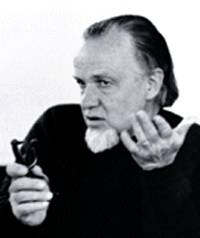
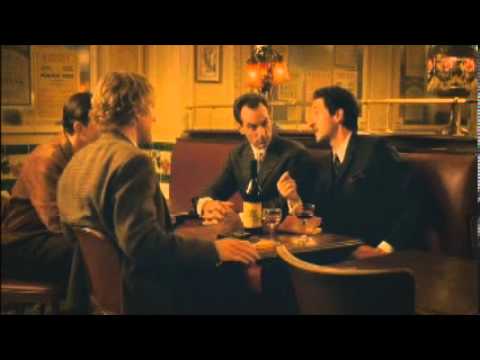


 2011 Roger Arpajou / Sony Pictures Classics


 The Daily Hatch
