Senator Mark Pryor wants our ideas on how to cut federal spending. Take a look at this video clip below:
Senator Pryor has asked us to send our ideas to him at cutspending@pryor.senate.gov and I have done so in the past and will continue to do so in the future. Here are a few more I just emailed to him myself at 8:38 am CST on Thursday April 21, 2011.
Open the coastal plain of the Arctic National Wildlife Refuge to leasing.
(The savings are leasing revenues, which are classified as negative spending in the federal budget.)
$200
Suspend federal land purchases.
Almost all of the proposed cuts in federal spending will provoke strong objections from constituencies that benefit from having Members of Congress give them taxpayer money taken from someone else. Yet the difficulties caused by each of these cuts should be measured against the status quo option of doubling the national debt over the next decade, risking an economic crisis, and drowning future generations in taxes.
Governing involves difficult choices, and Congress simply cannot continue to court long-term disaster for all merely to avoid short-term difficulties for some.
Clip of the new movie of Robert Redford.
Starring: James McAvoy, Robin Wright, Kevin Kline, Evan Rachel Wood, Justin Long, Alexis Bledel, Tom Wilkinson, Danny Huston, Toby Kebbel
President Andrew Johnson maintained that he never was shown the plea for mercy. Judge Advocate Joseph Holt said he had been in Johnson’s presence when the president read the plea. Johnson was quoted as saying that Mary Surratt “kept the nest that hatched the egg.” Anna Surratt tried in vain to meet with the president. Thus, along with Lewis Powell, David Herold, and George Atzerodt, Mary Surratt was executed by hanging on July 7, 1865. She wore a black dress and black veil. Her last words on the scaffold were “Don’t let me fall.”
Even Captain Christian Rath, the hangman, did not expect Mrs. Surratt to be executed. In his personal account of the hanging he stated, “The night before the execution I took the rope to my room and there made the nooses. I preserved the piece of rope intended for Mrs. Surratt for the last. By the time I got at this I was tired, and I admit that I rather slighted the job. Instead of putting seven turns to the knot – as a regulation hangman’s knot has seven turns – I put only five in this one. I really did not think Mrs. Surratt would be swung from the end of it, but she was, and it was demonstrated to my satisfaction, at least, that a five-turn knot will perform as successful a job as a seven-turn knot.”
Four years later Anna Surratt made a successful plea to the government for her mother’s remains. Today, Mary Surratt is buried in Mount Olivet Cemetery in Washington, D.C. The address of the cemetery is 1300 Bladensburg Road, NE. Her headstone reads simply “MRS. SURRATT.” (The photograph is from Mary Surratt: An American Tragedy by Elizabeth Steger Trindal.) Anna Surratt and Isaac Surratt were buried on each side of their mother. John Surratt was buried in Baltimore. Strangely, John Lloyd, whose testimony was so damaging to Mary, was buried less than 100 yards south of her in the same cemetery. His simple tombstone is marked John M. Lloyd.Elizabeth “Bessie” Jenkins, Mary Surratt’s mother, passed away in June 1878 at age 84. She was buried at St. Ignatius Church on Brinkley Road in Oxon Hill, Maryland. She never made a public comment about her daughter’s execution.Historical opinion is divided on the subject of Mary Surratt’s guilt or innocence. In 1977 a “Lost Confession” of George Atzerodt surfaced. Regarding Mary Surratt, Atzerodt stated, “Booth told me that Mrs. Surratt went to Surrattsville to get out the guns (Two Carbines) which had been taken to that place by Herold. This was Friday.” On the face of it, this statement by Atzerodt would certainly seem to point towards Mary Surratt’s complicity with John Wilkes Booth. (For the full text of Atzerodt’s lost confession, CLICK HERE.) Although no one knows for certain, it seems at least possible that Mary knew about the plot to kidnap the president, but may not have known about the plan to assassinate him. Several good arguments for Mary’s innocence are made by Elizabeth Steger Trindal in her article entitled The Two Men Who Held The Noosein the July 2003 edition of the Surratt Courier.
Mark Levin interviews Senator Hatch 1/27/2011 about the balanced budget amendment. Mark is very excited about the balanced budget amendment being proposed by Senator Orin Hatch and John Cornyn and he discusses the amendment with Senator Hatch. Senator Hatch explains the bill it’s ramifications and limitations. Senator Hatch actually worked on this bill with renowned economist Milton Friedman. This ammendment is the first big step in saving our country.
The disagreement is over the solutions — on what spending to cut; what taxes to raise (basically none ever, according to Boozman); whether or not to enact a balanced budget amendment (Boozman says yes; Pryor no); and on what policies would promote the kind of economic growth that would make this a little easier.
In the next few weeks, the government will reach its $14.3 trillion debt ceiling, the maximum amount it can borrow by law. There will be a big argument about whether or not to raise it. Elected officials will posture. A few concessions will be made here and there. And then Congress will vote to raise the ceiling. The United States government cannot default on its obligations.
The real argument is over what to do about the debt itself. One genuine point of contention between Arkansas’ two senators, Republican John Boozman and Democrat Mark Pryor, is whether to amend the Constitution to require a balanced budget. Boozman supports the idea, made it a centerpiece of his 2010 campaign, and endorsed it in his recent maiden speech, his first address on the Senate floor. Pryor opposes it.
Enacting a balanced budget amendment is not a new idea. In 1995, a proposed amendment passed the House and almost passed the Senate, failing by one vote. The next step would have been ratification by 38 states
Mark Levin had Orrin Hatch on his radio show to talk about the newly proposed Balanced Budget Amendment by himself and John Cornyn. Levin fully supports it and says that it is fundamental to putting us on the right fiscal path. Hatch describes what this newly proposed amendment will actually do:
Its mandates that total budgetary outlays for any fiscal year not exceed total revenues unless you have a two thirds vote to overturn it.
It caps federal spending at 20% of GDP.
It requires the President to submit a balanced budget to Congress every fiscal year.
It prohibits revenue raising measures (like increasing taxes) that are not approved by two thirds of both the House and Senate.
Provisions can be waived if there is a formal declaration of war or if the US is engaged in a military conflict constituting a threat to national security or if two thirds of both the House and the Senate approve.
There are Republican Senators who want to cap spending at around 17% or 18% but Hatch argues that it likely won’t pass if it’s that low. He believes 20% is a reasonable number that will appeal to the 20 or so Democrats needed to get this through the Senate and into the House. Once it passes there it will go to the states where it will need a three-fourths majority, but Hatch is very optimistic that now is the time for this amendment to pass. He’s been working on getting it passed for over three decades.
Noting the spending cap in the amendment, Mark Levin added this via email:
I would prefer the GDP level set at 17%. But 20% is better than 25% and the other provisions of the amendment are very important as well. I believe we really need to get behind this.
UPDATE: Corrected to say three-fourths instead of two-thirds. Thanks to commenter Irishspy for the correction.
Clip of the new movie of Robert Redford.
Starring: James McAvoy, Robin Wright, Kevin Kline, Evan Rachel Wood, Justin Long, Alexis Bledel, Tom Wilkinson, Danny Huston, Toby Kebbel
The carte-de-visite (left) entitled Morning, Noon, and Night was taken from a mantel at the Surratt boardinghouse during the police search of the premises. On the back of the carte-de-visite, Anna Surratt had hidden a photograph of John Wilkes Booth. An anonymous donor graciously contributed the image of Morning, Noon, and Night to this website.
Mary Surratt claimed total innocence. She said she knew nothing of Booth’s plans, and that her trips to Surrattsville had to do with collecting some money she was owed by a man named John Nothey.
One thing that looked suspicious about Mrs. Surratt was that she claimed she had never seen Lewis Powell before when he appeared at her boardinghouse on April 17. He had been there many times before the assassination. Was she lying, or was this due to poor eyesight?
Mrs. Surratt was tried along with seven men. Her attorneys, Frederick A. Aiken and John W. Clampitt, were inexperienced. In jail Lewis Powell maintained Mrs. Surratt was 100% innocent. However, she was convicted mostly due to the testimony of John Lloyd and Louis Weichmann. These men drew great criticism for their testimony. Nearing age 60 and dying, on June 2, 1902, Weichmann allegedly called to his sisters, asked them to get pen and paper, and told them to write “This is to certify that every word I gave in evidence at the assassination trial was absolutely true; and now I am about to die and with love I recommend myself to all truth-loving people.” However, this statement has never been produced and must presumed to be lost. Also, John Lloyd stuck to his damaging testimony at the 1867 trial of John Surratt.
In court Mrs. Surratt was dressed in black, with her head covered in a black bonnet. Her face was mostly hidden behind a veil. The jury voted the death penalty for her but added a recommendation for mercy due to her “sex and age.” The recommendation was that the penalty be changed to life in prison. (** see below **)
Sketch of Mary Surratt during the trial. The sketch appeared on the cover of an 1865
pamphlet titled Trial of the Assassins and Conspirators for the Murder of Abraham Lincoln
Here is clip from the new movie “The Conspirator” by Robert Redford about Mary Surratt. More on the movie below.
Senator Mark Pryor wants our ideas on how to cut federal spending. Take a look at this video clip below:
Senator Pryor has asked us to send our ideas to him at cutspending@pryor.senate.gov and I have done so in the past and will continue to do so in the future. Here are a few more I just emailed to him myself at 7am CST on April 21, 2011.
Better enforce eligibility requirements for food stamps.
Implementing the $343 billion in recommended cuts listed in Table 1 would reduce the deficit by somewhat less than $343 billion because some recommendations would also reduce tax revenues. For example, devolving the federal highway program to states would also mean devolving the gas tax, and repealing the Patient Protection and Affordable Care Act (Obamacare)[6] would repeal its tax increases.
Release Date: 15 April 2011
Genre: Drama
Cast: Robin Wright, James McAvoy, Tom Wilkinson
Directors: Robert Redford
Writer: James D. Solomon,
MPAA: PG-13
Studio: Roadside Attractions
Plot:
Mary Surratt is the lone female charged as a co-conspirator in the assassination trial of Abraham Lincoln. As the whole nation turns against her, she is forced to rely on her reluctant lawyer to uncover the truth and save her life.
Mary Elizabeth Jenkins Surratt was born in May or June of 1823 near Waterloo, Maryland. Her birthplace now lies within the grounds of Andrews Air Force Base, home of Air Force One. In 1840, at age 17, she married 28-year-old John H. Surratt. The couple went to live on lands that John had inherited from his foster parents, the Neales, in what is now a section of Washington known as Congress Heights. John and Mary had three children. Isaac was born on June 2, 1841. Anna was born on January 1, 1843, and John Jr. was born on April 13, 1844.
Mary’s children: Isaac, Anna, and John Jr.In 1851 fire destroyed the Surratt home. John Surratt decided not to rebuild the home at that location. He chose to build a combination home/tavern, and the couple bought a farm not far from Mary’s place of birth and near where her family still lived. They established a tavern and later a post office. The tavern was in operation by the fall of 1852, and by 1853 the family was living in the newly constructed Surratt House and Tavern. On December 6, 1853, John Surratt Sr. bought the Washington D.C. property on H Street that would later become Mary’s ill-fated boardinghouse. The price was $4000. Mr. Surratt was appointed postmaster on October 6, 1854, and the surrounding area was henceforth called Surrattsville, Maryland. When John Sr. died in 1862 John Jr. briefly served as Surrattsville’s postmaster. (On May 3, 1865, the Post Office Department changed the town’s name to Robeystown, after the postmaster Andrew V. Robey, and subsequently to Clinton on October 10, 1878.)
On October 1, 1864, along with her daughter, Anna, Mary moved to the Washington D.C. property previously purchased by her husband. She rented the Surrattsville tavern to a man named John Minchin Lloyd.
To make money, Mary started renting rooms in her Washington, D.C. residence located at 541 H Street. (The photo to the left is a Library of Congress photograph of Mary Surratt’s boardinghouse taken during the nineteenth century.) During the Civil War, Mary’s son, John, became a Confederate spy and messenger. John Jr. met John Wilkes Booth, and early in 1865, Booth became a frequent visitor to the boardinghouse. Other people, later identified as co-conspirators, also frequented the boardinghouse. It is unclear if Mary Surratt knew what all the “activity” was about.
Booth originally planned to kidnap Abraham Lincoln. In connection with that plot some of Booth’s co-conspirators hid two Spencer carbines in the joists of an unfinished loft in John Lloyd’s leased tavern. Apparently Lloyd had misgivings over the hiding of weapons in the building, but he allowed it to happen.
On April 11, 1865, Mrs. Surratt made a trip to Surrattsville. She traveled with Louis J. Weichmann, one of her boarders (pictured to the right). During the trip, they met John Lloyd on the road at Uniontown. According to Lloyd, Mrs. Surratt told him the “shooting irons” would be needed soon. This was a reference to the rifles which had been hidden in the tavern by Booth’s co-conspirators.
Three days later, on the day of the assassination, Mrs. Surratt made another trip to Surrattsville. Again Weichmann accompanied her in a hired buggy. This time, according to Lloyd, she delivered Booth’s French field glasses and reminded him to ready the weapons hidden at the tavern he leased from her. Lloyd testified Mary “told me to have those shooting-irons ready that night, there would be some parties who would call for them.”It was likely that Lloyd, a heavy drinker, was drunk during this conversation with Mary Surratt. At midnight, after the assassination, Booth and David Herold stopped at the tavern to collect these items.
Nowadays the boardinghouse is the Wok and Roll Restaurant (left), and the tavern (pictured below) is the Surratt House Museum. TheSurratt House Museum complex is owned and operated by a government agency, the Maryland-National Capital Park and Planning Commission, Department of Parks and Recreation, Prince George’s County, Natural and Historical Resources Division. The volunteerSurratt Society, among many wonderful things, assists with the interpretation of the site. It has been a very productive joint effort between public and private support for over 30 years.
Within hours of President Lincoln’s assassination detectives arrived at the Surratt boardinghouse. They searched the house and questioned all 13 people they found. On the night of April 17, 1865, officers arrested Mrs. Surratt. She was charged with conspiracy and with aiding the assassins and assisting their escape. The fact that Lewis Powell (alias Paine or Payne), a definite conspirator, had come to her boardinghouse just as she was being arrested didn’t help her cause.
The Democrat from Arkansas said Wednesday that he was hopeful a bipartisan group of senators will within the next two weeks come up with a way to address the nation’s debt based on recommendations issued by a commission last year.
Pryor told the Political Animals Club that any debt reduction plan needs to include spending cuts, changes to the tax code and efforts to grow the economy.
“I am not going to vote for that unless there is real and meaningful commitment to debt reduction,” Pryor said during a lunch meeting of the Little Rock Political Animals Club at the Governor’s Mansion. “We need to do that in a smart way.”
Treasury Secretary Timothy Geithner has said the nation’s $14.3 debt ceiling will be reached no later than May 16. A contingency plan would prevent the U.S. from defaulting until July 8 if the ceiling is not raised.
Republicans in Congress have said they will not vote to raise the limit unless significant spending cuts are part of a deal.
House Republicans and the Obama administration have alternative plans for reducing spending by more than $4 trillion over the next 10 or 12 years. Pryor said he is optimistic that a compromise will be reached.
Calling the national debt “our biggest challenge that we’re facing,” Pryor said cutting spending is necessary, but it should happen without cutting loose the nation’s most vulnerable populations, such as children, seniors and the poor.
“Instead of getting the meat cleaver out and just chop, chop, chop, I think this has to be much more measured and targeted and thoughtful,” he said.
Talking to reporters later, Pryor said the Republican budget plan by U.S. Rep. Paul Ryan, R-Wis., is “not going to get bipartisan support.”
Pryor told the Political Animals group he supports tax reform that addresses inequities in the system. He said Republicans who think a total embargo on tax increases will work are wrong, but that Democrats who think they can solve the nation’s problems just by taxing millionaires are wrong, too.
“Right now we have a tax system where 45 percent of Americans don’t pay any federal income tax,” he said. “There are a lot of problems in our tax code, and if you think you can solve this with bumper-sticker slogans, you’re wasting all of our time.”
Also key to lowering the debt is economic growth, Pryor said. Federal aid for regional innovation clusters, such as the Arkansas Research and Technology Park in Fayetteville, and a tax break for angel investors, or investors in small businesses, are two things Pryor said he believes will promote economic growth.
___________________________________________
In the last two weeks this blog has started two series concerning Senator Pryor and the issue of the out of control federal budget. One series is on the views of Senator Pryor and Senator Boozman concerning the Balance Budget amendment. The second series is a serious look at what spending cuts could be made out of the bloated federal budget. Senator Pryor asked for suggestions and I have been emailing at least one suggest per day for the last two weeks. Meanwhile the hits on my website have doubled!!!!!!!!!!
This article today indicates that Senator Pryor is serious about taking a look at the hard choices that need to be made instead of hiding his head in the sand like President Obama is presenting doing.
I went to see the movie “The Conspirator” the other night and I really enjoyed it. Since then I have been digging up facts about the trial and the people involved in the trial.
Christy Lemire (AP critic and host of Ebert Presents at the Movies, check your local PBS listings) and Alonso Duralde (Movieline) review The Conspirator.
George Andrew Atzerodt was born on June 12, 1835, in Dorna, Prussia. In June 1844 he came to America with his folks and settled near Germantown in Montgomery County, Maryland. Atzerodt never became a naturalized U.S. citizen. Later the Atzerodt family moved to Westmoreland County, Virginia. In 1857, George Atzerodt’s father, Johann, passed away.Before the Civil War started, Atzerodt settled in Port Tobacco, Maryland, with his older brother, John. Together, they set up a carriage repair shop. Although the business seemed to prosper, the two brothers eventually separated. John moved to Baltimore and George remained in Port Tobacco. (“Port Tobacco” became his nickname.)During the Civil War, George began rowing his Confederate friends back and forth across the Potomac River. While engaged in this activity, he became acquainted with a Confederate messenger named John Surratt. The introduction came through Confederate agent Thomas H. Harbin and occurred in January of 1865. Atzerodt’s knowledge of the back roads, escape routes, etc. impressed Surratt. Additionally, Surratt was looking for a boatman who could ferry the conspirators across the Potomac River after they had kidnapped President Lincoln. In time, Atzerodt was invited to Washington to meet John Wilkes Booth. He was also invited to the Surratt boardinghouse that was operated by John’s mother, Mary.He remained in an attic room at the boardinghouse for several days, but it is quite clear Mrs. Surratt did not like Atzerodt. While Atzerodt was out, Mary found liquor bottles in his room. She told her son, John, that Atzerodt had to move out because of his drinking.Booth was attracted to Atzerodt because he saw him as a knowledgeable accomplice in the initial plan to kidnap Lincoln. On the night of March 15, 1865, Atzerodt met with Booth and other conspirators at Gautier’s Restaurant on Pennsylvania Avenue to discuss the possible abduction of the president. These plans did not work out. Several days before the assassination, Booth told Atzerodt about the existence of a plot to blow up the White House. Atzerodt’s statement regarding this alleged plot disappeared until the late 1970’s when it was discovered by Joan Chaconas, then president of the Surratt Society.
The statement was found among the private papers of Atzerodt’s attorney, William E. Doster. The plot, which never took place, was to mine that part of the White House nearest the War Department where Lincoln spent a lot of time. Among other things, this “lost” statement of Atzerodt’s revealed that Booth had sent liquor and provisions to Dr. Samuel Mudd’s home two weeks before the assassination. For more on this, see Dr. Edward Steers’ book titled His Name is Still Mudd. For the text of Atzerodt’s statement,CLICK HERE.In the assassination plot, Atzerodt was assigned to kill Vice-President Andrew Johnson. Whether Atzerodt ever really agreed to do this is unproven. Whatever the case, before 8:00 A.M. on April 14th, 1865, Atzerodt rented room 126 at the Kirkwood House directly above where Johnson was staying. (The Kirkwood House was torn down after the Civil War; an office building now stands at the site on the northeast corner of 12th Street and Pennsylvania Avenue. The drawing to the right is from the National Park Service.) Atzerodt quizzed the Kirkwood House’s bartender, Michael Henry, about the vice-president’s character and habits. However, he made no attempt on the life of Andrew Johnson. At his trial, Atzerodt’s lawyer said, “Atzerodt was guzzling like a Falstaff at 10:15 P.M. After Lincoln’s assassination, Detective John Lee found a series of incriminating items in Atzerodt’s rented room most likely planted there by Booth or David Herold.
National Archives Photograph of Andrew Johnson
Atzerodt was arrested on April 20th at the home of his cousin, Hartman Richter, in Germantown, Maryland. Atzerodt was charged with being a party to the assassination conspiracy, and he was tried along with the others. Things did not go well for him in the courtroom. His appearance was described by spectators as “stupid and crafty.” Like Mary Surratt, Lewis Powell, and David Herold, Atzerodt was found guilty and sentenced to hang. On July 7, 1865, he was executed. In his strong German accent, his last words were, “Good-by, gentlemen. May we all meet in the other world!”
George Atzerodt was originally buried in an unmarked grave in Glenwood Cemetery north of the Capitol in Washington. Later his remains were moved to St. Paul’s Cemetery in Baltimore. He was buried under the fictitious name of Gottlieb Taubert.
There are at least five known statements of George Atzerodt in addition to the one discovered by Joan Chaconas. There is a statement given to Frank Monroe aboard the USS Saugus on April 23, 1865. There is the statement given to Col. H.H. Wells aboard the USS Montauk on April 25, 1865. There is a statement published in the Baltimore American on January 18, 1869. There is a statement read by attorney William E. Doster on June 21, 1865. Another statement is privately held.
NOTE: The information on the plot to blow up the White House came from an article by noted Lincoln scholar, Dr. William Hanchett, in the December 1995 issue of Civil War Times Illustrated. Also, see p. 172 of the late William A. Tidwell’s April ’65: Confederate Covert Action in the American Civil War and the Appendix and Notes of His Name is Still Mudd by Dr. Edward Steers. For more details on Atzerodt, please see the biography of George Atzerodt in the December 2000 edition of the Journal of the Lincoln Assassination.
THE EXECUTION – JULY 7, 1865, AT 1:26 P.M.
Left to right: Mary Surratt, Lewis Powell, David Herold, and George Atzerodt.
Senator Mark Pryor wants our ideas on how to cut federal spending. Take a look at this video clip below:
Senator Pryor has asked us to send our ideas to him at cutspending@pryor.senate.gov and I have done so in the past and will continue to do so in the future. Here are a few more I just emailed to him myself at 10pm CST on April 20, 2011.
Eliminate most homeland security grants to states and allow states to finance their own programs.
Eliminating waste, fraud, and abuse. Taxpayers will never trust the federal government to reform major entitlements if they believe that the savings will go toward “bridges to nowhere,” vacant government buildings, and Grateful Dead archives.[5]
o 10 of 14
Robert Redford
I went to see the movie “The Conspirator” the other night and I really enjoyed it. Since then I have been digging up facts about the trial and the people involved in the trial.
Richard Roeper reviews The Conspirator
Review of “The Conspirator” from the Huffington Post:
As he did with Lions for Lambs, Robert Redford uses The Conspirator to construct a conscience-pricking drama that tells one story while commenting (not all that obliquely) on something else.
In the case of Lions for Lambs, it was the rush to war in Iraq, for reasons that were murky at best, outright lies at worst.
The Conspirator has a comparable “ripped from the headlines” feel. In this case, it’s the situation at Guantanamo Bay and the recent crumbling by the Obama administration on the issue of military tribunals for suspected terrorists, rather than a trial by jury in a civilian court.
What’s amazing is the way the James Solomon’s script – about the trial of a boarding-house owner for her part in the assassination of Abraham Lincoln – captures the kind of us-vs.-them, might-makes-right approach that seemed to dominate the discourse from the Bush administration after 9/11. In this case, it’s that sense of incipient post-war panic after Lincoln is murdered: We have to crack down RIGHT NOW or all hell is going to break loose.
So, yeah, let’s suspend the inconvenient parts of the Constitution. Then let’s rush to judgment so we can have closure.
In this story, the one gnashing his teeth for blood and not worried about the niceties – is U.S. Secretary of War Edwin Stanton (Kevin Kline). He leaps into action after Lincoln is shot, rounding up all the conspirators – and casting his net wide enough to include Mary Surratt (Robin Wright), whose son was involved with Booth’s plot, which was planned at her boarding house.
But was Mary Surratt herself complicit? Theoretically, that should be the job of a prosecutor to prove. But Civil War hero Frederick Aiken (James McAvoy), an attorney who is drafted to handle Surratt’s defense, discovers that the deck is stacked against her by Stanton, who wants all of the conspirators hanged, buried and forgotten.
Aiken has no interest in defending her. He is importuned by a friend, Sen. Reverdy Johnson (Tom Wilkinson) of Maryland, to help in her defense. No matter his feelings about her guilt, Johnson says, she’s entitled to a defense. But the government has made defending her difficult, by having her tried in front of a military tribunal.
She and her lawyers have no opportunity to discover the evidence against her or interview the witnesses the government will bring into court. The military will try her and she is presumed guilty before she starts.
You can’t have it both ways. If the Gospel writers were allowed to adapt their message to a particular audience then it can’t be claimed that God literally took their hand and wrote the scriptures. If we allow the Gospel writers to adapt their message, then we had better get ready to accept the fact that Paul interjected his own opinion about so many matters that he was personally opposed to or were culturally dominant at the time he wrote it. God would not have written inconsistencies in His Scriptures unless we want to admit that God has a sense of humor.
“Can anything involving human beings contain the inerrant Word of God”?
The short answer to that question is “yes.” It’s true that humans are fallible vessels that they’re prone to error, but that in no way precludes the inerrancy of the Bible. All Scripture is God breathed. All Scripture is useful for teaching, rebuking, correcting, training in righteousness, so that the man of God may be thoroughly equipped for every good work (2 Tim. 3:16-17). The Apostle Paul there puts a very significant premium of the accuracy of all Scripture.
The Apostle Peter does essentially the same thing. He says that prophecy never had its origin in the will of man, but men spoke from God as they were carried along by the Holy Spirit.
The doctrine of inspiration tells us that God did something miraculous in inspiration. He worked through fallible human prophets, He utilized their individual personalities, all to pen what is authoritative, infallible, and sacred as Scripture. In fact we can demonstrate that the Bible is divine as opposed to human in origin. If you look just at archeology, you find what is concealed in the soil, corresponds to what is revealed in the Scriptures, and that with minute precision. I’m talking about people, and places, even particulars. So we know, we have evidence that the Bible corresponds to reality, and therefore it is truth, and a miracle—the miracle of infallible inspiration, the inspiration that comes from the Holy Spirit.
Now we don’t suppose that the disciples walked around with tape recorders, or we’re programmed automatons, but what we do suppose is that the believers who are used by God to pen the Scriptures captured the essential voice of God in the Scripture. Not the exact words they heard. For example, if you look at the Sermon on the Mount, you’ll see that there are various versions of the Sermon on the Mount given by Mark, Matthew, and Luke. And you see that the Sermon on the Mount is given in a different way but is essentially the same, because through their own personalities Matthew and Luke capture the essential voice of Jesus not the exact verbiage that Jesus used, and that’s why there can be differences and yet complete agreement because there’s no difference in the message that is being communicated in either case.
I went and secured a copy of the interview and read it myself. In a 1963 interview with Christianity Today magazine, William F. Albright (1891-1971) stated:
In my opinion, every book of the New Testament was written by a baptized Jew between the forties and eighties of the first century A.D. (very probably sometime between about 50 and 75 A.D.)(Christianity Today, VII, 359, January 18, 1963, “Toward a More Conservative View,” interview with William F. Albright.)
. ohn Ankerberg, Dr. John Weldon
Biblical Archaeology, Silencing the critics (Part 1)Significantly, even liberal theologians, secular academics, and critics generally cannot deny that archaeology has confirmed the biblical record at many points. Rationalistic detractors of the Bible can attack it all day long, but they cannot dispute archaeological facts. Consider the weekly PBS series “Mysteries of the Bible.” Despite some shortcomings, such as the theologically liberal experts and non-Christian commentators, this program has offered example after example, week after week, of the archaeological reliability of the Bible.To further illustrate, probably the three greatest American archaeologists of the twentieth century each had their liberal training modified by their archaeological work. W. F. Albright, Nelson Glueck, and George Ernest Wright all “received training in the liberal scholarship of the day, which had resulted from the earlier and continuing critical study of the Bible, predominantly by German scholars.”1 Despite their liberal training, it was archaeological research that bolstered their confidence in the biblical text:Albright said of himself, “I must admit that I tried to be rational and empirical in my approach [but] we all have presuppositions of a philosophical order.” The same statement could be applied as easily to Gleuck and Wright, for all three were deeply imbued with the theological perceptions which infused their work. Albright, the son of a Methodist missionary, came to see that much of German critical thought was established upon a philosophical base that could not be sustained in the light of archaeological discoveries…. Nelson Glueck was Albright’s student. In his own explorations in Trans-Jordan and the Negev and in his excavations, Glueck worked with the Bible in hand. He trusted what he called “the remarkable phenomenon of historical memory in the Bible.” He was the president of the prestigious Hebrew Union College-Jewish Institute of Religion and an ordained Rabbi. Wright went from the faculty of the McCormick Theological Seminary in Chicago to a position in the Harvard Divinity School which he retained until his death. He, too, was a student of Albright.2Glueck forthrightly declared, “As a matter of fact, however, it may be clearly stated categorically that no archaeological discovery has ever controverted a single biblical reference. Scores of archaeological findings have been made which confirm in clear outline or exact details historical statements in the Bible.”3
In fact, “Much of the credit for this relatively new assessment of the patriarchal tradition must go to the ‘Albright school.’ Albright himself pointed out years ago that apart from ‘a few diehards among older scholars’ there is hardly a single biblical historian who is not at least impressed with the rapid accumulation of data supporting the ‘substantial historicity’ of patriarchal tradition.”4
And, in fact, this is true not just for the patriarchal tradition but the Bible generally. The earlier statement by assyriologist A. H. Sayce continues to hold true today: “Time after time the most positive assertions of a skeptical criticism have been disproved by archaeological discovery, events and personages that were confidently pronounced to be mythical have been shown to be historical, and the older [i.e., biblical] writers have turned out to have been better acquainted with what they were describing than the modern critics who has flouted them.”5
Millar Burrows of Yale points out that, “Archaeology has in many cases refuted the views of modern critics. It has been shown in a number of instances that these views rest on false assumptions and unreal, artificial schemes of historical development….” And, “The excessive skepticism of many liberal theologians stems not from a careful evaluation of the available data, but from an enormous predisposition against the supernatural.”6
Many other examples could be given of how firsthand archaeological work changed the view of a critic. One of the most prominent is that of Sir William Ramsay. Ramsey’s own archaeological findings convinced him of the reliability of the Bible and the truth of what it taught. In his The Bearing of Recent Discovery on the Trustworthiness of the New Testament and other books, he shows why he came to conclude that “Luke’s history is unsurpassed in respect of its trustworthiness” and that “Luke is a historian of the first rank … In short, this author should be placed along with the very greatest of historians.”7
As part of his secular academic duties, Dr. Clifford Wilson was for some years required to research and teach higher critical approaches to the Bible. This gave him a great deal of firsthand exposure and insight to the assumptions and methodologies that go into these approaches. Yet his own archaeological research was found to continually refute such skeptical theories, so much so that he finally concluded, “It is the steady conviction of this writer that the Bible is … the ancient world’s most reliable history textbook….”8
In a personal communication he added the following,
I was not always the “literalist” I am today. I’ve always had a profound respect for the Bible, but accepted that the use of poetic forms meant that the record could often be interpreted symbolically where now I take it literally—though of course there are times when symbolism is clearly utilized. Thus in later Scriptures “Egypt” can be a geographic country or a symbolic term.
That liberalism is especially true in relation to Genesis chapters 1 through 11, often considered allegorical or mythical, where my researches have led me to the conclusion that this is profound writing, meant to be taken literally. There was a real Adam, creation that was contemporaneous for the various life forms as shown in Genesis chapter 1, and a consistent style of history writing—such as the outlines given in Genesis one, then zeroing in on the specifics relating to mankind in Genesis chapter 2; the history of all the early peoples in Genesis chapter 10, then the concentration on Abraham and his descendants from Genesis chapter 11 onwards. Early man, “the birth of the lady of the rib,” long-living man, giants in the earth (animals, birds, and men), the flood, the Tower of Babel—and much more—point to factual, accurate recording of history in these early chapters of Genesis.
Over 40 years have passed since I first became professionally involved in biblical archaeology and my commitment to the Bible as the world’s greatest history book is firmly settled. As Psalm 119:89 states, “Forever O Lord, your word is established in heaven.”
Indeed one of the most valuable contributions of modern archaeology has been its reputation of higher critical views toward scripture. Consider for example the discovery of the Dead Sea scrolls.
J. Randall Price (Ph.D., Middle Eastern Studies) currently working on a forthcoming apologetic text on biblical archaeology writes, “Those who expect the [Dead Sea] scrolls to produce a radical revision of the Bible have been disappointed, for these texts have only verified the reliability and stability of the Old Testament as it appears in our modern translations.”9
He further points out how the Daniel fragments of the Dead Sea Scrolls should require scholars to abandon a Maccabean date. The same kind of evidence forced scholars to abandon Maccabean dates for Chronicles, Ecclesiastes, and many of the Psalms. But so far, most scholars refuse to do this for Daniel: “Unfortunately, critical scholars have not arrived at a similar conclusion for the Book of Daniel, even though the evidence is identical.”10 In fact, according to Old Testament scholar Gerhard Hasel, a date for Daniel in the sixth or fifth century BC “has more in its favor today from the point of view of language alone than ever before.”11 The Dead Sea Scrolls also provide significant evidence for the unity and single authorship of the Book of Isaiah. Dr. Price concludes, “The discovery of the Dead Sea Scrolls, then, has made a contribution toward confirming the integrity of the biblical text and its own claim to predictive prophecy. Rather than support the recent theories of documentary disunity, the Scrolls have returned scholars to a time when the Bible’s internal witness to its own consistency and veracity was fully accepted by its adherents.”12
(to be continued)
Notes:
1 Keith N. Scoville, Biblical Archeology in Focus (Grand Rapids, MI: Baker, 1978), p. 163.
2 Ibid., p. 163.
3 Norman L. Geisler and Ron Brooks, When Skeptics Ask: A Handbook on Christian Evidences (Wheaton, IL: Victor, 1990), p. 179.
4 Eugene H. Merrill, Professor of Old Testament Studies, Dallas Theological Seminary, “Ebla and Biblical Historical Inerrancy” in Roy B. Zuck (Genesis ed.), Vital Apologetic Issues: Examining Reasons and Revelation in Biblical Perspective (Grand Rapids, MI: Kregel, 1995), p. 180.
5 A. H. Sayce, Monument Facts and Higher Critical Fancies (London: The Religious Tract Society, 1904), p. 23, Cited in Josh McDowell, More Evidence That Demands a Verdict (Arrowhead Springs, CA: Campus Crusade for Christ, 1975), p. 53.
6 As cited in Josh McDowell, Evidence that Demands a Verdict (Arrowhead Springs, CA: Campus Crusade for Christ, 1972) p. 66.
7 William M. Ramsay, The Bearing of Recent Discovery on the Trustworthiness of the New Testament (Grand Rapids, MI: Baker Bookhouse, 1959), p. 91; cf. William M. Ramsay, Luke the Physician, pp. 177-79, 222 from F. F. Bruce, The New Testament Documents: Are They Reliable? (Downers Grove, IL: InterVarsity Press, 1971), pp. 90-91.
8 Clifford Wilson, Rocks, Relics and Biblical Reliability (Grand Rapids, MI: Zondervan/Richardson, TX: Probe, 1977), p. 126
9 J. Randall Price, Secrets of the Dead Sea Scrolls (Eugene, OR: Harvest House, 1996), p. 146.
10 Ibid., p. 159.
11 Ibid., p. 163.
12 Ibid., p. 164; cf. p. 157.
Apologetics Authors
Dr. James Bjornstad
Mrs. Lorri MacGregor
Mr. Marvin Cowan
Dr. John Ankerberg
Dr. John Weldon
_______________________________________________
I went to see the movie “The Conspirator” the other night and I really enjoyed it. Since then I have been digging up facts about the trial and the people involved in the trial.
It has been 150 yrs since the start of the Civil War.
Though it grabbed national headlines in its day, the story of the lone woman charged with conspiracy in the assassination of President Abraham Lincoln has seldom been covered in history classes.
Most people know about John Wilkes Booth‘s role as Lincoln’s killer, but far fewer know anything about Mary Surratt and her alleged involvement in the events that led up the assassination.
Mary Surratt is played with a coiled intensity by Robin Wright Penn. In 1865 Surratt ran the Washington, D.C., boardinghouse where the plot to kill Lincoln was believed to have been devised. Her son John (Johnny Simmons) was allegedly one of the co-conspirators. But after Lincoln’s death, John Surratt disappeared. Officials put Mary on trial in some part because John could not be found. That she’s a woman refusing to submit information in a male-dominated society added fuel to their fire.
We see glimpses of Lincoln’s shooting, but the film focuses on the aftermath and Surratt’s trial. While the evidence implies that Surratt might have been innocent, she steadfastly refused to do what was necessary to save herself from conviction.
The Conspirator
* * * out of four
Stars: Robin Wright Penn, James McAvoy, Tom Wilkinson, Evan Rachel Wood, Kevin Kline Director: Robert Redford Distributor: Roadside Attractions Rating: PG-13 for some violent content Running time: 2 hours, 2 minutes Now playing
This stymied her conflicted lawyer, Frederick Aiken (James McAvoy, who does a fine job in a complex role). A Yankee, he is pressed into defending the Confederate-sympathizing Surratt by his superior Reverdy Johnson (an excellent Southern-accented Tom Wilkinson). Aiken’s distaste for her is written all over his face. And his dislike just makes her all the more tight-lipped. Over time, however, Aiken comes to question the credibility of government officials and believe in his client’s innocence. McAvoy’s intelligent, nuanced portrayal is the film’s biggest asset.
Redford methodically presents the injustices piled on Surratt and suggests what might have prompted her stoicism. But James D. Solomon’s script is often flat, perhaps in a misguided effort to be stately.
While some courtroom scenes feel inert, there’s a contemplative and literary quality to the film that’s appealing. And the exploration of the government’s rush to judgment is an earnest one.
The film’s deeper questions, about the bonds of family ties, justice and the nature of patriotism, are definitely worth probing.
The Conspirator reminds us of something all too easy to forget: The more profound our understanding of history, the more fully we can make sense of current and future events
Name: The Conspirator
Release date: April 15, 2011
Director(s): Robert Redford
Cast: James McAvoy, Robin Wright, Justin Long, Evan Rachel Wood, Tom Wilkinson, Alexis Bledel, Kevin Kline, Jonathan Groff and Norman Reedus
Genre(s): Drama
Washington, D.C. The four condemned conspirators, Mary Surratt and three others, on the scaffold as General John F. Hartranft reads the death warrant to them. Guards are on the wall, and onlookers are at the bottom left of the photograph.
Topics: women in the Civil War, Mary Surratt, assassination of President Abraham Lincoln, execution, hanging, first woman to be executed by the United States
The disagreement is over the solutions — on what spending to cut; what taxes to raise (basically none ever, according to Boozman); whether or not to enact a balanced budget amendment (Boozman says yes; Pryor no); and on what policies would promote the kind of economic growth that would make this a little easier.
In my two short months in office, it has become clear to me that the spending problem in Washington is far worse than many of us feared. For years, politicians have blindly poured more and more borrowed money into ineffective government programs, leaving us with trillion dollar deficits and a crippling debt burden that threatens prosperity and economic growth.
In the Florida House of Representatives, where a balanced budget is a requirement, we had to make the tough choices to cut spending where necessary because it was required by state law. By no means was this an easy process, but it was our duty as elected officials to be accountable to our constituents and to future generations of Floridians. In Washington, a balanced budget amendment is not just a fiscally-responsible proposal, it’s a necessary step to curb politicians’ decades-long penchant for overspending.
Several senators have proposed balanced budget amendments that ensure Congress will not spend a penny more than we take in, while setting a high hurdle for future tax hikes. I am a co-sponsor of two balanced budget amendments, since it is clear that these measures would go a long way to reversing the spending gusher we’ve seen from Washington in recent years.
During my Senate campaign, while surrounded by the employees of Jacksonville’s Meridian Technologies, I proposed 12 simple ways to cut spending in Washington. That company, founded 13 years ago, has grown into a 200-employee, high-tech business, and the ideas I proposed would help ensure that similar companies have the opportunity to start or expand just like Meridian did.
To be clear, our unsustainable debt and deficits are threatening companies like Meridian and impeding job creation. In addition to proposing a balanced budget amendment, I recommended canceling unspent “stimulus” funds, banning all earmarks and returning discretionary spending to 2008 levels.
Fortunately, some of my ideas have found their way to the Senate chamber. The first bill I co-sponsored in the Senate was to repeal ObamaCare, the costly overhaul of our nation’s health care system that destroys jobs and impedes our economic recovery. Democratic leaders in the Senate have expressed their willingness to ban earmarks for two years after the Senate Republican conference adopted a moratorium. I have also co-sponsored the REINS Act, a common-sense measure that would increase accountability and transparency in our outdated and burdensome regulatory process. These bills, along with a balanced budget amendment, would help get our country back on a sustainable path and provide certainty to job creators.
While Republicans are proposing a variety of ideas to rein in Washington’s out-of-control spending, unfortunately, President Obama’s budget for the upcoming fiscal year proposes to spend $46 trillion, and even in its best year, the deficit would remain above $600 billion. Worst of all, the President’s budget completely avoids addressing the biggest drivers of our long-term debt – Social Security, Medicare and Medicaid.
Rather than tackle these tough, serious issues, President Obama is proposing a litany of tax hikes on small businesses and entrepreneurs, to the tune of more than $1.6 trillion. These tax increases destroy jobs, make us less competitive internationally and hurt our efforts to grow the economy and get our fiscal house in order.
______________________________________
I went to see the movie “The Conspirator” the other night and I really enjoyed it. Since then I have been digging up facts about the trial and the people involved in the trial.
Robert Redford’s workmanlike “The Conspirator” is about Mary Surratt (Robin Wright), a Confederate sympathizer who was executed for her complicity, which she denied, in the plot to assassinate Abraham Lincoln. Tried in a military court as a civilian along with eight other alleged conspirators, she became the first woman to be executed by the United States federal government.
When we are first introduced to Mary, her lawyer, Union war hero Frederick Aiken (James McAvoy), believing she is guilty, is reluctant to take her case. As the proprietor of a boarding house where John Wilkes Booth and his other collaborators, including her son John (Johnny Simmons), met regularly, her claims of innocence initially ring hollow.
But Frederick delves deeper and doubts are raised, as are his hackles when he discovers that Mary, at the instigation of Secretary of War Edwin Stanton (Kevin Kline), is being railroaded. (At the time of her trial, her son had not yet been captured, and she was, among things, a convenient scapegoat.)
Mary is unmistakably being utilized by Redford and his screenwriter James Solomon as a stand-in for post-9/11 victimization. He makes it clear that the post-Civil War mood, inflamed by the assassination, was ripe for rabble-rousing and the suspension of civil liberties – the liberties that soldiers like Frederick fought and died for. The images of the conspirators in the courthouse with their heads hooded in canvas bags summons up Abu Ghraib. Stanton is placed in the same strongman continuum as Dick Cheney.
The supposed contemporaneity of Surratt’s story – the equating of Booth’s cronies with Gitmo prisoners – is more than a bit of a stretch, and Redford doesn’t give enough credence to the justifiable hysteria that ordinary Americans felt at the time. Essentially “The Conspirator” is a courtroom drama with occasional bulletins from the outside world. It plays out to its predictable end with the doggedness, if not the verve, of a “Law and Order” episode.
Still, the nightmare of Lincoln’s assassination, and its immediate aftermath, is effectively delivered, and Wright, shrouded in black, her face a mask of indomitable sorrow, gives great gravity to what might otherwise have been a waxworks historical reenactment. Grade: B- (Rated PG-13 for some violent content.)
A balanced budget amendment would be a necessary step in reversing Washington’s tax-borrow-spend mantra. It would force Congress to balance its budget each year – not allow it to pass our problems on to the next generation any longer.
The Institute for Creation Research equips believers with evidences of the Bible’s accuracy and authority through scientific research, educational programs, and media presentations, all conducted within a thoroughly biblical framework.
info@icr.org http://www.icr.org
Last night I had the opportunity to go back and forth with a couple of bloggers on the Arkansas Times Blog and this is some of their comments:
(username Norma Bates) noted with sarcasm:
Though biblical scholars have grappled with the contradictions and inconsistencies in the four “original” gospels for two thousand years, YOU have tidied it all up nicely on your site and solved all that nonsense with your impeccable sources!
I’m impressed.
(username RevMojoryson) noted:
Wiki has this on the Caiaphas ossuary: This ossuary appeared authentic and contained human remains. An Aramaic inscription on the side was thought to read “Joseph son of Caiaphas” and on the basis of this the bones of an elder man were considered to belong to the High Priest Caiaphas.[1][3] Since the original discovery this identification has been challenged by some scholars on various grounds, including the spelling of the inscription, the lack of any mention of Caiaphas’s status as High Priest, the plainness of the tomb.
The first challenge to address is how to account for the differences among the four Gospels. They are each different in nature, content, and the facts they include or exclude. The reason for the variations is that each author wrote to a different audience and from his own unique perspective. Matthew wrote to a Jewish audience to prove to them that Jesus is indeed their Messiah. That’s why Matthew includes many of the teachings of Christ and makes numerous references to Old Testament prophecies. Mark wrote to a Greek or Gentile audience to prove that Jesus is the Son of God. Therefore, he makes his case by focusing on the events of Christ’s life. His gospel moves very quickly from one event to another, demonstrating Christ’s lordship over all creation. Luke wrote to give an accurate historical account of Jesus’ life. John wrote after reflecting on his encounter with Christ for many years. With that insight, near the end of his life John sat down and wrote the most theological of all the Gospels.
Imagine if four people wrote a biography on your life: your son, your father, a co-worker, and a good friend. They would each focus on different aspects of your life and write from a unique perspective. One would be writing about you as a parent, another as a child growing up, one as a professional, and one as a peer. Each may include different stories or see the same event from a different angle, but their differences would not mean they are in error. When we put all four accounts together, we would get a richer picture of your life and character. That is what is taking place in the Gospels.
What we do expect from the Gospels is confirmation by archaeology and that is exactly what we get. The critics have scoffed at the historical figures mentioned in the Bible, but not only do we have the high priest Caiaphas confirmed but we also have Pilate confirmed in an amazing discovery in 1961. Take a look at my latest post which centers in on the objections of Norma Bates and RevMojoryson.
This is a quick summary of the Bible’s reliability by a famous and well-respected former atheist. Please check out his website (http://www.leestrobel.com) for hundreds of FREE high quality videos investigating the critical aspects of our faith.
The Bible and Archaeology – Is the Bible from God? (Kyle Butt 42 min)
Caesarea, Israel
New Testament Period
Pontius Pilate, (26-37 AD)
Limestone, inscribed
82.0 cm H, 65.0 cm W
Building Dedication
4 Lines of Writing (Latin)
Date of Discovery: 1961
Israel Museum (Jerusalem)
AE 1963 no. 104
Inscription by Pontius Pilate
It wasn’t long ago when many scholars were questioning the actual existence of a Roman Governor with the name Pontius Pilate, the procurator who ordered Jesus’ crucifixion. In June 1961 Italian archaeologists led by Dr. Frova were excavating an ancient Roman amphitheatre near Caesarea-on-the-Sea (Maritima) and uncovered this interesting limestone block. On the face is a monumental inscription which is part of a larger dedication to Tiberius Caesar which clearly says that it was from “Pontius Pilate, Prefect of Judea.”
It reads:
Line One: TIBERIEUM,, Line Two: (PON) TIUS Line Three: (PRAEF) ECTUS IUDA (EAE)
This is the only known occurrence of the name Pontius Pilate in any ancient inscription. Visitors to Caesarea’s theater today see a replica, the original is in the Israel Museum in Jerusalem. It is interesting as well that there have been a few bronze coins found that were struck form 29-32 AD by Pontius Pilate.
Who was Pontius Pilate?
Pontius Pilate’s family name, Pontius, indicates that he was of the tribe of Pontii. It was one of the most famous of the ancient Samnite names. The surname or cognomen Pilatus indicates the familia, or branch of the gens Pontius. The name is uncertain, though some think it may have meant “armed with the pilum” (a spear or javelin). One interesting note is about another man in Roman history bearing the name. Lucius Pontius Aquila was a friend of Cicero and one of the assassins of Julius Caesar on the Ides of March (44 BC) when the would-be king was murdered.
The only information regarding Pontius Pilate is the New Testament and two Jewish writers: Josephus and Philo of Alexandria. By far our greatest amount of information comes from the Jewish writer Flavius Josephus who composed his two great works, the Antiquities of the Jews and the Jewish War, towards the end of the first century. There are also several “less reliable” traditions and legends. One early German legend says that Pilate was an illegitimate son of Tyrus, king of Mayence, who had Pilate taken to Rome as a prisoner. After he had apparently committed a murder he was sent to Pontus, where he enlisted in the Roman Army and proved himself by winning many victories against the barbarous tribes in the north.
Tacitus, when speaking of the cruel punishments inflicted by Nero upon the Christians, tells us that Christ, from whom the name “Christian” was derived, was put to death when Tiberius was emperor by the procurator Pontius Pilate (Annals xv.44). Apart from this reference and what is told us in the New Testament, all our knowledge of him is derived from two Jewish writers, Josephus the historian and Philo of Alexandria.
The Roman Procurator
Tiberius Caesar, who succeeded Augustus in AD 14, appointed Pontius Pilate as governor of Judea in 26 AD. Pilate arrived and made his official residence in Caesarea Maritima, the Roman capital of Judea. Pilate was the 5th procurator of Judea. The province of Judea, formerly the kingdom of Archelaus, was formed in 6 AD when Archelaus was exiled and his territory transformed into a Roman province. Although it included Samaria and Idumaea, the new province was known simply as Judea or Judaea. It generally covered the S. half of Palestine, including Samaria. Judea was an imperial province (i.e. under the direct control of the emperor), and was governed by a procurator.
The procurator was devoted to the emperor and directly responsible to him. His primary responsibility was financial. The authority of the Roman procurators varied according to the appointment of the emperor. Pilate was a procurator cum porestate, (possessed civil, military, and criminal jurisdiction). The procurator of Judea was somehow under the authority of the legate of Syria. Usually a procurator had to be of equestrian rank and experienced in military affairs.
Under the rule of a procurator cum porestate like Pontius Pilate, the Jews were allowed as much self-government as possible under imperial authority. The Jewish judicial system was run by the Sanhedrin and court met in the “hall of hewn stone”, but if they desired to inflict the death penalty, the sentence had to be given and executed by the Roman procurator.
Pontius Pilate and the Jews
According to history Pilate made an immediate impression upon the Jews when he moved his army headquarters from Caesarea to Jerusalem. They marched into the city with their Roman standards, bearing the image of the “divine emperor” and set up their headquarters right in the corner of the Temple in a palace-fortress called “Antonia,” which outraged the Jews. Pilate quickly learned their zealous nature and political power within the province and, according to Josephus, ordered the standards to be returned to Caesarea (Josephus Ant. 18.3.1-2; Wars 2.9.2-4).
Pilate made some other mistakes according to history before the time when he ordered the crucifixion of Jesus. One time he placed on the walls of his palace on Mt. Zion golden shields bearing inscriptions of the names of various gods. Tiberius had to personally order the removal of the shields. Another time Pilate used Temple revenue to build his aqueduct. There is another incident only recorded in the Bible where Pilate ordered the slaughter of certain Galileans (Luke 13:1) who had supposedly been offering sacrifices in the Temple. Here are some details:
“On one occasion, when the soldiers under his command came to Jerusalem, he caused them to bring with them their ensigns, upon which were the usual images of the emperor. The ensigns were brought in privily by night, put their presence was soon discovered. Immediately multitudes of excited Jews hastened to Caesarea to petition him for the removal of the obnoxious ensigns. For five days he refused to hear them, but on the sixth he took his place on the judgment seat, and when the Jews were admitted he had them surrounded with soldiers and threatened them with instant death unless they ceased to trouble him with the matter. The Jews thereupon flung themselves on the ground and bared their necks, declaring that they preferred death to the violation of their laws. Pilate, unwilling to slay so many, yielded the point and removed the ensigns.”
(The Standards- Josephus, War 2.169-174, Antiq 18.55-59)
“At another time he used the sacred treasure of the temple, called corban (qorban), to pay for bringing water into Jerusalem by an aqueduct. A crowd came together and clamored against him; but he had caused soldiers dressed as civilians to mingle with the multitude, and at a given signal they fell upon the rioters and beat them so severely with staves that the riot was quelled.”
(The Aqueduct- Josephus, War 2.175-177, Antiq 18.60-62)).
“Philo tells us (Legatio ad Caium, xxxviii) that on other occasion he dedicated some gilt shields in the palace of Herod in honor of the emperor. On these shields there was no representation of any forbidden thing, but simply an inscription of the name of the donor and of him in whose honor they were set up. The Jews petitioned him to have them removed; when he refused, they appealed to Tiberius, who sent an order that they should be removed to Caesarea.”
(from International Standard Bible Encyclopaedia)
The Trial of Jesus and Pontius Pilate
Pilate had traveled to Jerusalem in order to maintain order during the huge festival of Passover. This festival was always a problem time for the Romans, especially since Jewish resentment had always run especially high during national or religious holidays.
According to the Scriptures the Jewish authorities brought Jesus to Pontius Pilate and began prosecution by saying,
“Luke 23:1-2 Then the whole multitude of them arose and led Him to Pilate. And they began to accuse Him, saying, “We found this fellow perverting the nation, and forbidding to pay taxes to Caesar, saying that He Himself is Christ, a King.”
The main charges brought before Pilate about Jesus were political and not religious. Jesus was accused of being a political threat to Rome and to Caesar’s authority.
Pilate spoke with Jesus (see John 18:33-19:12) and considered the charges being brought against Jesus.
1. He subverts the nation
2. He opposes payment of taxes
3. He claims to be a King
These were, of course, false accusations because Jesus refused the title of king in a political sense, and did not oppose paying taxes. He criticized the leaders on religious issues, not political.
Pilate’s verdict on all three counts were “I find no case against Him.” For whatever reason Pilate tried to avoid judging Jesus. He wanted to give the responsibility to the Jewish authorities, then he tried to detour the responsibility to Herod. He also tried to invoke the custom of releasing a prisoner in honor of the Jewish Passover and let the multitudes decide, but they chose a murderous criminal named Barabbas. Finally he had Jesus scourged in hope that the Jewish Sanhedrin would feel pity.
John 19:15-16 “But they cried out, “Away with Him, away with Him! Crucify Him!” Pilate said to them, “Shall I crucify your King?” The chief priests answered, “We have no king but Caesar!” Then he delivered Him to them to be crucified. So they took Jesus and led Him away.”
Pilate did not want to be responsible for the death of Jesus, and he would not until the Jewish rulers threatened to report him to Caesar, which they had done before. They cried “let His blood be upon us and on our children” (Matt 27:25) and how fearfully this was fulfilled. (See Masada)
When all else failed Pilate washed his hands of the whole situation in the presence of all the people and turned Jesus over to his soldiers for crucifixion and ordered a sign made for Jesus’ cross. The sign on the vertical beam of the cross read in Greek, Latin and Hebrew: “Jesus of Nazareth, the King of the Jews.” The Sanhedrin were outraged and the chief priests came to Pilate and said:
John 19:21-23 “Do not write, ‘The King of the Jews,’ but, ‘He said, “I am the King of the Jews.” ‘ “Pilate answered, “What I have written, I have written.”
What Happened to Pontius Pilate?
Scripture gives us no further information concerning Pilate, but Josephus, the Jewish historian records that Pilate, the Roman procurator of Judea succeeded Gratus. According to Josephus (Ant, XVIII, iv, 2) Pilate held office in Judea for 10 years. Afterwards he was removed from office by Vitellius, the legate of Syria, and traveled in haste to Rome to defend himself before Tiberius against certain complaints. Before he reached Rome the Tiberius had died and Gaius (Caligula) was on the throne, AD 36. Josephus adds that Vitellius came in the year 36 AD to Judea to be present at Jerusalem at the time of the Passover. This would indicate that Pilate had already left for Rome.
Josephus (Ant, XVIII, iv, 1, 2) gives an account of what really happened to Pontius Pilate and his removal from office. A religious fanatic arose in Samaria who promised the Samaritans that if they would assemble on Mt. Gerizim, he would show them the sacred vessels which Moses had hidden there. A great multitude of people came to the “sacred mountain” of the Samaritans ready to ascend the mountain, but before they could they were attacked by Pilate’s cavalry, and many of them were slaughtered. The Samaritans therefore sent an embassy to Vitellius, the legate of Syria, to accuse Pilate of murdering innocent people. Vitellius, who wanted to maintain friendship with the Jews, removed Pilate from office and appointed Marcellus in his place.
Pilate was ordered to go to Rome and answer the charges made against him before the emperor. Pilate set out for Rome, but, before he could reach it, Tiberius had died.
From this point onward history knows nothing more of Pilate.
Tradition and Legend
Eusebius (4th cent AD) tells us (Historia Ecclesiastica, II), based on the writings of certain Greek historians, that Pilate soon afterward, “wearied with misfortunes,” had killed himself. (Hist. Eccl. 2.7.1).
Various apocryphal writings have come down to us, written from the 3rd-5th centuries AD, giving legendary details about Pontius Pilate becoming a Christian, and his wife, traditionally named Claudia Procula, was a Jewish proselyte at the time of the death of Jesus and afterward became a Christian.
There are other traditions mentioned in the false Gospels (non-canonical Apocryphal Gospels) concerning Pontius Pilate.
Church tradition portrayed Pilate in very favorable terms. In the second century Gospel of Peter, Jesus is condemned not by Pilate but by Herod Antipas. Tertullian asserted that Pilate was a Christian at heart and that he wrote a letter to Tiberius to explain what had happened at Jesus’ trial (Apology 21). The fourth or fifth century Gospel of Nicodemus (which contains the Acts of Pilate), does not make Pilate a Christian, but depicts him as more friendly towards Jesus than any of the canonical gospels. Pilate was soon canonized by the Coptic and Ethiopic churches.
The Biblical Comparison
The Bible clearly mentions Pontius Pilate as the Roman procurator of Judea at the time of Jesus Christ. Since this dedication stone found in Caesarea Maritima was the first inscription mentioning his actual name, and that he indeed was the Roman procurator who had made his official residence in Caesarea, the discovery of The Pilate Inscription is a monumental discovery that verifies again that the Bible is a Book of history. The Evidence of Archaeology
The evidence of archaeology helps to give us:
1. Confidence that the places and people mentioned in the Bible are accurate, even though those places and people existed thousands of years in the past.
2. Confidence that the details of the Biblical accounts have not changed over the centuries since it was written as we have a “fixed fact” in history.
3. Confidence that everything that the Lord speaks will be fulfilled in its time.
Isa 46:8-10 “Remember this, and show yourselves men; Recall to mind, O you transgressors. Remember the former things of old, For I am God, and there is no other; I am God, and there is none like Me, Declaring the end from the beginning, And from ancient times things that are not yet done, Saying, ‘My counsel shall stand, And I will do all My pleasure,’
I went to see the movie “The Conspirator” the other night and I really enjoyed it. Since then I have been digging up facts about the trial and the people involved in the trial. ROGER NORTON wrote a good piece on Surratt and you can find it below and at this link:
JOHN SURRATT
John Surratt in his early 20’s and early 70’s
John Harrison Surratt, Jr. was born on April 13, 1844, on property his father, John Harrison Surratt, Sr., had inherited from his foster parents in what is now a section of Washington known as Congress Heights. John was Mary Surratt’s youngest child. John Surratt’s brother, Isaac, and sister, AnnaWhen the Civil War broke out in 1861, John was a student at St. Charles College. In August of 1862 John’s father died. John, Jr., who was home at the time (probably on summer break) did not return to school. He was named Surratsville postmaster on September 1, 1862, and served in that role until November 17, 1863, when he was replaced by Andrew V. Robey. After his father’s death, John became a messenger for the Confederacy. He carried dispatches to Confederate boats on the Potomac River. Additionally, he sent to the South information regarding troop movements of Union soldiers stationed in the Washington, D.C. area and elsewhere. He enjoyed this lifestyle and often carried the messages in his boots or in the planks of his buggy. He liked outfoxing the federal detectives.Dr. Samuel Mudd introduced John Wilkes Booth to Surratt in Washington on December 23, 1864. When Surratt heard of Booth’s plot to kidnap President Lincoln, he willingly joined Booth’s group of conspirators. On the night of Wednesday, March 15, 1865, Surratt met with Booth and other conspirators at Gautier’s Restaurant on Pennsylvania Avenue to discuss the possible abduction of the president. According to Surratt, he then took part in a failed attempt to kidnap Lincoln on March 17, 1865. ** (Although many assassination books include this story, it probably never really took place. The president was invited to attend a play at the Campbell Hospital just outside Washington, but he remained in the city to make a speech to the 140th Indiana Regiment. Booth had learned beforehand about the change in Lincoln’s schedule.) According to Surratt, his role in Booth’s group ended with this unsuccessful kidnap attempt.Surratt’s whereabouts on the night of the assassination have been the subject of historical speculation. Surratt, himself, said he was in Elmira, New York, and that he then fled to Canada after hearing news of Lincoln being shot by Booth. He was hiding in Canada when his mother was hanged on July 7, 1865.
On September 15, 1865, Surratt fled to England and later to Rome. He joined the Papal Zouaves. When his location was discovered he went to Alexandria, Egypt. There he was arrested on November 27, 1866. Surratt was brought back to the United States and went on trial for murder on June 10, 1867. The jury heard 80 witnesses for the government and 90 witnesses for the defense. The trial ended August 10 with the jury deadlocked (four votes for guilt and eight votes for innocence). Eventually, Surratt was freed in the summer of 1868. He had benefited from the fact that he had been tried by a civil court. To read an excellent account of the trial, please see the article entitled The Case of John Harrison Surratt, Jr. by John F. Doyle in the March 2000 edition of the Surratt Courier. Surratt became a teacher in Rockville, Maryland. At the courthouse there on December 6, 1870, he delivered a 75 minute public lecture on the conspiracy. Adults paid fifty cents to attend; children paid a quarter. He admitted his role in the abduction plot, but denied any part in the assassination. He blamed his mother’s execution on Louis Weichmann, the government’s star witness at the 1865 conspiracy trial. He called Weichmann a “perjurer.” He said his friends had kept from him the news of the seriousness of his mother’s plight in Washington. Additionally, Surratt said the Confederate government was not involved in the plot. CLICK HEREto read the transcript of Surratt’s lecture.During December 1870 Surratt gave a second lecture at the Cooper Union in New York City and a third one at Concordia Hall in Baltimore, but these events were not well attended. Surratt attempted to give a fourth lecture in Washington, D.C. on December 30, 1870, but enraged citizens forced its cancellation. It’s possible Surratt wouldn’t have given the lecture anyway as he had been arrested the day before in Richmond and charged with selling tobacco without a license in 1869.
Later Surratt secured a job as a teacher in St. Joseph Catholic School in Emmitsburg, Maryland. Some time after 1872 he was hired by the Baltimore Steam Packet Company. As time went by, he rose to freight auditor and treasurer of the company. In 1872 Surratt married Mary Victorine Hunter, a second cousin of Francis Scott Key. The couple lived in Baltimore and had seven children.
John Surratt outlived all connected with the assassination. His address was 1016 W. Lanvale Street in Baltimore. He died of pneumonia at 9:00 P.M. on Friday, April 21, 1916, at the age of 72. He was buried in the New Cathedral Cemetery in Baltimore.
NOTE: The photograph at the top right is from the Surratt House Museum. For more details on Surratt’s escape, capture, and trial please see Alfred Isacsson’s book entitled The Travels, Arrest, and Trial of John H. Surratt (Middletown, New York, Vestigium Press, 2003). Additionally, for MUCH more information, please see The Last Lincoln Conspirator: John Surratt’s Flight from the Gallows by Andrew Jampoler (Annapolis, Naval Institute Press, 2008). The picture of Surratt below came from Mr. Jampoler’s book.
** Verifying information about Booth’s March 17 kidnap plans was told by the late Lincoln assassination scholar, Dr. James O. Hall, during an interview published in the April, 1990, edition of the Journal of the Lincoln Assassination. Dr. Hall said that E.L. Davenport, an actor in the play at Campbell Hospital, recalled how Booth had arrived at the hospital and asked about Lincoln’s whereabouts on the afternoon of March 17.
I would like to say thank you to Laurie Verge, the Surratt House Museum Director, for her help with certain dates and other particulars on this page.
JOHN SURRATT AS AN OLDER MAN (The Mariners’ Museum)
I survived last night even though there were several tornadoes all through Arkansas last night.
America has too many bureaucrats and they are dramatically overpaid. This mini-documentary uses government data to show how federal, state, and local governments are in fiscal trouble in part because of excessive pay for a bloated civil service.
The disagreement is over the solutions — on what spending to cut; what taxes to raise (basically none ever, according to Boozman); whether or not to enact a balanced budget amendment (Boozman says yes; Pryor no); and on what policies would promote the kind of economic growth that would make this a little easier.
Over the next few days I want to take a closer look a Cato Policy Report from July/August 1996 called “Seven Reforms to Balance the Budget” by Stephen Moore. Stephen Moore was the Cato Institute’s director of fiscal policy studies, and afterwards, a Cato senior fellow. This article is based on testimony he delivered before the House Committee on Government Reform and Oversight on March 27, 1996. Moore commented:
7.) Debt Buy-Down Provision
This is Rep. Bob Walker’s idea that would allow taxpayers to dedicate up to 10 percent of their income tax payments to retirement of the national debt. Politicians earmark spending all the time. Taxpayers should have the same right.
Rules Matter
Those budget process reforms are vitally important to the balanced-budget exercise because the rules of the game matter. The rules dictate outcomes. For more than 20 years, forces that favor spending have consistently prevailed over forces that favor fiscal restraint. That pro-spending bias in Washington threatens to cripple our nation’s economic future.
Let me conclude by retelling a story about the late great Washington Redskins football coach George Allen. Allen lived by the motto “the future is now.” He traded all the Redskins draft picks for over-the-hill veterans. He spent millions of dollars of owner Jack Kent Cooke’s money to purchase expensive free agents. After several years of that, Cooke finally fired Allen. When asked why, Cooke responded, “When George Allen came to Washington I gave him an unlimited budget. But George managed to exceed it.” That’s the way taxpayers now feel about our politicians in Washington.
Pianist Art Porter was born in Little Rock, Arkansas on February 8, 1934. Porter, the Arkansas Jazz Statesman, never officially worked as a touring musician, choosing instead to perform, teach, contribute to his church as well as to other charitable causes in his hometown and state. There were two exceptions: In 1977 at FESTAC 77 (the World Black and African Festival of Arts and Culture) and at jazz festivals in Belgium, Germany, and The Netherlands during a 1991 European Tour with his son, saxophonist Art Porter, Jr.
Porter graduated from Dunbar High School in 1950, and attended AM&N College in Pine Bluff, graduating with a Bachelor of Science in Music Education in 1954. He went on to earn a Master of Science in Music Education from Henderson State University in 1975. He taught at Mississippi Valley College, Horace Mann High School, Parkview High School and Philander Smith College. He also received an Honorary Doctorate of Humane Letters from Shorter College and was pianist/organist/choral director at Bethel AME Church in Little Rock.
Porter formed the now legendary Art Porter Trio in 1962. This group continued to work in Little Rock and around the state through May of 1993. The group performed jazz in local Little Rock night clubs such as The AfterThought, Cajuns Wharf (for 8 years), The Brown Bottle, The Camelot Hotel, Profiles, in a club bearing the name ‘Art’s Place’ and other locations too numerous to mention. Many musicians became part of the famed Art Porter University. His formation of the Art Porter Singers in 1976 and the musical mentoring of and friendship with President Bill Clinton is still felt even today.
Porter produced two ground breaking programs on the Arkansas Educational Television Network: “The Minor Key”: a weekly series portraying black culture in Arkansas, and “Porterhouse Cuts”, a series of 10 shows which were aired throughout the southeastern region covering 14 states. He produced several albums including “Little Rock A.M.” and “Something Else.” His latest recording, “Portrait of Art,” was released after his death, on February 8, 1994 (his birthday), with proceeds going to help promising young musicians realize their musical dreams.
Porter has appeared on stage with Pharoah Sanders, Steve Allen, O. C. Smith, James Leary, Al Hibbler, the Northwest Arkansas Symphony Orchestra, Little Rock Jazz Machine, and many others. His groups have performed at the Eureka Springs Jazz Festival, Jazzlites, Wildwood Jazz Festival, Music Festival of Arkansas, Hot Springs Arts Festival, and at the Arkansas Jazz Heritage Foundation’ss Monday Jazz Series. Porter was the first recipient of the Arkansas Jazz and Heritage Foundation’s Lifetime Achievement Award in 1993.
Toby Kebbell
I went to see the movie “The Conspirator” the other night and I really enjoyed it. Since then I have been digging up facts about the trial and the people involved in the trial.
(Boston Globe) Ty Burr and Wesley Morris review Robert Redford’s historical drama about President Abraham Lincoln’s assassination in ‘The Conspirator.’
The Hanging of Mary Surratt
Judicial murder and government dirty linen–Part One
by Al Benson Jr.
After the assassination of Abraham Lincoln, eight people were put on trial and found guilty–four sentenced to long prison terms and the other four sentenced to hang. One of those sentenced to hang was Mary Eugenia Jenkins Surratt, the first woman ever to be hung in the United States. John Wilkes Booth had supposedly been shot and John Surratt had escaped to Canada, eventually to make it all the way to Europe. These eight were seemingly all that were left and the government wanted to make sure they talked as little as possible to anyone.
Historical opinions have been divided as to whether Mary Surratt was really guilty as one of the Lincoln assassins. Author Nathaniel Weyl has called Mary Surratt “…an innocent woman hanged for conspiracy to assassinate Lincoln.” My own opinion is that this is pretty close to the truth. That doesn’t mean that Mrs. Surratt was totally without knowledge of all that went on. She may well have been aware of the proposed attempts to abduct Mr. Lincoln, but, as far as assassination went, I don’t think she had a clue.
When it came to the conspirators’ “trial” (if such it can really be called) Mrs. Surratt had a good lawyer to start out with, Reverdy Johnson, former U.S. senator and, in 1849, U.S. Attorney General, and at the time of her trial, a Maryland senator. According to the book The Lincoln Conspiracy: “He was such a formidable opponent, it was immediately apparent to the prosecution that he must be removed. Johnson was to be assisted by Frederick Aiken and John W. Clampitt, each in practice only one year and each trying his first big case. Clampitt was 24 and Aiken even younger.” After some judicial maneuverings, the prosecution succeeded in getting Johnson to remove himself and so Mrs. Surratt was stuck with the two younger, more inexperienced lawyers. While they did the best they could they were no match for the legal scalawags the federal prosecution brought forth to handle them.
The way the federal government dealt with Mrs. Surratt was strongly reminiscent of the way it would later deal with the Plains Indians in the far West–it flat out broke its word, but then, what else have we come to expect from government? Otto Eisenschiml wrote in In the Shadow of Lincoln’s Death“When the Washington authorities put hoods over the heads of the men accused of conspiracy against Lincoln’s life, they committed a strange act. When they added stiff shackles–manacles which made writing impossible–and forbade all intercourse with the outside world, there arose a misgiving that the purpose was not punishment, but the enforcement of silence.” Eisenschiml also noted that the government changed the prison locations of those not hung from Albany, New York to the far-out Dry Tortugas, where the convicted men were confined, literally for years in solitary cells and were prevented from conversing with any outsiders. You have to wonder what the government was afraid these men would have to say, and whatever that might have been, they were going to make darn sure no one ever heard it.
One man on Edwin Stanton’s staff was Colonel William P. Wood, the man who ran Old Capitol Prison. Though he worked for the government, it appears that Colonel Wood still had some modicum of conscience left. In 1883 he wrote a series of articles for the Washington Sunday Gazette, in which he sought to tell all he knew about the conspiracy trial, most of which he said had never been revealed to the public. Again, what else is new? Even today we get sanitized versions of everything from who killed Kennedy to the war in Iraq.
Wood wrote of Mrs. Surratt that: “…there were guarantees made to her brother by the writer, upon authority of Hon. Edwin M. Stanton, that she should not be executed.” Wood hinted that such guarantees were given “…in exchange for information by Mrs. Surratt’s brother regarding (John Wilkes) Booth’s probable course of flight. The fact that the War Minister made such a promise gives food for thought. Very likely, he had at no time intended to live up to his promise.” And Wood, calling attention to this rank betrayal, said “…these conditions were violated, and…this deplorable execution of an innocent woman (followed).”
The court announced the guilty verdict on the morning of July 6th. Mrs. Surratt was not informed of it until the middle of the day, at which time she found out she was to be hung at noon the following day. Eisenschiml observed that “Such a short space of time between a sentence and its execution is practically unheard of.” Apparently whatever Mrs. Surratt and the others knew, the government was going to make sure they had no chance to pass it on to others.
John T. Ford, owner of Ford’s Theater, followed all these events as long as he lived. You could say he had somewhat of a consuming interest, so he gathered what facts he could. In 1889, he revealed something most people had never heard. He said that: “The very man of God who shrived her soul for eternity was said to be constrained to promise that she should not communicate with the world. Mr. Clampitt, one of her lawyers, confirmed what Ford stated. Mrs. Surratt pleaded with the priest to be allowed to tell people before she died that she was innocent of the crime of which she had been convicted. The priest refused her. It seems he had been made to tell her, after absolution and the sacrament, that she should be prevented from making any declaration as to her innocence. The priest later denied this. If the government had nothing to cover up, allowing her to make a last statement would have hurt nothing.
However, Eisenschiml has noted that: “What was vital was this: the condemned woman must not be permitted to harangue the crowd from the scaffold. There she might go beyond the mere question of her guilt, and every one of her words would be broadcast by news-hungry journalists.” And the powers that be couldn’t have that now, could they? Interestingly, our so-called “history” books never reveal any of this. The winners of the War of Northern Aggression have deemed that all this is information we are better off without. That way we don’t know enough to ask embarrassing questions.
To be continued.
___________________
About the Author
Al Benson Jr.’s, [send him email] columns are to found on many online journals such as Fireeater.Org, The Sierra Times, and The Patriotist. Additionally, Mr. Benson is editor of the Copperhead Chronicle [more information] and author of the Homeschool History Series, [more information] a study of the War of Southern Independence. The Copperhead Chronicle is a quarterly newsletter written with a Christian, pro-Southern perspective.
This is a quick summary of the Bible’s reliability by a famous and well-respected former atheist. Please check out his website (http://www.leestrobel.com) for hundreds of FREE high quality videos investigating the critical aspects of our faith.
My favorite “fake” “unconfirmed” quotes are those beginning with “Jesus said,” followed by anything enclosed in quotation marks, since the earliest gospel was written between 70 and 117 years after his supposed death and there were no eye-or-ear-witnesses to any of it.
But no matter. That’s what “faith” is all about. Unquestioning acceptance of hearsay as fact. And viciously attacking all who won’t play along with that pretense.
I responded with this:
I wanted you to know that the gospels were all finished before 100 AD. Patrick Zukeran of Probe Ministries reports:
The Rylands Papyri that was found in Egypt that contains a fragment of John, and dates to A.D. 130. From this fragment we can conclude that John was completed well before A.D. 130 because, not only did the gospel have to be written, it had to be hand copied and make its way down from Greece to Egypt. Since the vast majority of scholars agree that John is the last gospel written, we can affirm its first century date along with the other three with greater assurance.
A final piece of evidence comes from the Dead Sea Scrolls Cave 7. Jose Callahan discovered a fragment of the Gospel of Mark and dated it to have been written in A.D. 50. He also discovered fragments of Acts and other epistles and dated them to have been written slightly after A.D. 50 (Norman Geisler, Baker Encyclopedia of Christian Apologetics, (Grand Rapids, Mich.: Baker Books, 2002), 530.)
Ossuary of Caiaphas Did this ossuary contain the bones of Caiaphas, high priest during the time of Jesus?
This beautifully decorated ossuary found in the ruins of Jerusalem, contained the bones of Caiaphas, the first century AD. high priest during the time of Jesus.
On the side (as seen above) and the back of the ossuary is inscribed Caiaphas’ name (“Yosef bar Caifa”).
(see Matt 26:3, 57; Luke 3:2; John 11:49; 18:13-14, 24, 28; Acts 4:6; Josephus, Ant. 23.25, 39). It was a custom in ancient Israel to store the bones of the dead in ossuaries. They gathered the bones about a year after burial.
Caiaphas, who’s name means “searcher” was appointed high priest (after Simon ben Camith) by the procurator Valerius Gratus, under Tiberius, 18 A.D.. He continued in office from A.D. 26 to 37, when the proconsul Vitellius deposed him. He was the president of the Jewish council (Sanhedrim) which condemned the Lord Jesus to death, Caiaphas declaring Him guilty of blasphemy.
Caiaphas was the official high priest during the ministry and trial of Jesus (Matt 26:3, 57; Luke 3:2; John 11:49; 18:13, 14, 24, 28; Acts 4:6).
It was Caiaphas who, unknowingly, made the incredible prophecy concerning God’s plan of sacrificing Jesus for the sins of the nation and even the whole world:
John 11:47-54 “Then the chief priests and the Pharisees gathered a council and said, “What shall we do? For this Man works many signs. If we let Him alone like this, everyone will believe in Him, and the Romans will come and take away both our place and nation.” And one of them, Caiaphas, being high priest that year, said to them, “You know nothing at all, nor do you consider that it is expedient for us that one man should die for the people, and not that the whole nation should perish.” Now this he did not say on his own authority; but being high priest that year he prophesied that Jesus would die for the nation, and not for that nation only, but also that He would gather together in one the children of God who were scattered abroad. Then, from that day on, they plotted to put Him to death.”
Matthew 26:3-5 “Then assembled together the chief priests, and the scribes, and the elders of the people, unto the palace of the high priest, who was called Caiaphas, And consulted that they might take Jesus by subtilty, and kill him. But they said, Not on the feast day, lest there be an uproar among the people.”
Matt 26:57-68 And those who had laid hold of Jesus led Him away to Caiaphas the high priest, where the scribes and the elders were assembled. But Peter followed Him at a distance to the high priest’s courtyard. And he went in and sat with the servants to see the end. Now the chief priests, the elders, and all the council sought false testimony against Jesus to put Him to death, but found none. Even though many false witnesses came forward, they found none. But at last two false witnesses came forward and said, “This fellow said, ‘I am able to destroy the temple of God and to build it in three days.’ ” And the high priest arose and said to Him, “Do You answer nothing? What is it these men testify against You?” But Jesus kept silent. And the high priest answered and said to Him, “I put You under oath by the living God: Tell us if You are the Christ, the Son of God!” Jesus said to him, “It is as you said. Nevertheless, I say to you, hereafter you will see the Son of Man sitting at the right hand of the Power, and coming on the clouds of heaven.” Then the high priest tore his clothes, saying, “He has spoken blasphemy! What further need do we have of witnesses? Look, now you have heard His blasphemy! What do you think?” They answered and said, “He is deserving of death.” Then they spat in His face and beat Him; and others struck Him with the palms of their hands, saying, “Prophesy to us, Christ! Who is the one who struck You?”
John 18:19-24 “The high priest then asked Jesus about His disciples and His doctrine. Jesus answered him, “I spoke openly to the world. I always taught in synagogues and in the temple, where the Jews always meet, and in secret I have said nothing. Why do you ask Me? Ask those who have heard Me what I said to them. Indeed they know what I said.” And when He had said these things, one of the officers who stood by struck Jesus with the palm of his hand, saying, “Do You answer the high priest like that?” Jesus answered him, “If I have spoken evil, bear witness of the evil; but if well, why do you strike Me?” Then Annas sent Him bound to Caiaphas the high priest.”
The Jewish High Priests from 200 B.C to the Reign of Herod the Great
1. Simon II the Just, 220-190 B.C.
2. Onias III, 190-174 B.C.
3. Jason/Jeshua,175-172 B.C.
4. Menelaus, 172-162 B.C.
5. Alcimus, 162-156 B.C.
6. Jonathan, 153-142 B.C.
7. Simon, 142-135 B.C.
8. John Hyrcanus I, 134-104 B.C.
9. Aristobulus I, 104-103 B.C.
10. Alexander Jannaeus, 103-76 B.C.
11. Hyrcanus II, 76-67 B.C.
12. Aristobulus II, 67-63 B.C.
13. Hyrcanus II, 63-40 B.C.
14. Antigonus, 40-37 B.C.
The Jewish High Priests from Herod the Great to the Destruction of Jerusalem
15. Ananel, 37-36 B.C. (Appointed by Herod the Great)
16. Aristobulus III, 35 B.C.
17. Jesus, son of Phiabi, ? -22 B.C.
18. Simon, son of Boethus, 22-5 B.C.
19. Matthias, son of Theophilus, 5-4 B.C.
20. Joseph, son of Elam, 5 B.C.
21. Joezer, son of Boethus, 4 B.C.
22. Eleazar, son of Boethus, 4-1 B.C. – (Appointed by Herod Archelaus)
23. Jesus, son of Sie, 1 – 6 A.D.
24. Annas, 6-15 A.D. (Appointed by Quirinius)
25. Ishmael, son of Phiabi I, 15-16 A.D. (Appointed by Valerius Gratus)
26. Eleazar, son of Annas, 16-17 A.D.
27. Simon, son of Kamithos, 17-18 A.D.
28. Joseph Caiaphas, 18-37 AD.
29. Jonathan, son of Annas, 37 A.D. (Appointed by Vitellius)
30. Theophilus, son of Annas, 37-41 A.D.
31. Simon Kantheras, son of Boethus, 41-43 A.D. (Appointed by Herod Agrippa I)
32. Matthias, son of Annas, 43-44 A.D.
33. Elionaius, son of Kantheras, 44-45 A.D.
34. Joseph, son of Kami, 45-47 A.D. (Appointed by Herod of Chalcis)
35. Ananias, son of Nebedaius, 47-55 A.D.
36. Ishmael, son of Phiabi III, 55-61 A.D. (Appointed by Herod Agrippa II)
37. Joseph Qabi, son of Simon, 61-62 A.D.
38. Ananus, son of Ananus, 62 A.D.
39. Jesus, son of Damnaius, 62-65 A.D.
40. Joshua, son of Gamal iel, 63-65 A.D.
41. Matthias, son of Theophilus, 65-67 A.D.
42. Phinnias, son of Samuel, 67-70 A.D. (Appointed by The People)
Some dates cannot be known for certain.
I went to see the movie “The Conspirator” the other night and I really enjoyed it. Since then I have been digging up facts about the trial and the people involved in the trial.
The southern widow’s Maryland house was a crucial stop on the escape route for assassin John Wilkes Booth the night he shot the president.
As she mounted the gallows on a broiling summer day in 1865, Mary Surratt was shaded from the sun by an umbrella. She and three men, all convicted of conspiring to kill President Abraham Lincoln, were about to be hanged in a prison courtyard in Washington, D.C.
The umbrella is one of many fascinating details in Robert Redford’s “The Conspirator,” which focuses on the trial of the first woman executed by the U.S. federal government.
Director Redford and screenwriter James Solomon deserve credit for making a historical drama that largely sticks to the facts. The depiction of Surratt’s trial by a military tribunal is based on Solomon’s exhaustive research into the court transcripts and other written accounts of the trial.
Accuracy, however, doesn’t always produce a stirring story. “The Conspirator,” which is being released on the 146th anniversary of Lincoln’s death, is a talky, often ponderous film that’s better suited to the History Channel than your local multiplex.
The movie offers a sympathetic portrayal of Surratt, a widow who owned the Washington boarding house where John Wilkes Booth and his fellow conspirators plotted to kill Lincoln, Vice President Andrew Johnson and Secretary of State William Seward.
The case against Surratt was relatively weak, mostly based on her son John’s involvement with Booth and the fact that the conspirators met under her roof. She denied knowing anything about the Lincoln plot and refused to turn against her son, who fled the country after the assassination. But the military court — Gitmo analogies are sure to be made — wanted a swift, sure resolution.
Ford’s Theatre
Surratt is played with quiet dignity by Robin Wright, looking as stern as a Sunday school teacher. The other central character is her unlikely attorney, Frederick Aiken (a bearded, studious James McAvoy), a Union war hero who reluctantly agreed to defend a Southern sympathizer accused of plotting to kill the president.
Redford quickly sets the stage with cross-cut scenes of Booth shooting Lincoln at Ford’s Theatre, co-conspirator Lewis Powell savagely stabbing Seward in his bed (he survived) and their partner George Atzerodt getting drunk and failing to carry out his assignment to murder Johnson. The momentum stalls during the courtroom scenes, which are robotically enacted like a 19th- century version of “Law & Order.”
The period costumes and setting (the film was shot in Savannah, Georgia) are first rate, and Redford gets solid supporting performances from Tom Wilkinson and Evan Rachel Wood.
“The Conspirator,” from Roadside Attractions, opened yesterday across the U.S. Rating: **1/2


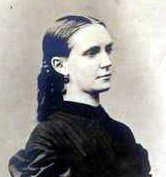


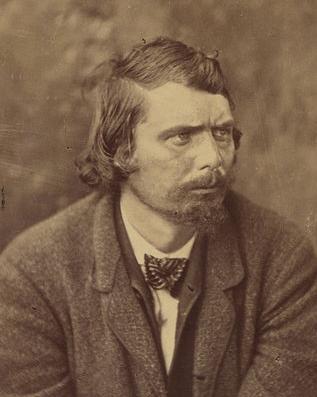


 Pianist Art Porter was born in Little Rock, Arkansas on February 8, 1934. Porter, the Arkansas Jazz Statesman, never officially worked as a touring musician, choosing instead to perform, teach, contribute to his church as well as to other charitable causes in his hometown and state. There were two exceptions: In 1977 at FESTAC 77 (the World Black and African Festival of Arts and Culture) and at jazz festivals in Belgium, Germany, and The Netherlands during a 1991 European Tour with his son, saxophonist Art Porter, Jr.
 After the assassination of Abraham Lincoln, eight people were put on trial and found guilty–four sentenced to long prison terms and the other four sentenced to hang. One of those sentenced to hang was Mary Eugenia Jenkins Surratt, the first woman ever to be hung in the United States. John Wilkes Booth had supposedly been shot and John Surratt had escaped to Canada, eventually to make it all the way to Europe. These eight were seemingly all that were left and the government wanted to make sure they talked as little as possible to anyone.
 The way the federal government dealt with Mrs. Surratt was strongly reminiscent of the way it would later deal with the Plains Indians in the far West–it flat out broke its word, but then, what else have we come to expect from government? Otto Eisenschiml wrote in In the Shadow of Lincoln’s Death“When the Washington authorities put hoods over the heads of the men accused of conspiracy against Lincoln’s life, they committed a strange act. When they added stiff shackles–manacles which made writing impossible–and forbade all intercourse with the outside world, there arose a misgiving that the purpose was not punishment, but the enforcement of silence.” Eisenschiml also noted that the government changed the prison locations of those not hung from Albany, New York to the far-out Dry Tortugas, where the convicted men were confined, literally for years in solitary cells and were prevented from conversing with any outsiders. You have to wonder what the government was afraid these men would have to say, and whatever that might have been, they were going to make darn sure no one ever heard it.
 John T. Ford, owner of Ford’s Theater, followed all these events as long as he lived. You could say he had somewhat of a consuming interest, so he gathered what facts he could. In 1889, he revealed something most people had never heard. He said that: “The very man of God who shrived her soul for eternity was said to be constrained to promise that she should not communicate with the world. Mr. Clampitt, one of her lawyers, confirmed what Ford stated. Mrs. Surratt pleaded with the priest to be allowed to tell people before she died that she was innocent of the crime of which she had been convicted. The priest refused her. It seems he had been made to tell her, after absolution and the sacrament, that she should be prevented from making any declaration as to her innocence. The priest later denied this. If the government had nothing to cover up, allowing her to make a last statement would have hurt nothing.


 The Daily Hatch